
Engineered Galvanized & Coated Steel Coil Portfolio
Direct factory supply of high-grade galvanized coils, zinc-iron alloy sheets, and seamless structural piping manufactured under strict metallurgical controls.



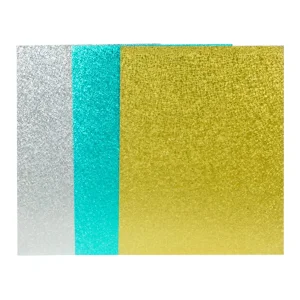
The Global Landscape of Hot Dip GI Coils Manufacturing
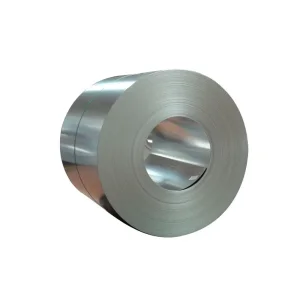
Hot-dip galvanized steel coils (GI Coils) represent a foundational pillar of modern industrial infrastructure, architectural cladding, automotive body manufacturing, and HVAC ducting. Manufactured via the continuous galvanizing line (CGL) process, cold-rolled or hot-rolled steel substrate passes through a molten zinc bath at temperatures ranging from 450°C to 465°C, forming a tightly bound metallurgical intermetallic alloy layer.
Metallurgical Fe-Zn Alloy Phase Architecture
The superior corrosion performance of hot-dip galvanized steel relies on the formation of four discrete metallurgical iron-zinc phase layers during continuous immersion:
- Alpha-Gamma (γ) Phase: Adjacent to the steel substrate, containing 21% to 28% iron, delivering high bond tenacity.
- Delta (δ) Phase: A compact layer containing 7% to 12% iron, providing essential mechanical impact resistance.
- Zeta (ζ) Phase: Columnar crystal structure containing 5% to 6% iron, acting as a ductile barrier against progressive atmospheric moisture penetration.
- Eta (η) Phase: The outer layer composed of 100% pure metallic zinc, yielding cathodic sacrificial corrosion protection.
When exposed to ambient weather conditions, the outer zinc layer undergoes oxidation to form zinc oxide ($\text{ZnO}$), followed by reaction with atmospheric moisture to yield zinc hydroxide ($\text{Zn(OH)}_2$), and ultimately reacts with carbon dioxide to form a dense, insoluble, non-reactive protective film of basic zinc carbonate ($\text{2ZnCO}_3 \cdot \text{3Zn(OH)}_2$). This self-healing passive patina suppresses further galvanic degradation even when scratched or cut.
Global Manufacturing Standards & Metallurgical Equivalent Matrix
| Standard System | Commercial Grade | Deep Drawing Grade | Structural Steel Grade | Coating Mass Range |
|---|---|---|---|---|
| EN 10346 (European) | DX51D+Z | DX52D+Z / DX53D+Z / DX54D+Z | S250GD+Z to S550GD+Z | Z100 to Z600 (g/m²) |
| ASTM A653 / A653M (USA) | CS Type A / B / C | FS Type A / B, DDS, EDDS | SS Grade 33 (230) to Grade 80 (550) | G30 to G360 (oz/ft²) |
| JIS G3302 (Japan) | SGCC | SGCD1 / SGCD2 / SGCD3 | SGC340 to SGC570 | Z08 to Z60 (g/m²) |
| GB/T 2518 (China) | Q195 / DX51D+Z | 08AL / DX53D+Z | Q235 / Q355 / S350GD+Z | Z40 to Z600 (g/m²) |
Global Market Trends: Transition to Next-Generation Coated Steels
The international galvanized steel coil market is undergoing a structural paradigm shift driven by stringent decarbonization targets, aggressive atmospheric corrosion environments, and high-strength lightweight engineering demands.
1. Zinc-Aluminum-Magnesium (ZM/AZM) Evolution
While traditional pure zinc (GI) coils remain the global standard for building and ducting, advanced applications—such as solar PV ground-mounting structures and coastal livestock facilities—are rapidly transitioning to Zinc-Aluminum-Magnesium alloy coatings (e.g., ZM275 / AZM150). The addition of 1.5% to 3% Magnesium and Aluminum induces the formation of dense Simonkolleite ($\text{Zn}_5(\text{OH})_8\text{Cl}_2 \cdot \text{H}_2\text{O}$), delivering up to 5x superior cut-edge self-healing protection compared to standard hot-dip galvanized coatings.
2. Green Steel & Low-Carbon CGL Processing
Tier-1 continuous galvanizing line factories are replacing fossil-fuel annealing furnaces with direct hydrogen-fueled induction heating and electric heat recuperators. Coupled with scrap-based Electric Arc Furnace (EAF) substrate steel, modern green GI coil production reduces embodied carbon footprint ($\text{CO}_2\text{e}$) by over 45%, fulfilling Scope 3 decarbonization mandates for European and North American buyers.
3. AI-Driven Air-Knife Coating Thickness Control
Leading Chinese export factories utilize closed-loop, laser-guided dynamic air-knife pressure systems. Real-time X-ray fluorescence (XRF) coating gauges scan every millimeter of the strip across its full width, maintaining coating thickness tolerance within $\pm 2.0\text{g/m}^2$. This ensures complete elimination of transverse coating thickness variation (ridge defects) during roll forming.
Factory Processing Capabilities & Surface Chemical Treatments
Selecting the correct GI coil specification requires balancing mechanical yield strength, surface spangle morphology, and post-galvanizing chemical passivation tailored to the destination climate and fabrication method.
Surface Spangle Formation Matrix
During molten zinc cooling, spangle crystallization is controlled via chemistry (lead/antimony addition) and water-atomized cooling jets:
Zero Spangle / Extra Smooth
Formed by rapid forced cooling mist. Features an ultra-flat surface ideal for automotive painting, appliance panels, and smooth color coating (PPGI base).
Minimized Spangle
Faint zinc crystal outlines visible under close inspection. Preferred for general ducting, cable trays, and structural profiles where visual grain must remain subdued.
Regular / Normal Spangle
Classic metallic fern-like crystal flower pattern. Cost-effective standard choice for agricultural roofing, corrugated siding, and unpainted outdoor construction.
Post-Galvanizing Chemical Passivation Options
- Environment-Friendly Chromate-Free Passivation (RoHS Compliant): Utilizes organic silane or zirconium-based chemical sealers to prevent white rust formation during transit without hazardous heavy metals.
- Light Oiling (DOS / Vanishing Oil): Applies 0.5 to 1.5 $\text{g/m}^2$ rust-preventative oil for temporary protection during ocean freight; easily degreased prior to painting.
- Anti-Fingerprint (AFP) Resin Coating: Applies a 1 to 2 micron transparent acrylic coating over the zinc layer, eliminating smudge marks during manual assembly of doors, home appliances, and server racks.
Macro Industry Solutions & Regional Applications
Different regional climate zones, regulatory codes, and manufacturing sectors require tailored technical specifications for hot-dip galvanized steel coil procurement.
Tropical & Coastal Building Cladding
Primary Regions: Southeast Asia (Philippines, Vietnam, Indonesia), Latin America, Coastal Africa.
Recommended Spec: Substrate DX51D+Z or S350GD+Z, Coating Mass Z275 (275g/m² total two-sided zinc), Regular Spangle, Chromate Passivated.
High relative humidity and salt-laden marine air demand heavy zinc coating weights to resist humid-thermal pitting and edge creep corrosion on corrugated roof profiles.
HVAC Ducting & Electrical Cable Trays
Primary Regions: North America, Middle East (GCC Countries), Europe.
Recommended Spec: Substrate CS Type B / DX51D, Coating Mass Z120 - Z180, Minimized / Zero Spangle, Tension Leveled, Lightly Oiled.
High dimensional precision and lock-forming bendability without flaking or micro-cracking during 90-degree Pittsburgh seam duct fabrication.
Solar PV Tracker Racking & Purlins
Primary Regions: North America, Middle East, Australia, India.
Recommended Spec: High-Yield Structural Steel S350GD+Z / S450GD+Z or ZM310 (Zinc-Aluminum-Magnesium), Coating Mass Z450 - Z600, Zero Spangle.
Requires high yield strength ($\ge 350\text{ MPa}$) to withstand extreme wind shear loads while maintaining 30-year structural integrity without field painting.
High-Performance Coated, Silicon & Carbon Steel Solutions
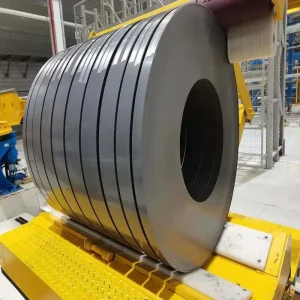
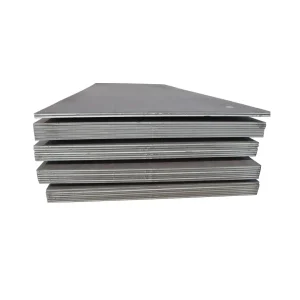
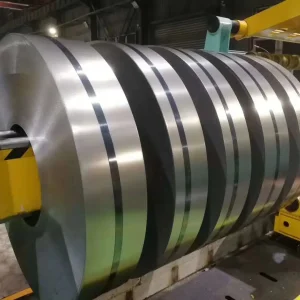
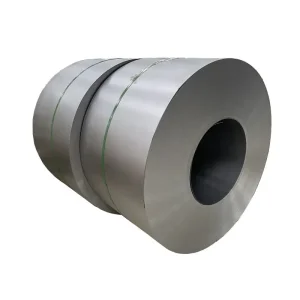
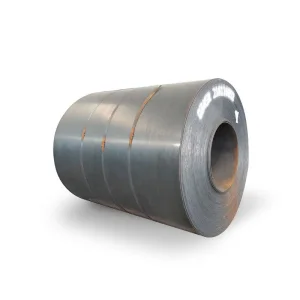
Full mill access to electrical silicon coils, zinc-aluminum-magnesium structural plates, deep-drawing cold rolled sheets, and pickled oiled plates.


Factory Testing Standards & Export Verification Protocols
To prevent field failures, ocean transport degradation, and micro-cracking during profiling, our mill enforces a comprehensive 6-stage Quality Control (QC) matrix prior to issuing EN 10204 3.1 Mill Test Certificates (MTC).
1. Hydrostrate Chemical & Mechanical Testing
Optical Emission Spectrometry (OES) verifies Carbon, Manganese, Phosphorus, and Sulfur content on every melt heat. Tensile testing verifies Yield Strength ($R_{eH}$), Ultimate Tensile Strength ($R_m$), and Elongation percentage ($A_{80}$) in compliance with ASTM A370.
2. Coating Weight Magnetic Verification
Tri-spot magnetic thickness gauges perform coating mass verifications across the drive side, centerline, and operator side of the strip, ensuring compliance with specified zinc mass (e.g., $275\text{g/m}^2 \pm 10\text{g/m}^2$).
3. Coating Adhesion 180° T-Bend Test
Specimens are bent 180 degrees over a mandrel of specified thickness ($0T, 1T, 2T$). High-magnification microscopic inspection confirms zero zinc flaking or delamination along the outer radius bend.
4. Accelerated Salt Spray Corrosion Testing
Continuous neutral salt spray testing (ASTM B117) exposes samples to a 5% $\text{NaCl}$ fog at 35°C, confirming 720+ hours to first red rust for Z275 coatings and 1500+ hours for ZM275 coatings.
Frequently Asked Technical & Procurement Questions (FAQ)
Clear, authoritative answers to common engineering, metallurgical, and supply chain queries encountered by international steel buyers.
What is the exact metallurgical difference between Hot-Dip Galvanized (GI) and Galvannealed (GA) steel coils?
How do I select between DX51D+Z, DX52D+Z, DX53D+Z, and DX54D+Z under EN 10346?
- DX51D+Z: Commercial Quality bending and profiling grade; ideal for corrugated roofing, purlins, and general structural profiles.
- DX52D+Z: Lock-forming quality; suitable for 90-degree tight radius ducting and simple pressed parts.
- DX53D+Z: Deep drawing quality; designed for complex stamped components and deep metal enclosures.
- DX54D+Z: Extra Deep Drawing Quality (EDDQ); suited for severe automotive stampings requiring high plastic strain ratio ($r$-value) and strain hardening exponent ($n$-value).
What is the theoretical service life expectancy of Z275 (G90) galvanized coil in outdoor environments?
- C2 (Low / Rural): 0.1 to 0.7 $\mu\text{m/year}$ → 30 to 50+ years service life.
- C3 (Medium / Urban Industrial): 0.7 to 2.1 $\mu\text{m/year}$ → 15 to 25 years service life.
- C4 (High / Coastal Industrial): 2.1 to 4.2 $\mu\text{m/year}$ → 6 to 10 years service life (heavy Z450 or ZM coatings recommended).
Why is skin-pass rolling (temper rolling) recommended for galvanized steel coils?
- Eliminates yield point elongation (Lüders lines) during subsequent stamping or bending, preventing surface stretcher strain marks.
- Improves coil surface flatness and suppresses spangle relief to produce an Extra Smooth finish.
- Imparts controlled surface roughness ($Ra$ micro-roughness) to enhance lubricant retention during stamping and mechanical paint bonding.
How does Zinc-Aluminum-Magnesium (ZM) compare directly to traditional Hot-Dip GI coils?
What sea-freight anti-rust packaging standards are used for ocean shipping?
- Inner VCI (Vapor Corrosion Inhibitor) paper layer to absorb residual air moisture.
- High-density polyethylene (HDPE) plastic film outer wrapping.
- Internal and external steel corner protectors with galvanised steel side discs.
- Minimum of 3 circumferential and 4 radial high-tensile steel strapping bands.
- Wooden skids or cradles treated under ISPM-15 heat treatment standards for containerized or break-bulk loading.