
Explore our mill-certified structural steel components, precision electro-galvanized flat products, and high-strength hollow sections directly supplied from our manufacturing facilities.
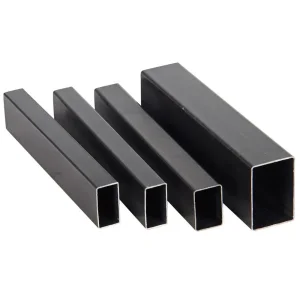
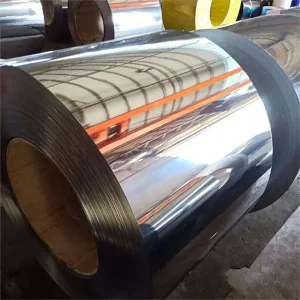
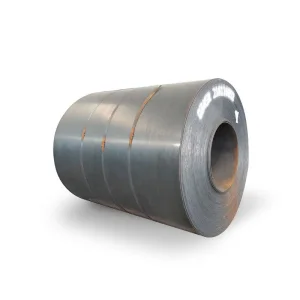
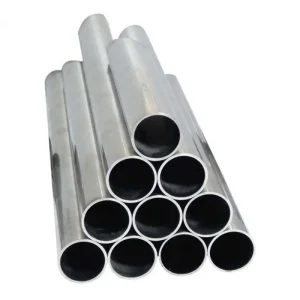
Structural hollow sections—encompassing Square Hollow Sections (SHS), Rectangular Hollow Sections (RHS), and Circular Hollow Sections (CHS)—represent the backbone of modern civil architecture, industrial infrastructure, and mechanical engineering. As global urbanization accelerates and the demand for lightweight, high-torsional-rigidity structural frameworks expands, hollow sections have evolved from basic tubular commodities into highly engineered structural elements.
The global market for structural steel tubing is currently driven by several macro-industrial shifts:
- Infrastructure Modernization & Renewable Energy: Ground-mounted utility-scale solar PV tracker systems, wind turbine platform structures, and electrical substations heavily utilize hot-dip galvanized SHS and RHS for structural longevity against harsh atmospheric corrosion.
- Logistics & Warehouse Architecture: The boom in global e-commerce has led to unprecedented demand for wide-span distribution centers utilizing tubular steel trusses, spatial frames, and high-bay racking systems engineered to EN 10219 and ASTM A500 specifications.
- Modular & Off-Site Construction: Prefabricated volumetric building units (PPVC) demand tight-tolerance cold-formed hollow sections capable of precise automated robotic welding and modular stacking.
| Hollow Section Profile | Torsional Rigidity Index | Bending Efficiency (X-Y Axis) | Connection Ergonomics | Primary Industrial Application |
|---|---|---|---|---|
| Square Hollow Section (SHS) | Exceptionally High | Symmetrical (Equal $I_x$ and $I_y$) | Optimal for multi-planar welded nodes | Building columns, equipment frames, solar mounting legs |
| Rectangular Hollow Section (RHS) | High | Asymmetrical (Directional flexural advantage) | Flat-surface joining & cladding attachment | Roof purlins, structural girders, perimeter beams, trailer frames |
| Circular Hollow Section (CHS) | Maximum Uniform Torsion | Uniform Drag Coefficient & Fluid Resistance | Requires profiled end-saddles or node joints | Offshore jackets, space frames, fluid conduits, architectural columns |
China accounts for over 50% of the world's total crude steel output. However, the true competitive advantage for global steel wholesalers sourcing from leading Chinese hollow section manufacturers lies in the hyper-integrated supply chain ecosystem concentrated in regions like Tianjin, Hebei, and Shandong.
Direct pipeline access to primary hot-rolled steel strip mills (such as Shougang, Tangsteel, and Baosteel) minimizes intermediate transport costs and ensures exact metallurgical chemistry control from slab casting to pipe forming.
State-of-the-art continuous High-Frequency Induction Welding (HFIW) lines operating at speeds up to 120 m/min ensure high weld seam integrity, tight dimensional tolerances, and minimal heat-affected zones (HAZ).
Proximity to major deep-water shipping terminals like Tianjin Xingang Port enables seamless sea freight container loading, breakbulk chartering, and optimized bundle nesting to drastically cut sea transport expenses per ton.
For international buyers and procurement officers, verifying technical compliance across regional building codes is paramount. Quality hollow section factories manufacture products compliant with strict European, American, Australian, and Japanese standards.
| Standard | Region | Steel Grades | Key Tolerance Specifications |
|---|---|---|---|
| EN 10219-1 / -2 | Europe / UK | S235JRH, S275J0H, S355J2H, S460NH | Cold-formed welded structural hollow sections. Strict outer dimension, concavity/convexity, and corner radius limits. |
| EN 10210-1 / -2 | Europe / UK | S275J2H, S355K2H, S460H | Hot-finished structural hollow sections. Uniform internal stress distribution, elevated impact toughness down to -40°C. |
| ASTM A500 / A500M | North America | Grade A, Grade B, Grade C, Grade D | Cold-formed welded and seamless carbon steel structural tubing in rounds and shapes. Focuses on minimum yield strength (up to 50 ksi / 345 MPa). |
| AS/NZS 1163 | Australia / NZ | C250L0, C350L0, C450L0 | Structural steel hollow sections. Requires mandatory low-temperature impact testing (Charpy V-notch at 0°C or -20°C). |
| JIS G3466 | Japan / Asia | STKR400, STKR490 | Carbon steel square and rectangular tubes for general structural purposes. Tight wall thickness tolerances. |
Corrosion protection is customized based on application environments:
- Pre-Galvanized Strip Hollow Sections: Formed from hot-dip galvanized steel strip (Z80 to Z275g/m²). The weld seam is continuously restored inline via zinc thermal spraying. Ideal for indoor framing, greenhouse arches, and furniture tubing.
- Post-Fabrication Hot-Dip Galvanized (HDG): Black steel sections are fully immersed in molten zinc baths at 450°C, producing zinc-iron alloy coating weights up to 600g/m² (>85 µm coating thickness) compliant with ISO 1461 / ASTM A123 for 50+ year maintenance-free outdoor service.
- Zinc-Aluminum-Magnesium (ZAM): Advanced alloy coatings providing self-healing edge corrosion resistance in marine and agricultural ammonia-rich environments.
Top-tier Chinese manufacturers operate ISO 9001 and ISO 14001 certified QA labs equipped for rigorous testing:
- Inline Ultrasonic & Eddy Current Weld Testing: 100% continuous monitoring of seam fusion to eliminate micro-cracks.
- Charpy V-Notch Impact Testing: Verifying fracture toughness under low ambient operating temperatures.
- Flattening & Bending Tests: Testing ductility and seam integrity during secondary cold forming.
- 3D Laser Dimensional Scanning: Ensuring strict squareness, twist (less than 1mm per meter), and straightness tolerances.
Hollow sections offer high strength-to-weight ratios, clean aesthetic lines, and reduced wind drag coefficients. Here is how wholesalers distribute these products into major industries worldwide:
High-strength S355J2H SHS columns provide multi-directional load resistance in high-rise building cores, airport terminal space frames, and stadium roofs while allowing structural fireproofing coatings to be applied efficiently.
High-zinc galvanized RHS posts drive directly into soil without pre-drilling, supporting single-axis tracker torque tubes with exceptional resistance to wind-induced fatigue and soil salinity.
Pre-galvanized lightweight SHS and elliptical tubes form high-roof agricultural structures capable of supporting snow loads, automated drip systems, and climate curtains in humid environments.
Procuring structural hollow sections at container scale requires managing total cost of ownership (TCO), quality risk, and supply chain logistics. International purchasing directors must structure procurement contracts around five critical pillars:
Shipping hollow sections across ocean routes requires intelligent bundle design. Wholesalers optimize container volume utilization by specifying nested sizing—placing smaller SHS tubes (e.g., 50x50mm) inside larger RHS sections (e.g., 100x100mm). This technique maximizes freight weight capacity per 40ft HQ container, reducing ocean transport costs per ton by up to 25%.
Every shipment must be backed by authentic Mill Test Certificates (MTC) detailing heat numbers, chemical ladle analysis (Carbon Equivalent Value - CEV), tensile strength ($R_m$), yield strength ($R_e$), elongation ($A_5$), and non-destructive test results. For infrastructure projects, third-party inspection (SGS, Bureau Veritas, Intertek) to issue 3.2 certificates is standard practice.
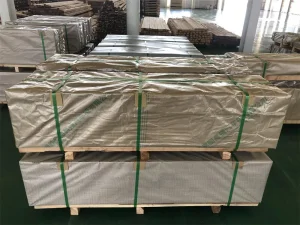
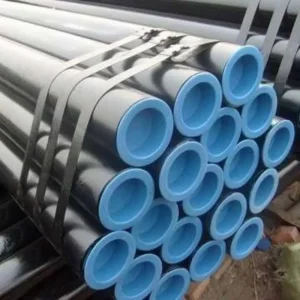
Long sea voyages risk white rust (zinc oxidation) and mechanical surface damage. Leading factories implement seaworthy packaging protocols: anti-corrosion oiling, plastic end-caps, waterproof plastic wrapping, high-tensile steel strapping, and wooden dunnage to facilitate forklift unloading.
Avoid commercial disputes by defining mass tolerances (typically $\pm 6\%$ per length), wall thickness tolerances ($\pm 10\%$), and straightness limits in formal purchase orders rather than relying on generic commercial terms.
The structural steel manufacturing sector is undergoing rapid transformation driven by decarbonization mandates and AI-driven production controls:
Transitioning from blast furnace (BF-BOF) routes to Electric Arc Furnace (EAF) recycling scrap steel lowers the embedded carbon footprint of hollow sections, helping European and North American buyers meet strict CBAM (Carbon Border Adjustment Mechanism) environmental compliance.
The adoption of S460NH and S690 high-yield strength structural tubing enables architects to design lighter structural frames without sacrificing load-bearing safety margins, saving total raw material tonnage.
Factories are integrating 3D laser cutting and inline robotic notch-cutting direct from BIM software models, transforming standard stock lengths into ready-to-assemble structural kits before export.
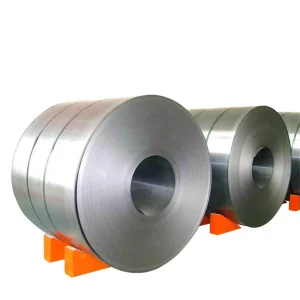
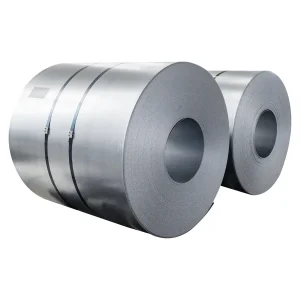
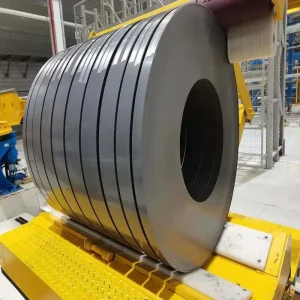
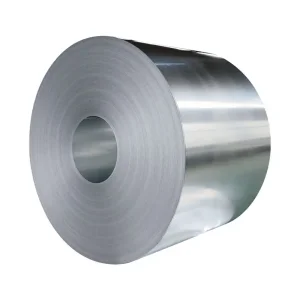
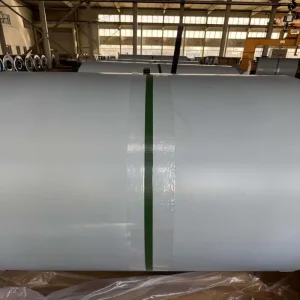
Browse additional mill products including electrical silicon steel, seamless pressure pipes, specialized tinplate, and coated steel coils.
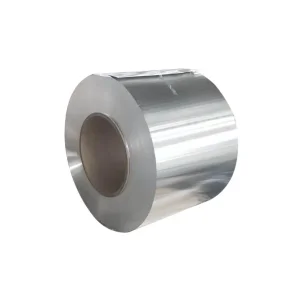
Comprehensive technical and procurement reference for structural steel distributors, EPC contractors, and global importers.
What is the difference between cold-formed (EN 10219) and hot-finished (EN 10210) hollow sections?
How do square hollow sections (SHS) compare to circular hollow sections (CHS) in structural columns?
What standard zinc coating options exist for hollow sections in high-corrosion environments?
Can Chinese factories produce non-standard corner radiuses for custom hollow sections?
What is the typical yield strength difference between ASTM A500 Grade B and Grade C?
How is weld seam quality verified during continuous High-Frequency Induction Welding (HFIW)?
What container loading optimization strategies reduce freight costs per ton?
What documentation is required for custom clearance and structural compliance?
Whether you require high-volume ASTM A500 Grade C square tubing, EN 10219 S355J2H structural hollow sections, or custom pre-galvanized profiles, our engineering team provides direct mill pricing, guaranteed lead times, and comprehensive quality assurance.