
High-Precision Steel & Coated Metal Portfolio
Mill-direct structural steel, electro-galvanized sheets (SECC/SECD), and protective coated coils for global engineering applications.
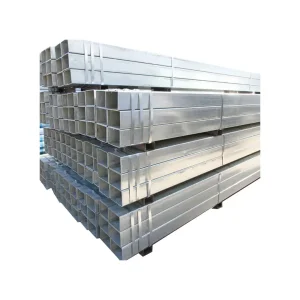
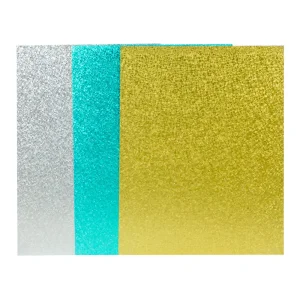
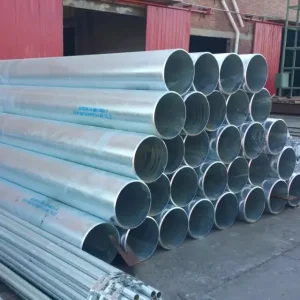
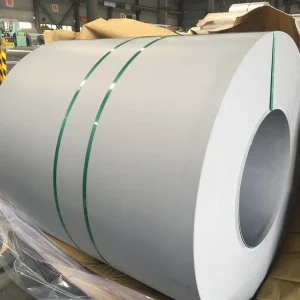
Electro Galvanizing vs. Electroplating: Core Process & Electrochemical Distinctions
Understanding the precise electro-deposition mechanics, coating uniformity, and structural integrity differences for industrial procurement decision-making.
Continuous Electro Galvanizing (EG / EGL)
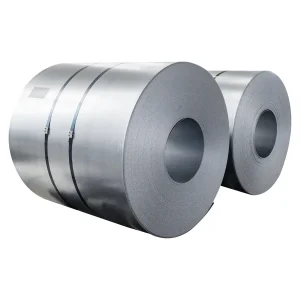
Electro Galvanizing (EG), commercially identified under specifications like JIS G3313 SECC (Commercial Grade), SECD (Deep Drawing Grade), and SECE (Extra Deep Drawing Grade), is an automated, continuous coil-coating electrolytic process. Cold-rolled steel coils pass through an aqueous solution bath containing zinc ions (Zn2+) driven by a high-density direct electric current (DC).
The primary advantage of continuous Electro Galvanizing lies in its unyielding layer uniformity and surface smoothness. Unlike hot-dip galvanizing, electro-galvanizing involves zero thermal stress, preserving the precise mechanical properties, tensile yield, and grain structure of the cold-rolled substrate. The zinc layer thickness (typically ranging from 10 g/m² to 90 g/m² per side, or 1.5 µm to 12 µm) is controlled with sub-micron precision, eliminating surface defects, spangles, or thickness variations, making it the premier choice for painted automotive body panels, computer server chassis, and home appliances.
Batch Component Electroplating (Rack & Barrel Plating)
Industrial Electroplating, governed by standards such as ASTM B633 or ISO 2081, generally refers to a batch electro-deposition process applied to pre-fabricated, finished metal components, fasteners, stamping brackets, or machined hardware. Submersed in plating tanks via racks or barrels, zinc or zinc-alloy ions deposit onto localized surfaces under electrolyte agitation.
While sharing similar electrochemical principles with continuous electro-galvanizing, batch electroplating differs fundamentally in structural scale and operational scope. It provides localized corrosion protection for complex 3D shapes, threaded fasteners, and cast parts. However, batch electroplating often introduces variations in coating thickness across sharp edges and internal cavities (due to Faraday cage effects and non-uniform current density), requiring post-plate baking procedures to mitigate hydrogen embrittlement risks in high-strength steel alloys (tensile strength > 1000 MPa).
Electro Galvanizing vs. Electroplating vs. Hot-Dip Galvanizing Matrix
Quantitative performance analysis comparing layer thickness, corrosion resistance, formability, weldability, and total cost of ownership (TCO).
| Evaluation Parameter | Electro Galvanizing (Coil/Sheet) | Batch Electroplating (Parts) | Hot-Dip Galvanizing (HDG) |
|---|---|---|---|
| Primary Substrate / Form | Cold-Rolled Steel Coils & Sheets (SECC/SECD) | Fabricated Stamped Parts, Fasteners, Castings | Structural Steel, Heavy Pipe, Coils (GI) |
| Coating Thickness Range | 1.5 µm - 12 µm (10 - 90 g/m²) | 3 µm - 25 µm (ASTM B633 Fe/Zn 5 to 25) | 35 µm - 100+ µm (275 - 600 g/m²) |
| Surface Roughness (Ra) & Aesthetics | Ultra-smooth, spangle-free (Ra < 0.6 µm), paint-ready | Bright to semi-bright finish, variable on edges | Rougher surface, variable spangle visual patterns |
| Salt Spray Corrosion Resistance (NSS) | 72 - 240+ Hours (With Trivalent Passivation) | 48 - 192 Hours (Depending on Sealants) | 500 - 1500+ Hours (Heavy Duty Outdoor) |
| Ductility & Deep Drawability | Superior (Erichsen > 10.5 mm), zero flaking | Moderate (Applied after forming step) | Limited (Zinc-iron alloy layer can micro-crack) |
| Weldability & Paint Adhesion | Outstanding spot weldability, flawless paint grip | Good, localized to part geometry | Requires pre-treatment/sanding before paint |
| Hydrogen Embrittlement Risk | Negligible for standard strip tempers | High for high-strength steel (Needs baking) | Extremely Low (Thermal process) |
| Target Industry Applications | Automotive doors, Server cases, Appliances, HVAC | Fasteners, Automotive brackets, Hardware | Civil infrastructure, Solar mounting, Outdoor pipes |
Metallurgical Information Gain: The Sacrificial Cathodic Protection Mechanism
In corrosive environments, zinc acts as a sacrificial anode to protect the iron (Fe) core due to its lower standard electrode potential (-0.763V vs. -0.440V for Fe). Electro-galvanized coatings achieve an optimal balance between sacrificial protection and mechanical ductility. Because the electro-deposited zinc layer forms a pure, homogeneous crystallographic texture without brittle intermetallic Fe-Zn alloy phases (unlike hot-dip coatings), SECC steel can undergo extreme stamping and bending without exposing the underlying steel matrix to atmospheric oxidation.
Localization Support & Global Regulatory Compliance
Ensuring seamless international procurement compliance with environmental directives, technical standards, and certified chemical passivation.
RoHS 3.0 & REACH SVHC Compliance
Modern global procurement strictly prohibits hexavalent chromium (Cr6+). Our electro-galvanizing production lines utilize Cr3+ (Trivalent Chromium) passivation and organic Anti-Fingerprint (AFP) sealants. Every shipment comes backed with comprehensive SGS laboratory testing, verifying zero lead, cadmium, mercury, or PBB/PBDE flame retardants.
International Standard Mapping
We provide full cross-reference localization support across multi-regional specifications:
- Japanese Standard: JIS G3313 (SECC, SECD, SECE)
- American Standard: ASTM A879 / ASTM B633
- European Standard: EN 10152 (DC01+ZE, DC04+ZE)
- Chinese Standard: GB/T 15675
Traceable Mill Test Certificates (MTC)
All delivered electro-galvanized coils, sheets, and pipes include EN 10204 3.1 Mill Test Certificates detailing exact chemical ladle analysis, yield strength (ReH), tensile strength (Rm), elongation (A80), coating weight (g/m² via EDXRF spectroscopic test), and neutral salt spray test log hours.
China Factory Supply Chain & Manufacturing Ecosystem
Leveraging scale, integrated steel production clusters, and modern logistics to deliver unbeatable value to global buyers.
Upstream Material Integration
China's steel clusters (such as Tianjin and Hebei industrial belts) provide direct access to prime hot-rolled and cold-rolled substrate coils from top-tier primary mills (Baosteel, Shougang, HBIS). This guarantees stable chemical purity, minimal non-metallic inclusions, and uniform coil thickness before entering the continuous electro-galvanizing line (EGL).
Logistics & Port Proximity
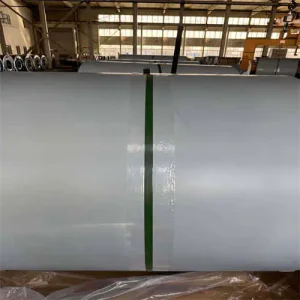
Situated in major coastal industrial hubs near Tianjin Port (Xingang), our logistics infrastructure minimizes inland freight costs and eliminates transit degradation. Coils are packed in heavy-duty ocean-ready packaging: waterproof VCI (Vapor Corrosion Inhibitor) paper, galvanized steel outer sleeves, and eye-vertical/eye-horizontal wooden skid strapping.
Economies of Scale & Price Competitiveness
Operating high-speed continuous electro-galvanizing lines with automated bath chemical dosing allows Chinese suppliers to achieve unmatched operational efficiency. Global procurement leaders achieve 15% to 30% total procurement cost savings compared to domestic European or North American processing mills without compromising metallurgical quality.
Enterprise Sourcing Strategy & Supply Chain Risk Mitigation
Actionable strategies for procurement heads, OEM buyers, and structural engineers sourcing electro-galvanized materials globally.
1. Material Specification & Slitting Optimization
Procuring electro-galvanized steel in wide master coils (1250mm / 1500mm) and utilizing factory precision slitting (tolerances down to ±0.1mm) drastically reduces scrap rates at your local stamping plant. Ensure your Purchase Order (PO) clearly specifies coating weight per side (e.g., 20/20 designating 20 g/m² zinc on both sides) and surface finish requirements (e.g., E5/E5 for standard electro-zinc or C5/C5 for chromate-treated finish).
2. Dual-Sourcing & Inventory Buffer Planning
To hedge against international shipping volatility and lead-time disruptions, leading OEM procurement teams maintain a dual-sourcing model. Partnering with premier Chinese electro-galvanizing manufacturers for 70% of base volume establishes a low baseline cost, while local service centers provide buffer stock for emergency production spikes.
Localized Industrial Applications & Engineering Case Scenarios
Where Electro Galvanized (SECC/SECD) and Electroplated metals outperform alternative coatings in real-world environments.
Server Rack Chassis & Computer Cases
High-end IT hardware requires electromagnetic shielding (EMI), absolute dimensional flatness, and anti-fingerprint aesthetics. SECC electro-galvanized sheets with Anti-Fingerprint (AFP) organic coating provide an unpainted metallic look that resists corrosion and oxidation from server room humidity.
Vehicle Inner Body Panels & Brackets
Automotive OEMs rely on electro-galvanized steel (JIS SECD/SECE) for interior door skins, floor pan reinforcements, and dashboard structural brackets. The coating's superior drawability prevents zinc cracking during heavy stamping, while offering perfect cathodic protection beneath E-coat primer baths.
Washing Machines, Fridges & HVAC Units
Appliance outer side panels demand flawless gloss painting. Cold-rolled electro-galvanized sheet provides an ultra-smooth surface texture free of visual spangles. When post-painted, it delivers superior salt-spray corrosion protection against detergent spills and moisture.
Next-Gen Electro-Coating Innovations & Trends
Emerging electro-metallurgical developments shaping the future of global corrosion protection.
Zinc-Nickel (Zn-Ni) Electro-Alloying
Traditional pure zinc electro-plating is increasingly upgrading to Zinc-Nickel alloy electro-deposition (12-15% Ni content). Zn-Ni electro-plated steel provides up to 5 to 10 times higher corrosion resistance than standard pure zinc at equivalent layer thicknesses. It exhibits exceptional resistance to micro-cracking during severe mechanical deformation and stands up against high thermal stress (>250°C), making it the new benchmark for automotive engine compartment brackets and fluid lines.
Green Electro-Chemistry & Zero-Discharge Processing
Environmental regulations are accelerating the adoption of eco-friendly electro-galvanizing lines equipped with continuous closed-loop acid recovery and zero-liquid-discharge (ZLD) wastewater treatment technology. Furthermore, self-healing bio-based thin organic sealants are replacing conventional chemical passivators, reducing total carbon footprint while enhancing barrier protection against chemical degradation.
Buyer FAQ: Electro Galvanizing vs Electroplating Sourcing
Expert answers to common engineering, procurement, and technical inquiries.
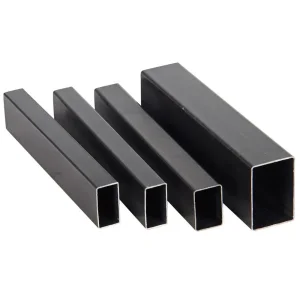
Specialized Coils, Electrical Steel & Structural Pipe Selection
Explore additional mill-direct steel products engineered for transformer cores, solar mounting, agricultural greenhouses, and structural framing.

Request Direct Factory Quotations & Metallurgical Specifications
Partner directly with top-tier Chinese electro-galvanizing manufacturers. Obtain instant FOB/CIF pricing, sample coils for stamping verification, and certified MTC documents for your engineering team.