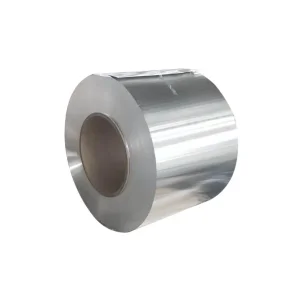
Featured Coated & Structural Steel Products
Mill-certified carbon steel, electro-galvanized, hot-dipped, and alloy-coated steel solutions manufactured under strict ASTM, EN, and JIS standards.
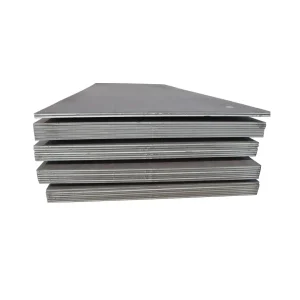
High-Quality Q235 Q195 Q345 ST S355 Hot rolled carbon steel plates Factory, Factories
View Product Specs
Wholesale China Factory Slip-on Plate Flanges for Carbon Steel & Stainless Steel - Top Suppliers of Blind Flanges Manufacturers, Suppliers
View Product Specs
High-Quality China Suppliers Factory ZM Alloy Coated Steel Sheet 275g for Solar Mounting Structure - Zinc Aluminum Magnesium Manufacturer, Manufacturers
View Product Specs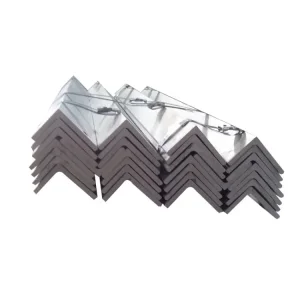
High-Quality China Suppliers Factory Q195 Q215 Hot Rolled Steel Angle Iron Beams for Structural Applications Supplier, Factories
View Product Specs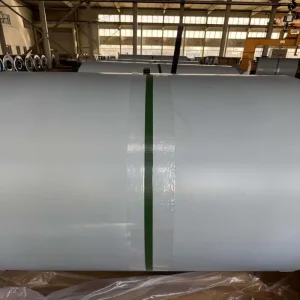
High-Quality Electrogalvanized Steel from China Suppliers - High-Quality Factory Direct Coated Metal Products Supplier, Factories
View Product Specs
Wholesale Zinc Iron Alloy Galvannealed Steel Coil DC51D ZF60 ZF275 - China Suppliers and Factory Factory, Factories
View Product Specs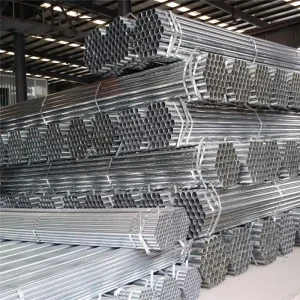
High-Quality Thick-Wall Pre Galvanized Steel Pipe for Green Houses - China Suppliers & Factory Quality Products Manufacturer, Factory
View Product Specs
Wholesale CRNGO Silicon Steel Coil M310 M350 M470 M600 M800 - China Suppliers & Factory for Non-Grain Oriented Electrical Steel Supplier, Suppliers
View Product SpecsElectro-Galvanized (EG) vs. Hot-Dip Galvanized (HDG) Kinetics
Understanding the fundamental differences in zinc-substrate bonding mechanics, phase crystal nucleation, and metallurgical layer chemistry between cold electro-deposition and thermal immersion.
Electro-Galvanized Steel (EG) Dynamics
Electro-galvanizing involves cold electrochemical deposition of pure zinc onto a cold-rolled steel substrate in an electrolyte bath under a controlled direct electric current ($Zn^{2+} + 2e^- \rightarrow Zn$).
- Microstructure: Uniform, pure zinc layer with negligible iron-zinc intermetallic phases. Microscopic roughness (Ra) is exceptionally low.
- Coating Thickness: Typically thin, ranging from 10 g/m² to 60 g/m² per side (approx. 1.4 to 8.5 microns).
- Surface Quality: Ultra-smooth, mirror-like finish free of spangles, ideal for exposed automotive body panels and consumer electronics.
- Formability: Superior drawability (high Lankford $r$-value and strain hardening exponent $n$-value) because the substrate undergoes no thermal stress.
Hot-Dip Galvanized Steel (HDG) Dynamics
Hot-dip galvanizing passes steel coil or fabricated sections through molten zinc at approximately 450°C (840°F), triggering a continuous thermal metallurgical diffusion reaction.
- Metallurgical Layers: Forms distinct intermetallic Zn-Fe phase layers: Gamma ($\Gamma$, 75% Zn 25% Fe), Delta ($\delta$, 90% Zn 10% Fe), Zeta ($\zeta$, 94% Zn 6% Fe), and outer Eta ($\eta$, 100% pure Zn).
- Coating Weight: Substantially thicker, ranging from 90 g/m² to over 600 g/m² (approx. 12 to 85+ microns).
- Corrosion Barrier: Exceptional physical barrier combined with sacrificial cathodic protection; ideal for aggressive outdoor atmospheres.
- Substrate Impact: Thermal cycle alters substrate strain aging, requiring post-annealing temper pass for precise mechanical yield control.
Engineering Performance Matrix & Specification Comparison
A side-by-side technical evaluation across key physical, mechanical, chemical, and economic metrics for procurement officers and structural design engineers.
| Performance Criterion | Electro-Galvanized (EG / SECC / SEHC) | Hot-Dip Galvanized (HDG / GI / DX51D+Z) | Zinc-Aluminum-Magnesium (ZM / ZAM) |
|---|---|---|---|
| Standard Coating Thickness | 1.4 µm – 8.5 µm (ZE10/10 to ZE50/50) | 12 µm – 85 µm (Z90 to Z600) | 6 µm – 25 µm (ZM90 to ZM275) |
| Salt Spray Resistance (ASTM B117) | 72 – 240 Hours to Red Rust (Unpainted) | 480 – 1500+ Hours to Red Rust | 2000 – 4000+ Hours (Cut-edge Self Healing) |
| Surface Topography & Finish | Ultra-smooth, zero spangle, matte grey finish | Regular spangle, minimized spangle, or zero spangle | Smooth dark grey metallic sheen |
| Deep Drawing & Formability | Outstanding ($r \ge 2.0, n \ge 0.22$), zero coating flaking | Good; risk of flaking on heavy zinc layers during tight radii bends | Excellent; dense oxide layer provides natural lubricant effect |
| Spot & Resistance Weldability | Excellent; low electrode pickup, minimal zinc vaporization | Moderate; requires higher current and frequent tip dressing | Good; superior to heavy HDG due to thinner coating density |
| Direct Paint / Powder Coating Adhesion | Superior direct bond without complex pretreatment | Requires chromate/phosphate conversion or sweep blasting | High bond strength due to stable magnesium-zinc carbonate film |
| Primary Standard Specifications | ASTM A879, EN 10152, JIS G3313 (SECC/SECD) | ASTM A653, EN 10346, JIS G3302 (SGCC/SGCD) | EN 10346 (ZM), ASTM A1046 / A1046M |
| Typical Processing Cost / Ton | Higher coating processing energy cost per µm | Lowest cost per micron of zinc protection | Medium-high initial cost; lowest total LCCA |
Global Industrial & Commercial Market Landscape
Market segmentation, regional demand drivers, and regulatory pressures steering global supply chain procurement between electro-deposited and hot-dip coated steels.
Automotive & Precision Manufacturing
Automotive OEMs rely on Electro-Galvanized steel for exposed outer body panels (hoods, fenders, doors) requiring flawless Class-A surface finishes after electro-coating (E-coat) paint systems. Meanwhile, structural underbody components utilization favors heavy HDG or Galvannealed (GA) steel for enhanced impact rustproofing.
Consumer Appliances & HVAC Racks
In server chassis, computer enclosures, washing machines, and indoor HVAC ductwork, EG steel dominates due to its superior punch-ability and flat aesthetics. Manufacturers eliminate secondary liquid painting steps by specifying pre-treated or finger-print resistant (anti-fingerprint / Organic Coated) EG sheets.
Civil Infrastructure & Solar Energy
For solar ground-mount racking, highway guardrails, structural steel pipes, and agricultural greenhouses, Hot-Dip Galvanized steel (HDG) and emerging Zinc-Aluminum-Magnesium (ZM) alloys capture over 90% market share due to critical barrier longevity in C3-C5 corrosive environments.
Manufacturing Technology & Future Process Roadmap
Innovations in high-speed continuous galvanizing lines (CGL), AI-driven air-knife zinc thickness control, and zero-carbon hydrogen annealing lines.
Conventional CGL & EGL
Traditional wet-flux immersion for HDG and acid sulphate/chloride bath electro-plating. Manual air-knife adjustments and reactive chemistry sampling.
Closed-Loop Automated Gauging
Real-time X-ray fluorescence (XRF) coating gauge feedback driving automated high-frequency air-knife pressure and line speed synchronization ($< \pm 1.5\%$ variance).
Zinc-Aluminum-Magnesium (ZM)
Commercialization of 3% Mg, 11% Al ternary bath formulations. Creation of dense Simonkolleite [$Zn_5(OH)_8Cl_2 \cdot H_2O$] protective films for cut-edge self-healing.
Hydrogen Annealing & Zero Chrome
Integration of 100% $H_2$ direct reduction annealing furnaces, green-electricity electro-deposition cells, and complete bio-based, trivalent chromium-free passivations.
Localized Industrial Application Scenarios
Selecting the optimal metallic protection based on micro-climates, mechanical stamping requirements, and atmospheric corrosion categories (ISO 9223).
Scenario A: Indoor High-Humidity Server Enclosures (C2 Environment)
Engineering Challenge: Component stamped with complex geometry, tight tolerances, requiring structural ground continuity and zero zinc flake dust contamination near CPU sockets.
Optimal Selection: Electro-Galvanized Steel Sheet (SECC 20/20 with Anti-Fingerprint Coating).
Rationale: Thin 2.8 µm uniform zinc layer maintains electrical grounding conductivity without flaking off during progressive die stamping. Anti-fingerprint resin prevents hand oil oxidation during assembly.
Scenario B: Coastal Utility Solar Mounting Structures (C4-C5 Marine Environment)
Engineering Challenge: Ground-mounted tracker piles exposed to high salt spray, wind abrasive sand, and humidity for a mandatory 25-year design life without maintenance painting.
Optimal Selection: Hot-Dip Galvanized Structural Pipe / Profile (HDG Z600 / 85 µm) or ZM275.
Rationale: Heavy metallurgical intermetallic $\zeta$ and $\delta$ phases withstand physical sand abrasion, while sacrificial zinc corrosion rate (~1.5 µm/year in C4) ensures 35+ years structural integrity.
Macro Industry Solutions & Life Cycle Cost Analysis (LCCA)
Evaluating initial procurement costs against 30-year operational expenditure (OPEX) and repair cycles to optimize Total Cost of Ownership (TCO).
Initial Capital Expenditure (CAPEX)
Electro-Galvanized steel exhibits a lower initial purchase price premium when light zinc coatings (< 30 g/m²) are required. However, attempting to electro-plate heavy coatings (> 100 g/m²) becomes exponentially expensive due to electric current consumption per unit weight.
Operational Maintenance (OPEX)
Hot-Dip Galvanized steel offers the lowest lifetime maintenance cost per square meter. The initial CAPEX of HDG Z300/Z450 is offset within 5–7 years in outdoor installations by completely eliminating field recoating, grit blasting, and rust remediation painting programs.
ESG & Carbon Footprint Analysis
Modern steel mills utilizing scrap-based Electric Arc Furnaces (EAF) combined with continuous galvanizing lines reduce Scope 1 and Scope 2 $CO_2$ emissions by up to 65%. 100% magnetic scrap recovery ensures total circular economy compliance.
Factory Procurement & Audit Quality Checklist
Essential quality control protocols for international buyers auditing direct China steel mills, coating line manufacturers, and service centers.
Raw Material & Chemistry Verification
- Mill Test Certificates (MTC): Enforce EN 10204 Type 3.1 or 3.2 certification detailing ladle analysis for C, Mn, P, S, Si, and micro-alloying elements (Ti, Nb, V).
- Substrate Origin: Verify whether base coil stems from top-tier integrated mills (e.g., Baosteel, Shougang, HBIS) to guarantee uniform cold-roll grain structures.
- Tension Leveling: Confirm post-galvanizing tension leveling to ensure yield point elongation is suppressed and strip flatness complies with ASTM A568 / EN 10131.
Coating Integrity & Laboratory Testing
- Magnetic Gauge Calibration: Daily 5-point coating thickness testing per ASTM B499 / ISO 2178.
- Bending & Adhesion: Zero-T to 2-T bend tests (ASTM E290) to check coating cracking and flaking along the outer bend radius.
- Cross-Hatch Hatching & Cuping: Erichsen cupping test combined with cross-hatch tape test for electro-galvanized paint-bond verification.
- Salt Spray Validation: Continuous monitoring in neutral salt spray chambers (ASTM B117 / ISO 9227) for red rust appearance thresholds.
Frequently Asked Questions (Technical & Commercial)
Direct answers from senior metallurgical engineers regarding coating selection, processing constraints, and procurement standards.
G90 (ASTM A653): Imperial designation for hot-dip galvanizing requiring 0.90 oz/ft² total both sides (equivalent to approx. 275 g/m²).
ZE50/50 (EN 10152): Electro-galvanized designation indicating a 50 g/m² zinc layer on EACH side (approx. 7.0 µm thickness per side).
Specialized Steel & Industrial Piping Products
Explore mill-direct high-zinc hot-dip pipes, stainless coils, electrical CRNGO silicon steel, and precision structural profiles.

Wholesale High Zinc Hot-Dip Galvanized Steel Pipes, Greenhouse Steel Pipes,Agricultural Galvanized Pipes Manufacturers, Factory
View Product Specs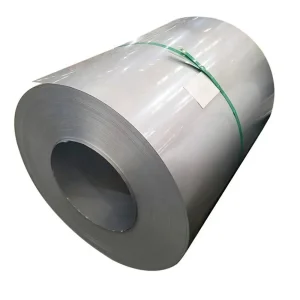
High-Quality China Suppliers Factory Cold Rolled Stainless Steel Coil 201 304 316 321 430 904L 2205 310S 309S Manufacturers, Supplier
View Product Specs
High-Quality Electrogalvanized Steel: Top Quality from China Suppliers & Factory with SPCC/SPCD Grades and Zinc Coating Options Supplier, Suppliers
View Product Specs
High-Quality Non-Oriented Silicon Steel Coil CRNGO M310 M350 M470 M600 M800 - China Suppliers & Factory Manufacturers, Factories
View Product Specs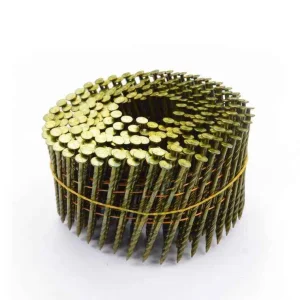
High-Quality Precision 15-Degree Coil Nails with Copper Plated Wire - China Suppliers & Factory for Wood and Furniture Suppliers, Factory
View Product Specs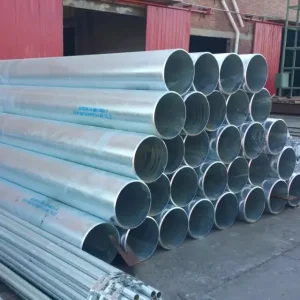
High-Quality High Strength A53 A106GR.B Spiral Steel Pipe from China Suppliers | Quality Factory Manufacturing Manufacturer, Factory
View Product Specs
High-Quality Zn Al Mg coated steel sheet 275g zinc Aluminum magnesium steel sheet plate ZM AZM Alloy Coating for solar mounting structure Supplier, Factory
View Product Specs