
Featured Steel Products & Coated Solutions
Explore our core export-grade steel inventory engineered for heavy industry, automotive stamping, precision agricultural structures, and high-durability construction applications.

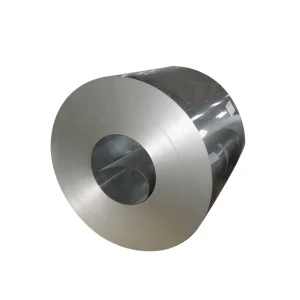
Metallurgical Foundations of Drawing Quality Steel Coils
An engineering whitepaper on plastic anisotropy, dislocation dynamics, interstitial-free (IF) alloy design, and micro-cleanliness in high-strain metal forming.
Plastic Strain Ratio ($r$-value) & Work Hardening ($n$-value)
The drawability of cold-rolled steel coils is fundamentally governed by two mechanical parameters: the Plastic Strain Ratio ($r$-value) and the Strain Hardening Exponent ($n$-value). The $r$-value measures the resistance of the sheet steel to thinning during deep drawing operations. Higher $r$-values (typically > 1.6 for DDQ and > 1.9 for EDDQ) indicate that the metal flows in the plane of the sheet rather than reducing in wall thickness.
The $n$-value dictates uniform elongation during stretching. A high $n$-value allows localized strain to distribute evenly across the workpiece, preventing necking in complex geometries such as automotive fenders, appliance panels, and deep compressor shells.
Interstitial-Free (IF) & Titanium/Niobium Stabilization
Modern Extra Deep Drawing Quality (EDDQ and EDDQ+) steel coils utilize Ultra-Low Carbon (ULC) chemistries with carbon contents kept strictly below 0.003% (30 ppm). Through RH vacuum degassing, dissolved carbon and nitrogen are extracted down to trace levels.
Micro-alloying additions of Titanium (Ti) and Niobium (Nb) lock remaining interstitial C and N into ultra-stable Ti(C,N) and NbC precipitates. This eliminates Yield Point Elongation (YPE), completely preventing the formation of unsightly Lüders lines (stretcher strain marks) on uniaxially drawn or stamped surfaces without requiring skin-pass aging windows.
Global Industry Landscape & Supply Chain Dynamics
Macroeconomic trends, localized OEM manufacturing shifts, and decarbonization mandates driving demand for premium deep-drawing cold rolled and metallic-coated steel coils.
Automotive Lightweighting & Complex BIW Stamping
Global Tier-1 automotive stampers are under continuous pressure to integrate single-piece complex Body-in-White (BIW) pressings. Drawing Quality (SECD, DX54D, EDDQ) coils allow deep structural draws—such as floor pans, door inner panels, and shock tower reinforcements—reducing the need for multi-part welded assemblies and achieving up to 15% structural weight reduction.
Appliance & HVAC Compressor Manufacturing
The global home appliance sector requires pristine visual finishes paired with severe wall drawability. Washing machine inner/outer drums, refrigerator door skins, and hermetic HVAC compressor shells demand deep drawing steel with zero surface flaws, tight gauge tolerance (±0.02mm), and exceptional lubricity retention during multi-stage die pressings.
CBAM Compliance & Green Steel Cold Rolling
With the European Union's Carbon Border Adjustment Mechanism (CBAM) and international Scope 3 emissions reporting, tier-1 suppliers demand cold-rolled and electro-galvanized coils produced via energy-efficient continuous annealing lines (CAL) powered by low-carbon EAF/BOF routes with full Environmental Product Declarations (EPD).
International Specification & Grade Cross-Reference Matrix
Comprehensive engineering comparison table aligning ASTM, EN, JIS, and GB/T standards for Drawing Quality (DQ), Deep Drawing Quality (DDQ), and Extra Deep Drawing Quality (EDDQ) steel coils.
| Quality Grade | ASTM Standard | EN Standard (Cold Rolled / HDG) | JIS Standard | Yield Strength (MPa) | Tensile Strength (MPa) | Min Elongation (%) | $r_{bar}$ Value |
|---|---|---|---|---|---|---|---|
| Commercial Quality (CQ) | ASTM A1008 CS Type A/B | EN 10130 DC01 / DX51D | JIS G3141 SPCC | 140 - 280 | 270 - 410 | ≥ 28 | -- |
| Drawing Quality (DQ) | ASTM A1008 DS Type A/B | EN 10130 DC03 / DX52D | JIS G3141 SPCD | 140 - 240 | 270 - 370 | ≥ 34 | ≥ 1.3 |
| Deep Drawing Quality (DDQ) | ASTM A1008 DDS | EN 10130 DC04 / DX53D | JIS G3141 SPCE | 130 - 210 | 270 - 350 | ≥ 38 | ≥ 1.6 |
| Extra Deep Drawing (EDDQ) | ASTM A1008 EDDS | EN 10130 DC05 / DX54D | JIS G3141 SPCF | 120 - 180 | 260 - 330 | ≥ 42 | ≥ 1.9 |
| Super EDDQ (S-EDDQ / IF) | ASTM A1008 EDDS Type2 | EN 10130 DC06 / DC07 / DX56D | JIS G3141 SPCG | 100 - 160 | 250 - 310 | ≥ 45 | ≥ 2.1 |
Manufacturing Excellence & Quality Assurance Protocols
From molten steel ladle metallurgy to continuous tension levelling, our integrated production chain guarantees dimensional uniformity and microscopic micro-cleanliness.
BOF / RH Vacuum Degassing
Precise desulfurization and secondary RH vacuum degassing remove gaseous impurities ($H_2, N_2, O_2$), ensuring inclusions are controlled to Fine Series ≤ 1.0 according to ASTM E45 standards.
Tandem Cold Rolling (TCRM)
5-Stand 6-High Tandem Cold Rolling Mills equipped with automatic gauge control (AGC) and shape meters maintain strip crown and thickness tolerances within a tight ±0.015mm envelope.
Continuous Annealing (CAL)
Precisely controlled heating, soaking (>800°C), and slow cooling cycles promote complete recrystallization and optimal {111} crystallographic texture development, yielding maximum $r$-values.
Skin-Pass & AOI Inspection
Controlled temper rolling (0.5% - 1.2% elongation) imparts the target surface roughness ($Ra$ 0.8 - 1.2 µm) for lubricant retention, followed by Automated Optical Inspection (AOI) for 100% surface defect detection.
Localized Application Scenarios & Engineering Case Studies
Real-world performance validation of our Drawing Quality steel coils across demanding global manufacturing applications.
Case Study 1: Automotive BIW Stamping
Partner: Tier-1 European Automotive Metal Stamper
Challenge: 18% split rate on complex wheel house inner panels using standard DC04 cold rolled steel coils due to localized strain concentration.
Solution: Upgraded to SMSTEEL Interstitial-Free Titanium-stabilized DC06 / EDDS coil with guaranteed $r_{bar} \ge 2.1$ and controlled $n$-value of 0.25.
Result: Scrap rate dropped from 18% to 0.02%, press line speed increased by 12 strokes per minute, saving €420,000 annually in material loss.
Case Study 2: Hermetic Compressor Shells
Partner: Global HVAC Compressor OEM in Southeast Asia
Challenge: Oil leaks and wall thinning during deep cup drawing of 3.0mm thick compressor housings.
Solution: Supplied deep-drawing quality hot-rolled acid pickled & oiled (SPO) and cold-rolled S-EDDQ coil with isotropic grain structures (ASTM Grain Size 9).
Result: Zero wall bursting under 4.5 MPa hydrostatic proof testing; tool wear reduced by 30% due to optimized micro-lubricant surface texture.
Case Study 3: Commercial Food Buntrays
Partner: Industrial Bakery Equipment Fabricator (North America)
Challenge: Flaking coating and cracking during severe flange folding of hamburger buntrays under high heat cycles.
Solution: Customized DX53D + AS120 Aluminized-Silicon coated steel coil with high heat resistance and extra deep drawing ductility.
Result: Extended tray operational lifespan from 18 months to 48 months, fully compliant with FDA non-stick bake testing.
Localized Support, Compliance & Seaworthy Protection
Protecting your material integrity from factory floor to global destination with rigorous packaging, international certification, and technical field support.
Global Compliance & Certification Framework
All SMSTEEL Drawing Quality Coils are manufactured under strict management systems accredited to ISO 9001, ISO 14001, and IATF 16949 (Automotive Quality Management System). Full Mill Test Certificates (MTC) conforming to EN 10204 3.1 or 3.2 are issued with every shipment, detailing ladle chemical analysis, mechanical tension test results, $r$ & $n$ values, and coating weight verifications.
- Full REACH & RoHS 2.0 Heavy Metal Free Compliance
- CE Marking for Structural Steel Coils (EN 10025 / EN 10346)
- Third-Party Inspection Support (SGS, BV, TUV, Intertek)
Export-Grade Heavy Duty Packaging Protection
Transporting cold rolled and electro-galvanized coils across maritime climate zones requires specialized preservation against humidity condensation, white rust, and edge damage:
- VCI Anti-Rust Film & Paper: Volatile Corrosion Inhibitor wrapping creates an active protective vapor zone inside the package.
- Galvanized Outer & Inner Ring Protectors: Heavy-gauge metal corner guards prevent handling strap indentations on coil edges.
- Radial & Circumferential Steel Strapping: High-tensile strapping on wooden skids tailored for eye-to-sky or eye-to-wall vessel loading.
Technology Roadmap: Next-Generation Deep Drawing Steels (2025–2035)
Pioneering the future of ultra-formable, eco-friendly, and intelligent flat-rolled steel solutions.
1. Zero-Carbon Hydrogen DRI Route
Transitioning from traditional blast furnace routes to 100% Green Hydrogen Direct Reduced Iron (DRI) coupled with Electric Arc Furnaces, lowering embedded carbon intensity to <0.4 t $CO_2$/ton of finished EDDQ coil by 2030.
2. Nano-Grain IF Steels
Utilizing severe plastic deformation annealing technology to refine ferrite grain size below 3 microns, yielding higher yield strength (260+ MPa) while preserving ultra-high drawability ($r_{bar} > 2.2$).
3. AI-Driven Inline Formability Control
Integrating continuous laser ultrasonic $r$-value measuring systems directly into the continuous annealing line, enabling real-time feedback loops for strip tension and furnace temperature adjustments.
Complete Coated & Structural Steel Catalog
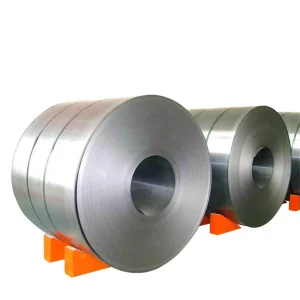
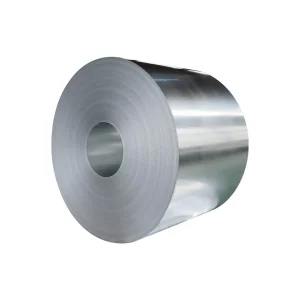
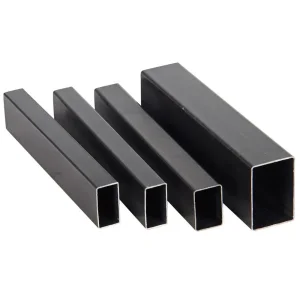
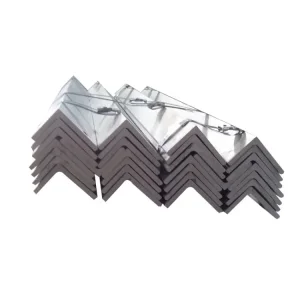
Discover additional high-demand steel grades, cold rolled extra deep drawing sheets, aluminized silicon coils, and structural profiles from our factory lines.


Technical FAQ: Drawing Quality Steel Coil Procurement
Direct answers from our metallurgical engineering team regarding parameters, testing, shelf life, and ordering specs.