
Featured Structural & Flat Rolled Mill Stock (Part I)


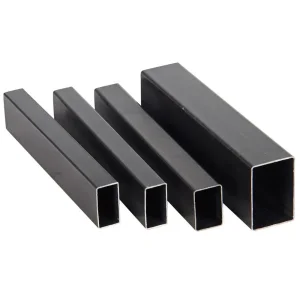

Metallurgical Architecture of Extra Deep Drawing Quality (EDDQ) Steels
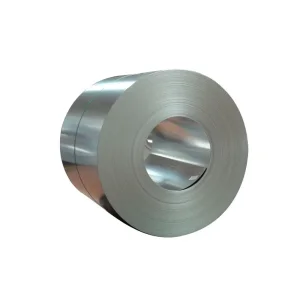
Cold Rolled Extra Deep Drawing (EDD) steel coils represent the pinnacle of flat-rolled carbon steel engineering. Designed to undergo extreme plastic deformation without necking, micro-cracking, or wall-thinning failures, these steels are critical for complex multi-stage hydraulic press operations.
Mechanical Property Comparison Matrix (EN 10130 / DIN 1623 / JIS G3141)
| Steel Grade Standard | Yield Strength $R_e$ (MPa) | Tensile Strength $R_m$ (MPa) | Elongation $A_{80}$ Min (%) | Plastic Strain Ratio $r_{80}$ Min | Strain Hardening $n_{80}$ Min | Formability Classification |
|---|---|---|---|---|---|---|
| DC01 / SPCC / St12 | 140 – 280 | 270 – 410 | ≥ 28 | — | — | Commercial Quality (CQ) |
| DC03 / SPCD / St13 | 140 – 240 | 270 – 370 | ≥ 34 | ≥ 1.3 | ≥ 0.16 | Drawing Quality (DQ) |
| DC04 / SPCE / St14 | 140 – 210 | 270 – 350 | ≥ 38 | ≥ 1.6 | ≥ 0.18 | Deep Drawing Quality (DDQ) |
| DC05 / SPCF / St15 | 140 – 180 | 270 – 330 | ≥ 40 | ≥ 1.9 | ≥ 0.20 | Extra Deep Drawing (EDDQ) |
| DC06 / SPCG / IF Steel | 120 – 170 | 270 – 330 | ≥ 41 | ≥ 2.1 | ≥ 0.22 | Super Extra Deep Drawing (SEDDQ) |
| DC07 / UDDQ | 100 – 150 | 250 – 310 | ≥ 44 | ≥ 2.5 | ≥ 0.23 | Ultra Deep Drawing (UDDQ) |
By adding precise quantities of Ti and Nb during vacuum degassing, carbon and nitrogen atoms are bound into stable carbides and nitrides. This completely eliminates Yield Point Elongation (YP), preventing stretcher strain marks (Lüders lines) on finished stamped surfaces.
The plastic strain ratio ($r$-value) measures normal anisotropy—the material's resistance to thinning during drawing. Higher $r$-values ensure that metal flows smoothly from the flange area into the die cavity without splitting across critical radii.
Unlike standard cold-rolled coils that suffer from strain aging over long ocean transit or ambient storage, IF extra deep drawing coils maintain absolute mechanical ductility for over 6 to 12 months without hardening or embrittlement.
Global Industrial Demand & Commercial Market Dynamics
The international demand for Cold Rolled Extra Deep Drawing Steel Coils is expanding rapidly across tier-1 automotive manufacturing, high-efficiency HVAC compressor production, and precision consumer appliance sectors.
With the rapid growth of Electric Vehicles (EVs), lightweight structural design requires high formability. EDDQ and IF steels enable single-piece stamping of complex battery housings and deep-drawn inner door structures, eliminating multiple weld joints.
Refrigeration compressors and HVAC pressure vessels require deep drawn, airtight cylindrical steel housings. Using DC05/DC06 grades prevents structural micro-porosity under extreme hydraulic expansion.
Asia-Pacific dominates manufacturing output, while European and North American enterprises increasingly rely on international sourcing to balance raw material procurement budgets against high domestic mill premiums.
China Mill Ecosystem & Manufacturing Efficiency Advantages
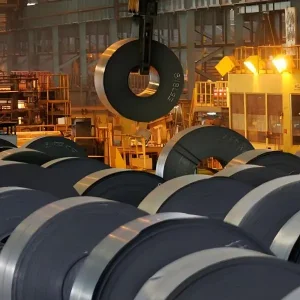
China’s modern cold-rolling mills combine state-of-the-art 5-stand continuous tandem cold rolling technology, automated hydrogen bell annealing, and integrated port logistics to deliver unmatched cost efficiency and quality consistency.
100% pure hydrogen atmosphere annealing furnaces ensure uniform heat transfer throughout massive 30-ton coils, yielding identical mechanical properties from the outer lap to the inner core.
Real-time inline CCD optical surface defect detection systems check 100% of the coil surface at speeds up to 1,500 m/min, tagging scratches, slivers, or roll marks automatically.
Direct integration with upstream iron ore deep-water ports and captive power generation facilities yields a total cost-per-ton advantage of 15% to 25% over overseas competitors.
Located in prime steel manufacturing hubs (such as Tianjin and Hebei), finished coils reach major export shipping terminals within 24 hours of final slitting and packing.
Localized Technical Application Scenarios
From deep-drawn automotive body components to high-precision domestic oil filter canisters, exploring how specific mechanical grades solve real-world stamping challenges.
Stamping Challenge: Door inner frames feature complex draw angles and deep pockets. Standard DDQ coils split near corner radii.
Solution Impact: Utilizing DC06 coil with an $r$-value ≥ 2.1 eliminated split scrap rates from 4.2% down to 0.05%, drastically improving press shop productivity.
Stamping Challenge: Multi-stage ironed deep drawing (DDI) requires smooth wall thickness reduction without vertical tearing.
Solution Impact: Tailored surface roughness ($Ra = 0.6 - 1.2 \mu m$) provided optimal lubricant retention during high-speed drawing passes.
Stamping Challenge: Circular domed caps prone to "earing" defects caused by anisotropic planar yield variation ($ \Delta r $).
Solution Impact: Controlled rolling schedules achieved near-zero planar anisotropy ($ \Delta r \approx 0 $), cutting edge trimming waste by 12%.
Emerging Trends & Next-Gen Stamping Metallurgy
As environmental regulations tighten and press automation reaches unprecedented speeds, cold-rolled steel coil manufacturing is evolving toward high-strength deep drawing grades and ultra-clean green steel processing.
Combining extra deep drawing capability with solid-solution strengthening elements (Phosphorus, Manganese). This allows auto engineers to down-gauge panel thickness while maintaining crash energy absorption and dent resistance.
Transitioning from traditional Blast Furnace (BF-BOF) routes to Direct Reduced Iron (DRI) melted in Electric Arc Furnaces powered by renewable energy, reducing embedded carbon footprints by up to 70% for international CBAM compliance.
Application of hot-melt dry lubricants and specialized anti-corrosion wash oils directly at the mill slitting line, eliminating the need for press-side liquid lubricant spraying and simplifying post-stamping wash cycles.
Global Enterprise Sourcing & Quality Inspection Protocol
To ensure total reliability during international ocean shipping and high-speed automated pressing, procurement managers should enforce rigid mill specification standards.
Critical Coil Ordering Specifications Checklist
- FB (Standard Surface): Minor pore, small indentation, minor scratch permitted.
- FC (Higher Surface): Front side clear of defects that affect uniform paint finish.
- FD (Best Surface): Premium automotive exposed panel grade; flawless front face.
Specify Mill Edge (EM) or Cut/Slit Edge (EC). Standard thickness tolerances follow EN 10131 Restrictive Class (Special Tolerance ±0.03mm) to prevent die wear during progressive stamping.
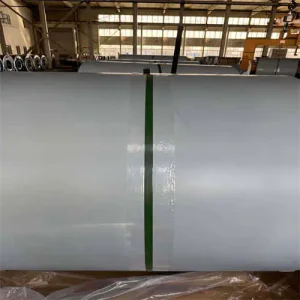
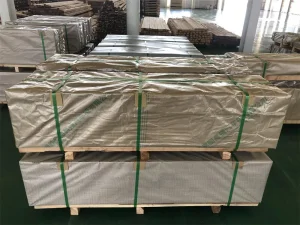
Coils must be wrapped in VCI (Volatile Corrosion Inhibitor) anti-rust paper, encapsulated in galvanised outer metal sleeve protectors, bound with at least 4 radial and 3 circumferential steel straps, and mounted on wooden skids.
Featured Coated, Silicon & Special Alloy Coils (Part II)


Frequently Asked Questions (Technical & Procurement FAQ)
Expert engineering responses regarding mechanical limits, grade equivalents, surface finishes, and quality assurance for Extra Deep Drawing cold rolled steel coils.
- DC06 Equivalent: JIS G3141 SPCG, DIN 1623 IF Steel, ASTM A1008 DDS / EDDS.
- DC01 Equivalent: JIS G3141 SPCC, DIN 1623 St12, ASTM A1008 CS Type A.