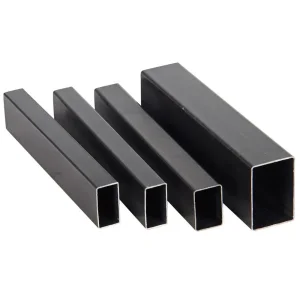
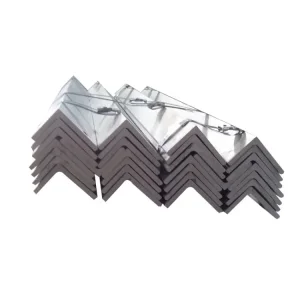
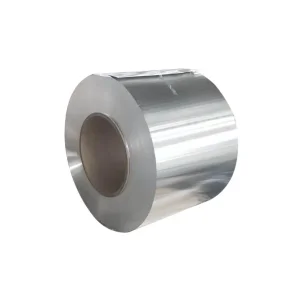
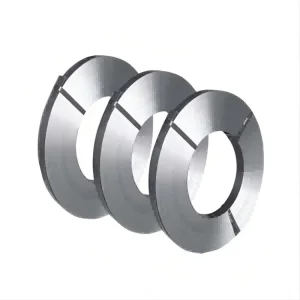
Explore our mill-certified product offerings engineered for global structural, high-pressure, energy, and electrical transformer applications. All items comply with ISO 9001 and international metallurgical standards.

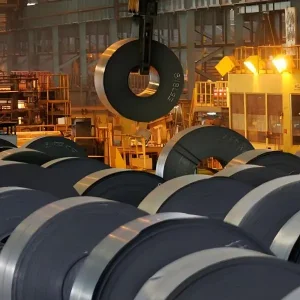
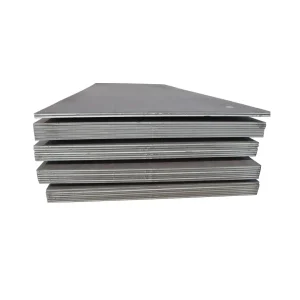
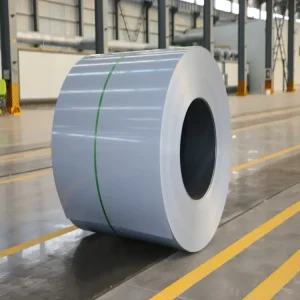
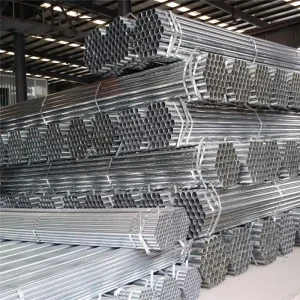
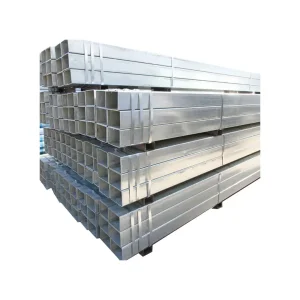
Carbon steel seamless pipes (SMLS) represent the pinnacle of structural integrity in fluid transmission, mechanical engineering, and high-pressure thermal installations. Unlike electric resistance welded (ERW) or submerged arc welded (SAW) pipes, seamless pipes possess no longitudinal or helical weld seam. This absence of a heat-affected zone (HAZ) eliminates microstructural vulnerabilities, conferring uniform circumferential strength capable of enduring extreme internal pressures, severe torsional forces, and harsh thermal cycling.
The global seamless steel pipe market is experiencing structural expansion, driven by multi-billion-dollar investments in deepwater energy exploration, cross-border hydrocarbon infrastructure, hydrogen-blend transportation, power generation plant modernization, and heavy industrial plant construction. Valued at over USD 30 Billion globally, the demand for high-strength seamless carbon tubing is shifting rapidly toward specialized grades capable of surviving sour service environments ($H_2S$ corrosion), ultra-low temperature arctic climates, and supercritical steam cycles exceeding 560°C.
While welded pipes (ERW/LSAW) offer cost advantages for low-pressure structural and water conveyance applications, seamless carbon steel pipe remains non-negotiable for critical services under ASME B31.3 (Process Piping) and ASME B31.1 (Power Piping). The seamless manufacturing process eliminates the risk of selective seam corrosion, stress corrosion cracking (SCC), and weld-line fatigue under cyclic loading.
High-quality seamless carbon steel pipes are manufactured using two primary thermal-mechanical routes: Hot Rolling (Hot Piercing) and Cold Drawing (Cold Rolling). The hot-rolling method utilizes solid round steel billets (rotary forged or continuously cast) heated in a rotary hearth furnace to approximately 1200°C. The heated billet is then pierced via a Mannesmann cross-roll piercing mill, followed by wall reduction in a Premium Quality Finishing (PQF) or Mandrel mill, and final sizing to produce a homogeneous hollow shell.
Ideal for heavy wall thicknesses (Outer Diameters from 2" to 36"). Hot rolling refines the austenite grain size during high-temperature deformation, resulting in superior toughness and isotropic mechanical properties across longitudinal and transverse axes.
Used when tight dimensional tolerances (±0.05 mm on OD/ID), ultra-smooth surface finishes (Ra < 0.8 µm), and thin wall ratios are specified. Cold drawing works the metal below recrystallization temperature, followed by full annealing or stress-relieving heat treatment.
To assist international procurement engineers and project managers in specification compliance, the table below maps global standard equivalents, chemical compositions, and mechanical property targets across major standards organizations:
| Specification / Standard | Common Steel Grades | Yield Strength (MPa) | Tensile Strength (MPa) | Primary Industrial Purpose |
|---|---|---|---|---|
| ASTM A106 / A53 | Grade A, Grade B, Grade C | ≥ 240 (Gr. B) | ≥ 415 (Gr. B) | High-temperature fluid service, refineries, process plants |
| API 5L (PSL1 / PSL2) | Grade B, X42, X52, X60, X65, X70 | 245 – 485 | 415 – 635 | Onshore/offshore cross-country gas and oil pipelines |
| EN 10216-1 / EN 10210 | P235TR1, P265GH, S355J2H | 235 – 355 | 360 – 630 | European pressure vessels, structural columns & trusses |
| DIN 1629 / DIN 2448 | St 37.0, St 44.0, St 52.0 | 235 – 355 | 350 – 650 | High-performance engineering, plant construction, hydraulic lines |
| ASTM A333 | Grade 6, Grade 3 | ≥ 240 | ≥ 415 | Low-temperature refrigeration, cryogenic gas compression (< -45°C) |
| GB/T 8162 / GB/T 8163 | 20#, 45#, Q345B (S355 equivalent) | 245 – 345 | 410 – 600 | General mechanical structures, fluid conveyance, heavy equipment |
China’s transformation into the world’s leading hub for seamless steel pipe production is rooted in unprecedented supply chain integration, raw material availability, advanced automation, and continuous technological upgrading. Regions such as Tianjin, Shandong, and Jiangsu harbor massive industrial steel clusters where raw iron ore reduction, continuous billet casting, pipe rolling, heat treatment, testing, and seaport export facilities exist within a tight geographic radius.
Leading Chinese mills source ultra-clean round billets directly from state-of-the-art Vacuum Degassing (VD) and Ladle Refining Furnace (LF) steelmaking lines. This guarantees minimal non-metallic inclusions, precise chemical homogeneity, and low carbon equivalent values (CEV) for effortless field welding.
Modern Chinese factories utilize fully automated 100% Non-Destructive Testing (NDT) systems. Ultrasonic Testing (UT) inspects longitudinal and transverse internal flaws, Flux Leakage (MFL) checks wall thickness variations, and Hydrostatic testing units verify pressure containment up to 1000 bar.
Positioned close to major deep-water ports (such as Tianjin Xingang, Qingdao, and Shanghai), Chinese suppliers eliminate costly inland freight fees. Automated bundling, anti-corrosion varnish application, beveling, plastic end cap installation, and container/breakbulk shipping are executed seamlessly.
Carbon steel seamless pipes are specified across diverse heavy-duty industrial sectors. Their mechanical reliability makes them indispensable in conditions where material failure would cause catastrophic operational downtime, environmental hazards, or structural collapse.
Used extensively in upstream OCTG (Oil Country Tubular Goods) drill pipe, casing, and tubing, as well as midstream cross-country pipeline networks under API 5L (X52 through X70). High resistance to hydrogen-induced cracking (HIC) and sulfide stress cracking (SSC) ensures safe transmission of sour oil and gas.
Supercritical and ultra-supercritical thermal power plants rely on ASTM A106 Grade C and ASTM A210 seamless carbon boiler tubes for superheaters, reheaters, economizers, and main steam lines subject to continuous pressure up to 25 MPa and operating temperatures exceeding 500°C.
Precision cold-drawn seamless tubes (ST52, 20#, 45#) serve as honing-ready barrel stock for hydraulic cylinders, heavy crane telescopic booms, automotive driveshafts, structural axles, and precision machined bushings requiring high dimensional accuracy.
Offshore wind jacket foundations, deepsea piling structures, stadium roof trusses, and high-rise core columns utilize heavy-wall structural seamless pipe under EN 10210 (S355J2H). High yield strength and impact resistance at sub-zero temperatures (-20°C to -40°C) guarantee structural stability.
International B2B buyers, EPC contractors, and stocking distributors face significant commercial risks when importing steel products—ranging from dimensional non-conformance to improper seaworthy packaging resulting in white rust or transit damage. Professional China seamless pipe suppliers mitigate these risks through comprehensive Quality Assurance (QA) and Quality Control (QC) frameworks.
Every shipment must be accompanied by an authentic Mill Test Certificate in strict accordance with EN 10204 3.1 or 3.2. MTCs detail melt heat numbers, chemical composition (C, Mn, Si, P, S, Cr, Ni, Cu, V), mechanical test results (Yield, Tensile, Elongation), Hardness values, and Charpy V-Notch impact energies.
Leading factories welcome independent third-party agencies such as SGS, Bureau Veritas (BV), TÜV, DNV, or Lloyd's Register. TPI inspectors perform dimensional verification (Wall thickness tolerance under ASTM A530/A999), Positive Material Identification (PMI spectrometry), hydrostatic verification, and visual surface inspection.
To withstand prolonged ocean transit across humid maritime environments, seamless pipes receive anti-rust black varnish, clear oil coating, or 3LPE/FBE anti-corrosion layers. Pipe ends are bevel-machined to 30° (+5°/-0°) for field welding, protected with heavy-duty plastic end caps, and tightly bound with steel straps.
The carbon steel seamless pipe industry is undergoing a technological revolution driven by global decarbonization mandates, digital manufacturing, and next-generation energy transitions:
Steelmaking processes are shifting from traditional Blast Furnace-Basic Oxygen Furnace (BF-BOF) routes toward Electric Arc Furnaces (EAF) powered by renewable energy and Direct Reduced Iron (DRI) produced using green hydrogen. This lowers the embodied carbon footprint ($CO_2$/ton of steel) to meet EU CBAM (Carbon Border Adjustment Mechanism) standards.
As hydrogen energy infrastructure expands, research focuses on modifying seamless carbon steel microstructures to prevent Hydrogen Embrittlement (HE). Micro-alloyed low-carbon steel grades with specialized inclusions control are being deployed for pure hydrogen and natural gas-hydrogen blend transmission pipelines under ASME B31.12.
Implementation of Industry 4.0 IoT sensors across hot-rolling mills enables real-time wall thickness monitoring using gamma-ray and laser gauges. Individual pipes are laser-etched with unique QR codes, providing end-to-end digital traceability from raw molten heat batch to job-site installation.
Discover our extended line of steel plates, galvannealed coils, silicon steel, rectangular tubing, and industrial flange fittings available for consolidated container shipment.