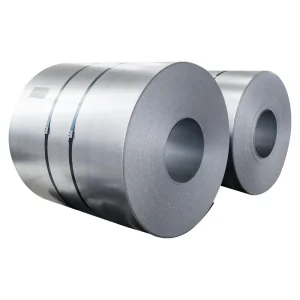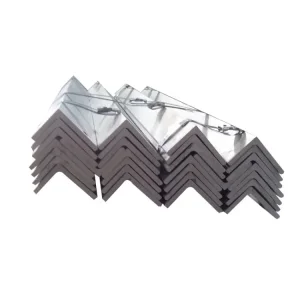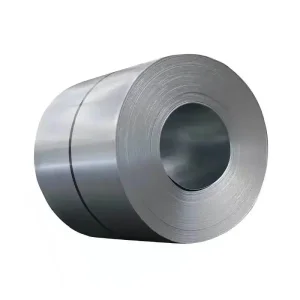
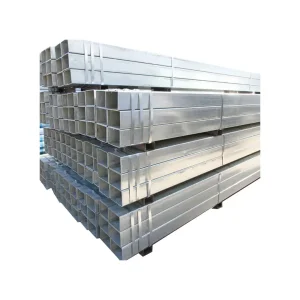
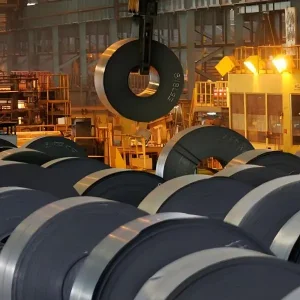
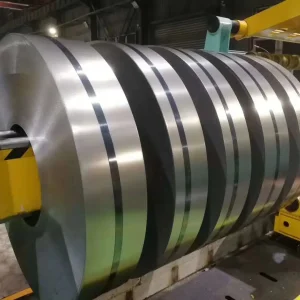
The Osaka metropolitan area, serving as the economic engine of Western Japan’s Kansai region, represents one of the most sophisticated industrial clusters for high-specification alloy processing, heavy machinery fabrication, shipbuilding, chemical processing, and semiconductor capital equipment manufacturing. Central to this industrial vitality is the steady supply of premium grade stainless steel plate materials. As global engineering parameters demand higher pitting resistance, mechanical durability under thermal stress, and stringent dimensional tolerances, sourcing from qualified stainless plate manufacturers & suppliers in the Osaka market requires a deep understanding of localized industrial requirements alongside international material standards.
Historically known as the "City of Merchants" and the historic core of Japan's metalworking innovation, Osaka hosts a vast network of service centers, stockists, laser-cutting fabricators, and specialized mill agents. From the heavy maritime infrastructure bordering Osaka Port and Yumeshima to the chemical complexes within the Sakai-Senboku coastal industrial zone, stainless steel plates are utilized under severe corrosive and load-bearing conditions. Procurement engineers and asset owners must evaluate suppliers not merely on raw unit costs, but on technical compliance (JIS G4304/G4305, ASTM A240, EN 10088-2), surface condition consistency, heat treatment certification, and just-in-time (JIT) logistical reliability.
On a macro scale, the global stainless steel plate market is undergoing a structural transition driven by decarbonization mandates, fluctuation in nickel and molybdenum surcharges, and rising demand for high-strength duplex alloys (such as 2205 / UNS S32205 and 2507 / UNS S32750). While primary production output remains concentrated in Asia, regional distribution hubs like Osaka play a critical value-addition role. Raw mill plates imported or locally rolled are subjected to precision leveling, surface grinding, waterjet/plasma shearing, and custom ultrasonic flaw detection before integration into industrial machinery.
Global Macro Trends Impacting Supply
Global market volatility in raw materials (specifically Ferro-Nickel, Ferro-Chrome, and Molybdenum) directly influences monthly mill alloy surcharges. Furthermore, stricter European and Asian green steel standards require mills to document Carbon Footprint Declarations (CFD) and utilize electric arc furnace (EAF) production with high scrap metal ratios. International EPC contractors executing projects in Japan or exporting from Kansai ports require full traceabilty down to the heat number and raw melt shop origin.
Osaka Regional Stockholding & Processing
The Osaka ecosystem relies on localized coil-to-plate cut-to-length lines and thick-plate stockyards strategically located near Osaka Port and the Hanshin Expressway network. Local stocking distributors maintain comprehensive inventories of standard sheet sizes (4'x8', 5'x10', 2000mm x 6000mm) in thicknesses ranging from 3.0mm up to 100mm in SUS304, SUS316L, SUS310S, and specialized heat-resistant grades.
Engineering projects based in Osaka frequently require cross-referencing Japanese Industrial Standards (JIS) with American (ASTM/ASME) and European (EN) specifications. Below is an authoritative technical mapping matrix provided by engineering metallurgists for plate selection across various manufacturing applications in the Kansai zone.
| JIS Grade Standard | Equivalent ASTM / UNS | EN Standard | PREN Value | Primary Industrial Application in Osaka |
|---|---|---|---|---|
| SUS304 / SUS304L | ASTM A240 / UNS S30403 | 1.4301 / 1.4307 | 18.0 - 20.0 | General food processing, architectural cladding, light chemical tanks |
| SUS316 / SUS316L | ASTM A240 / UNS S31603 | 1.4401 / 1.4404 | 23.0 - 25.0 | Osaka Bay maritime engineering, chemical process piping, coastal structures |
| SUS310S | ASTM A240 / UNS S31008 | 1.4845 | ~ 25.0 | High-temperature industrial furnaces, heat exchangers, thermal incinerators |
| SUS329J4L (Duplex) | ASTM A240 2205 / S32205 | 1.4462 | 34.0 - 36.0 | Desalination components, high-pressure marine pumps, offshore energy platforms |
| SUS430 (Ferritic) | ASTM A240 / UNS S43000 | 1.4016 | ~ 16.0 | Commercial kitchen equipment, indoor paneling, automotive trim fabrications |
| SUS904L (Super Austenitic) | ASTM B625 / UNS N08904 | 1.4539 | > 43.0 | Flue gas desulfurization (FGD), sulfuric acid concentration units in Sakai |
Note on PREN Calculation: Pitting Resistance Equivalent Number (PREN) is calculated using the established formula: PREN = %Cr + 3.3(%Mo + 0.5%W) + 16(%N). For Osaka coastal installations where atmospheric chloride exposure is elevated, materials with a minimum PREN of 23.0 are strictly specified by municipal infrastructure authorities.
The demand for stainless steel plate in Osaka is not uniform; it is segmented into specialized geographical and technological zones across the Kansai area. Suppliers operating in this region must tailor their inventory specifications, cutting capabilities, and quality assurance protocols to these precise end-use cases.
1. Osaka Bay Marine & Offshore Infrastructure
Infrastructure development along Osaka Bay, including sea wall defenses, dockside container crane structures, and artificial island expansions (such as Yumeshima and Maishima), requires heavy-gauge stainless steel plates. Marine-grade SUS316L and Duplex SUS329J4L plates are specified due to their immunity to marine splash-zone pitting and stress corrosion cracking (SCC).
2. Sakai-Senboku Chemical & Refining Hub
The vast petrochemical refinery complexes in Sakai rely heavily on heavy stainless steel pressure vessel plates (ASME SA240 / JIS G4304). Plates must undergo solution annealing, positive material identification (PMI), and 100% ultrasonic testing (UT) according to JIS G0801 to prevent catastrophic failures under high temperature and aggressive acid conditions.
3. Kansai Semiconductor Capital Equipment
The broader Osaka-Kyoto-Hyogo tech corridor is home to premier manufacturers of vacuum chambers and semiconductor wet-processing equipment. Ultra-high vacuum (UHV) applications mandate cold-rolled stainless plates with 2B or BA finish, featuring extremely low surface roughness (Ra < 0.2 µm) and zero non-metallic inclusion defects.
4. Commercial Food Processing Machinery
Osaka’s status as a culinary and food manufacturing hub drives significant demand for sanitary-grade SUS304 and SUS316L stainless sheet and plate. Fabricators utilize automated polish lines (No. 4 satin and 8K mirror finishes) to meet strict Japanese Health & Hygiene Standards for mixing vats, conveyors, and automated packaging lines.
5. Environmental Protection & Waste-to-Energy
Kansai municipal waste treatment plants and industrial incinerators utilize heat-resistant stainless plates such as SUS310S and SUS309S. These plates retain structural integrity and scale resistance at operating temperatures exceeding 1000°C, offering long-term lifecycle savings for city utility projects.
6. Architectural & Structural Engineering
Modern commercial towers and transit stations in the Umeda and Namba districts feature custom structural stainless steel plate fabrications. Architectural specifications frequently demand bead-blasted, hair-line (HL), or PVD-coated decorative stainless plates for durable exterior curtain walls and structural columns.
The stainless steel plate manufacturing industry serving Osaka is undergoing rapid technological transformation. Driven by national net-zero targets for 2050 and the integration of advanced manufacturing technologies, the next decade will redefine material expectations across three core technology pillars:
Green Hydrogen Steelmaking
Transitioning from fossil-fuel-intensive blast furnaces to Green Hydrogen Direct Reduced Iron (DRI) combined with Electric Arc Furnaces (EAF). Major mills supplying the Osaka market are targeting a 50% reduction in Scope 1 and Scope 2 CO2 emissions per ton of stainless plate produced by 2030.
AI-Driven Precision Leveling
Next-generation roller levelers equipped with real-time laser scanning sensors dynamically adjust hydraulic pressure to neutralize internal stress vectors. This guarantees absolute plate flatness after thermal laser cutting, eliminating downstream production downtime for Kansai OEMs.
Advanced Explosion Clad Plates
To optimize material costs in heavy chemical vessels, suppliers are expanding production of bi-metal clad plates. A high-strength carbon steel substrate (e.g., Q355D or SS400) is explosively bonded with a thin layer of corrosion-resistant SUS316L or Nickel Alloy cladding, offering dual performance benefits.
For global sourcing directors and local project managers in Osaka, successful procurement depends on establishing an end-to-end quality assurance framework. Sourcing stainless steel plate is not merely a transaction; it involves structural integrity verification, international compliance certification, and tailored logistic planning.
Quality Assurance & Verification Protocol
- EN 10204 3.1 / 3.2 Mill Test Certificates: Independent third-party inspection (TUV, SGS, Lloyd's Register) verifying chemical heat analysis and mechanical tensile/yield performance.
- Ultrasonic Flaw Detection (UT): Compliance with JIS G0801 / ASTM A578 Level A/B standards to ensure zero internal voids or lamination defects in heavy plates (>12mm).
- Corrosion Resistance Testing: Intergranular corrosion tests (ASTM A262 Practice E) and pitting corrosion resistance verification for aggressive chemical service.
- Dimensional & Surface Inspection: Strict adherence to thickness tolerances under JIS G4304 Class A/B and surface roughness verification (Ra values).
Kansai Logistical Integration Solutions
- Vendor-Managed Inventory (VMI): Dedicated safety stock held in Osaka warehouse facilities to support continuous production schedules for contract fabricators.
- Seaworthy Export Packaging: Heavy-duty wooden skids, plastic wrapping, corner protectors, and desiccant packs to prevent transit corrosion during ocean transport.
- Custom Shearing & Beveling: Pre-processed weld preparations (V-bevel, J-bevel) applied via CNC plasma or beveling machine prior to site delivery.
- Traceability & Marking: Clear laser etching and stencil marking of heat numbers, plate dimensions, and grade specifications on every plate.
Below are expert answers to frequently asked technical and commercial questions compiled by metallurgical specialists and industrial buyers operating in Western Japan.