
Primary Industrial Cold Rolled & Coated Solutions
Engineered for high-precision stamping, automotive body panels, and structural roll-forming across Brazil's industrial hubs.
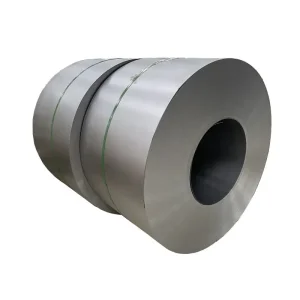
High-Quality Cold Rolled High Strength Steel Sheets with Extra Deep Drawing Quality (DC04/DC06 for Brazil Automotive)
Technical Specs & Direct Inquiry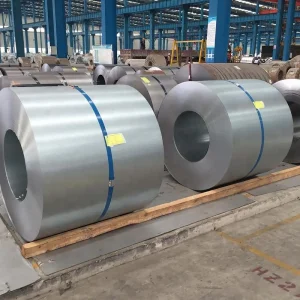
High-Quality Galvanized Steel Coils for Brazil Construction, Automotive & Appliance Manufacturing
Technical Specs & Direct Inquiry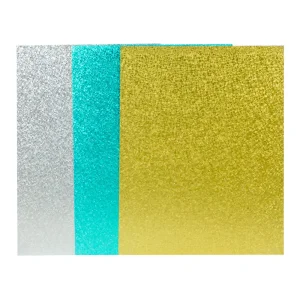
Galvalume Aluzinc Zinc-Aluminum Coated Steel Roofing Sheets for Durable Brazilian Agribusiness Panels
Technical Specs & Direct Inquiry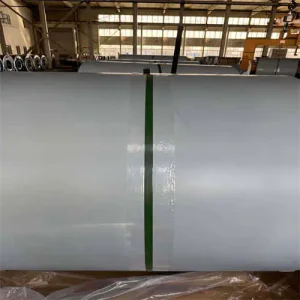
Wholesale Electro-Galvanized Steel Coils for Premium Door Gates, HVAC & Enclosures in Brazil
Technical Specs & Direct Inquiry1. Executive Industry Overview: Cold Rolled Steel Dynamics in Brazil
Navigating domestic manufacturing capabilities, supply deficits, and technical grade requirements in Latin America’s largest economy.
Brazil stands as the industrial powerhouse of South America, consuming millions of metric tons of flat-rolled steel annually to support its robust automotive assembly corridors, massive white goods manufacturing base, expanding renewable energy infrastructure, and agricultural silos. At the center of this industrial matrix is Cold Rolled Steel (CRS)—a critical engineering material required whenever tight dimensional tolerances, high surface finish quality, superior formability, and specific mechanical yield strength are non-negotiable.
Historically, the domestic supply of cold rolled steel coil and sheet in Brazil has been dominated by a concentrated group of integrated steelmakers, primarily Usiminas (Usinas Siderúrgicas de Minas Gerais), CSN (Companhia Siderúrgica Nacional), Gerdau, and ArcelorMittal Brasil. While these domestic producers operate modern blast furnaces and rolling mills in regions like Minas Gerais, Rio de Janeiro, and São Paulo, the Brazilian manufacturing sector continuously faces structural supply challenges:
- High Domestic Price Premiums ("Custo Brasil"): Domestic flat steel prices in Brazil frequently trade at a substantial premium over international benchmarks due to high energy tariffs, complex internal taxation (ICMS, PIS/COFINS), and logistics bottlenecks within the national road network.
- Lead Time Volatility & Allocation Constraints: Local Tier-1 and Tier-2 automotive suppliers, appliance OEMs in Manaus (Zona Franca de Manaus), and transformer manufacturers face extended delivery cycles (often 12–16 weeks) during periods of peak regional demand.
- Specialized Grade Gaps: Ultra-deep drawing grades (such as EDDQ/S280-S550 high-strength low-alloy steels) and ultra-thin precision gauge coils (<0.30mm) often suffer from limited domestic production campaign schedules.
Strategic Market Insight: To maintain profit margins and operational agility, Brazilian procurement directors across São Paulo (ABC Paulista), Caxias do Sul, Joinville, and Manaus are increasingly adopting a dual-sourcing model. By combining baseline domestic volume with highly flexible, smart-factory direct imports from premier Chinese manufacturers, Brazilian OEMs achieve supply chain resilience, guaranteed chemical consistency, and significant raw material cost optimization.
2. Metallurgy, Processing & Standard Equivalencies (NBR vs. Global Norms)
Understanding mechanical properties, annealing technologies, and normative mapping for Brazilian engineering compliance.
Cold rolled steel is produced by taking hot rolled pickled coil (HRC) and passing it through continuous cold reduction mills at room temperature. This mechanical working strain-hardens the steel, increasing its tensile strength while reducing thickness to micro-exact dimensions. To restore ductility and achieve desired grain structures, the steel undergoes either Batch Annealing (BA) or Continuous Annealing (CA), followed by a light temper pass (skin pass) to eliminate yield point elongation and achieve specific surface roughness profiles (Matte, Bright, or Extra Dull).
Technical Standards Cross-Reference Matrix
Engineers and purchasing agents in Brazil must map local ABNT NBR standards against international ASTM, EN, and JIS designations to ensure seamless interchangeability in stamping and roll-forming operations:
| Brazilian Norm (ABNT NBR) | European Standard (EN 10130 / 10268) | American Standard (ASTM) | Japanese Standard (JIS G3141) | Typical End-Use Application in Brazil |
|---|---|---|---|---|
| NBR 5915 EM (Estampagem Média) | DC01 | ASTM A1008 CS Type B | SPCC | General bending, light enclosures, distribution boxes, shelving. |
| NBR 5915 EP (Estampagem Profunda) | DC03 | ASTM A1008 DS Type B | SPCD | Deep drawing automotive brackets, home appliance side panels. |
| NBR 5915 EEP (Estampagem Extra Profunda) | DC04 | ASTM A1008 DDS | SPCE | Complex automotive stampings, oil pans, compressor housings. |
| NBR 5915 EG (Estampagem Profunda Especial) | DC05 / DC06 (IF Steel) | ASTM A1008 EDDS (Interstitial-Free) | SPC370 / SPC440 | Complex automotive body-in-white (BIW), intricate deep-draw components. |
| NBR 7008 (Structural Grades) | S215GD to S350GD | ASTM A1008 SS Grade 33 / 40 / 50 | SPFC 390 to 590 | High-strength structural beams, grain silo stiffeners, solar trackers. |
Micro-Alloying & Clean Steel Tech
Utilizing vacuum degassing (RH process) and ultra-low carbon Interstitial-Free (IF) steel formulations to eliminate strain aging and fluting defects during severe stamping operations in Brazilian press lines.
Surface Roughness Control (Ra)
Engineered roll texturing (EDT) provides controlled surface micro-topography (Ra 0.6µm to 1.6µm), ensuring optimal lubricant retention during deep drawing and flawless paint adhesion for electro-coating (E-coat).
Strict Tolerance Calibration
Advanced AGC (Automatic Gauge Control) laser thickness gauges enforce tight strip tolerance across the entire coil width and length, preventing press die wear and material jams in automated high-speed stamping.
3. Localized Application Scenarios Across Brazilian Industrial Clusters
How specialized cold rolled steel grades power major manufacturing regions from Southern automotive hubs to Northern free trade zones.
Automotive Hubs (São Paulo, Betim, Resende, Curitiba)
Supplying high-strength cold rolled coils and galvannealed (ZF) sheets to Tier-1 stampers. Crucial for inner body panels, structural chassis reinforcements, door skins, and fuel tank assemblies requiring strict weldability and anti-fatigue performance.
White Goods & Electronics (Joinville & Manaus ZFM)
Precision full-hard (FH) and soft annealed cold rolled coils custom-slit for refrigerator outer cabinets, washing machine drums, microwave shells, and air conditioner chassis, requiring zero-spangle, ultra-flat flatness (≤3mm/m).
Agribusiness & Storage (Mato Grosso, Paraná, Rio Grande do Sul)
High-tensile cold rolled substrate converted into specialized Galvalume (AZ150) and Zinc-Aluminum-Magnesium coated corrugated sheets for heavy-duty grain silos, poultry climate control systems, and tractor implement shields.
Information Gain - Electrical Steel Synergy: In addition to carbon cold rolled steel, Brazilian electric motor manufacturers (e.g., in Jaraguá do Sul) and distribution transformer builders heavily depend on specialized cold rolled non-grain oriented (CRNGO) and grain-oriented (CRGO) electrical silicon steel. Sourcing these specialized magnetic alloys under unified supply contracts significantly reduces freight overhead and simplifies customs clearance.
4. China Industry 4.0 Smart Manufacturing: Supply Resilience & Efficiency Edge
Unlocking mill-direct cost advantages, rapid turnaround, and robust quality management for international steel procurement.
As global supply chains shift toward digitalization and resilience, leading Chinese steel manufacturers have integrated Industry 4.0 smart manufacturing practices into every stage of cold rolling. Utilizing automated reversing cold reduction mills, continuous hydrogen annealing furnaces, and AI-driven automated surface inspection systems (ASIS), Chinese smart mills deliver unprecedented consistency and scale.
Core Strategic Advantages for Brazilian Steel Buyers:
1. Massive Scale & Lead Time Agility
With monthly outputs exceeding 100,000 metric tons, smart factories eliminate the campaign waiting periods common in smaller domestic mills, enabling production scheduling in as little as 10–14 days from contract signing.
2. Micro-Dimensional Customization
In-house precision slitting lines allow Brazilian importers to order custom strip widths (from 15mm up to 1500mm) and specific coil weights (3 to 15 metric tons) tailored directly to press feeder capacities, eliminating secondary service center costs in Santos or SP.
3. Complete Quality Traceability & E-E-A-T
Every coil is issued a full Mill Test Certificate (MTC) according to EN 10204 3.1, detailing exact heat analysis chemical compositions (C, Mn, P, S, Si, Al) and mechanical test results (Yield Strength, Tensile Strength, Elongation, r-value, n-value).
Comparative Matrix: Brazilian Domestic Sourcing vs. Direct Industry 4.0 Imports
| Decision Vector | Brazilian Domestic Mills (CSN / Usiminas) | China Direct Industry 4.0 Smart Supply | Strategic Benefit to Importer |
|---|---|---|---|
| Price / Cost per Ton | Higher due to internal tax structures & energy costs | Highly competitive mill-direct FOB/CFR pricing | 15% – 25% raw material cost reduction |
| Custom Width / Thickness Slitting | Requires independent coil service centers (Cut-to-length fees) | Mill-direct automated slitting & custom packaging included | Zero secondary processing waste or double handling |
| Order MOQ Flexibility | High MOQ per gauge campaign (often 50t+ per item) | Flexible order aggregation for trial & volume shipments | Lower working capital tied up in inventory |
| Export Seaworthy Packaging | Standard domestic wrap (vulnerable to maritime humidity) | Heavy-duty anti-rust VCI paper, galvanized outer ring & metal eyelets | Zero rust or transit damage upon arrival at Santos/Paranaguá |
5. Import Logistics, Tariffs & Customs Strategy for Brazilian Buyers
A step-by-step navigational guide for smooth maritime transport, Mercosur tariffs (NCM), and SISCOMEX clearance.
Importing flat steel into Brazil requires careful planning regarding customs compliance, tax structure optimization, and maritime logistics. The primary entry ports for cold rolled steel coils in Brazil include Port of Santos (SP), Port of Paranaguá (PR), Port of Itajaí / Navegantes (SC), and Port of Suape (PE).
Key Compliance & Import Steps:
- NCM Classification (Nomenclatura Comum do Mercosul): Cold rolled carbon steel coils typically fall under NCM code
7209.16.00,7209.17.00, or7209.18.00depending on thickness. Coated variants (GI/GL) fall under7210.49.10. Accurately verifying NCM codes with your Despachante Aduaneiro ensures correct TEC (Tarifa Externa Comum) duty application. - RADAR & SISCOMEX License: Importers must hold an active RADAR license (Rastreamento da Atuação dos Intermediários no Comércio Exterior) issued by the Receita Federal to register the DI (Declaração de Importação) in the SISCOMEX system.
- Corrosion Protection for Equatorial Maritime Transit: Ocean voyages across tropical sea routes expose cargo to high humidity and salt fog. All export coils must feature premium VCI (Vapor Corrosion Inhibitor) plastic wrap, moisture-absorbing desiccant bags, high-tensile steel strapping, and wooden skids compliant with ISPM 15 heat treatment standards.
- Tax Optimization (Ex-Tarifário / Drawback): Manufacturers importing cold rolled steel to assemble finished products for re-export can utilize the Brazilian Drawback Regime to obtain 100% exemption on II (Imposto de Importação) and IPI, significantly boosting global export competitiveness.
Complete Steel Product Portfolio for Brazilian Import Expansion
Complementary structural, coated, and electrical steel solutions available for consolidated container or breakbulk shipment.
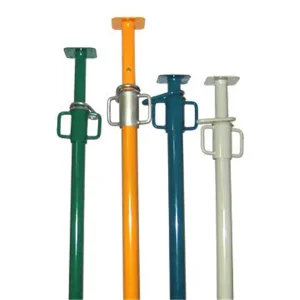
Heavy Duty Telescopic Prop Formwork Scaffolding for Brazilian Civil Engineering & Shoring
Technical Specs & Direct Inquiry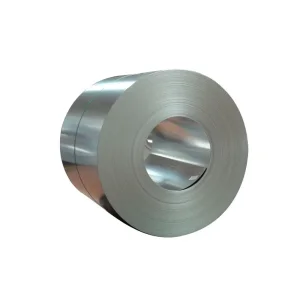
Customized ASTM A653 DX51D Z275 Hot Dipped Zinc Coated Galvanized Sheets for Brazil Infrastructure
Technical Specs & Direct Inquiry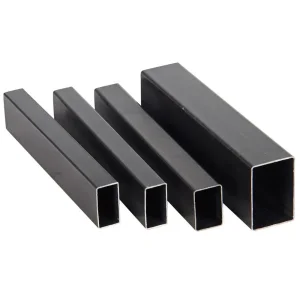
50*50mm (4x4) Square Steel Tubing Hollow Sections for Durable Fence Posts & Framing in Brazil
Technical Specs & Direct Inquiry
Galvalume Aluzinc Zinc-Aluminum Coating Roofing Sheets & Wall Metal Panels for Brazil Housing
Technical Specs & Direct Inquiry
High-Quality Galvalume Aluzinc Roofing Panels Designed for High-Corrosion Agribusiness Facilities
Technical Specs & Direct Inquiry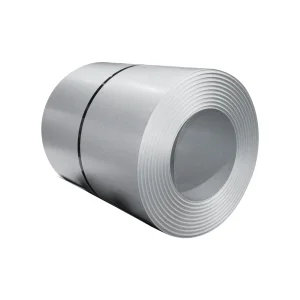
275g Zinc Aluminum Magnesium (ZAM) Coated Steel Sheet for Solar Mounting Structures in Brazil
Technical Specs & Direct Inquiry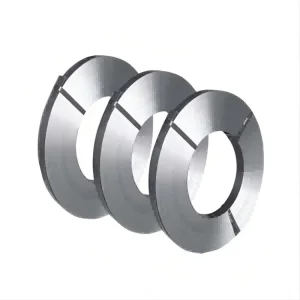
0.23mm CRGO Grain Oriented Electrical Silicon Steel Coil for High-Efficiency Brazilian Transformers
Technical Specs & Direct Inquiry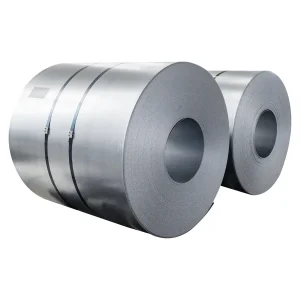
DX51D ZF60-ZF275 Galvannealed Steel Coils (Zinc-Iron Alloy) for Superior Welding & Auto Painting
Technical Specs & Direct InquiryFrequently Asked Questions (FAQ) for Brazilian Steel Importers
Expert answers addressing technical specifications, logistics, customs clearance, and quality assurance.