
Industrial Steel Supply Catalog (Part I)
Browse our mill-direct steel products engineered for structural stability, severe-environment corrosion resistance, and precision OEM fabrication.
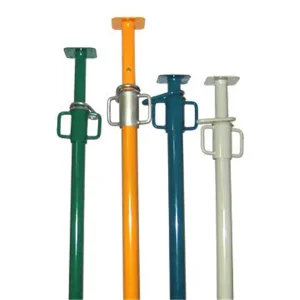
Heavy Duty Telescopic Prop Formwork Scaffolding for Construction Support and Shoring
View Product Details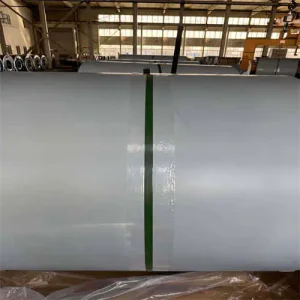
SECC Electrical Galvanized Steel Coils for Door Gates - Enhanced Quality & Finish
View Product Details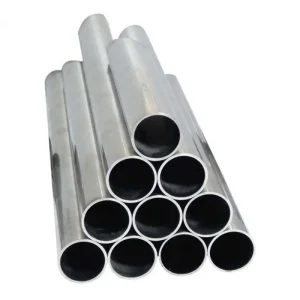
High Zinc Hot-Dip Galvanized Steel Pipes | Durable Greenhouse & Agricultural Options
View Product Details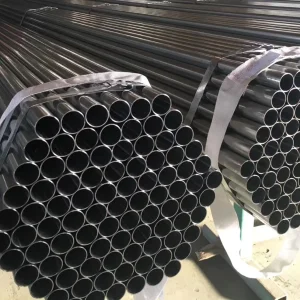
ASTM A106 Sch 40 ERW Iron Tube – China Factory Suppliers for Carbon Steel Pipe
View Product Details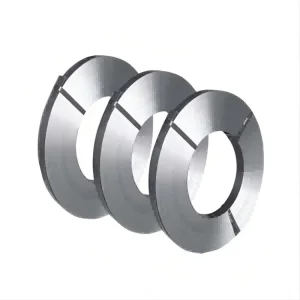
0.23mm CRGO Grain Oriented Electrical Silicon Steel Coil for Transformer
View Product Details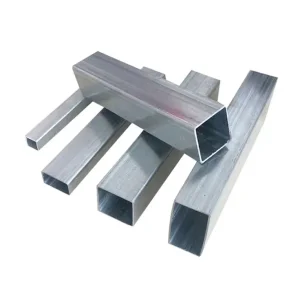
Pre-Galvanized Square Steel Tube 20*20 SHS RHS Rectangular Hollow Section
View Product Details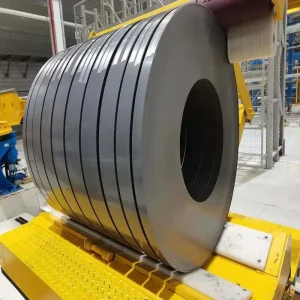
China Silicon Steel Coil (CRNGO) - High-Quality Suppliers for Magnetic Alloy Needs
View Product Details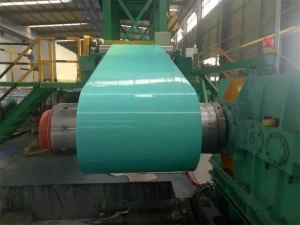
PPGI PPGL Galvanized Corrugated Metal Roof Suppliers - G550 Steel Plate Factory
View Product DetailsThe Zinc-Aluminum-Magnesium (ZAM) Paradigm Shift in Surface Engineering
Understanding why leading B2B industrial buyers are transitioning from standard Hot-Dip Galvanized (HDG) and Galvalume (Alu-Zinc) coatings to advanced Zinc-Aluminum-Magnesium alloy technology.
In the evolving landscape of industrial steel procurement, corrosion prevention has shifted from a periodic maintenance consideration to a critical total-cost-of-ownership (TCO) metric. Global infrastructure, clean energy systems, and automotive engineering projects demand coated steel products capable of surviving 30 to 50 years in severe atmospheric, chemical, and marine microclimates. The emergence of Zinc-Aluminum-Magnesium Steel Coils (Zn-Al-Mg / ZAM / ZM) represents the most significant breakthrough in continuous hot-dip surface finishing over the past half-century.
Unlike conventional galvanized steel coatings—which rely almost entirely on a sacrificial zinc barrier—ZAM coatings feature a ternary alloy structure produced by adding precise mass percentages of Aluminum (typically 1.5% to 11%) and Magnesium (1.5% to 3%) into the molten zinc bath. This metallurgical chemistry triggers a radical improvement in atmospheric corrosion resistance, friction performance, and cut-edge self-healing functionality.
Triple Corrosion Defense
The ternary Zn-Al-Mg matrix creates a dense, insoluble protective film called Simonkolleite (Zn5(OH)8Cl2·H2O and Zn2Cr(OH)6·2H2O), which retards oxidation rates by 5x to 10x compared to pure zinc layers.
Autonomous Cut-Edge Healing
When ZAM steel is cut, stamped, or scratched, dissolved magnesium and aluminum ions migrate across the exposed raw iron edge, forming a fine protective rust layer that prevents creep corrosion.
Superior Formability & Hardness
ZAM coatings exhibit a significantly lower coefficient of friction and higher Vickers hardness (HV 110–160) than conventional GI (HV 60–80), dramatically reducing galling and flaking during deep drawing.
Industry Macro Trends & Global Buyer Demand Drivers
Analyzing commercial procurement shifts across North America, Europe, Asia-Pacific, and emerging markets toward high-performance alloy-coated sheet and coil products.
1. Photovoltaic & Renewable Infrastructure Expansion
Solar tracker manufacturers and ground-mount PV developers are rapidly abandoning post-galvanized structural beams in favor of mill-galvanized Zinc-Aluminum-Magnesium coil profiles (S350GD+ZM, S450GD+ZM, S550GD+ZM). The ability to roll-form pre-coated ZAM coil directly eliminates secondary galvanizing costs, reduces project lead times by 30%, and delivers superior resistance to soil salinity and agricultural ammonia.
2. Green Building Standards & Decarbonization (CBAM)
With strict emissions tracking under the EU’s Carbon Border Adjustment Mechanism (CBAM) and global ESG directives, B2B buyers require steel components with lower embodied carbon. ZAM steel coils allow engineers to reduce total coating weight (e.g., replacing Z600 HDG with ZM270 ZAM) without sacrificing corrosion longevity, achieving up to a 40% reduction in zinc raw material consumption per square meter.
3. Automotive & Transportation Lightweighting
Automotive OEMs and tier-1 suppliers are leveraging high-strength ZAM steel coils for underbody chassis parts, battery enclosure frames, and structural cross-members. Excellent press-forming behavior, coupled with resistance to road-salt rust and high-frequency spot-weldability, makes ZAM an ideal substitute for heavier or costlier stainless/aluminum alternatives.
Metallurgical Performance Benchmark Matrix
Comparing key operational parameters of Zinc-Aluminum-Magnesium coils against standard coated steel substrates.
| Coating Specification | Standard GI (Hot-Dip Galv) | Galvalume (55% Al-Zn) | Galvannealed (ZF) | Zinc-Alu-Mag (ZAM / ZM) |
|---|---|---|---|---|
| Alloy Composition | 99% Zn | 55% Al, 43.4% Zn, 1.6% Si | 90% Zn, 10% Fe alloy | 84-93% Zn, 1.5-11% Al, 1.5-3% Mg |
| Salt Spray Resistance (NSS) | ~500 - 800 Hours | ~1,500 - 2,000 Hours | ~400 - 600 Hours | > 3,000 - 5,000+ Hours |
| Cut-Edge Protection | Poor (Sacrificial rust creeps) | Moderate (Alumina passivates) | Poor | Self-Healing (Simonkolleite film) |
| Coating Hardness (HV) | 60 - 80 HV | 80 - 100 HV | 180 - 220 HV (Brittle) | 110 - 160 HV (Ductile/Hard) |
| Ammonia / Alkaline Resistance | Low | Extremely Low (Alumina degrades) | Low | Exceptional (Ideal for Livestock/PV) |
| Formability / Galling Risk | Moderate flaking risk | High micro-cracking risk | High powdering risk | Excellent (Low friction coeff.) |
China Industry 4.0: Manufacturing Resilience & Mill-Direct Scale
How modern Chinese steel manufacturing hubs like Tianjin leverage continuous automated lines, digital quality control, and integrated supply chains to serve global buyers.
Procuring industrial steel from modern Chinese wholesale factories is no longer just a cost-reduction strategy; it is a quality and capacity imperative. China’s steel processing ecosystem has undergone a comprehensive digital transformation, adopting Industry 4.0 Smart Factory standards across continuous galvanizing lines (CGL), tension levelling, automated slitting, and inline thickness testing.
Precision Alloy Dip Control
Automated electromagnetic air-knife wiping systems monitor coating thickness down to ±1 gram per square meter in real-time, ensuring uniform ZM coating mass across the full coil length.
Rigorous QA & Traceability
Every master coil undergoes automated spectral analysis, T-bend adhesion testing, zero-spangle surface inspection, and X-ray fluorescence (XRF) coating checks with full heat-number traceability.
Port Proximity & Port Logistics
Facilities concentrated around Tianjin and coastal shipping hubs allow seamless transfer from mill-floor to containerized or break-bulk vessels, offering rapid lead times to over 80 destination ports worldwide.
Data-Driven Manufacturing Scale
Localized Application Scenarios & Engineering Practices
Where and how Zinc-Aluminum-Magnesium steel coils, sheets, and profiles deliver superior operational life in real-world commercial environments.
Solar PV Mounting Structures & Trackers
Solar racking systems are installed in high-salinity coastal areas, deserts, and agricultural soils. Standard HDG coatings degrade quickly due to atmospheric sulfur, moisture, and ground friction. Using S350GD+ZM300 or S550GD+ZM270 ZAM steel coils allows cold-roll forming of C/U/Z purlins and ground screws with pre-punched holes. The self-healing cut-edges ensure hole rims remain completely rust-free without post-painting.
- Eliminates post-galvanizing bottleneck
- Resists agricultural chemical fertilizers
- 30+ Year service life in atmospheric C4/C5 zones
Agriculture & Livestock Housing
Poultry farms, swine facilities, and commercial greenhouses represent extreme microclimates rich in animal manure, uric acid, and moisture. Standard aluminum-zinc (Galvalume) coatings fail rapidly because free alumina dissolves in alkaline environments. ZAM steel coil profiles withstand high-concentration ammonia atmospheres, making them the standard specification for greenhouse arches and feeding equipment.
- High ammonia & alkali corrosion resistance
- Extended roof/wall panel durability
- Reduces livestock facility maintenance downtime
HVAC, Cable Trays & Building Infrastructure
Indoor commercial buildings, subway tunnels, and industrial plants require heavy-duty cable management trays, air ducts, and framing. ZAM steel’s low friction coefficient enables seamless deep drawing and punch-stamping for electrical enclosures. Uncoated cut edges formed during stamping self-heal, avoiding red rust creep in humid basements or coastal transit systems.
- Superior surface micro-hardness
- Clean aesthetic finish with zero micro-cracking
- Ideal for high-humidity HVAC ducting
Wholesale Zinc Aluminum Magnesium Steel Sourcing Checklist
Essential technical parameters and inspection criteria for global procurement managers during mill selection and order verification.
1. Substrate & Base Grade Selection
Ensure the mill supplies base metal tailored to your end processing requirements:
- Commercial/Bending: DX51D+ZM, DX52D+ZM
- Deep Drawing: DX53D+ZM, DX54D+ZM
- Structural Steel: S250GD+ZM, S350GD+ZM, S450GD+ZM, S550GD+ZM
- High Strength Low Alloy: HC260LA+ZM to HC420LA+ZM
2. Coating Weight Designation
Coating thickness dictates longevity under specific ISO 12944 atmospheric corrosion categories (C1 to C5-M):
- Light Indoor (ZM60 - ZM120): 60 to 120 g/m² double-sided coating
- Medium Industrial (ZM180 - ZM270): 180 to 270 g/m² for outdoor roofing & purlins
- Severe Marine/PV (ZM300 - ZM430): Heavy-duty protection for extreme soils & coastal solar
3. Surface Passivation & Packaging
Prevent white rust during maritime transport with proper mill treatments:
- Environmentally friendly Trivalent Chromium-free passivation (RoHS compliant)
- Anti-fingerprint (AFP) acrylic sealing for clean handling
- Seaworthy eye-to-sky / eye-to-wall vertical packaging with VCI rust-inhibitor wrapping
Industrial Steel Supply Catalog (Part II)
Complementary steel pipe, electrical silicon coil, and specialized coated sheet products directly from our manufacturing partner network.
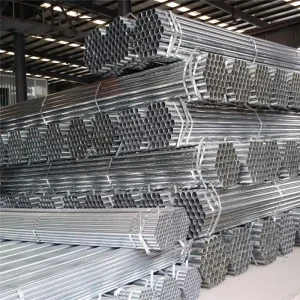
High-Quality Thick-Wall Pre Galvanized Steel Pipe For Green House Supplier
View Product Details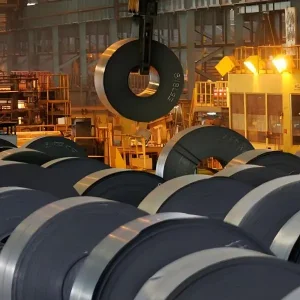
Wholesale China Hot Rolled Pickled and Oiled Steel Coils - Leading Suppliers
View Product Details
Wholesale Prime Hot Rolled Pickled and Oiled Steel Coils - Factory Quality Products
View Product Details
Wholesale China Silicon Steel Coil (CRNGO) - Suppliers for Soft Magnetic Alloys
View Product Details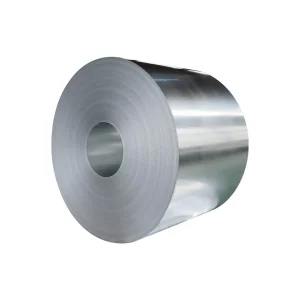
DX53D DX54D Aluminized Silicon Coating Coils - Reliable Bakery Tray Material
View Product Details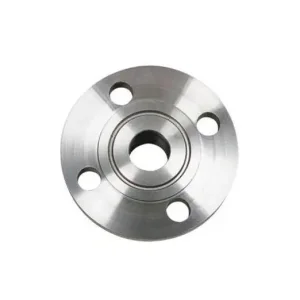
China Factory Slip on Plate Flanges for Flat Plain Welding in Carbon & Stainless
View Product Details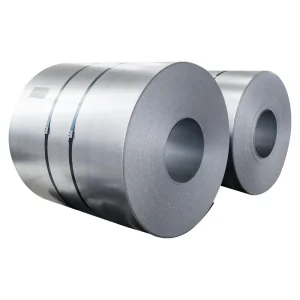
Wholesale Galvannealed Steel Coil DC51D DX51D ZF60 ZF275 Zinc Iron Alloy Coating
View Product Details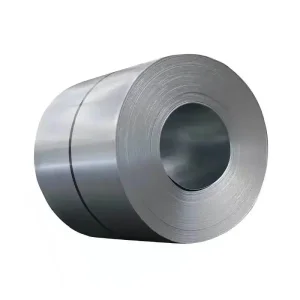
Non-Grain Oriented Silicon Steel Coil M310 M350 M470 M600 M800 Suppliers
View Product DetailsFrequently Asked Sourcing & Engineering Questions
Answers to critical technical, manufacturing, and commercial inquiries regarding wholesale Zinc Aluminum Magnesium steel procurement.