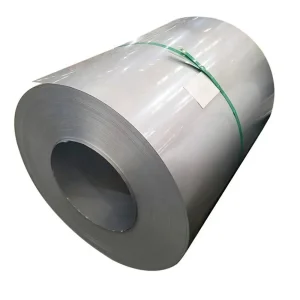
Mill-Direct Steel Supply Catalog (Batch 1)
Direct factory inventory featuring galvanized sheets, structural steel, electrical coils, and high-performance alloy products for global procurement.
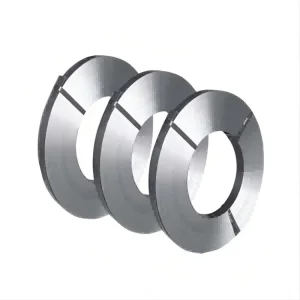
High-Quality 0.23mm CRGO Grain Oriented Electrical Silicon Steel Coil for Transformer - China Suppliers and Factory Manufacturer, Manufacturers
View Details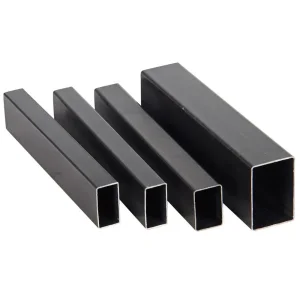
Wholesale China Square Tubing Suppliers - 50x50mm 4x4 Metal Pipe Factory for Durable Steel Fence Posts Manufacturer, Factory
View Details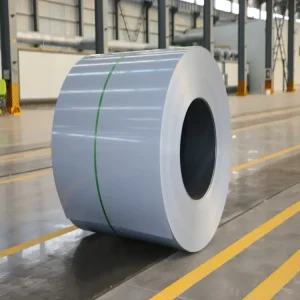
High-Quality China Suppliers Factory G550 PPGI PPGL Galvanized Corrugated Metal Roof Steel Sheets Suppliers, Factories
View Details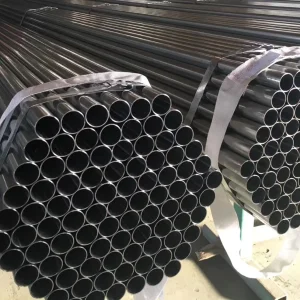
Wholesale Factory Sale High Quality ASTM A106 Sch 40 ERW Iron Tube, ERW Weld Carbon Steel Pipe Manufacturers, Suppliers
View Details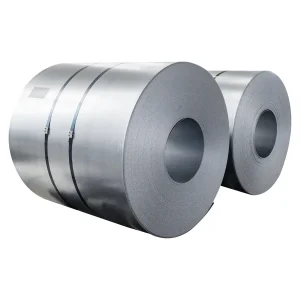
Wholesale Zinc Iron Alloy DC51D Dx51D ZF60 ZF275 Galvannealed Steel Coil from China Suppliers and Factory Factory, Factories
View Details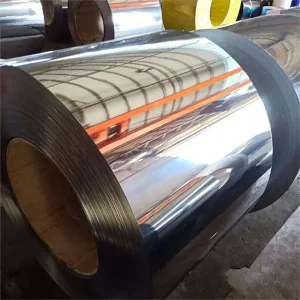
High-Quality Electrolytic Tinplate ETP & TFS Tin Clad Steel for Packaging - China Suppliers & Factory Manufacturer, Factories
View Details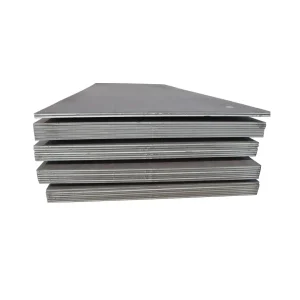
Wholesale China Suppliers Factory Hot Rolled Carbon Steel Plates Q235 Q195 Q345 ST S355 for Industrial Applications Suppliers, Factories
View Details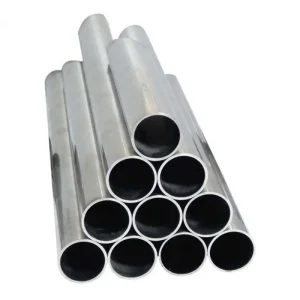
High-Quality High Zinc Hot-Dip Galvanized Steel Pipes from China Suppliers | Greenhouse & Agricultural Applications Factory Manufacturer, Suppliers
View DetailsUnderstanding ZF 275g Galvannealed Steel Sheets: Metallurgical Foundations
A comprehensive engineering analysis of zinc-iron alloy coating mechanisms, microstructural phase distributions, and performance differentiation against standard GI sheets.
What is ZF 275g (Galvannealed) Steel?
In industrial steel manufacturing, ZF 275g GI Sheet refers to hot-dip galvannealed steel sheet carrying a double-sided total coating mass of 275 grams per square meter (nominal 137.5 g/m² per side, corresponding to approximately 18–20 μm thickness per side). Unlike standard galvanized steel (designated as "Z"), which leaves a pure zinc layer on the surface, the "ZF" designation signifies a post-dip thermal treatment.
Immediately after the cold-rolled steel strip exits the molten zinc bath (containing 0.11%–0.14% Al), it passes through an inline induction annealing furnace maintained between 500°C and 560°C. This forces atomic interdiffusion between the iron substrate and molten zinc, transforming the surface into an integrated Zinc-Iron (Zn-Fe) alloy layer containing 8% to 12% Iron content.
Microstructural Phase Architecture
The mechanical integrity and performance of ZF275 galvannealed sheet stem from its distinct intermetallic layer profile formed during the annealing phase:
- Gamma 1 ($\Gamma_1$) Phase ($Fe_3Zn_{10}$): Thin, compact intermetallic layer at the steel interface containing 16%–28% Fe, providing boundary adhesion.
- Delta ($\delta$) Phase ($FeZn_7$): The dominant columnar phase (7%–12% Fe), delivering high hardness (350–450 HV) and supreme scratch resistance.
- Zeta ($\zeta$) Phase ($FeZn_{13}$): A softer, Fe-poor top layer (<6% Fe) controlled strictly during annealing to prevent coating flaking during deep drawing.
Modern factory controls utilize automated radiometric gauges to minimize brittle Zeta-phase surface formation, assuring zero-powdering during complex stamping.
Why Specify 275g/m² (ZF275) Coating Weight?
While lighter galvannealed coatings such as ZF60, ZF100, or ZF180 are prevalent in automotive interior brackets, specifying ZF 275g provides an essential barrier for extreme atmospheric and mechanical environments.
ZF275 strikes an optimal industrial balance: offering heavy-gauge sacrificial protection equivalent to structural Z275 hot-dip galvanizing, while delivering the high electrical resistivity, paintable matte texture, and high spot-welding speed inherent to zinc-iron alloys. It completely eliminates the need for post-fabrication anti-corrosion dipping in severe structural applications.
Coating Comparison & Mechanical Grade Standard
Informative breakdown comparing ZF275 against standard pure zinc (Z275), Galvalume (AZ150), and Zinc-Aluminum-Magnesium (ZM275) co-alloys.
| Coating Specification | Coating Structure | Surface Appearance | Weldability (Spot Welding) | Paint Adhesion (E-Coat / Powder) | Primary Industrial Sector |
|---|---|---|---|---|---|
| ZF275 (Galvannealed) | Zn-Fe Alloy (8-12% Fe) | Matte Dark Gray (No Spangle) | Exceptional (Low electrical resistance, long tip life) | Superior (Micro-porous structure anchors paint without primer) | Automotive Body-in-White, HVAC, Enclosures, Heavy Doors |
| Z275 (Pure Zinc HDG) | 100% Metallic Free Zinc | Bright Metallic (Spangle/Zero Spangle) | Fair (Zinc vaporizes, wears copper tips rapidly) | Moderate (Requires phosphating or specialized primer) | Agricultural Greenhouses, Roofing, General Construction |
| AZ150 (Galvalume / GL) | 55% Al, 43.4% Zn, 1.6% Si | Spangled Silver Metal | Moderate to Poor (Requires adjusted welding parameters) | Good (Requires specific pretreatment) | Industrial Roofing, Thermal Shielding, Cladding |
| ZM275 (Zinc-Al-Mg) | Zn-Al-Mg Composite Phase | Smooth Satin Gray | Good (Slightly higher hardness) | Excellent | Solar Mounting Structures, Highway Guards, Marine C4/C5 |
Steel Substrate Grades Available for ZF 275g Production
Wholesale buyers and structural engineers can order ZF 275g GI sheets milled from a variety of underlying carbon steel substrates compliant with EN 10346, ASTM A653/A653M, and JIS G3302 standards:
Forming & Deep Drawing Grades
- DX51D + ZF275: Commercial forming quality for general bending, light stamping, and ducting.
- DX52D + ZF275: Drawing quality with extended elongation limits.
- DX53D + ZF275: Deep drawing quality engineered for deep stamped automotive brackets.
- DX54D + ZF275 / DX56D + ZF275: Extra-deep drawing quality for intricate, multi-stage pressings without necking.
Structural High-Strength Grades
- S250GD + ZF275 to S350GD + ZF275: Load-bearing structural steels with guaranteed minimum yield strengths ($R_{eH} \ge 250 - 350\text{ MPa}$).
- S550GD + ZF275: High-yield structural steel for ultra-lightweight structural framing.
- Advanced High Strength (AHSS) / Dual Phase: DP590+ZF, DP780+ZF for impact-critical automotive safety cages.
Macro Commercial Landscape & Supply Chain Dynamics
How top-tier steel factories respond to global demand shifts, decarbonization mandates, and procurement requirements across key international markets.
Global Decarbonization & Green Galvannealing Trends
As global OEMs align with Scope 1, 2, and 3 emission targets, leading Chinese steel factories producing wholesale ZF 275g GI sheets are rapidly shifting from Blast Furnace-Basic Oxygen Furnace (BF-BOF) routes toward Electric Arc Furnace (EAF) processing using recycled scrap feeds and green hydrogen reduction power.
Furthermore, the traditional gas-fired annealing furnaces used for galvannealing are being replaced by high-efficiency electromagnetic induction heaters. This cuts carbon footprints by up to 35% per metric ton of ZF275 sheet while providing millisecond-accurate temperature feedback to lock in precise 10% Fe alloy compositions across 1,500 mm wide strips.
Wholesale Market Demand Drivers
Global consumption of high-zinc galvannealed sheet steel is accelerating driven by three dominant industrial pivots:
- Electric Vehicle (EV) Lightweighting: High-strength ZF275 sheets allow automakers to down-gauge panel thicknesses without sacrificing anti-corrosion warranty spans (typically 10-12 years anti-perforation).
- Modular Off-Site Construction: Prefabricated wall studs and fire door assemblies require immediate post-weld paintability without expensive surface blasting.
- HVAC Energy Efficiency Standards: Commercial ventilation systems require zero white-rust formation during high-humidity operation, which heavy 275g/m² coatings reliably withstand.
Localized Application Scenarios for Wholesale ZF 275g Sheets
Tailored engineering implementations across automotive manufacturing, commercial HVAC, electrical distribution, and structural architectural systems.
1. Automotive Body-in-White (BIW)
In automotive assembly plants across North America, Europe, and Asia, ZF 275g sheets serve as the benchmark for unexposed inner body panels, hood reinforcements, floor pans, and wheelhouse assemblies. The micro-rough zinc-iron alloy surface retains drawing lubricants exceptionally well during deep stamping, while providing flawless spot-welding performance on robotic assembly lines.
2. Commercial HVAC & Environmental Systems
Commercial air handling units (AHUs), dampener frames, and heavy-duty ventilation ducts located in tropical or industrial environments require heavy coating mass protection. ZF 275g sheets offer robust resistance to condensate corrosion. Fabrication shops cut, roll, and seam-weld ZF275 ductwork without paint flaking or coating delamination at fold bends.
3. Electrical Enclosures & Switchgear
Electrical transformer cabinets, power distribution boxes, and industrial server racks demand high structural rigidity and ground-plane electrical conductivity. ZF 275g GI sheet acts as an ideal substrate that can be post-powder coated directly without chemical etching primers, passing stringent 1000-hour humidity chamber tests.
Mill Quality Assurance & Global Compliance Framework
How tier-1 wholesale factories verify metallurgical compliance, coating mass uniformity, and mechanical performance for international shipments.
Rigorous Laboratory Testing Protocols
Every coil or bundle of wholesale ZF 275g GI sheets dispatched from our accredited facilities undergoes rigorous mill testing certified according to EN 10204 3.1 & 3.2 standards:
- Coating Weight Triple-Spot Test (ISO 1460 / ASTM A90): Verifies that total double-sided zinc-iron mass equals or exceeds $275\text{ g/m}^2$ ($137.5\text{ g/m}^2$ minimum spot).
- Alloy Fe% Content Titration / EDX Analysis: Confirms iron content is locked strictly between 8.0% and 12.0% to prevent excess brittle Zeta phase formation.
- Zero-Powdering 180° Bend Test (ISO 7438): Evaluates coating adhesion under extreme mechanical deformation to ensure zero flaking along bend radii.
- Erichsen Cupping & Tensile Testing (ISO 20482 / ASTM A370): Validates yield strength ($R_e$), tensile strength ($R_m$), and total elongation ($A_{80}$) targets.
International Regulatory & Environmental Certifications
To clear global customs smoothly and satisfy end-user tender specifications, our ZF 275g galvannealed product lines comply with top international certifications:
- IATF 16949: Automotive Quality Management System compliance for tier-1 automotive component manufacturing.
- ISO 9001 & ISO 14001: Fully audited quality and environmental management standards.
- REACH & RoHS Compliance: Surface treatments (passivation oils, dry lubricants) are 100% heavy-metal-free, hexavalent-chromium-free ($Cr^{6+}$ free), meeting EU environmental directives.
- Third-Party Inspection Ready: Full support for pre-shipment inspections by SGS, Bureau Veritas, or Intertek at Tianjin or Qingdao loading ports.
Technology Roadmap: Next-Generation Coated Steel Solutions
Exploring technological innovations in galvannealed processing, AI closed-loop coating control, and multi-component alloy developments.
AI-Driven Closed-Loop Air Knives
Modern zinc coating lines are incorporating real-time computer vision and X-ray fluorescence gauges connected to automated nitrogen air knives. This closed-loop system adjusts wiper pressure in milliseconds, reducing thickness variance across a 275g/m² sheet down to a tight ±3%, ensuring uniform welding performance.
Ultra-High Strength AHSS Galvannealing
Metallurgical research focuses on resolving selective surface oxidation of manganese (Mn) and silicon (Si) during annealing of Advanced High-Strength Steels (AHSS). Advanced pre-oxidation and flash-iron plating techniques now allow high-mass ZF275 coatings to adhere perfectly onto 980 MPa and 1180 MPa dual-phase substrates.
Nanocomposite Eco-Passivation
Replacing traditional chromate conversion coatings, next-generation ZF275 sheets utilize nano-silica zirconium passivation layers. This provides superior anti-fingerprint properties, low contact resistance for grounding, and prolonged resistance to transit wet-storage stain (white rust) during ocean voyages.
Frequently Asked Questions (FAQ) for ZF 275g Procurement
Direct technical answers to common questions asked by B2B buyers, procurement managers, and structural engineers.
What is the main difference between ZF275 and standard Z275 galvanized steel?
The fundamental difference lies in coating composition and surface structure. Z275 is hot-dip coated with 100% pure zinc, leaving a shiny metallic surface (spangled or smooth). ZF275 undergoes immediate post-dip heat treatment (galvannealing) to create an integrated Zinc-Iron alloy (8%-12% Fe). ZF275 features a matte dark gray finish, provides significantly better spot-weldability, and allows direct painting without special chemical primers.
Why is ZF275 preferred over pure GI for automotive and welded structural assemblies?
Pure zinc on Z275 sheets melts at low temperatures (419°C), causing copper welding tips to alloy with zinc, which leads to rapid tip erosion during resistance spot welding. In contrast, the Zn-Fe alloy on ZF275 has a higher melting point (approx. 650°C–780°C) and higher electrical resistance. This extends spot welding tip life by up to 300% and yields cleaner, stronger spot welds without spatter.
How does ZF275 paint adhesion compare with conventional electro-galvanized (EG) or pure GI?
ZF275 possesses a microscopic, porous matte texture resulting from iron diffusion. This surface mechanically locks paint films, e-coats, and powder coatings directly to the metal matrix without requiring aggressive chemical etching. Painted ZF275 exhibits superior salt-spray corrosion performance (>1,500 hours) compared to painted pure GI sheets.
What thickness and width tolerances can your factory supply for wholesale orders?
Our mills supply ZF 275g GI sheets in thicknesses ranging from 0.40 mm to 3.50 mm and widths up to 1,500 mm. Thickness tolerances strictly meet EN 10143 or ASTM A924 precision classes (e.g., ±0.03 mm on nominal gauge), supplied as slit coils, cut-to-length sheets, or corrugated profile plates.
How are wholesale ZF 275g GI sheets packaged for international sea freight?
Export shipments use seaworthy vertical or horizontal eye-to-sky packaging. Coils and sheet bundles are wrapped in anti-rust VCI paper, sealed with heavy-duty galvanized steel outer shields, reinforced with inner/outer corner protectors, and bound with at least 4 radial and 3 circumferential steel straps mounted on heat-treated ISPM-15 wooden skids.
Mill-Direct Steel Supply Catalog (Batch 2)
Explore our complementary product range, including stainless steel, electrogalvanized coils, specialized alloy sheets, and structural sections.
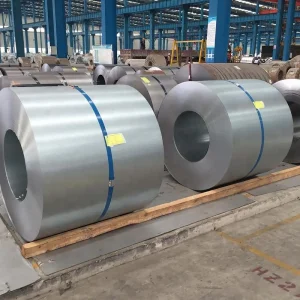
High-Quality China Suppliers of Galvanized Steel Coils - High-Quality Factory Products for Construction and Industry Manufacturers, Suppliers
View Details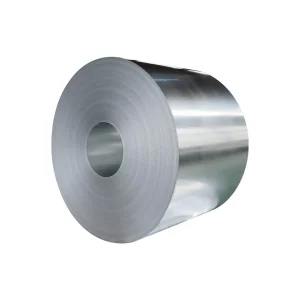
High-Quality China Suppliers Factory for DX53D DX54D Aluminized Silicon Coating Coils for Bread Pans and Burger Buntrays Manufacturer, Suppliers
View Details
Wholesale Electrogalvanized Steel from China Suppliers - Quality Factory Direct Coating Solutions Supplier, Factories
View Details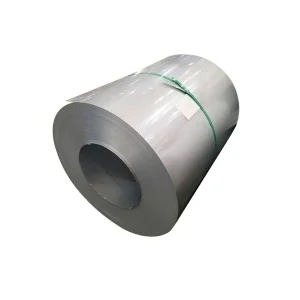
Wholesale High-Quality Cold Rolled Stainless Steel Coils 201, 304, 316 from China Suppliers - Trusted Factory Direct Supply Supplier, Factory
View Details
Wholesale China Suppliers Factory ZF Galvannealed Steel Coil DC51D Dx51d Zinc Iron Alloy Coating for Welding and Painting Manufacturer, Factories
View Details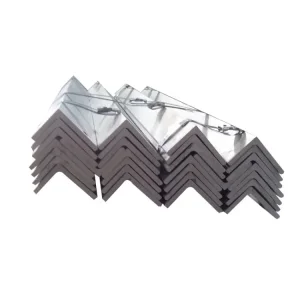
Wholesale Steel Processing Parts Q195 Q215 Hot Rolled steel angle iron beam steel structural Manufacturers, Supplier
View Details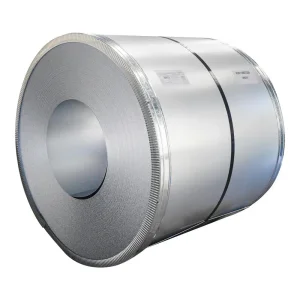
Wholesale China ZM AZM Alloy Coated Steel Sheet Suppliers - 275g Zinc Aluminum Magnesium Factory Product for Solar Mounting Manufacturers, Factories
View Details