
Featured Industrial Steel Catalog (Part I)
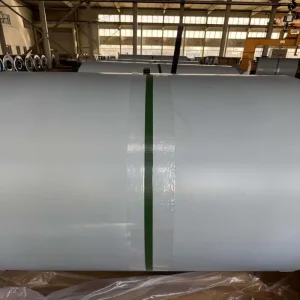
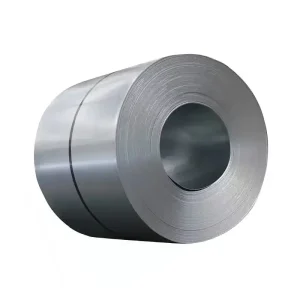
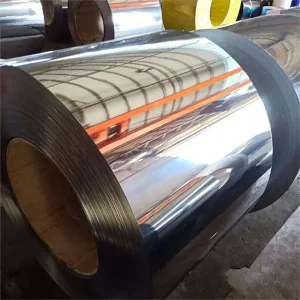
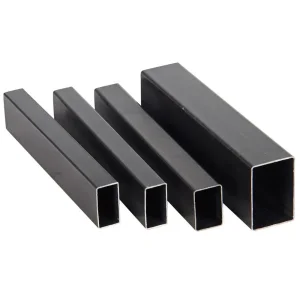
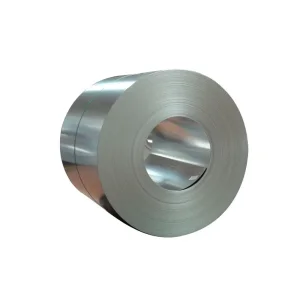
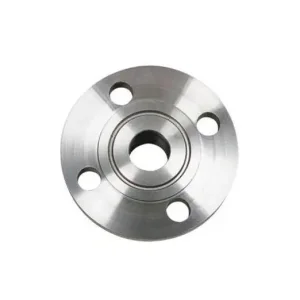
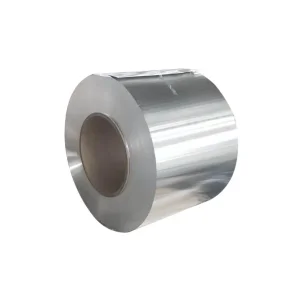
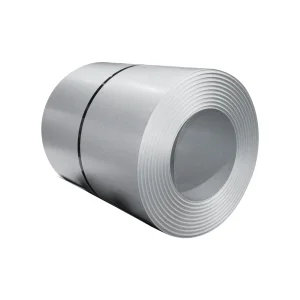
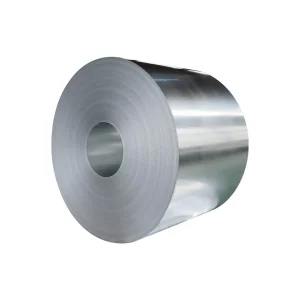
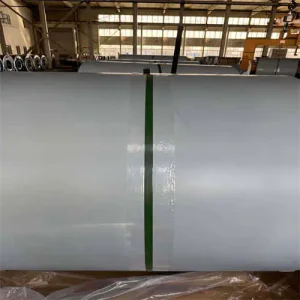
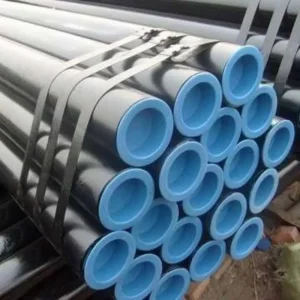
Precision-milled carbon steel, galvanized coils, and specialty alloy products optimized for exact weight tolerances and structural integrity.
Executive Technical Briefing: Engineering Steel Weight Dynamics
A rigorous metallurgical and mathematical investigation into theoretical mass estimation, mill tolerance variations, and global procurement optimization.
The Volumetric Density Standard
In modern industrial engineering, steel structural integrity and transport logistics pivot on exact mass calculation. The universal benchmark density for carbon steel is defined as 7.85 g/cm³ (7,850 kg/m³) under ISO 3183 and ASTM A6. However, real-world commercial procurement must account for micro-alloying adjustments, galvanizing mass additions (Z100 to Z600 coatings), and dimensional wall-thickness tolerances specified by standards such as ASTM A500 or EN 10219.
Theoretical vs. Actual Mass Delta
Discrepancies between Theoretical Calculated Weight (TCW) and Actual Scale Weight (ASW) represent a significant source of operational friction in EPC (Engineering, Procurement, Construction) projects. Manufacturing rolling tolerances typically permit a variation of ±5% to ±10% in wall thickness. Understanding the governing mathematical equations enables procurement directors to accurately forecast freight container payloads, structural dead loads, and precise cost-per-ton logistics.
Comprehensive Steel Weight Calculation Formulas
Derivation of exact mathematical models for structural tubing, round ERW/seamless pipes, solid bars, plates, and galvanized flat-rolled steel.
1. Carbon Steel Round Pipe & Tubing Formula
For seamless and Electric Resistance Welded (ERW) round steel pipes, weight calculation relies on calculating the cross-sectional area of the annular ring multiplied by material density.
Where: W = Weight (kg/m), D = Outer Diameter (mm), t = Wall Thickness (mm), 0.0246615 = Constant derived from π × 0.00785.
Example Calculation: For an ERW pipe with Outer Diameter $D = 219\text{ mm}$ and Wall Thickness $t = 6.0\text{ mm}$: $W = 0.0246615 \times 6.0 \times (219 - 6.0) = 31.52\text{ kg/m}$.
2. Square & Rectangular Structural Tubing (SHS / RHS)
Square Hollow Sections (SHS) and Rectangular Hollow Sections (RHS) require corner radius correction factors. Standard structural formulas assume a corner radius $R = 1.5t$ to $2.0t$.
Where: A & B = Side lengths (mm), t = Nominal thickness (mm), 0.0157 = Constant derived from 4 × 0.00785 / 2.
Example Calculation: For a $50 \times 50\text{ mm}$ square tube with $3.0\text{ mm}$ wall thickness: $W = 0.0157 \times 3.0 \times (50 + 50 - 6) = 4.428\text{ kg/m}$.
3. Steel Plate, Sheet, and Flat Coils
Calculating the total weight of hot-rolled, cold-rolled, or stainless steel plates depends on total surface area, nominal thickness, and standard alloy weight multipliers.
For Stainless Steel (Grade 304): Density multiplier adjusted to 7.93 g/cm³.
For Stainless Steel (Grade 316): Density multiplier adjusted to 7.98 g/cm³.
Example Calculation: A $2.0\text{ mm}$ thick steel plate measuring $1.25\text{ m}$ in width and $2.5\text{ m}$ in length equals: $W = 2.0 \times 1.25 \times 2.5 \times 7.85 = 49.0625\text{ kg}$.
4. Zinc Coating Multipliers (Galvanized / Zincalume)
Coated steel products—including Hot-Dip Galvanized (HDG), Electro-galvanized (SECC), and Zinc-Aluminum-Magnesium (ZAM)—incorporate additional weight based on zinc mass per square meter.
Double-sided coating weight (e.g., Z275 = 275g/m² total both sides) adds roughly 0.275 kg per square meter of sheet.
| Steel Profile Type | Standard Dimension Range | Theoretical Weight Formula | Typical Application Sector |
|---|---|---|---|
| Seamless Round Pipe | OD 21.3mm - 610mm | WT 2mm - 40mm | 0.0246615 × t × (D - t) |
High-Pressure Energy, Oil & Gas Pipelines |
| ERW Welded Pipe | OD 1/2" - 24" | Sch 10 - Sch 80 | 0.0246615 × t × (D - t) |
Fire Sprinkler Lines, Structural Water Mains |
| Square Hollow Section (SHS) | 20x20mm - 400x400mm | 0.0157 × t × (2A - 2t) |
Commercial Building Framing, Solar Mounts |
| Rectangular Tube (RHS) | 40x20mm - 500x300mm | 0.0157 × t × (A + B - 2t) |
Automotive Chassis, Bridge Construction |
| Galvanized Coil (GI/HDG) | Thickness 0.12mm - 4.0mm | Thick(mm) × Width(m) × 7.85 + Coating |
HVAC Ducting, Appliance Outer Panels |
| Silicon Steel (CRNGO) | Thickness 0.35mm - 0.50mm | Thick(mm) × Area(m²) × 7.65 |
EV Drive Motors, Power Transformers |
Global Localized Application Scenarios
Adapting steel weight calculations and structural specifications to regional compliance standards and environmental demands.
North America: ASTM & Imperial Adjustments
In the United States and Canada, engineering tenders frequently specify steel dimensions in nominal pipe sizes (NPS) and schedules (Sch 40, Sch 80) governed by ASTM A53, A500, and A106. Weight calculations must seamlessly convert pounds per foot (lb/ft) to metric tons for maritime shipping logistics. Furthermore, structural engineers require precise theoretical mass inputs to evaluate earthquake loading under ASCE 7 building codes.
European Union: EN 10219 & Eurocode 3
European infrastructure projects strictly mandate compliance with EN 10219 (Cold formed welded structural hollow sections) and EN 10255. Eurocode 3 structural safety evaluations rely on minimum mass guarantees. Contractors utilize weight calculations to evaluate dead weights on crane installations, off-shore wind turbine foundations, and highway noise barrier frameworks subject to strict CE marking protocols.
Southeast Asia & Middle East: Extreme Climates
In tropical and desert environments—such as the UAE, Saudi Arabia, Philippines, and Vietnam—corrosion resistance dictates structural longevity. Solar farm racking systems require Zinc-Aluminum-Magnesium (ZAM) or heavy hot-dip galvanizing (Z600 / 85µm coating). Calculations must account for the added weight of dense zinc layers when designing foundation piles subject to wind-uplift torque and saline humidity.
Technology Roadmap & Industry 4.0 Transformation
Integrating AI-driven volumetric laser scanning and automated metallurgical control to eliminate weight variances during high-speed tube forming.
1. Real-Time Online Ultrasonic Thickness Monitoring
Modern high-frequency welding lines integrate multi-channel ultrasonic sensors directly following the sizing mill. Continuous wall thickness measurement feeds into closed-loop hydraulic roll adjustments, maintaining wall uniformity within ±0.03mm and stabilizing mass output across multi-ton coil runs.
2. AI-Driven Volumetric Mass Profiling
By leveraging deep-learning algorithms, production computers dynamically cross-reference incoming coil chemistry with temperature expansion variables. Theoretical pipe weight calculations are modified live during hot-rolling to offset thermal contraction, ensuring shipped metric tonnage matches customer bill-of-lading (BOL) estimates precisely.
3. Ultra-High Strength Steel (UHSS) Weight Reduction
The future of industrial steel lies in micro-alloyed, high-yield steels (e.g., S700MC, S960QL). By increasing tensile strength without adding mass, structural engineers can reduce overall wall thickness by up to 30%, dramatically lowering structural deadload and ocean transportation emissions.
China Manufacturing Supply Chain Resilience
Unmatched raw material integration, high-capacity manufacturing clusters, and strategic sea-freight logistics from the Tianjin steel industrial hub.
Tianjin Industrial Cluster Synergy
Located in the heart of Jinghai, Tianjin, our facilities operate directly adjacent to China's premier hot-rolled strip mills and zinc smelting facilities. This geographic proximity eliminates raw material transit delays, secures preferential strip pricing, and enables a continuous monthly manufacturing throughput exceeding 100,000 metric tons.
Logistical Proximity to Port
Direct access to Tianjin Xingang Port—one of the largest deep-water bulk ports globally—drastically reduces inland freight costs. Automated bundle strapping, corrosion-inhibiting sea-worthy wrapping, and containerized loading protocols ensure structural steel products arrive at destination ports without mechanical deformation or white-rust oxidation.
Rapid Order Execution & Flexibility
With eight automated high-frequency tube welding lines operating in tandem with specialized slitting and galvanizing units, production lead times are reduced by 40% relative to European or North American competitors. Custom outer diameters, non-standard wall thicknesses, and special cut-to-length requests are seamlessly integrated into production runs.
Global Commercial & Industrial Market Dynamics
Navigating global raw material volatility, international tariff compliance, and carbon footprint mass calculations in steel procurement.
Volumetric Pricing & Freight Optimization
International ocean freight rates are calculated based on the greater of actual mass (metric tons) or volumetric volume (cubic meters). Understanding exact steel pipe weight calculations empowers procurement managers to optimize container space loading—combining heavy wall pipes with lightweight structural hollow sections to reach container maximum payloads without triggering overweight fines.
CBAM & Green Steel Carbon Accounting
Under the European Union's Carbon Border Adjustment Mechanism (CBAM), importers must calculate embedded greenhouse gas emissions per ton of imported steel. Precise weight calculation formula enforcement ensures that carbon tariffs are paid strictly on accurate physical steel mass, avoiding over-taxation resulting from generic weight estimates.
Quality Control, Compliance & Global Support
Rigorous metallurgical testing, third-party inspection protocols, and dedicated engineering consultation for international projects.
EN 10204 3.1 Mill Test Certificates (MTC)
Every steel batch leaving our manufacturing plant is accompanied by a full EN 10204 3.1 Mill Test Certificate detailing chemical composition (Carbon, Manganese, Silicon, Phosphorus, Sulfur), yield strength ($R_eH$), tensile strength ($R_m$), elongation ($A\%$), hydrostatic test pressures, and non-destructive eddy-current weld test results.
Third-Party Inspection Verification
We routinely partner with world-renowned independent inspection agencies—including SGS, Bureau Veritas (BV), Intertek, and TÜV Rheinland. Inspectors verify physical dimensional wall thickness, zinc coating thickness using magnetic gages, flare tests, bend tests, and actual weigh-scale verification against theoretical calculation formulas prior to container sealing.
24/7 Multilingual Technical Consultation
Our dedicated engineering sales team provides 24-hour response SLAs. We assist client procurement departments with imperial-to-metric conversions, custom weight formula scripting, customs HS code alignment, and localized import compliance documentation.
Frequently Asked Questions (Q&A)
In-depth technical answers addressing engineering calculation formulas, manufacturing tolerances, and bulk ordering specifications.
What is the standard formula for calculating steel pipe weight per meter?
W (kg/m) = 0.0246615 × t (mm) × (D (mm) - t (mm)). In this equation, D represents the Outer Diameter in millimeters, t represents the nominal Wall Thickness in millimeters, and 0.0246615 is a derived metallurgical constant assuming a base steel density of 7.85 g/cm³.
How does hot-dip galvanizing affect the total calculated weight of steel tubing?
Why is there a difference between Theoretical Calculated Weight and Actual Scale Weight?
How do you calculate the weight of square steel tubing (SHS)?
W (kg/m) = 0.0157 × t (mm) × (2A (mm) - 2t (mm)), where A is the side length and t is wall thickness. This formula accounts for corner radius approximations standard in roll-forming processes.
What density factor should be used for stainless steel weight calculations?
Can your mill produce non-standard pipe sizes with custom wall thickness tolerances?
Featured Industrial Steel Catalog (Part II)
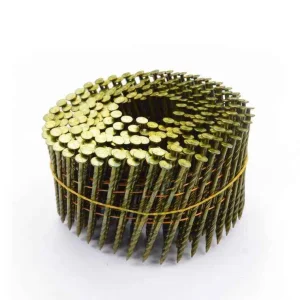
Explore our export-grade line of solar mounting sheets, aluminized coils, seamless pipes, and specialized hardware fittings.
Partner with China's Premier Steel Tube & Coil Manufacturer
Submit your project requirements, dimensional schedules, or custom weight calculation parameters today. Our engineering specialists respond within 24 hours with mill-direct pricing and mill test certification protocols.