
Industrial Grade Alloy & Steel Solutions (Part I)
Direct factory supply featuring mill-certified galvannealed, non-grain oriented silicon, cold rolled, structural, and specialty coated steel lines.
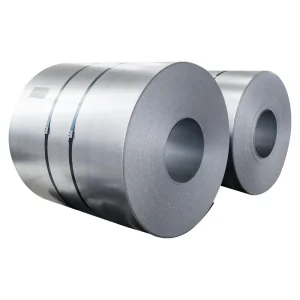
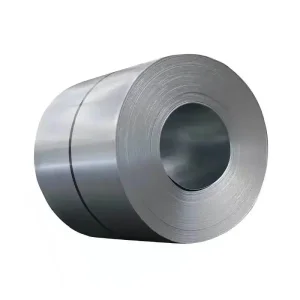
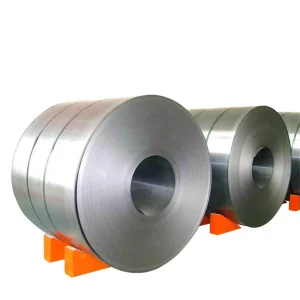
1. Executive Summary & Metallurgical Engineering Principles
In modern industrial metallurgy, Steel Aluminum-Silicon Alloy Coating (Al-Si Coating) represents a apex technological standard for high-temperature oxidation resistance, structural lightweighting, and thermal barrier performance. As tier-1 OEMs and global engineering procurement groups transition from traditional pure hot-dip galvanizing (GI) toward advanced intermetallic alloy matrix coatings, understanding the exact metallurgical mechanics of Al-Si systems is crucial for optimizing lifecycle costs and component longevity.
Al-Si Binary Coating Matrix
Composed typically of 87%–91% Aluminum and 9%–11% Silicon, the eutectic alloy structure forms a stable intermetallic Fe-Al-Si diffusion layer during continuous hot-dip coating. Silicon prevents uncontrolled exothermic reaction layer growth between the molten aluminum and carbon steel substrate.
Thermal Barrier Up to 800°C
Unlike standard zinc coatings that volatilize around 419°C, Al-Si coatings withstand prolonged operating temperatures up to 550°C to 800°C without flaking, scaling, or structural degradation, forming a self-healing passivating Al₂O₃ alumina oxide skin.
Hot Stamping & Press Hardened Steel (PHS)
Crucial for automotive Usibor® 1500 and 2000 equivalents, Al-Si coating protects steel coils from oxidation and decarburization during high-temperature (900°C–950°C) austenitization prior to die-quenching.
| Coating System Type | Nominal Composition | Max Service Temp (°C) | Primary Corrosion Barrier | Hot Stamping Compatibility | Typical Industrial Target |
|---|---|---|---|---|---|
| Al-Si Alloy Coating (AS / Type 1) | 89% Al + 10% Si + 1% Fe | 800°C | Al₂O₃ Passivation Oxide Film | Optimal (Industry Standard) | Automotive PHS, HVAC, Exhaust Systems |
| Hot-Dip Galvanized (GI) | >99% Pure Zinc | 200°C | Zinc Sacrificial Protection | Unsuitable (Zinc Micro-cracking) | Building Profiles, General Sheet Metal |
| Galvannealed (GA / ZF) | 90% Zn + 10% Fe Alloy | 350°C | Zinc-Iron Intermetallic Phase | Limited / Special Process | Automotive Outer Body Panels |
| Zinc-Aluminum-Magnesium (ZM) | Zn + 3% Al + 3% Mg | 250°C | Simonkolleite Layer Protection | Not Recommended | Solar Racking, Agricultural Structures |
2. Global Procurement Trends & Macro Industry Demand Drivers
Strategic global supply chains are rapidly expanding their procurement quotas for wholesale steel aluminum-silicon alloy coatings. Driven by rigorous international carbon emission mandates and fuel-efficiency standards, industrial buyers require high-tenacity materials that reconcile strength with weight reduction.
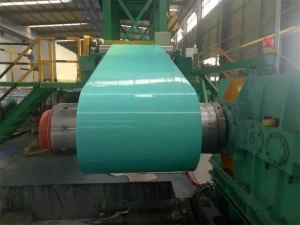
The macroeconomic shift toward Electric Vehicles (EVs) has fundamentally altered structural steel specifications. Vehicle battery enclosures, A/B-pillar reinforcements, roof rails, and bumper beams necessitate ultra-high-strength steel (UHSS) capable of withstanding extreme impact tests. Wholesale steel aluminum-silicon alloy coating manufacturers fulfill this critical demand by providing pre-coated coils and cut sheets that undergo press-hardening without requiring post-forming shot blasting, drastically lowering factory CAPEX and OPEX for automotive assemblers.
Beyond mobility engineering, energy supply infrastructures—including commercial heat exchangers, biomass combustion chambers, thermal power plant tubing, and household appliance heating elements—increasingly mandate Al-Si coated steel sheet to replace expensive 300-series stainless steels, achieving up to a 35% reduction in total raw material procurement costs.
3. Macro Sector Turnkey Solutions & Engineering Integration
Tailored supply-chain solutions engineered specifically for high-stress manufacturing sectors.
Automotive Body-In-White (BIW)
Challenge: Micro-cracking and liquid metal embrittlement (LME) caused by standard zinc coatings in high-temperature press hardening.
Al-Si Solution: Pre-coated Al-Si sheets form a protective iron-aluminum intermetallic alloy during heating, guaranteeing microstructural integrity, pristine surface finishes, and direct paintability without shot-blasting.
HVAC & Industrial Thermal Equipment
Challenge: Thermal fatigue, sulfurous gas erosion, and rapid oxidation in industrial furnace liners and heat exchanger tubing.
Al-Si Solution: High-density Al-Si alloy coating prevents thermal oxidation up to 800°C, offering superior thermal reflection (>80%) to maximize heat efficiency in boilers, ovens, and water heaters.
Exhaust Systems & Catalyst Housings
Challenge: Severe internal condensate corrosion combined with high external operating temperatures in catalytic converters and mufflers.
Al-Si Solution: Type 1 Al-Si coating delivers dual resistance against high-temperature atmospheric scaling and wet acidic condensate attack, dramatically extending exhaust component lifespans.
4. Localized Support, Regulatory Compliance & Quality Assurance
Global steel procurement demands unyielding compliance with international material specifications, environmental mandates, and localized tariff frameworks.
Global Quality Standards Adherence
Our network of wholesale steel aluminum-silicon alloy coating production lines adheres strictly to global metallurgical specifications:
- EN 10346: Continuously hot-dip coated steel flat products (AS120, AS150 coatings).
- ASTM A463 / A463M: Standard Specification for Steel Sheet, Aluminum-Coated, by the Hot-Dip Process (Type 1 & Type 2).
- IATF 16949 & ISO 9001: Automotive quality management systems governing coil thickness tolerances, adhesion testing, and surface defects.
- JIS G3314: Hot-dip aluminum-coated steel sheets and coils.
Environmental & Carbon Neutrality Alignment
With increasing scrutiny under the EU Carbon Border Adjustment Mechanism (CBAM) and global ESG standards, modern Al-Si coating production incorporates green steel technology:
- REACH & RoHS Compliance: 100% free from hexavalent chromium (Cr6+), lead, cadmium, and dangerous passivating chemicals.
- Hydrogen-Assisted Annealing: Reducing Scope 1 carbon footprints during coil annealing and furnace heating.
- EAF Route Integration: Offering high-recycled-content steel substrate options for reduced lifecycle embodied carbon.
Localized Warehousing & Processing
To eliminate lead-time uncertainty and mitigate ocean freight disruptions, structured manufacturer-direct purchasing programs provide:
- Precision Slitting & Blanking: Custom narrow coil widths, trapezoidal blanks, and laser-welded blank configurations.
- VCI Seaworthy Packaging: Multi-layer anti-rust vapor barrier wrapping and steel-cradled export packaging to prevent transit corrosion.
- JIT Delivery Hubs: Regional buffer stocking to support Tier-1 stamping schedules with zero stockout risk.
5. Technical Roadmap & Next-Generation Material Innovations
As industry demands push structural boundaries toward higher thermal limits and reduced mass, wholesale steel aluminum-silicon coating manufacturers are pioneering advanced alloy chemistries.
Addition of trace Magnesium and Rare Earth (RE) elements into the Al-Si bath to enhance cut-edge self-healing protection and salt spray resistance.
Development of AS50 to AS80 low-weight coating specifications designed for rapid thermal cycle press-hardening, cutting furnace dwelling time by 15%.
Integration of Al-Si coatings with 2000 MPa grade Ultra-High Strength Steels containing high boron/manganese formulations for next-gen vehicle crash cages.
Deployment of inline optical pyrometry and automated x-ray fluorescence (XRF) gauge control to ensure coating thickness uniformity within ±1 micron.
Industrial Grade Alloy & Steel Solutions (Part II)
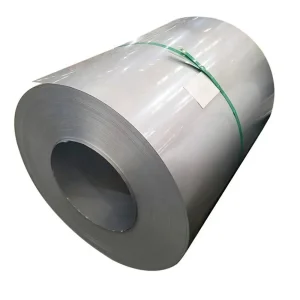
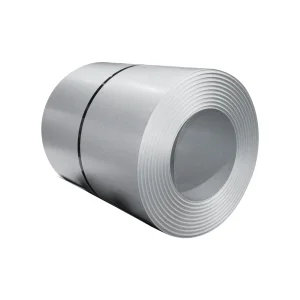
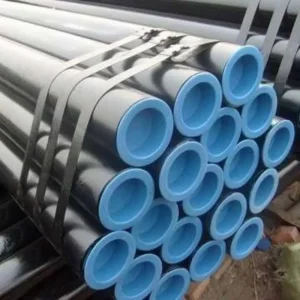
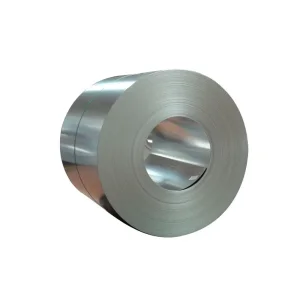
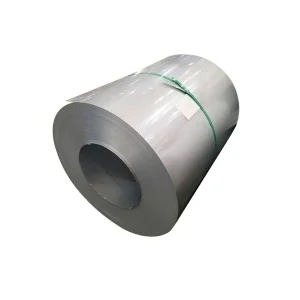
Explore our full line of stainless, Zn-Al-Mg, seamless structural, GI sheet, and specialized electrical steel coils.
6. Frequently Asked Questions (Technical & Procurement)
In-depth answers curated by senior metallurgical engineers and international steel purchasing directors.
- AS80 / AS080 (approx. 40 g/m² per side): Ideal for light heat shields and thin-gauge automotive press hardening.
- AS120 / AS120 (approx. 60 g/m² per side): The standard automotive baseline for Usibor 1500 structural members.
- AS150 / AS150 (approx. 75 g/m² per side): Heavy-duty thermal protection for industrial heat exchangers, exhaust manifolds, and kiln components.