
Featured Corrosion-Resistant Metal Products (Batch 01)
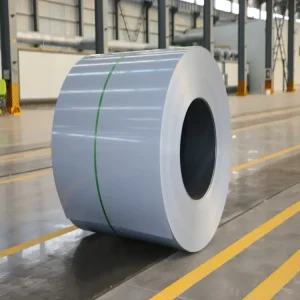
Direct Factory Supply of High-Zinc Galvanized, Stainless, and Alloy-Coated Steels
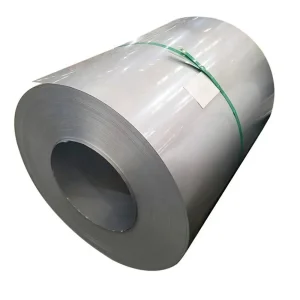
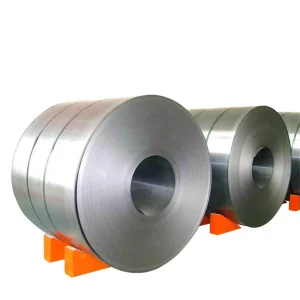


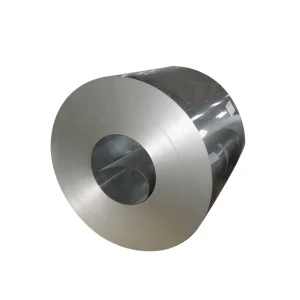
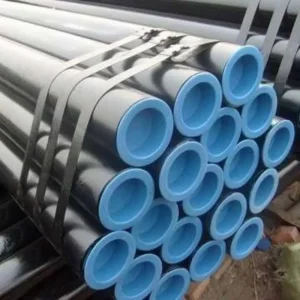

1. Executive Summary & The Global Corrosion Prevention Landscape
Metallic oxidation and atmospheric degradation cost the global industrial economy an estimated $2.5 trillion annually—approximately 3.4% of global Gross Domestic Product (GDP). For global procurement managers, civil engineers, and manufacturing OEMs, sourcing reliable rust-preventing metal solutions is not merely a material selection choice; it is an overarching risk-management strategy that directly dictates structural asset longevity, operational safety, and Total Cost of Ownership (TCO).
The Electrochemical Challenge
Unprotected ferrous metals naturally revert to their lowest thermodynamic energy state through oxidation. When exposed to ambient moisture ($H_2O$) and atmospheric oxygen ($O_2$), steel undergoes anodic dissolution:
Anodic Reaction: Fe → Fe²• + 2e¯
Cathodic Reaction: O‚ + 2H‚O + 4e¯ → 4OH¯
Precipitation: Fe²• + 2OH¯ → Fe(OH)‚ → Fe‚O‚•H‚O (Red Rust)
Without specialized sacrificial metallurgy or protective dielectric barriers, structural integrity deteriorates exponentially in marine, agricultural, and industrial microclimates.
The Modern Paradigm Shift
Traditional rust prevention relied heavily on localized post-fabrication liquid painting or temporary anti-rust oils—solutions that require frequent maintenance re-application and are prone to premature micro-cracking. Today's global supply chain demands pre-engineered corrosion defense directly at the manufacturing level.
Leading Chinese steel mills and structural pipe factories now deploy advanced continuous hot-dip galvanizing, galvalume alloying (Al-Zn), galvannealing (Zn-Fe alloy), and surface passivation treatments during primary rolling. This guarantees uniform micro-structural protection prior to export and installation.
2. Technical Deep-Dive: Anti-Corrosion Mechanisms & Material Matrix
Selecting the appropriate wholesale metal specification requires a granular engineering understanding of sacrificial vs. barrier anti-rust mechanisms. Below is a detailed technical comparative matrix of anti-corrosion methodologies engineered across China's leading mill production lines.
| Technology / Material | Primary Protection Mechanism | Coating Mass / Spec Range | Optimal Environment | Key Industrial Applications |
|---|---|---|---|---|
| Hot-Dip Galvanizing (HDG) | Sacrificial Anodic Protection (Zinc Anode) & ZnO Barrier | Z100 to Z600 (Up to 85 μm thickness) | Outdoor, Marine, High Humidity (ISO 12944 C3-C5) | Agricultural Greenhouses, Structural Pipes, Solar Racking |
| Galvannealed Steel (ZF / Zn-Fe Alloy) | Intermetallic Fe-Zinc Diffusion Layer (10% Fe) | ZF60 to ZF275 (Matte Gray Surface) | High Weldability & Direct Automotive Painting | Automotive Stamping, HVAC Cabinets, Appliance Housings |
| Aluzinc / Galvalume (GL) | 55% Al, 43.4% Zn, 1.6% Si Dual Barrier/Sacrificial | AZ50 to AZ180 Coating Density | High Temperature & Acid Rain Atmosphere | Industrial Corrugated Roofing, Cladding, Heat Shields |
| Stainless Steel (Austenitic/Duplex) | Self-Healing Passive Chromium Oxide (Cr‚O&sbcombo;) Layer | Cr > 16%, Ni > 8%, Mo addition (316/2205) | Aggressive Chemical, Marine & Cryogenic | Chemical Processing, Offshore Energy, Architectural Trim |
| Hot Rolled Pickled & Oiled (HRPO) | Temporary Chemical Rust-Inhibitive Oil Film over Acid-Cleaned Surface | Controlled Oil Density (1.0 to 3.0 g/m²) | Indoor Stamping & Post-Powder Coating Operations | Precision Automotive Parts, Heavy Structural Framing |
Microstructure Engineering: The Zinc-Iron Phase
In hot-dip galvanized and galvannealed steel, rust protection is dictated by the formation of discrete metallurgical alloy phases when molten zinc reacts with the steel substrate at ~450°C:
- Gamma Phase (Γ): Fe‚Zn‚‚ (21-28% Fe) - Extremely thin, hard intermetallic interface layer providing adhesion.
- Delta Phase (δ): FeZn‚‚ (7-12% Fe) - Columnar structure offering ductile impact resistance.
- Zeta Phase (ζ): FeZn‚‚ (5-6% Fe) - Feathery crystals forming the bulk of the alloy coating.
- Eta Phase (η): 100% Free Zinc - Soft, outer ductile sacrificial layer protecting against mechanical scratch damage.
ISO 9223 Corrosivity Category Life Expectancy
Engineers must match the coating weight (e.g., Z275 vs Z600) to the targeted ambient corrosion rate:
- C1 (Very Low - Indoor Heated): Zinc loss < 0.1 μm/yr. Service life > 100 years.
- C3 (Medium - Urban / Moderate Marine): Zinc loss 0.7 to 2.1 μm/yr. Z275 coating lasts ~30+ years.
- C5 (Very High - Marine / Offshore): Zinc loss 4.2 to 8.4 μm/yr. Requires heavy Z600 or Zn-Al-Mg advanced alloy coatings.
3. China Industry 4.0: Supply Chain Resilience & Modern Factory Efficiency
As global supply chains navigate economic volatility, Chinese manufacturing clusters—particularly located around Tianjin and Northern steel hubs—have evolved into highly integrated, digitalized production ecosystems. Buying wholesale rust-preventing metals directly from these advanced OEM factories provides unmatched cost-efficiency, technical precision, and lead-time stability.
Upstream Integration
Direct integration with primary liquid iron reduction mills ensures raw material purity, low sulfur/phosphorus content, and tight chemical tolerances.
Continuous Galv Lines
Automated continuous hot-dip galvanizing lines equipped with dual nitrogen knife gas wiping system regulate coating mass within ±2 g/m² accuracy.
Online NDT Quality Check
Real-time eddy current testing, laser wall-thickness scanning, and continuous ultrasonic seam inspection eliminate structural defects prior to coil slitting.
Seaworthy Preservation
Multi-layer export packaging utilizing VCI (Volatile Corrosion Inhibitor) paper, galvanized steel end-caps, and desiccant packs for safe ocean transit.
Factory Automation & Scale Advantage
Modern Tianjin factories operate high-frequency electric resistance welding (HFW/ERW) pipe mills alongside large-capacity continuous color-coating and galvanizing lines. With monthly outputs exceeding 100,000 metric tons, these facilities leverage massive economies of scale.
This scale enables customized spangle control (regular, minimized, or zero spangle), tailored surface passivation (chromate-free eco-passivation, oiled, or dry skin-passed), and custom length cutting without incurring prohibitive tooling surcharges.
Quality Assurance & ISO Compliance
To meet stringent Western and international engineering standards, top-tier Chinese manufacturers operate rigorous in-house metallurgical testing laboratories certified to ISO/IEC 17025.
- Salt Spray Testing (ISO 9227 / ASTM B117): Continuous fog testing validating 500h to 1500h zero red-rust performance.
- Coating Mass Verification: Gravimetric strip-weigh-strip testing (ISO 1460) verifying accurate zinc weight per square meter.
- Mechanical Tensile & Bend Testing: Verifying yield strength (e.g., G550, DX51D, S355) and zero coating flaking during tight radius bends.
4. Global Procurement Demand Trends & Sourcing Decision Matrix
International procurement strategy varies significantly across geographic regions due to local climate challenges, regulatory standards, and tariff frameworks. Understanding regional user intent empowers sourcing managers to optimize material specifications.
North America & Europe
Primary Intent: Strict Compliance & High Yield Strength.
Buyers prioritize ASTM A653, ASTM A53, EN 10346, and EN 10219 standards. Strong demand for G550 high-tensile structural roofing sheets, Z275 hot-dip galvanized square tubing for solar frameworks, and CRNGO silicon steels meeting stringent energy-efficiency directives.
Southeast Asia & LATAM
Primary Intent: Cost-Per-Meter & Tropical Humidity Defense.
Demands focus on high-zinc agricultural pipes for greenhouse construction and corrugated PPGI/Aluzinc roofing panels capable of resisting intense tropical rainfall, UV radiation, and localized agricultural fertilizer corrosion.
Middle East & Africa
Primary Intent: Thermal Reflectivity & Desert Salt Fog Resilience.
High preference for Galvalume (AZ150) due to its thermal reflection properties, heavy-gauge HRPO plates for oil & gas storage tanks, and high-zinc hot-dip galvanized seamless pipes for water distribution infrastructure.
Engineering Sourcing Formula: Life-Cycle Cost Analysis (LCCA)
When evaluating wholesale vendor pricing, strategic buyers utilize the LCCA model rather than initial purchase price ($C_{init}$):
LCCA = C_{init} + \sum_{t=1}^{n} \frac{C_{maint}(t) + C_{failure}(t)}{(1 + r)^t} - \frac{S_n}{(1 + r)^n}
By specifying factory-applied Z275 galvanizing or Galvalume over standard thin pre-galvanized options, maintenance costs ($C_{maint}$) drop to near zero over a 25-year service window, yielding up to a 60% reduction in net present value structural expenditure.
5. Sector-Specific Application Scenarios & Case Engineering
Different industrial deployment scenarios require precise matching between the corrosive environment and the engineered metal product.
A. Agricultural Greenhouses & Irrigation
Environmental Stress: High internal humidity (85-95% RH), condensation, soil acids, and corrosive nitrogen/ammonia fertilizer vapors.
Engineered Solution: High-Zinc Hot-Dip Galvanized Oval & Round Steel Pipes with Z275-Z400 coating weights. Internal and external fluid immersion dipping guarantees that internal pipe walls resist standing water corrosion.
B. Solar Photovoltaic (PV) Mounting Arrays
Environmental Stress: 25-30 year maintenance-free outdoor exposure in deserts, coastal zones, and open farmland.
Engineered Solution: Pre-galvanized and post-galvanized C/Z purlins, SHS/RHS hollow sections, or Zinc-Aluminum-Magnesium (Zn-Al-Mg) coils that provide self-healing edge protection when cut or punched on site.
C. Precision Automotive Stamping & Electrical Motors
Environmental Stress: Deep drawing micro-stress, high cyclic mechanical vibration, and requirements for paint adhesion or electromagnetic flux insulation.
Engineered Solution: Galvannealed ZF60/ZF275 for zero-flaking welded automotive body panels, and CRNGO Silicon Electrical Steel Coils (M310 to M800) engineered with organic/inorganic insulation varnish to prevent inter-laminar rust without diminishing magnetic permeability.
D. Heavy Industrial Roofing & Architectural Cladding
Environmental Stress: Severe acid rain, industrial chemical exhaust, marine salt air, and thermal expanding stresses.
Engineered Solution: G550 High-Strength Aluzinc Galvalume and PPGI Corrugated Roofing Sheets. The 55% Aluminum phase acts as a durable thermal and chemical barrier, while the Zinc phase delivers localized galvanic cut-edge sacrificial defense.
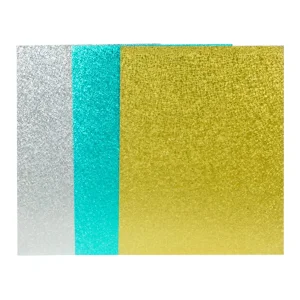
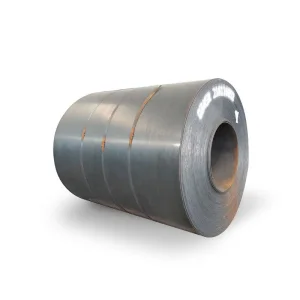
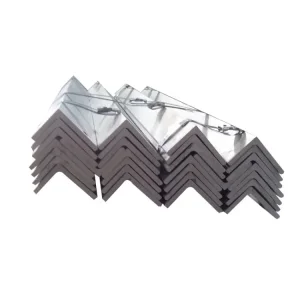
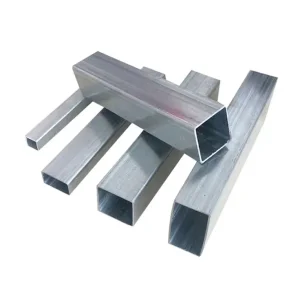
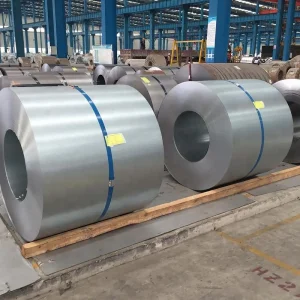
Featured Corrosion-Resistant Metal Products (Batch 02)
Precision Cold Rolled, Galvalume, Tinplate, and Structural Profile Inventory


6. Frequently Asked Questions (Technical Sourcing & Engineering)
In-depth technical clarifications curated by lead metallurgical engineers and international procurement officers.
Q1: How does Galvannealed steel (ZF60/ZF275) differ from standard Hot-Dip Galvanized steel (Z275) in rust prevention and paintability?
Galvannealed steel undergoes an inline post-galvanizing annealing furnace treatment at ~500-550°C, causing iron from the steel substrate to diffuse into the molten zinc layer. This forms a complete zinc-iron alloy coating (~90% Zn, 10% Fe) with a matte gray appearance. Unlike standard HDG (Z275), which has a ductile free-zinc surface (η phase) that can pose adhesion challenges for post-painting, Galvannealed steel features a micro-porous, hard intermetallic surface structure. This surface allows direct primer/paint application without chemical pretreatments, while completely eliminating paint flaking or blistering during automotive deep drawing and robotic welding operations.
Q2: What prevents rust from forming on exposed cut edges of galvanized pipes and corrugated steel sheets?
Exposed cut edges are protected through cathodic galvanic sacrificial protection. Because zinc has a lower electrochemical potential (-0.76V) than iron (-0.44V), when moisture bridges an exposed steel cut edge and the adjacent zinc coating, an electrochemical cell is established. Zinc sacrificially corrodes to protect the exposed steel core. Furthermore, zinc corrosion byproducts—specifically basic zinc carbonate [$Zn_5(OH)_6(CO_3)_2$]—precipitate over the cut edge, bridging the exposed seam and establishing a secondary physical passivation barrier. For extra-severe environments, Zinc-Aluminum-Magnesium (Zn-Al-Mg) coatings form a self-healing Simonkolleite [$Zn_5(OH)_8Cl_2•H_2O$] mineral layer across exposed edges.
Q3: Why is Hot Rolled Pickled & Oiled (HRPO) steel preferred over raw hot-rolled steel for precision stamping and indoor structures?
Raw hot-rolled steel develops an abrasive, dark blue mill scale ($Fe_3O_4 / FeO$) during hot rolling. This scale frequently flakes off during stamping, ruining stamping dies, clogging press tooling, and causing uneven paint adhesion. HRPO steel undergoes a continuous hydrochloric acid ($HCl$) pickling bath that completely strips the mill scale, followed by the electro-static application of a thin rust-inhibitive oil film (1.0-3.0 $g/m^2$). HRPO delivers the clean surface finish and tight dimensional tolerances of cold-rolled steel at a significantly lower structural cost, providing temporary indoor corrosion resistance during storage and manufacturing.
Q4: How does ocean freight transit cause "white rust" (wet storage stain), and how do export factories mitigate it?
"White rust" or wet storage stain [$Zn(OH)_2$] occurs during ocean freight when zinc-coated products are exposed to trapped moisture in low-oxygen environments (e.g., tightly bound coil laps or nested pipe bundles subject to thermal condensation). Lacking atmospheric carbon dioxide ($CO_2$), zinc cannot form its protective zinc carbonate film, corroding rapidly into white hydroxide powder. Premium Chinese export factories mitigate this by applying trivalent chromium or chromate-free chemical passivation, utilizing water-repellent protective oils, wrapping coils in VCI (Volatile Corrosion Inhibitor) vapor barriers, and stowing cargo in temperature-monitored, desiccated vessel holds.
Q5: What standard mill test certificates (MTC) and third-party quality documentation should global buyers demand?
Wholesale buyers must demand an EN 10204 Type 3.1 Mill Test Certificate issued directly by the manufacturing factory. The MTC must detail heat number traceability, full ladle chemical analysis (C, Mn, Si, P, S, Cr, Ni content), mechanical yield and tensile strength, total elongation percentages, and exact coating mass verification (e.g., Triple Spot Test results in $g/m^2$). Additionally, for major municipal or EPC infrastructure tenders, buyers should request third-party verification reports from accredited agencies such as SGS, BV, or Intertek validating compliance with ISO 9227 salt spray fog testing and ASTM A653 / A53 specifications.
Q6: How does non-grain-oriented silicon electrical steel (CRNGO) prevent core oxidation while preserving magnetic permeability?
CRNGO silicon steel coils contain 1.0% to 3.5% Silicon ($Si$), which increases electrical resistivity and suppresses eddy current core losses in electric motors and transformers. To prevent surface rust without adding thick dielectric barriers that would reduce the stacking factor, factories apply extremely thin (0.5 to 2.0 μm) inorganic or organic-inorganic hybrid insulation coatings (e.g., C-3, C-5, or C-6 class). These micro-thin coatings provide corrosion protection during motor rotor/stamping storage and thermal annealing while maintaining inter-laminar resistance and high magnetic flux density.
Partner with Certified Chinese Anti-Corrosion Manufacturers
Navigating global market volatility requires direct access to high-capacity, quality-assured steel mills and pipe manufacturing facilities. Secure factory-direct pricing, certified ISO quality compliance, and customized anti-corrosion engineering tailored precisely to your project's environmental requirements.