
Featured Factory-Direct Steel Products & Coils
Direct mill inventory, custom dimensional tolerances, and certified structural steel solutions engineered for global commercial deployment.
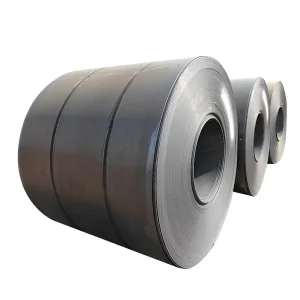
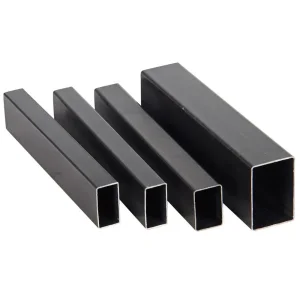
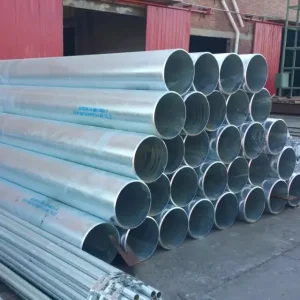
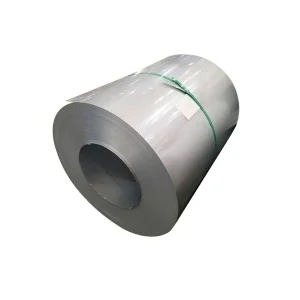
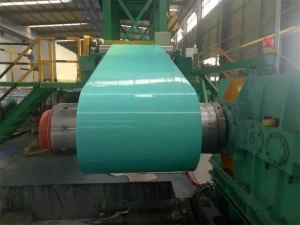
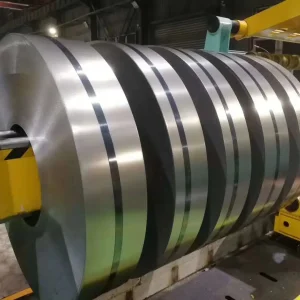
Executive Metallurgical & Industrial Masterclass: Hot Rolled Coils (HRC)
Understanding the thermomechanical processing, microalloying science, and structural fundamentals that govern wholesale hot rolled coil purchasing.
Hot Rolled Steel Coils (HRC) form the core backbone of global industrial infrastructure. Produced via continuous casting and high-temperature rolling above the steel’s recrystallization temperature (typically exceeding 1,100°C / 2,012°F), HRC serves as both a primary structural component and a critical feedstock for cold rolling mills, tube manufacturing plants, and heavy fabrication facilities. For global procurement officers and B2B buyers seeking wholesale hot rolled steel coils with best price opportunities, achieving commercial advantage requires a granular understanding of steel chemistry, phase transformation kinetics, and mechanical performance metrics.
Thermomechanical Controlled Processing (TMCP) & Microalloying Science
Modern HRC production has evolved beyond basic hot rolling. State-of-the-art Chinese manufacturing facilities utilize Thermomechanical Controlled Processing (TMCP), which tightly integrates precise slab reheating temperatures, multipass roughing and finishing rolling reductions, and accelerated run-out table cooling (ACC). This controlled thermal history refines the austenitic grain structure before austenite-to-ferrite phase transformation, yielding ultra-fine ferrite-pearlite or bainitic microstructures.
Through strategic microalloying with Niobium (Nb), Vanadium (V), and Titanium (Ti) in quantities under 0.10%, steelmakers induce precipitate hardening and grain refinement without increasing the Carbon Equivalent Value (CEV). This yields high-strength low-alloy (HSLA) steel coils with exceptional yield strength (up to 700 MPa) while retaining superior weldability and cold formability.
| Standard & Grade | Yield Strength (MPa) | Tensile Strength (MPa) | Elongation (%) | CEV Max (%) | Primary Industrial Application |
|---|---|---|---|---|---|
| EN 10025-2 S235JR | ≥ 235 | 360 – 510 | ≥ 26 | 0.35 | General construction, light structural sections, stamping |
| EN 10025-2 S355JR / J2 | ≥ 355 | 470 – 630 | ≥ 22 | 0.45 | Heavy structural columns, bridges, crane gantry beams |
| ASTM A36 | ≥ 250 | 400 – 550 | ≥ 20 | 0.40 | North American structural steel framing, storage tanks |
| JIS G3101 SS400 | ≥ 245 | 400 – 510 | ≥ 21 | 0.40 | Asia-Pacific civil engineering, machinery beds, yellow goods |
| GB/T 700 Q235B | ≥ 235 | 370 – 500 | ≥ 26 | 0.38 | Standard welded pipe feedstock, structural framing, scaffolding |
| GB/T 1591 Q345B / Q355B | ≥ 345 / 355 | 470 – 630 | ≥ 21 | 0.44 | High-load pressure vessels, yellow goods, solar mounting structures |
Weldability Index & Carbon Equivalent Formula
For industrial buyers fabricating welded pipes, structural columns, or pressure equipment, the Carbon Equivalent Value (CEV) dictates preheating requirements and weld-crack resistance. Responsible China hot rolled steel manufacturers calculate CEV using the standard International Institute of Welding (IIW) formula:
A CEV below 0.40% indicates excellent weldability under standard MIG/TIG and submerged arc welding (SAW) without mandatory preheating, significantly lowering labor and energy costs during secondary manufacturing.
Global Commercial & Industrial Market Dynamics
Deconstructing price formation mechanisms, Total Cost of Ownership (TCO), freight economics, and international trade policy impacts on wholesale procurement.
Wholesale steel coil pricing is dictated by a complex matrix of raw material inputs (62% Fe Iron Ore Fines, Coking Coal, Premium Heavy Melting Scrap), blast furnace vs. electric arc furnace operational rates, ocean freight shipping indexes (Baltic Dry Index, containerized vs. breakbulk chartering), and regional tariff frameworks (EU CBAM, US Section 232, regional anti-dumping duties).
FOB vs. CFR/CIF Benchmark Mechanics
Wholesale HRC pricing fluctuates based on port of loading (e.g., Tianjin Port, Qingdao, Bayuquan). Understanding FOB mill cost vs. ocean freight risk allocation enables procurement teams to lock in forward shipping rates via breakbulk chartering or containerized flexi-booking.
Total Cost of Ownership (TCO)
The sticker price per metric ton represents only part of total cost. True TCO incorporates coil weight consistency, edge trim scrap loss, coil telescoping damage risk, surface scale pickle-ability, and inventory holding costs.
CBAM & Decarbonization Pressures
With the European Union’s Carbon Border Adjustment Mechanism (CBAM) transitioning to active tax levying, tracking embedded carbon intensity ($tCO_2 / t$) in steelmaking has transformed from a ESG preference into a hard commercial compliance mandate.
China Factory Supply Chain Resilience & Superiority
How concentrated industrial clusters, integrated logistical corridors, and advanced metallurgical capital expenditure deliver unprecedented quality and cost performance.
China's dominance in hot rolled steel coil manufacturing is backed by concentrated mega-industrial ecosystems, primarily clustered around the Bohai Rim (Tianjin, Tangshan, Handan, and Cangzhou). These industrial hubs integrate raw material unloading ports, coking plants, sintering facilities, blast furnaces, continuous slab casters, and high-speed strip rolling mills within contiguous manufacturing corridors.
1. Mega-Scale Continuous Rolling Mills
Modern Chinese hot strip mills (HSM 1580mm, 1780mm, and 2250mm lines) operate at rolling speeds exceeding 25 meters per second. Automated Hydraulic Automatic Gauge Control (AAGC) and Work Roll Bending systems ensure cross-sectional thickness tolerances within ±0.02 mm across a 1,500 mm wide strip.
2. Integrated Port & Logistics Infrastructure
Proximity to Tier-1 deepwater ports such as Tianjin Port allows for immediate factory-to-berth transportation. Specialized heavy-duty coil truck fleets and covered port warehousing shield unpickled hot rolled coils from atmospheric corrosion and seawater humidity before vessel loading.
3. In-House Metallurgical Testing
Leading China manufacturers host CNAS-accredited testing laboratories capable of conducting automated SPECTRO optical emission spectrometry chemical analysis, ZwickRoell tensile testing, Charpy V-notch impact testing at -40°C, and ultrasonic flaw detection.
Technical Roadmap & Future Manufacturing Horizons
Next-generation steelmaking technology: From ultra-thin hot strip casting to hydrogen metallurgy and AI-driven quality assurance.
Thin Slab Casting & Rolling (TSCR)
TSCR technology eliminates slab reheating furnaces by casting liquid steel directly into 50-70mm thin slabs and feeding them directly into compact rolling mills. This process achieves strip thicknesses down to 0.8mm—directly competing with cold rolled coil pricing while saving up to 60% in thermal energy.
Green Steel & H2-DRI Integration
China’s leading steel conglomerates are pioneering Green Hydrogen Direct Reduced Iron (H2-DRI) integrated with Electric Arc Furnaces (EAF). This cuts Scope 1 and Scope 2 emissions by up to 75%, allowing international buyers to source low-carbon HRC compliant with future global carbon taxes.
AI Surface Defect & Crown Control
High-resolution machine vision vision algorithms scan 100% of the coil surface at full production speeds, instantly identifying scale inclusions, scratches, and edge slivers. Automated profile models adjust rolling pressure in real-time to guarantee crown symmetry across every meter of strip.
Localized Industrial Application Scenarios
How target steel grades and specialized physical processing match specific regional engineering requirements and environmental stresses worldwide.
1. Structural Infrastructure & Commercial High-Rise
Primary Grades: S355JR, S355J2+N, ASTM A572 Grade 50.
Scenario: Heavy welded H-beams, box columns, and floor decking plates in earthquake-active zones requiring guaranteed minimum yield strength and high impact toughness at sub-zero temperatures (-20°C testing).
2. Energy Transmission & API Line Pipe Manufacturing
Primary Grades: API 5L PSL1 / PSL2 (Grades B, X42, X52, X65, X70).
Scenario: Feedstock for Spiral Submerged Arc Welded (SSAW) and High-Frequency Welded (HFW) line pipes transporting natural gas, crude oil, and slurry across harsh desert and arctic terrains.
3. Heavy Automotive Chassis & Yellow Goods
Primary Grades: SAPH440, S500MC, S700MC, Q690D.
Scenario: Stamped truck chassis frames, excavator booms, and agricultural machinery components requiring high strength-to-weight ratios to increase vehicle payload efficiency.
Localization Support, Quality Assurance & Compliance
Mitigating overseas procurement risks through mill certification, third-party inspections, and custom seaworthy export packaging.
Mill Test Certificate (MTC) EN 10204 3.1 & 3.2
Every wholesale coil shipment is accompanied by an original MTC detailing heat numbers, chemical ladle analysis, mechanical test results (Yield, Tensile, Elongation, Impact), grain size, and non-destructive testing verification. Independent 3rd party verification by SGS, BV, Intertek, or Lloyd's Register is fully supported.
Strict Dimensional & Surface Tolerances
Products are manufactured in full alignment with international tolerance standards: EN 10051 for hot rolled steel sheet/strip, ASTM A635/A568 for heavy thickness coils, and JIS G3193. Standard crown target is kept within 1-2% of nominal gauge to prevent processing misalignment during slitting.
Heavy-Duty Seaworthy Export Packaging
To withstand multi-week ocean transport across varying climate zones, coils undergo rigorous export packing: anti-rust oiled or dry passivated surface treatment, VCI (Vapor Corrosion Inhibitor) plastic wrapping, galvanized outer metal eye rings, side edge protectors, and minimum 4 steel circumferential straps plus 3 radial straps.
Additional Wholesale Factory Direct Offerings
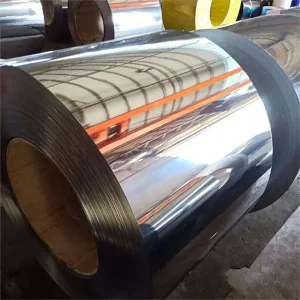
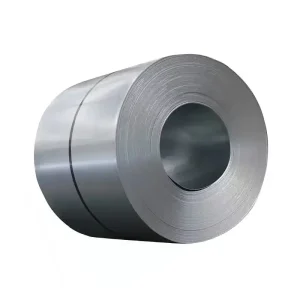
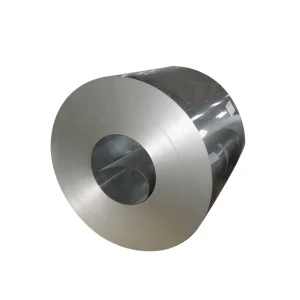
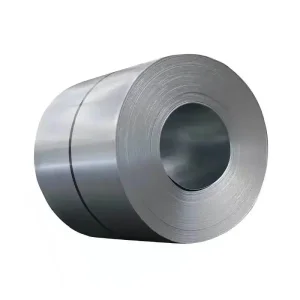
Expand your product sourcing portfolio with our full range of specialty flat steel coils, silicon steels, and coated structural profiles.
Frequently Asked Questions (Technical Sourcing & Procurement FAQ)
Expert answers addressing metallurgical selection, price optimization, shipping logistics, and compliance for wholesale hot rolled coil buyers.