
Prime Industrial Steel Coils & Precision Components
Mill-direct inventory engineered for automotive, structural, and heavy industrial applications worldwide.
Industry Executive Report: Strategic Sourcing of Galvanized & Galvannealed Coils
An engineering-grade analysis of global coated flat steel production, metallurgical coating physics, and mill-direct procurement paradigms.
Manufacturing Excellence & E-E-A-T Standards
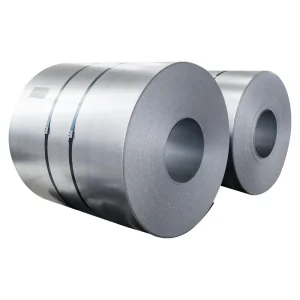
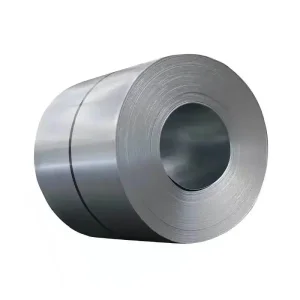
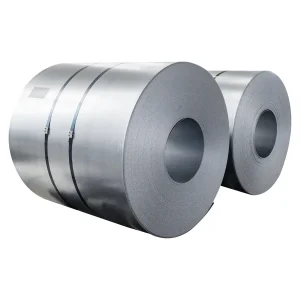
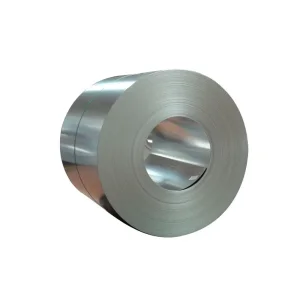
In modern global manufacturing, purchasing wholesale galvanized steel coils and galvannealed iron-zinc alloy coils requires strict compliance with international standards. Our manufacturing infrastructure operates state-of-the-art continuous hot-dip galvanizing lines (CGL) equipped with online X-ray fluorescence coating weight gauges, optical surface inspection systems, and automated closed-loop zinc pot chemistry controls.
Whether supplying structural steel profiles, high-formability deep-drawing sheets (DX53D/DX54D), or specialized galvannealed coils (ZF60 to ZF275), our products conform precisely to ASTM A653/A653M, EN 10346, and JIS G3302 standards. Every shipment is delivered with comprehensive EN 10204 3.1 Mill Test Certificates (MTC) verifying chemical heat analysis, yield strength, tensile elongation, and coating mass adhesion testing.
Information Gain: Zinc-Iron (Zn-Fe) Phase Metallurgy
A common misconception in the procurement sector is conflating standard hot-dip galvanized (GI) coils with galvannealed (GA) coils. While traditional GI features a free-zinc surface layer, galvannealing introduces an inline thermal diffusion furnace operating at 500°C–560°C immediately after the zinc bath.
This process transforms the molten zinc layer into a fully alloyed zinc-iron coating containing 8% to 12% iron by weight. The resulting intermetallic structure consists of discrete intermetallic phases: Zeta (ζ, FeZn13), Delta (δ, Fe10Zn93), and Gamma (γ, Fe3Zn10). This phase transition yields superior weldability for automated resistance spot welding and exceptional paint adhesion for automotive electro-deposition (ED) primers.
Global Industrial Landscape & Macro Sourcing Solutions
Analyzing global supply dynamics, tariff realignments, and multi-sector applications across tier-1 supply chains.
Automotive Body-in-White (BIW)
Automotive OEMs are rapidly shifting toward galvannealed zinc-iron alloy coils (DC51D+ZF, DC53D+ZF, DX54D+ZF). The micro-roughness of the alloyed surface provides high friction coefficients for anti-galling during deep stamping, while eliminating electrode zinc pickup during robotic resistance welding.
Solar PV Mounting Infrastructure
Utility-scale solar farms demand 25+ year structural lifespans under severe atmospheric exposure. Heavy zinc coated GI coils (Z275 to Z600) and emerging Zinc-Aluminum-Magnesium (ZAM) alloys provide sacrificial anodic protection for structural C/U purlins and ground-mount tracker posts.
HVAC & Ductwork Engineering
High-speed spiral duct roll-forming lines require zinc-coated steel coils with exceptional surface ductility and zero flaking. Lock-forming quality (LFQ) galvanized coils ensure tight seam closure without micro-cracking in the zinc layer, preventing internal oxidation.
Comparative Metallurgy: GI vs. Galvannealed (GA) vs. HRPO vs. Silicon Steel
In-depth technical specification matrix comparing coating structures, mechanical performance, and processing suitability.
| Steel Category | Coating Chemistry / Surface | Yield Strength Range (MPa) | Weldability Index | Primary Industrial Best-Use |
|---|---|---|---|---|
| Hot-Dip Galvanized (GI) | 100% Free Zinc (Zn) / Regular or Zero Spangle | 140 – 550 (Structural grades available) | Standard (Requires elevated welding current) | Roofing sheets, solar racks, C/Z purlins, outdoor enclosures |
| Galvannealed (GA / ZF) | Zn-Fe Alloy (8-12% Fe) / Matte Dark Grey Finish | 140 – 300 (Deep drawing automotive) | Superior (Optimal resistance spot welding) | Automotive unibody, structural brackets, painted appliance cabinets |
| Hot Rolled Pickled & Oiled (HRPO) | Scale-Free Cleaned Surface with Rust-Inhibitive Oil | 235 – 700 (High strength low alloy) | Excellent (Direct fusion welding without fumes) | Heavy stamping, wheel rims, frame rails, laser-cut components |
| Aluminized-Silicon Coated | 90% Al + 10% Si Coating Layer | 180 – 320 | Moderate (High thermal reflectivity) | Automotive exhaust heat shields, industrial baking trays, ducting |
| CRNGO Electrical Silicon Steel | Non-Grain Oriented Silicon Steel (1% - 3.5% Si) | 300 – 450 | Specialized Stamping / Lamination | Electric motor rotors/stators, power transformers, generators |
Localized Engineering Application Scenarios
Optimizing steel alloy selection to withstand localized environmental stresses and regional building codes.
High-Salinity Coastal & Marine Infrastructure
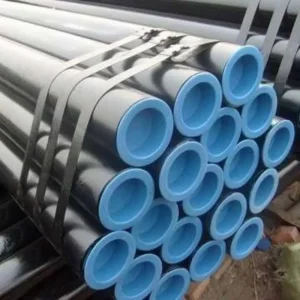
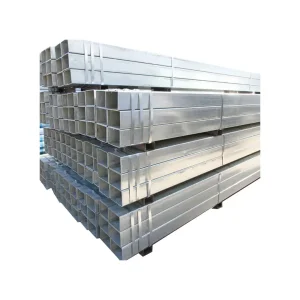
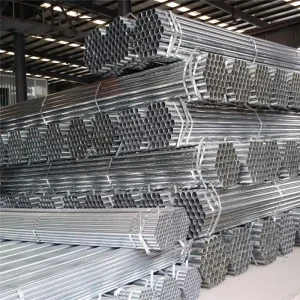
In coastal zones subject to C4 and C5 high-corrosivity atmospheric conditions, traditional thin-coated GI sheets experience rapid galvanic consumption. Sourcing heavy hot-dip galvanized steel pipe (ASTM A53 / BS 1387) combined with Z275/Z600 zinc coated coils guarantees sacrificial protection. The formation of basic zinc carbonate [ZnCO3·3Zn(OH)2] creates an insoluble passivation film, reducing annual corrosion rates down to < 0.5 µm/year.
Tropical Agricultural Greenhouses
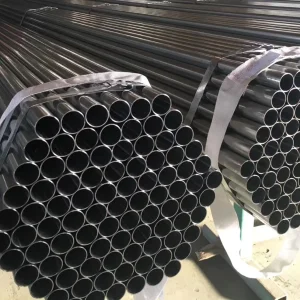
Greenhouse structures in humid, tropical agricultural zones face constant condensation, fertilizer runoff, and pesticide exposure. Sourcing thick-wall pre-galvanized or hot-dip galvanized structural tubing (40x40 SHS to 200x100 RHS) ensures structural integrity against wind shear while eliminating internal pipe corrosion through continuous inner-diameter hot-dip coating.
Technology Roadmap & Strategic Industry Outlook
Pioneering green steel metallurgy, AI-driven gauge consistency, and advanced surface passivation technologies.
Hydrogen-Based Green Steel Substrates
In compliance with EU CBAM regulations and global decarbonization mandates, mill lines are transitioning toward Direct Reduced Iron (DRI) powered by green hydrogen. This lowers the embodied carbon footprint of the base hot-rolled strip by up to 70% before hot-dip coating.
AI Coating Weight Closed-Loop Control
Integrating high-speed laser distance sensors with automated gas-knife jet controls allows dynamic adjustment of zinc coating thickness across coil lengths at rolling speeds over 200 m/min, yielding sub-micron coating uniformity across the coil width.
Hexavalent Chromium-Free Passivation
To satisfy strict REACH and RoHS chemical standards, advanced organo-silane and titanium-based environmentally friendly passivation chemical coatings are completely replacing traditional chromate treatment films without sacrificing salt-spray rust protection hours.
High-Performance Steel Tubes, Sections & Coils
Mill-direct structural tubing, electrical silicon coils, and coated steel solutions tailored for your global supply chain.
Engineering & Procurement FAQ: Galvanized & Galvannealed Coils
Search-intent mined answers providing technical clarity for B2B purchasing managers and metallurgical engineers.