
Featured Mill-Direct Steel & Silicon Products
Explore our top export-grade steel coils, electrical laminations, pipes, and structural profiles engineered for global manufacturing standards.


Wholesale CRNGO for Stator Core Manufacturing: Technical Dynamics
An authoritative evaluation of Cold-Rolled Non-Grain Oriented (CRNGO) silicon steel performance, magnetic domain control, and procurement economics for global electric motor OEMs.
In the contemporary electromechanical engineering landscape, Cold Rolled Non-Grain Oriented (CRNGO) Silicon Steel represents the foundational soft magnetic alloy required for rotating electrical machinery. Unlike Grain Oriented (CRGO) electrical steel—which prioritizes magnetic permeability along a single rolling direction for static transformer cores—CRNGO exhibits uniform isotropic magnetic properties across all planar directions. This multi-directional magnetic uniformity is vital for electric motor stators and rotors, where alternating magnetic flux rotates dynamically through 360 degrees of azimuthal orientation.
Global decarbonization initiatives, stringent MEPS (Minimum Energy Performance Standards) such as EU IE3/IE4/IE5 efficiency classes, and the explosive proliferation of Electric Vehicle (EV) traction drives have fundamentally shifted purchasing criteria for motor laminations. Stator core fabricators no longer source electrical steel purely based on raw material cost per metric ton. Instead, tier-1 motor manufacturers evaluate Information Gain indicators including core loss density ($P_{1.5/50}$ and $P_{1.0/400}$), high-field magnetic flux density ($B_{5000}$), lamination thickness uniformity ($\pm 0.005\text{ mm}$ strip crown tolerance), and insulation coating dielectric strength under thermal stress.
Standard Wholesale CRNGO Grade Reference for Stator Laminations
The following technical matrix outlines key physical, magnetic, and mechanical properties across international standard CRNGO silicon steel grades supplied for stator stamping applications:
| Standard Grade (IEC / EN) | Nominal Thickness (mm) | Max Core Loss $P_{1.5/50}$ (W/kg) | Min Magnetic Flux $B_{5000}$ (Tesla) | Minimum Stacking Factor (%) | Primary Stator Application Target |
|---|---|---|---|---|---|
| M230-35A | 0.35 mm | 2.30 W/kg | 1.60 T | 96.5% | EV Traction Motors & High-RPM Compressors |
| M270-35A | 0.35 mm | 2.70 W/kg | 1.62 T | 97.0% | Premium Servo Motors & Aerospace Actuators |
| M330-50A | 0.50 mm | 3.30 W/kg | 1.64 T | 97.5% | IE4 Premium Industrial Motors (50Hz/60Hz) |
| M470-50A | 0.50 mm | 4.70 W/kg | 1.66 T | 98.0% | Standard IE3 Industrial Induction Stators |
| M600-50A | 0.50 mm | 6.00 W/kg | 1.68 T | 98.0% | General HVAC Fan & Pump Motors |
| M800-64A | 0.65 mm | 8.00 W/kg | 1.70 T | 98.5% | Fractional HP Domestic Appliance Motors |
Silicon Metallurgy & Stator Core Manufacturing Physics
Deep dive into alloying balance, grain growth dynamics, insulation coating classes, and precision stamping mechanics.
Silicon-Aluminum Alloying Optimization
Silicon ($Si$, 1.0% to 3.5%) and Aluminum ($Al$, 0.2% to 1.0%) are added to iron matrix to increase electrical resistivity ($\rho$), thereby directly suppressing eddy current losses ($P_e$). However, excessive silicon content induces lattice embrittlement, increasing tool wear during progressive die stamping. Our optimized steel formulations maintain precise mechanical ductility (Yield strength 300–450 MPa) while minimizing overall iron loss.
Texture Control & Grain Refinement
Through specialized two-stage cold rolling and continuous annealing lines (CAL), the crystallographic orientation of CRNGO strip is tuned to optimize the $\{100\} \langle 001 \rangle$ cube texture. Controlled grain growth (target grain size: 50 to 120 $\mu\text{m}$) minimizes hysteresis loss ($P_h$) while maintaining isotropic flux density across longitudinal and transverse cutting angles.
Surface Insulation Coating Systems
To prevent interlaminar eddy current loops between stacked stator laminations, CRNGO coils are treated with advanced thin-film coatings:
• C-3: Organic coating for superior punchability and tool life.
• C-5: Inorganic-organic hybrid coating offering high breakdown voltage (>100 $\Omega\cdot\text{cm}^2$) and heat resistance during stress-relief annealing (SRA).
• C-6 / Backlack: Self-bonding coating enabling rivetless, weldless stator core stacks with reduced acoustic noise.
Global Procurement Requirements & Supply Risk Management
Strategic framework for tier-1 motor manufacturers to audit mill quality, slitting tolerances, and total cost of ownership (TCO).
Slitting Edge Burr & Width Precision
For high-speed progressive stamping dies operating at up to 400 strokes per minute, edge burr height must strictly remain below < 0.015 mm. Excessive slitting burrs cause interlaminar short-circuits during stator core stacking, degrading final motor efficiency by up to 3.5%. Our ultra-precision rotary slitting knives ensure width tolerances within $\pm 0.05\text{ mm}$ and edge camber under $1.0\text{ mm}$ per 2 meters length.
Moisture & Corrosion Control
Raw CRNGO strip is highly susceptible to superficial oxidation during transoceanic transit. All wholesale export shipments are wrapped with high-density Volatile Corrosion Inhibitor (VCI) paper, sealed inside aluminum barrier foil, and protected by heavy-duty steel outer casings mounted on eye-vertical or eye-horizontal seaworthy timber skids.
Vendor Managed Inventory (VMI)
To hedge against global silicon steel price volatility and lead-time disruptions, we partner with stator manufacturers via customized VMI and consignment buffer stock programs near key manufacturing hubs in North America, Europe, and Southeast Asia, guaranteeing continuous supply availability.
Mill Solutions & Custom Processing Capabilities
From master coil slitting to stress-relief annealing protocols, our processing facilities deliver ready-to-stamp electrical steel solutions.
High-Speed Precision Slitting
Capable of slitting master coils (up to 1250mm width) into narrow precision strips down to 15mm width. Equipped with automatic laser-guided tension control and online camera inspection systems that detect surface coating flaws in real time.
Stress Relief Annealing (SRA) Support
During progressive lamination punching, mechanical shear stress creates a work-hardened zone along cut edges, increasing local hysteresis loss. We provide technical protocols for post-stamping SRA in protective nitrogen-hydrogen atmospheres (750°C–780°C), fully restoring intrinsic magnetic performance.
Mill Test Certificate (MTC) Integrity
Every batch of CRNGO silicon steel coil is fully traceable back to the raw iron melt. We issue comprehensive EN 10204 3.1 Mill Test Certificates detailing specific Epstein frame magnetic testing results, physical chemical analysis, and coating thickness measurements.
Localization Support & International Quality Assurance
Ensuring full regulatory compliance across North American, European, and Asia-Pacific manufacturing standards.
IATF 16949 & ISO Quality Management
Our manufacturing and processing lines operate under strict IATF 16949 automotive quality management standards, supporting PPAP (Production Part Approval Process) Level 3 documentation for automotive EV stator programs.
Environmental Compliance (RoHS / REACH)
All surface insulation coatings (C-3, C-5, C-6, Backlack) are 100% free of hexavalent chromium, lead, cadmium, mercury, and polybrominated biphenyls, fully complying with EU RoHS Directive 2011/65/EU and REACH SVHC candidate lists.
Cross-Standard Equivalent Mapping
We provide seamless grade conversion across global standards, including ASTM A677 (USA), EN 10106 (Europe), JIS C2552 (Japan), and GB/T 2521.1 (China), enabling rapid engineering approval for localized manufacturing lines.
Technical Roadmap & Stator Material Innovation (2025–2035)
Anticipating technological shifts in ultra-thin laminations, high-frequency core loss reduction, and self-bonding lamination stacks.
High-Frequency EV Traction Motors
As electric vehicle traction motors push rotational speeds beyond 20,000 RPM, fundamental operating frequencies exceed 800 Hz. Ultra-thin CRNGO laminations dramatically suppress high-frequency eddy currents, raising overall inverter-to-shaft system efficiency by up to 2.2%.
Rivetless & Weldless Stator Core Stacks
Eliminating interlocking dimples, rivets, and perimeter welding removes physical magnetic short-circuit pathways across lamination edges. Thermally activated self-bonding coatings create solid, hermetically sealed stator stacks with superior thermal dissipation and NVH (Noise, Vibration, Harshness) performance.
Near-Zero Magnetostriction Cores
Next-generation chemical vapor deposition (CVD) siliconizing processes allow silicon content to reach 6.5% wt. At this critical threshold, magnetostriction approaches zero, eliminating motor hum in ultra-quiet automotive cabin environments.
Wholesale CRNGO & Associated Industrial Products
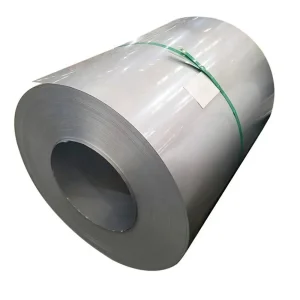
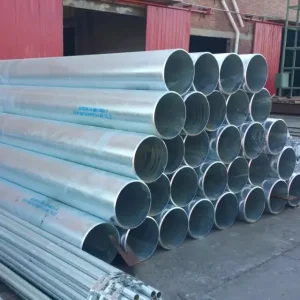
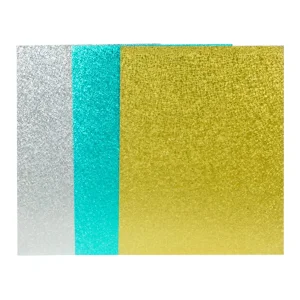
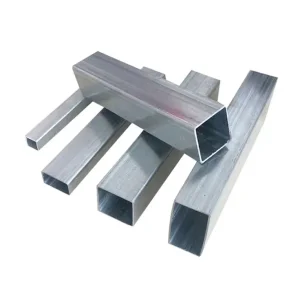
Select from our mill-direct supply lines for non-grain oriented electrical steel coils, coated metal sheets, welded pipes, and precision hardware.

Frequently Asked Questions (FAQ) for Stator Engineers
Comprehensive engineering and procurement answers regarding CRNGO silicon steel selection, core loss testing, and stamping optimization.
What is the fundamental difference between CRNGO and CRGO steel for motor stators?
How does lamination thickness impact stator core eddy current losses?
Which surface insulation coating (C-3, C-5, C-6) is recommended for stator cores?
• C-3 (Organic): Recommended for standard industrial stators where maximum punching die life and lubricity are prioritized, provided no stress-relief annealing (SRA) is required.
• C-5 (Inorganic-Organic Hybrid): Best for stators undergoing post-stamping stress relief annealing (up to 800°C) or high-voltage industrial motors requiring high breakdown resistance (>100 $\Omega\cdot\text{cm}^2$).
• C-6 / Backlack (Self-Bonding): Ideal for high-precision EV stators and quiet servo motors, enabling rivetless heat-cured lamination stacks with superior mechanical rigidity and reduced acoustic hum.
What slitting tolerances are mandatory to prevent interlaminar shorting?
Why is stress-relief annealing (SRA) necessary after progressive stamping?
How does core loss density ($P_{1.5/50}$) translate to real-world motor efficiency?
What ocean freight packaging standards apply to wholesale CRNGO coils?
Can you supply custom narrow slit coils for small fractional horsepower (FHP) stators?
How does CRNGO support EV traction motor thermal management?
What documentation and Mill Test Certificates (MTC) accompany bulk shipments?
Request Mill-Direct Quotation & Technical Data Sheets
Partner with an established supplier of wholesale CRNGO silicon steel coils and precision slit strips. Our metallurgical engineers provide material selection guidance, sample coils for stamping trials, and competitive factory pricing.
Submit Technical RFP / Inquire Now