High-Precision Cold-Rolled & Coated Steel Portfolio
Direct mill-sourced coils, sheets, profiles, and structural piping engineered to strict international engineering tolerances.

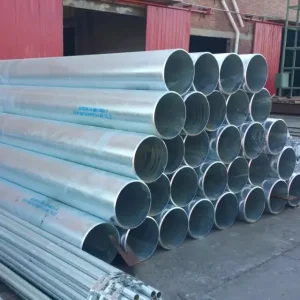
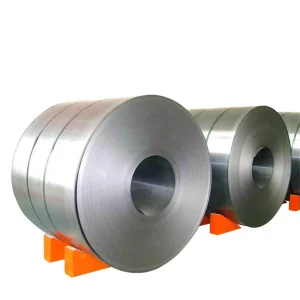
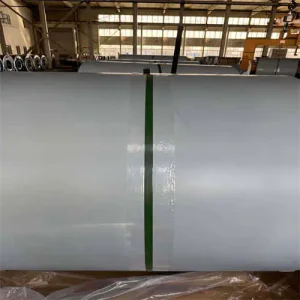

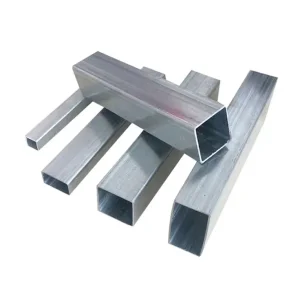
1. Comprehensive Analysis of Cold Rolling Metallurgical Processes
Understanding the transition from hot-rolled pickled substrate to ultra-precise, strain-hardened finished steel with superior mechanical isotropic properties.
Continuous Hydrochloric Acid Pickling & Scale Removal
Prior to cold reduction, hot-rolled steel strip passes through multi-stage turbulent HCL pickling tanks. This process completely dissolves the multi-layered iron oxide scale ($Fe_2O_3$, $Fe_3O_4$, $FeO$) created during hot rolling. Integrated laser-guided side trimmers ensure clean, crack-free edge profiles, mitigating edge-checking defects under high-stress cold reduction pass schedules.
Multi-Stand Tandem Mill Cold Reduction
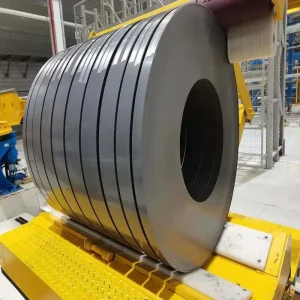
Utilizing state-of-the-art 5-stand or 6-stand 6-high Reversing and Continuous Tandem Cold Mills (TCM), the steel strip experiences extreme compressive roll forces. Advanced Automatic Gauge Control (AGC) systems, featuring X-ray and isotope thickness gauges, continuously adjust hydraulic roll gaps and inter-stand tensions in real-time, holding micro-tolerances down to ±0.005mm across the entire coil length.
Controlled Annealing & Grain Recrystallization
Cold work severely distorts iron grain structures, reducing ductility. To restore formability, coils undergo either Hydrogen Bell-Type Batch Annealing (BA) or Continuous Annealing Lines (CAL). Heating the steel to $680^\circ C - 850^\circ C$ triggers complete nucleated recrystallization, releasing internal lattice stresses and allowing precise control over grain size ($ASTM 8-10$) for superior deep-drawing properties.
2. Global Enterprise Procurement Demands & TCO Analysis
A strategic breakdown of procurement parameters, Total Cost of Ownership (TCO) optimization, and risk mitigation strategies for multinational industrial purchasers.
Total Cost of Ownership (TCO) Optimization
Global procurement teams must evaluate cold-rolled steel sourcing beyond initial metric ton pricing. Factoring in scrap rate reductions due to uniform yield strengths, zero-defect stamping capability, roll-wear minimization on client tooling, and logistics risk hedges yields a true TCO efficiency gain of 14% to 22% annually.
- Minimized press downtime through tight crown/wedge control
- Optimized coil weight consistency (up to 30 MT individual coils)
- Elimination of secondary slitting-edge burrs
Quality Assurance & Microstructural Defect Control
Leading tier-1 automotive and appliance suppliers require 100% surface inspection. Automated visual inspection systems (AVIS) detect line-speed micro-imperfections like stretcher strains, oil spots, pinholes, scale remnants, and temper-roll marks before material is approved for export packaging.
- Eddy current and ultrasonic non-destructive testing
- In-line roughness measurement (Ra, RPc values)
- 100% full-width thickness profile logging
Just-In-Time (JIT) Supply Chain Buffer Systems
To insulate overseas buyers from oceanic freight volatility, reliable wholesale manufacturers establish regional consignment stocks, VMI (Vendor Managed Inventory) hubs, and heavy-duty ocean packaging standards complying with ISPM 15 and VCI anti-corrosion barrier wrapping.
- Multlayer VCI anti-rust film with metal outer casing
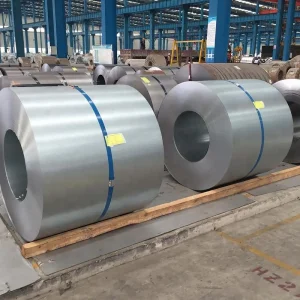
- Vertical and horizontal eye-to-sky coil packing options
- GPS and humidity sensor tracked containerized freight
3. Macro Industry Solutions & Engineering Specifications
Tailored cold-rolled steel grades customized for severe deep drawing, structural load-bearing, electrical magnetism, and environmental corrosion resistance.
| Sector Application | Recommended Steel Grade | Mechanical / Surface Metric | Engineering Value Proposition |
|---|---|---|---|
| Automotive Stamping | DC04, DC06, IF Steels, DP590/980 | $r$-value > 2.1, $n$-value > 0.24 | Zero earring effect during complex extra-deep drawing; light-weighting high structural crashworthiness. |
| Home Appliances (White Goods) | DC01, SECC, SPCC-SD | Ra 0.6–1.2 µm, O5 Finish | Flawless electro-static powder coating and paint adhesion; zero orange-peel surface flaws after bending. |
| Solar Mounting & Infrastructure | Zinc-Aluminum-Magnesium (ZM275) | 275g/m² Coating, Cut-Edge Healing | Self-healing edge protection in coastal/c2-c5 harsh environments; 30+ year maintenance-free structural life. |
| Precision Motor & Transformer Cores | CRNGO (e.g., 50WW290, M310-50A) | Core Loss < 2.90 W/kg at 1.5T 50Hz | Low eddy-current loss, high magnetic permeability, maximum torque efficiency for EV and industrial motors. |
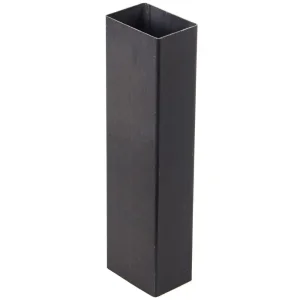
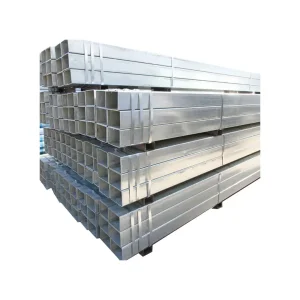
| High-Strength Structural Tubing | HC340LA, HC420LA (HSLA) | Yield Strength 340-520 MPa | High strength-to-weight ratio for cold-formed hollow structural sections (SHS/RHS) with superior weldability. |
Automotive Deep Drawing Solutions
Interstitial-Free (IF) and High-Strength Low-Alloy (HSLA) steels processed through continuous annealing lines deliver superior plastic strain ratios ($r$-value) and strain hardening exponents ($n$-value). This prevents necking or tearing during severe press molding of complex body-in-white (BIW) panels.
Electrical Steel Magnetics
Cold Rolled Non-Grain Oriented (CRNGO) silicon steel undergoes specialized final decarburization annealing to grow optimal grain textures $(100)[001]$. This drastically minimizes magnetic hysteresis loss in electric vehicle traction motors and high-efficiency transformers.
Advanced Surface Finishing Options
From matte (dull) finish produced by shot-blasted rolls to mirror-bright surface finishes for direct electroplating, custom roll texturing matches exact post-processing demands of high-end appliance manufacturers.
4. Industry Trends: Green Steel & Smart Factory Automation
How modern cold rolling manufacturing integrates AI neural networks, hydrogen reduction substrates, and low-carbon metallurgical pathways.
AI-Driven Autonomous Gauge & Shape Control
Next-generation cold rolling mills leverage real-time artificial intelligence algorithms. Cloud-connected sensors monitor roll bending forces, thermal expansion of rolls, and strip flatness profiles at 1,000 sampling points per second, executing dynamic micro-adjustments that eliminate manual operator error.
Decarbonized Substrates & DRI-EAF Integration
Global net-zero mandates are accelerating the shift toward cold rolling hot-band feedstocks produced via Direct Reduced Iron (DRI) and Electric Arc Furnaces (EAF) powered by green hydrogen. This lowers the scope 1 and 2 carbon footprint of finished cold-rolled coils by up to 70% compared to traditional Blast Furnace routes.
Third-Generation AHSS Development
To balance high strength with extreme ductility, 3rd Generation Advanced High-Strength Steels (AHSS) utilize complex multi-phase microstructures (Retained Austenite, Bainite, and Martensite). Cold rolling and intercritical annealing processes are precisely calibrated to produce lightweight structural steels with tensile strengths surpassing 1,200 MPa.
5. Global Compliance Framework & Quality Standards
Comprehensive international cross-reference standards ensuring seamless engineering substitution and localized regulatory compliance across Europe, the Americas, and Asia-Pacific.
| International Standard | Steel Designation / Grade | Yield Strength (MPa) | Tensile Strength (MPa) | Elongation A80 Min (%) |
|---|---|---|---|---|
| EN 10130 | DC01 / DC03 / DC04 / DC06 | 140 – 280 | 270 – 410 | ≥ 28 – 41% |
| ASTM A1008 | CS Type A/B/C, DS Type A/B, DDS, EDDS | 140 – 240 | 270 – 370 | ≥ 30 – 42% |
| JIS G3141 | SPCC / SPCD / SPCE / SPCG | 135 – 270 | 270 – 390 | ≥ 32 – 44% |
| GB/T 5213 | SC1 / SC2 / SC3 / IF Steels | 140 – 270 | 270 – 410 | ≥ 30 – 42% |
Mill Test Certification (MTC EN 10204 3.1)
Every shipped heat is accompanied by an authenticated MTC detailing complete ladle chemical analysis (C, Mn, P, S, Si, Al, Ti, Nb), mechanical tensile test results, yield ratios, total elongation, surface roughness scans, and grain size verifications.
ESG & Carbon Border Adjustment (CBAM)
Our manufacturing protocols align with EU CBAM carbon tracking parameters. Verified Environmental Product Declarations (EPD) provide full scope-1, scope-2, and scope-3 lifecycle carbon intensity data to simplify import clearance and localized carbon taxation.
RoHS & REACH Environmental Compliance
All oiling chemistry (including rust-preventative synthetic oils), passivations, and surface treatments strictly exclude hexavalent chromium ($Cr^{6+}$), heavy metals, or restricted hazardous substances under European Union REACH chemical regulations.
6. Technological Roadmap & Future Outlook
Pioneering advancements in cold rolling manufacturing to power tomorrow's sustainable infrastructure, aerospace, and high-efficiency electrification.
Ultra-Thin Precision Gauges (<0.12mm)
Engineering 20-high Sendzimir mill technologies capable of rolling ultra-thin gauge cold-rolled strip down to 0.12mm with high surface uniformity for next-generation hydrogen fuel cell bipolar plates, micro-electronic shielding, and aerospace foil applications.
Hybrid Metallic Coatings (Zn-Al-Mg-Si)
Expanding advanced continuous hot-dip coating technologies onto cold-rolled substrates with alloy compositions featuring zinc, aluminum, magnesium, and silicon. This provides superior corrosion barrier protection up to 10 times higher than conventional hot-dip galvanizing.
Zero-Waste Circular Manufacturing
Implementing closed-loop hydrochloric acid regeneration plants, 100% recycling of cold rolling emulsion oils through ultrafiltration, and zero-liquid-discharge (ZLD) water treatment systems across all cold rolling production facilities.
7. Frequently Asked Questions (FAQ)
Authoritative technical answers to common queries regarding cold rolling processes, material selection, and procurement logistics.
- SPCC (Commercial Quality): Ideal for simple bending, shallow forming, and flat structural panels.
- SPCD (Drawing Quality): Suitable for moderate drawing applications such as automotive interior covers and appliance housings.
- SPCE / SPCG (Deep / Extra-Deep Drawing Quality): Interstitial-Free (IF) steel formulations engineered for severe deep drawing where complex 3D stretching without wall thinning or splitting is required.
Heavy Structural & Specialized Alloy Products
Premium structural steel plates, galvannealed coils, silicon steels, and hollow section structural tubes.