


Executive Summary: The Role of Classy Grain-Oriented Silicon Steel Coils in Modern Electrical Engineering
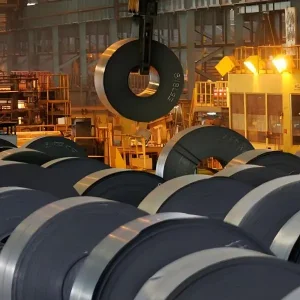
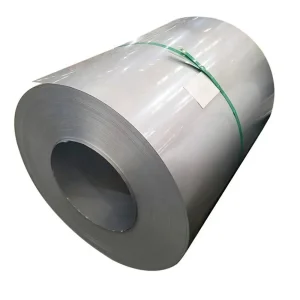
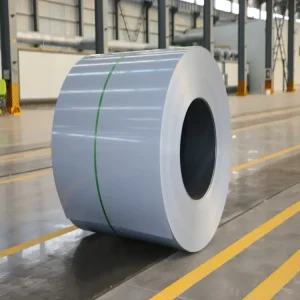
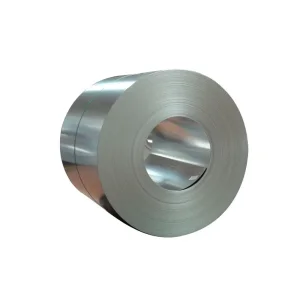
Cold-Rolled Grain-Oriented (CRGO) Silicon Steel Coils—often referred to in premium B2B commerce as Classy Oriented Silicon Steel Coils—represent the absolute pinnacle of soft magnetic material engineering. Essential for transformer cores, power generators, and large electrical reactors, these specialized iron-silicon alloys are metallurgically tailored to minimize hysteresis losses and eddy current dissipation under alternating magnetic fields.
Goss Texture Alignment (110)[001]
Classy oriented silicon steel achieves its exceptional magnetic permeability through precise secondary recrystallization. This process aligns the easy magnetization direction along the rolling direction (the classic Goss texture). Consequently, magnetic domain wall movement experiences minimal crystal lattice resistance, reducing magnetic loss significantly compared to non-oriented steels.
Laser Scribing Domain Refinement
To satisfy stringent Tier-1 grid efficiency standards, premium Classy CRGO coils undergo high-energy laser domain refinement. By introducing microscopic thermal stress lines perpendicular to the rolling direction, the primary 180° magnetic domains are artificially narrowed. This reduces anomalous eddy current loss by up to 20% without compromising the insulation coating integrity.
Phosphate Inorganic Coating (C-5 Class)
Each steel strip is coated on both surfaces with an inorganic, tension-inducing insulating layer (Carlite / C-5 specification). This coating provides high inter-lamination resistance (>100 Ω·cm²/lamination), withstands stress-relief annealing temperatures up to 800°C in neutral atmospheres, and imparts mechanical tension that further compresses magnetic losses.
Information Gain Analysis: Soft Magnetic Material Comparison Matrix
Understanding the trade-offs between different core materials is paramount for transformer designers. Below is an engineering comparison evaluating Cold-Rolled Grain-Oriented (CRGO) Steel against Cold-Rolled Non-Oriented (CRNGO) Steel and Amorphous Ribbons.
| Material Category | Crystalline Structure | Typical Thickness | Saturation Induction (Bs) | Specific Core Loss (P1.7/50Hz) | Primary Industrial Application |
|---|---|---|---|---|---|
| Classy Oriented Silicon Steel (CRGO / Hi-B) | Single-Direction Goss Texture (110)[001] | 0.18 mm – 0.30 mm | 1.95 – 2.03 Tesla | 0.75 – 0.95 W/kg | Power & Distribution Transformers, EHV Shunt Reactors |
| Non-Grain Oriented Steel (CRNGO) | Isotropic / Random Grain Alignment | 0.35 mm – 0.65 mm | 1.60 – 1.75 Tesla | 2.20 – 5.50 W/kg | Rotating Electric Motors, Generators, Small Transformers |
| Amorphous Metal Ribbon (Fe-Based) | Non-Crystalline / Amorphous Glass Structure | 0.025 mm (25 µm) | 1.56 Tesla | 0.20 – 0.35 W/kg | Ultra-Low Loss Distribution Cores (High Brittleness/Low Bs) |
Global Commercial & Industrial Status of Grain-Oriented Silicon Steel Coils
The global demand for high-grade electrical steel is experiencing a structural paradigm shift. Driven by decarbonization mandates, grid modernization, renewable energy interconnectivity, and the exponential expansion of AI-centric data centers, high-permeability Classy Oriented Silicon Steel Coils have transitioned from conventional commodity materials into strategic industrial assets.
Energy Transition & Grid Decarbonization
Governments in Europe (EU Eco-design Directive Tier 2) and North America (DOE 2026 Energy Standards) strictly limit maximum allowable transformer core losses. This regulatory pressure forces power equipment OEMs to upgrade from conventional grade CRGO (e.g., M4, M5) to ultra-low loss High-Permeability (Hi-B) Classy Oriented Silicon Steel Coils.
Renewables & EV Fast-Charging Microgrids
Solar PV parks, offshore wind farms, and megawatt-level EV supercharging hubs demand robust step-up transformers capable of continuous operation under high thermal stress and harmonic distortion. Premium oriented electrical steel coils ensure minimal heat generation and long service lives under severe cyclic loading.
AI Hyper-scaler Data Center Power Supplies
Modern Artificial Intelligence computing clusters require unprecedented megawatt-density power distribution units (PDUs) and isolation transformers. To prevent continuous operational power drain, hyper-scalers mandate transformer cores engineered from top-tier 0.20mm and 0.23mm domain-refined CRGO coils.
Regional Procurement Shifts & Supply Dynamics
While Western mills face aging equipment constraints and high energy tariffs, global procurement directors increasingly rely on Chinese manufacturing hubs. China's integrated supply chains deliver consistent coil geometry, strict magnetic quality control, and competitive wholesale pricing at scalable volumes.
China Manufacturing Efficiency & Technical Advantages
China has established itself as the global epicenter for electrical steel manufacturing. Through multi-billion-dollar investments in secondary refining, modern multi-roll cold rolling mills, and automated continuous annealing lines, Chinese factories produce wholesale Classy Oriented Silicon Steel Coils with unmatched precision and operational efficiency.
Ultra-Clean Secondary Metallurgy
Leading Chinese steel mills utilize Vacuum Degassing (RH) and Ladle Refining Furnace (LF) technologies to control impurities to ultra-low levels (Carbon ≤0.005%, Sulfur ≤0.007%, Nitrogen ≤0.008%). Maintaining pristine melt purity is critical to preventing premature magnetic domain pinning and ensuring predictable secondary recrystallization.
20-High Sendzimir Cold Rolling Precision
Utilizing state-of-the-art 20-high Sendzimir cold rolling mills equipped with automatic gauge control (AGC) and laser thickness gauges, Chinese factories achieve tight thickness tolerances (±0.005 mm) across the full width of 1000mm–1200mm coils. This guarantees outstanding lamination stacking factors during core assembly.
Comprehensive Quality Assurance & Testing
Every master coil manufactured undergoes stringent testing protocols. Automated Epstein Frame testing (conforming to IEC 60404-2) and Single Sheet Testers (SST) record real-time loss values (P1.5, P1.7) and magnetic polarization (B800, B5000) across every slit coil section prior to seaworthy packaging.
Integrated Production Flow of Wholesale Classy CRGO Coils
1. Basic Oxygen Furnace (BOF) Melt → 2. RH Vacuum Degassing → 3. Continuous Slab Casting → 4. Hot Strip Rolling → 5. First Cold Rolling → 6. Intermediate Annealing → 7. Final Cold Rolling (Sendzimir Mill) → 8. Decarburization & Primary Annealing → 9. High-Temperature Box Annealing (Goss Texture Formation) → 10. Continuous Coating & Laser Scribing → 11. Precision Slitting & Seaworthy Packing.
Technical Specifications & Standard Grade Cross-Reference
To simplify international procurement, below is the standard grade engineering matrix for Classy Grain-Oriented Electrical Silicon Steel Coils, comparing international standard designations (IEC 60404-8-7, ASTM A876, JIS C2553, and Chinese GB/T 2521-2008).
| Nominal Thickness | IEC Standard Grade | JIS Equivalent (JIS C2553) | ASTM Equivalent (A876) | Max Core Loss P1.7/50Hz (W/kg) | Min Magnetic Induction B800 (Tesla) |
|---|---|---|---|---|---|
| 0.18 mm (High-Permeability Domain Refined) | 18RK070 / 18QG070 | 18G070 / 18P070 | 018-70G050 | 0.65 – 0.70 W/kg | ≥ 1.91 T |
| 0.20 mm (High-Permeability Domain Refined) | 20RK075 / 20QG075 | 20G075 / 20P075 | 020-75G050 | 0.70 – 0.75 W/kg | ≥ 1.90 T |
| 0.23 mm (High-Permeability / Hi-B) | 23RK085 / 23QG085 | 23G085 / 23P085 | 023-85G050 | 0.80 – 0.85 W/kg | ≥ 1.89 T |
| 0.27 mm (Regular CRGO / Conventional) | 27M120 / 27CG120 | 27G120 | 027-120G050 | 1.05 – 1.15 W/kg | ≥ 1.85 T |
| 0.30 mm (Conventional Grade) | 30M130 / 30CG130 | 30G130 | 030-130G050 | 1.15 – 1.25 W/kg | ≥ 1.83 T |
Engineering Scenarios & High-Performance Applications
Classy Oriented Silicon Steel Coils serve as the critical magnetic core material across a wide array of electrical infrastructure projects worldwide. Below are the core localized application scenarios where material selection directly impacts system thermal balance and energy efficiency.
Extra-High Voltage (EHV) Power Transformers
In 220kV, 500kV, and 1000kV UHV power transmission substations, transformer core volume is massive. Utilizing 0.23mm or 0.20mm domain-refined Hi-B Classy CRGO coils drastically reduces core heating, minimizes cooling oil oxidation, and lowers continuous no-load operational losses over 40+ year service lifespans.
Dry-Type & Cast Resin Distribution Transformers
Widely deployed in commercial high-rises, hospitals, and subway systems where fire safety is mandatory. Dry-type transformers operate without liquid coolants. High-permeability oriented steel coils ensure that operating temperatures remain well within Class F or Class H insulation thermal limits while minimizing acoustic audible noise (<45 dB).
High-Frequency Shunt & Filter Reactors
In modern HVDC converter stations and wind farm collector networks, shunt reactors experience heavy harmonic currents. Laser-scribing domain-refined CRGO coils eliminate harmonic localized overheating and maintain stable magnetic inductance even under high peak voltage stress.
Global Enterprise Procurement Requirements & Quality Assurance Checklist
When sourcing wholesale Classy Oriented Silicon Steel Coils internationally, procurement managers must evaluate critical technical parameters beyond initial cost-per-ton. Below is the technical audit checklist established by senior transformer design engineers.
1. Edge Burr Height Control (< 0.02 mm)
During coil slitting, precise blade clearance is non-negotiable. Excess edge burr height causes short circuits between stacked core laminations, dramatically raising eddy current loss. Qualified suppliers must guarantee slitting burr height ≤ 0.02 mm.
2. Insulating Coating Resistance & Adhesion
Coating quality must comply with Franklin insulation resistance standards (IEC 60404-1-1). The insulation layer must pass 180° mandrel bend tests without flaking and maintain chemical resistance against hot transformer insulating oils (ASTM D3487).
3. Flatness & Longitudinal Crown Tolerances
Strip wave, edge wave, or center buckle prevents tight lamination clamping, introducing magnetostrictive vibrations and high transformer noise. Coils must strictly adhere to flatness tolerances within 10 I-units.
4. Export Seaworthy Packaging Standards
Oriented silicon steel is highly vulnerable to moisture corrosion and edge physical damage. Procurement specifications must mandate VCI (Vapor Corrosion Inhibitor) anti-rust paper wrap, inner/outer metal corner protectors, eye-vertical or eye-to-sky strapping on fumigated wooden skids.
Frequently Asked Questions: Wholesale Classy Oriented Silicon Steel Procurement
Expert answers to common technical, metallurgical, and commercial inquiries from global transformer manufacturers and electrical steel importers.
What is the distinction between "Classy Oriented Silicon Steel Coil" and standard CRGO coils?
Why is stress-relief annealing (SRA) necessary after slitting or stamping CRGO coils?
What core thickness is recommended for distribution vs. power transformers?
How does silicon content affect magnetic and mechanical properties?
What Mill Test Certificates (MTC) are provided with wholesale steel orders?
What minimum order quantities (MOQ) and lead times apply to custom slitting?