Featured Structural & Coated Steel Products (Part I)
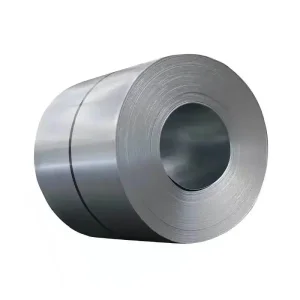
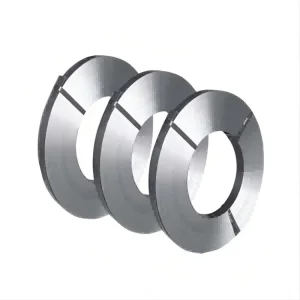
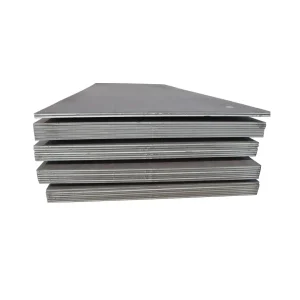
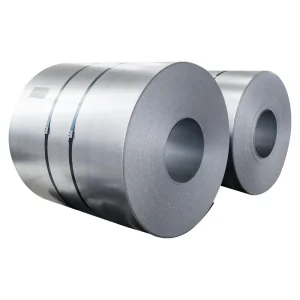
Mill-direct structural steel, hot-rolled/cold-rolled coils, and custom zinc-aluminum alloy products engineered for high-durability global infrastructure.
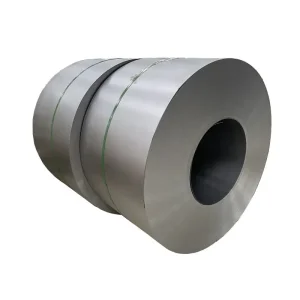
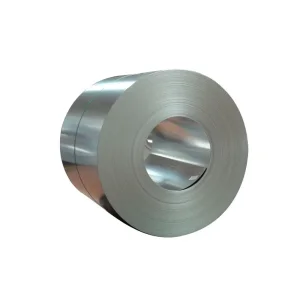
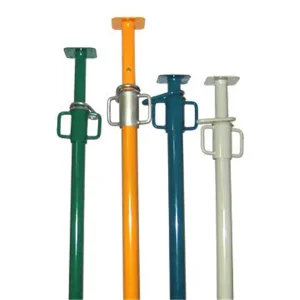
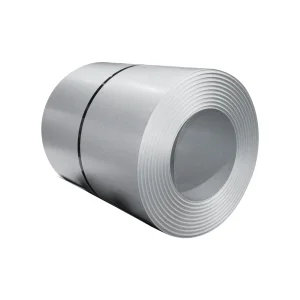
1. Metallurgical Architecture: The Dual-Protection Synergy of Alu Zinc (55% Al-Zn)
Understanding why 55% Aluminum-Zinc alloy coated coils (Galvalume / Aluzinc) outlast traditional GI galvanized coils by 3x to 6x in aggressive atmospheric environments.
Microstructural Composition & Alloy Phases
The continuous hot-dip Alu Zinc coil (Galvalume) is coated with a nominal alloy composition consisting of 55% Aluminum, 43.4% Zinc, and 1.6% Silicon by weight. This specific ratio forms a unique microscopic dendrite matrix during the rapid solidification process after the molten bath.
The aluminum-rich dendritic phase forms an interlocking network that acts as an impermeable physical barrier against moisture, oxygen, and airborne pollutants. Interspersed within this matrix are the zinc-rich interdendritic zones, which provide active galvanic (sacrificial) protection to the cold-rolled steel base plate.
The addition of 1.6% Silicon is not merely additive; it plays a critical metallurgical role by controlling the exothermic iron-aluminum reaction at the interface. Silicon prevents the formation of a brittle Fe-Al intermetallic phase, ensuring superior coating adhesion during complex cold roll-forming and deep drawing.
Dual Mechanism: Barrier + Sacrificial Cathodic Action
Traditional Galvanized steel (GI) relies primarily on zinc sacrificial corrosion. As zinc oxidizes, it depletes over time. Alu Zinc coils, however, employ a twin-shield defense mechanism:
- Primary Corrosion Shield (Barrier Protection): The 55% Aluminum component forms a dense, insoluble aluminum oxide ($Al_2O_3$) film upon exposure to the atmosphere. This ceramic-like passivation layer drastically slows down the corrosion rate in industrial and acid-rain environments.
- Edge & Scratch Protection (Cathodic Galvanic Protection): When the sheet is cut, punched, or scratched, exposing the raw steel edge, the zinc portion within the interdendritic pockets sacrifices itself electrochemically, preventing creeping red rust along cut edges.
- Thermal Reflectivity & Heat Resistance: Alu zinc coils display a thermal reflectivity index exceeding 75%, reflecting solar radiation back into the atmosphere and withstanding continuous temperatures up to 315°C (600°F) without surface discoloration or scaling.
Information Gain Matrix: Galvalume (AZ150) vs. Galvanized (Z275) vs. ZAM (Zinc-Al-Mg)
| Performance Metric | Alu Zinc Coil (Galvalume AZ150) | Hot-Dip Galvanized (GI Z275) | Zinc-Al-Mg Coil (ZAM AZM275) |
|---|---|---|---|
| Nominal Coating Composition | 55% Al, 43.4% Zn, 1.6% Si | 99% Min Pure Zinc (Zn) | Zn + 1.5-11% Al + 1.5-3% Mg |
| Neutral Salt Spray Life (ASTM B117) | 1500 - 3000 Hours to 5% Red Rust | 500 - 800 Hours to 5% Red Rust | 2500 - 4000+ Hours |
| Cut-Edge Protection | Excellent (Self-healing interdendritic Zn) | Good (Sacrificial Zn flow) | Superior (Simonkolleite dense film) |
| Continuous Heat Resistance | Up to 315°C (600°F) without peeling | Up to 200°C (392°F) max | Up to 300°C (572°F) |
| Solar Thermal Reflectivity Index | 75% - 80% High Efficiency | 30% - 40% Moderate | 70% - 75% High |
| Paint Adhesion (PPGL Substrate) | Superior (Fine micro-rough spangle structure) | Requires pre-phosphating | Excellent |
| Typical Lifespan (Rural/Suburban) | 30 - 45 Years Warranty | 10 - 15 Years | 40 - 50 Years |
2. China Manufacturing Ecosystem: Technology, Scale & Cost Efficiency
Why Tier-1 Chinese Alu Zinc factories in Tianjin and Shandong supply chain clusters dominate global procurement for civil engineering and industrial construction.
Non-Oxidizing Furnace (NOF) Technology
Advanced Chinese factories utilize state-of-the-art vertical Non-Oxidizing Furnaces (NOF) integrated with radiant tube heating. Cold-rolled full hard steel strips are thermally cleaned and annealed in a strictly controlled hydrogen-nitrogen protective atmosphere (up to 25% $H_2$), removing residual surface oils and optimizing iron crystallographic structure prior to galvalume dipping.
Automated Air-Knife & Closed-Loop Gauge Control
Precision coating weight control is executed via automated nitrogen gas air-knives coupled with online dual-head X-Ray fluorescent coating thickness gauges. Real-time feedback loops adjust gas pressure, nozzle distance, and strip tension within milliseconds, guaranteeing uniform coating mass across the entire width ($1000\text{mm} - 1250\text{mm}$) within an ultratight tolerance of $\pm 2\text{g/m}^2$.
In-Line Skin-Pass & Tension Leveling
To eliminate yield point elongation and ensure zero waviness, Chinese export-grade galvalume lines incorporate a 4-high wet skin-pass mill followed by a hydraulic tension leveler. This imparts a uniform micro-spangle satin finish, improves flatness to within 2mm/m, and optimizes surface micro-roughness ($Ra 0.8 - 1.2\mu m$) for direct painting (PPGL) or anti-fingerprint resin application.
3. International Standard Equivalency & Procurement Specifications
Mapping ASTM, EN, JIS, and GB standards for international procurement engineering teams, EPC contractors, and steel stockists.
| Standard Body | Specification / Code | Steel Grade Equivalents | Coating Designation | Typical Mechanical Property |
|---|---|---|---|---|
| ASTM (Americas) | ASTM A792 / A792M | CS Type A, B, C / SS Grade 33, 40, 50, 80 | AZ30, AZ50, AZ55, AZ60, AZ70 | Yield: 230-550 MPa | Tensile: 340-570 MPa |
| EN Standard (Europe) | EN 10346 | DX51D+AZ, DX52D+AZ, S250GD+AZ, S350GD+AZ, S550GD+AZ | AZ100, AZ120, AZ150, AZ180, AZ200 | Elongation $A_{80}$: 16% - 30% depending on grade |
| JIS (Japan / Asia) | JIS G3321 | SGLCC, SGLCD, SGLCE, SGLC400, SGLC570 | AZ90, AZ120, AZ150 | Zero spangle / Regular spangle finish |
| GB (China National) | GB/T 14978 | TDC51D+AZ, TDC52D+AZ, TS250GD+AZ, TS550GD+AZ | AZ70 - AZ200 | Full compliance with ISO 9364 standards |
Surface Chemical Passivation Options
- AFP (Anti-Fingerprint Resins): Organic transparent acrylic or green/blue transparent coating ($1.0 - 2.0\mu m$). Prevents staining during handling and improves roll-forming lubricity without requiring additional oiling.
- Chromate-Free Chemical Passivation (RoHS Compliant): Environmentally friendly trivalent chromium or zirconium-based passivation designed for strict European environmental compliance.
- Oiled (Light/Medium Vanishing Oils): Applied for temporary transit corrosion prevention where secondary chemical cleaning is performed prior to post-painting.
Packaging & Seaworthy Logistics Specifications
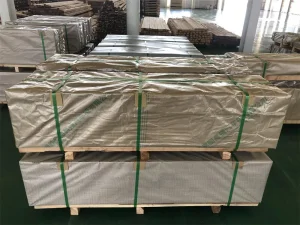
- VCI Moisture Barrier Wrapping: Coils wrapped in VCI anticorrosive film and heavy-duty waterproof Kraft paper inside.
- Structural Protection: Galvanized steel inner and outer corner protection rings, corrugated steel outer cylinder protection plate.
- Radial & Circumferential Strapping: Minimum 3 circumferential and 4 radial high-tensile steel straps locked over wooden eye-to-sky or eye-to-wall pallets.
4. Macro Industrial Solutions & Field Engineering Applications
Deploying wholesale alu zinc coils across severe marine microclimates, renewable energy fields, and precision manufacturing sectors.
Solar PV Tracking Structural Systems
In utility-scale solar farms located in desert or coastal environments, structural purlins ($C/Z$ channels) made from high-strength Galvalume (S550GD+AZ150) provide structural rigidity against 160km/h wind loads while offering 30-year maintenance-free resistance against soil alkalinity and atmospheric condensation.
Architectural Roofing & Standing Seam Wall Cladding
Galvalume AZ150 substrate sheets formed into double-lock standing seam roof profiles eliminate fastener penetrations. The high solar heat reflection lowers interior air conditioning loads by up to 22% in tropical zones (Southeast Asia, Middle East, Latin America), serving as an ideal green building material.
HVAC Ducting & High-Temperature Exhaust Systems
Thanks to the silicon-stabilized aluminum barrier, Alu Zinc coils retain their bright metallic luster and structural integrity under constant temperatures up to 315°C, preventing the flaking and unpleasant odor outgassing common in traditional GI ducting exposed to commercial heat exchanges.
5. Global Market Trends & Low-Carbon Manufacturing (2025 - 2030)
Strategic transition toward scrap-based Electric Arc Furnace (EAF) substrate coils, ultra-low carbon coating processes, and next-generation Zn-Al-Mg evolution.
De-carbonization & Green Steel Substrates
Global procurement managers under Scope 3 carbon reporting mandates are increasingly requiring hydrogen-reduced direct reduced iron (DRI) base metal for galvalume coating lines. Leading Chinese mills are integrating renewable solar/wind power into continuous pot heating lines, reducing total embodied carbon footprint per ton of Galvalume by 35%.
Extended material lifespan directly reduces Life Cycle Assessment (LCA) environmental impact. Because AZ150 galvalume lasts up to four times longer than standard Z120 galvanizing, structural replacement frequencies and raw steel extraction needs drop proportionally.
Technological Convergence: Galvalume to Zn-Al-Mg (ZAM)
The coated steel industry is witnessing a gradual convergence between 55% Al-Zn (Galvalume) and Ternary Zinc-Aluminum-Magnesium (ZAM) alloys. While Galvalume remains the undisputed benchmark for high-temperature reflectivity and atmospheric roof sheeting, Zn-Al-Mg alloys are capturing market share in heavy-gauge structural ground PV mounts due to instant cut-edge self-repair in chloride-dense soils.
Tier-1 Chinese factories offer dual-purpose continuous lines capable of rapidly switching bath chemistry between AZ galvalume and ZAM alloys based on international contract requirements.
6. B2B Sourcing FAQ: Technical & Commercial Clarifications
Direct technical answers to questions commonly raised by global purchasing officers, metallurgical auditors, and structural engineers.
What is the key difference between Galvalume (Alu Zinc) and Galvanized (GI) steel coils?
Can Alu Zinc steel coils be directly painted without secondary treatment?
How does the cut-edge corrosion resistance of Galvalume compare to GI steel?
Why is 1.6% Silicon added to the 55% Al-Zn coating bath alloy?
What coating mass designation (AZ50 vs AZ150) should I specify for roofing tenders?
Are Chinese Alu Zinc factories compliant with EN 10204 3.1 Mill Test Certificates (MTC)?
What bending radius (T-bend) can Galvalume coils withstand without micro-cracking?
How are wholesale galvalume coil orders packaged for sea freight to prevent white rust?
Featured Structural & Coated Steel Products (Part II)
Silicon electrical steel coils, electro-galvanized sheets, and cold-rolled deep drawing steels manufactured to international standards.
Partner with China's Premier Alu Zinc Coil Manufacturing Network
Get direct factory pricing, request free sample coupons, verify metallurgical lab certificates, or submit your bill of materials (BOM) for tender bidding support.