Featured Steel Products & Coated Solutions
Direct-from-mill global export catalog covering carbon steel black pipes, structural hollow sections, and specialty galvanized coils.
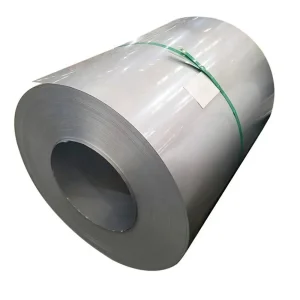
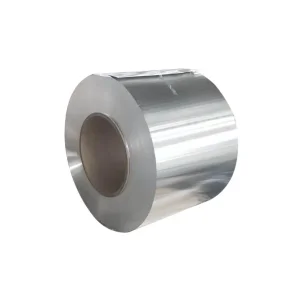
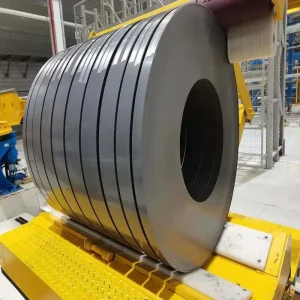
Wholesale Electrolytic Tinplate ETP & TFS Tin Clad Steel Quality Packaging Solutions
View Product Details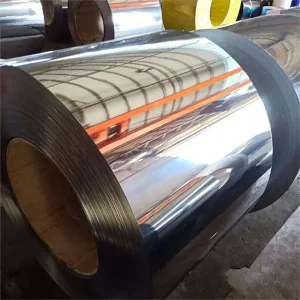
Executive Technical Whitepaper: The Engineering Evolution of Black Steel Pipes
Black pipe—manufactured primarily from non-galvanized mild carbon steel—remains the fundamental backbone of heavy industrial infrastructure, fire protection lines, oil and gas transport systems, district heating grids, and structural engineering. The term "black pipe" originates from the dark-colored iron oxide coating formed on its exterior surface during the high-temperature hot-rolling and thermal finishing phases.
In modern global procurement, global EPC (Engineering, Procurement, Construction) contractors and stocking distributors evaluate **wholesale all black pipe manufacturers & suppliers** not simply on per-ton spot pricing, but on metallurgical consistency, non-destructive testing (NDT) reliability, tight dimensional tolerances, and environmental compliance of protective temporary varnish lacquers.
Manufacturing Paradigms & Structural Specification Matrix
Comparative analysis of black carbon steel pipe manufacturing routes, mechanical thresholds, and chemical specifications.
| Manufacturing Process | Primary Standards | Typical Steel Grades | Size Outer Diameter (OD) | Pressure / Structural Application |
|---|---|---|---|---|
| ERW / HFW (Electric Resistance Welded) | ASTM A53, EN 10219, GB/T 3091 | Gr. A, Gr. B, Q235B, Q345B, S235JRH | 1/2" to 24" (21.3mm - 610mm) | Fire sprinklers, gas distribution, HVAC, structural scaffolding. |
| Seamless (SMLS) (Hot Extruded / Cold Drawn) | ASTM A106, API 5L, ASTM A53 | Gr. B, X42 through X70, ST45.8 | 1/8" to 36" (10.3mm - 914mm) | High-pressure boilers, oil & gas flowlines, high-stress hydraulic lines. |
| LSAW (Longitudinal Submerged Arc) | API 5L, EN 10210, ASTM A672 | X52 to X80, Grade 60/70, S355J2H | 16" to 56" (406mm - 1422mm) | Cross-country oil/gas trunklines, offshore structural piling. |
| SSAW / HSAW (Spiral Submerged Arc) | API 5L, ASTM A252, SY/T 5037 | Q235B, Q345B, X42 to X70 | 8" to 120" (219mm - 3048mm) | Municipal water supply, structural piling, low-pressure industrial gas. |
Chemical Integrity & Purity
Controlled carbon equivalent (CEV) chemistry ensures superior weldability without pre-heating. Strict sulfur (S ≤ 0.015%) and phosphorus (P ≤ 0.025%) controls prevent hot-shortness and grain boundary brittleness.
Hydrostatic & Ultrasonic Verification
Every single joint undergoes factory hydrostatic testing up to 100% specified minimum yield strength (SMYS) or full-length inline ultrasonic testing (UT) and eddy current examination to detect subsurface laminations.
Anti-Corrosion Surface Systems
Black pipes are finished with specialized water-based varnish, black lacquer, light anti-rust oiling, or advanced 3-layer polyethylene (3LPE) / 3LPP coatings to protect raw steel during oceanic transit and jobsite storage.
Global Commercial & Industrial Landscape for Black Steel Pipe Sourcing
Analysis of regional demand, regulatory drivers, and procurement strategies across key continental markets.
North America: Infrastructure & NFPA Compliance
The North American market demonstrates robust demand for Schedule 40 and Schedule 80 black ERW pipes driven by commercial building fire protection systems (NFPA 13, UL/FM certified) and natural gas distribution lines. Importers require strict compliance with ASTM A53 Grade B and ASME B36.10M dimensions, accompanied by full heat traceability and anti-dumping tariff optimization strategies.
Europe: Structural EN 10219 & CPR Standards
European buyers focus heavily on EN 10219 cold-formed structural hollow sections and EN 10255 non-alloy steel tubes suitable for welding and threading. Under the EU Construction Products Regulation (CPR), manufacturers must supply CE-marked black structural tubes with certified impact energy testing at -20°C (S355J2H), alongside Environmental Product Declarations (EPD).
Middle East & Africa: Mega-Projects & Energy Growth
In the MEA region, rapid urban development, mega-city construction (e.g., Saudi Vision 2030), and district cooling plants drive volume consumption of heavy-wall black carbon steel pipes. Buyers emphasize high-temperature resistance, bevel-end protection for field welding, and anti-abrasion external coatings capable of withstanding desert transport conditions.
Southeast Asia & Latin America: Rapid Urbanization
Developing industrial hubs across ASEAN and Latin America prioritize cost-effective black ERW pipes for structural piling, industrial water lines, and agricultural machinery frames. Mill direct flexibility in offering bundled container loads, mixed-size shipments, and customized cut-to-length services is critical for regional distributors.
China Factory Supply Chain Resilience & Production Efficiency
The Tianjin-Hebei steel manufacturing cluster represents the highest concentration of high-frequency welded pipe and carbon steel tube production capacity in the world. China's industrial supply chain ecosystem offers unmatched structural advantages for international wholesale buyers:
Upstream Raw Material Integration
Direct hot-rolled coil (HRC) supply lines from Tier-1 state-owned steel mills eliminate intermediate handling fees, ensuring raw material chemical purity and stable tensile strength.
High-Speed Automated Mill Lines
State-of-the-art continuous solid-state high-frequency welding lines achieve production speeds of over 60 meters per minute with real-time laser seam tracking and computerized internal bead trimming.
Tianjin Seaport Port Logistics Synergy
Factory proximity to Tianjin Port (Xingang)—the largest maritime gateway in Northern China—enables rapid container loading, breakbulk vessel staging, and reduced inland freight transit time.
Supply Chain Performance KPIs
*Data compiled from Tianjin steel manufacturing operational benchmarks, representing mill-direct delivery capabilities for standard carbon black pipe grades.
Localized Application Scenarios & Engineering Deployment
Exploration of how wholesale black pipes are specialized across demanding industrial environments.
Fire Protection & Sprinklers
ASTM A53 / ASTM A795 Black ERW pipes with threaded, coupled, or roll-grooved ends form the standardized piping matrix for commercial fire suppression grids due to high pressure resistance and impact ductility.
HVAC & District Cooling
Chilled water loops and high-temperature hydronic heating systems utilize heavy-wall Schedule 40 black pipes. High thermal conductivity and resistance to thermal fatigue make carbon steel superior to plastic alternatives in closed circuits.
Structural Hollow Sections
Square, rectangular, and round black structural tubing (EN 10219 / ASTM A500) serve as load-bearing columns, airport terminal space frames, bridge trusses, and modular container construction skeletons.
OEM Machinery & Mining
Heavy machinery OEMs weld black structural pipes into crane booms, agricultural tillage frames, drill casing strings, and conveyor rollers where torsion resistance and flexural strength are paramount.
Technological Roadmap & Future Outlook: Green Steel & Smart Pipe Manufacturing
The global steel pipe industry is undergoing a structural transformation towards decarbonization, automated quality control, and full-lifecycle traceability.
1. Green Steelmaking & EAF Integration
Leading Chinese manufacturers are transitioning from blast furnace-basic oxygen furnace (BF-BOF) routes toward Electric Arc Furnace (EAF) steelmaking powered by scrap steel and renewable energy. This reduces embodied carbon emissions (Scope 1 and 2) by up to 60%, aligning with international CBAM (Carbon Border Adjustment Mechanism) mandates.
2. AI-Driven Smart NDT & Seam Control
Integration of real-time phased array ultrasonic testing (PAUT) combined with artificial intelligence computer vision allows instantaneous detection of microscopic weld seam anomalies during high-speed ERW forming, eliminating manual human inspection variance.
3. Low-VOC Eco-Friendly Lacquers
Future black pipe manufacturing replaces solvent-based black paint with zero-VOC waterborne acrylic varnishes and UV-curable polymer conversion coatings, providing enhanced salt-spray corrosion resistance without chemical off-gassing during welding.
Localized Support, Testing Standards & Quality Compliance
Procuring wholesale black pipes across international borders requires rigorous quality assurance frameworks. A trustworthy manufacturer provides complete documentation transparency and localized technical compliance support.
- ✓ Mill Test Certificates (MTC EN 10204 3.1 / 3.2): Full chemical composition, tensile/yield strengths, elongation testing, and hydro-test pressures declared per heat number.
- ✓ Third-Party Inspection (TPI): Full site access and testing authorization for international agencies including SGS, Bureau Veritas (BV), TÜV Rheinland, and Intertek.
- ✓ Export Seaworthy Packaging: Beveled pipe ends protected with plastic end caps, hexagonal bundle strapping with heavy-duty steel belts, and waterproof plastic wrapping for containerized or breakbulk shipping.
Standard Pipe End Options & Workmanship
Tailored pipe end preparation ensures rapid field jointing on construction sites:
Additional Factory Direct Steel Supply Lines
Comprehensive industrial steel components, plates, and electro-galvanized solutions.
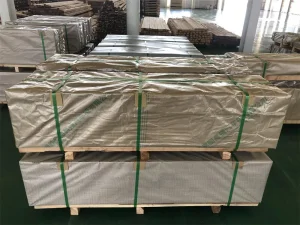
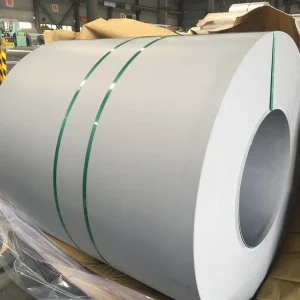
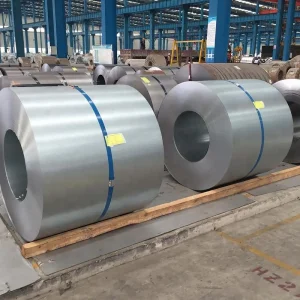
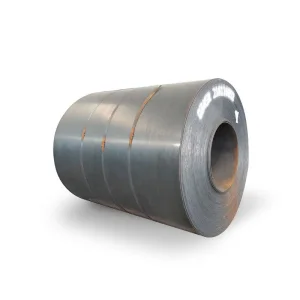
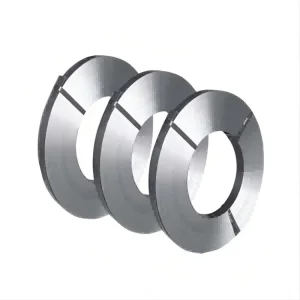
Wholesale 0.23mm CRGO Grain Oriented Electrical Silicon Steel Coil for Transformer
View Product Details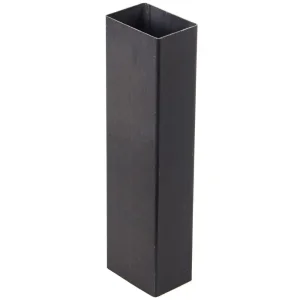
Frequently Asked Questions: Wholesale Black Pipe Procurement
Expert engineering answers to critical purchasing, technical, and regulatory questions.