
Featured Industrial & Structural Steel Products
Direct factory supply of certified structural hollow sections, coated steel coils, and specialized engineering tubing produced under stringent ISO 9001 and EN 10219 parameters.



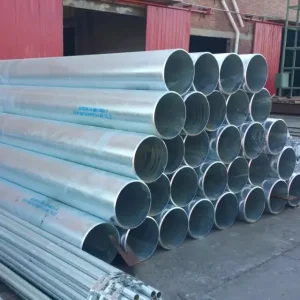
Global Commercial & Industrial Landscape of Agricultural Steel Tubing
Modern commercial agriculture has undergone a profound structural transformation over the past two decades, transitioning from localized, low-density framing solutions to highly engineered, high-yield infrastructure. At the core of this transition is advanced **agricultural steel tubing**—a critical structural component that underpins commercial greenhouse complexes, automated livestock housing systems, precision center-pivot irrigation frameworks, and emerging Agri-Voltaic (Agri-PV) dual-use installations worldwide.
The global demand for high-performance structural hollow sections (SHS, RHS, and CHS) within the agritech sector is driven by severe climatic shifts, shrinking arable land per capita, and the urgent imperative for resource-efficient food production. Industrial-scale farming demands structural materials capable of enduring aggressive atmospheric environments—such as high ambient humidity inside closed-loop hydroponic facilities, corrosive gaseous ammonia ($NH_3$) concentrations within intensive livestock facilities, and relentless cyclic wind or snow loads in open-field deployments.
To meet these stringent operational mandates, primary structural engineering specs have pivoted away from legacy timber or light-gauge aluminum toward high-tensile carbon steel tubing protected by advanced metallic alloy coatings. Whether utilized for structural gutter beams in Dutch Venlo multi-span greenhouses or high-torque rotary shafts in mechanized irrigation rigs, modern agricultural tubing must maintain high structural integrity while minimizing dead weight to reduce foundation loads and logistics costs.
Structural Advantages of Chinese Manufacturing Efficiency & Supply Chain Integration
China’s industrial steel cluster—centered prominently around regions like Tianjin and Hebei—represents the world's most vertically integrated structural tubing manufacturing ecosystem. For global procurement officers, commercial greenhouse manufacturers, and agricultural distributors, partnering directly with leading Chinese mill manufacturers yields significant cost-performance, quality, and supply continuity advantages.
Fully Integrated Upstream-to-Downstream Chain
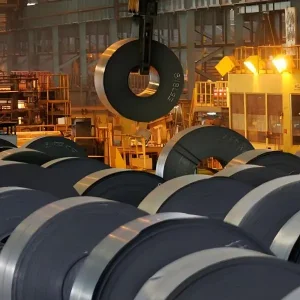
Chinese steel pipe factories leverage immediate proximity to primary hot-rolled coil (HRC) steel mills. This proximity eliminates internal freight markups, ensures precise control over metallurgy and ladle chemistry, and allows seamless slitting, High-Frequency Electric Resistance Welding (HF-ERW), and inline galvanizing under unified quality protocols.
Advanced Automated HF-ERW Production
Equipped with state-of-the-art solid-state High-Frequency welding lines, modern Chinese factories execute automated seam squeeze-roll pressure control, online weld seam heat treatment (normalizing), and continuous non-destructive eddy current testing at production speeds exceeding 60 meters per minute.
Continuous Metallic Coating Metallurgy
China leads global production in continuous galvanizing lines capable of applying precise micro-alloyed coatings—ranging from standard pre-galvanized zinc layers ($Z100-Z275$) to hot-dip galvanized ($HDG, \ge 85 \mu m$) and next-generation Zinc-Aluminum-Magnesium ($Zn-Al-Mg$) coatings with auto-repairing edge cut protection.
Comparative Efficiency Matrix: Global Regional Supply Capability
| Evaluation Vector | China Industrial Base (e.g., Tianjin) | North American Suppliers | European Mill Producers |
|---|---|---|---|
| Raw HRC Cost Basis | Direct integrated mill access; optimized scale economies | Higher scrap/electric arc furnace costs; domestic premiums | Energy-intensive surcharges; volatile carbon tax impacts |
| Custom Profile Capability | In-house quick-change roll tooling; custom SHS/RHS/Oval sizes | Standard ASTM sizes; long lead times for non-standard tooling | Strict standard sections; custom tooling carries high setup fees |
| Lead Time for Bulk Tenders | 15 – 25 Days for multi-thousand metric ton orders | 6 – 12 Weeks subject to rolling schedules | 8 – 14 Weeks subject to raw material allocations |
| Coating Diversity | Seamless access to HDG, Pre-GI, ZAM, Electro-Galvanized, PPGI | Primarily HDG or paint-primed carbon steel | Advanced coatings available at significant cost premiums |
Metallurgical Engineering Standards & Coating Metallurgy Matrix
Selecting the precise structural steel grade and anti-corrosion coating methodology is the single most critical engineering decision when specifying agricultural tubing. Structural failure resulting from inadequate yield strength under extreme snow/wind loads, or premature section loss due to atmospheric corrosion, leads to catastrophic asset loss for agricultural operators.
Steel Grade Mechanical Property Standards Comparison
| International Standard | Steel Grade | Min. Yield Strength $\sigma_y$ (MPa) | Tensile Strength $\sigma_b$ (MPa) | Elongation $A_5$ (%) | Primary Structural Application |
|---|---|---|---|---|---|
| GB/T 3091 / GB/T 6728 | Q195 | 195 | 315 – 430 | $\ge 33$ | Light internal hoops, crop support stakes, fencing posts |
| GB/T 3091 / GB/T 6728 | Q235B | 235 | 370 – 500 | $\ge 26$ | Standard greenhouse arches, purlins, structural trusses |
| GB/T 6728 | Q345B / Q355B | 345 / 355 | 470 – 630 | $\ge 21$ | Heavy multi-span columns, main structural gutter beams |
| EN 10219-1 | S235JRH | 235 | 360 – 510 | $\ge 24$ | European commercial tunnel framing & structural stays |
| EN 10219-1 | S355J2H | 355 | 510 – 680 | $\ge 22$ | High-load wide-span agricultural buildings & Agri-PV posts |
| ASTM A500 | Grade B | 315 (Round) / 315 (Sq) | 400 | $\ge 23$ | North American agricultural machinery frames & posts |
| ASTM A500 | Grade C | 315 (Round) / 345 (Sq) | 425 | $\ge 21$ | Heavy load-bearing structural hollow sections |
Coating Metallurgy: Salt Spray Resistance & Service Life Expectancy
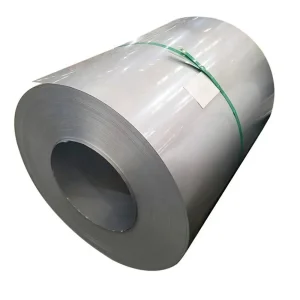
Corrosion protection for agricultural tubing is categorized into three primary metallurgical processes: Pre-Galvanized (Pre-GI), Batch Hot-Dip Galvanized (HDG), and Zinc-Aluminum-Magnesium alloy (ZAM/ZM) coatings.
Pre-Galvanized Steel Tubing (Pre-GI)
Process: Formed from pre-coated hot-dip galvanized steel strip. The external weld seam is restored online via continuous thermal zinc spraying.
Coating Weight: $Z100 - Z275 \text{ g/m}^2$ (approx. $7 - 20 \mu m$ thickness per side).
Neutral Salt Spray (NSS): 200 – 500 Hours before first red rust appearance.
Best Suited For: Indoor structural framing, low-humidity livestock partitioning, light greenhouse arches.
Post-Weld Hot-Dip Galvanized Tubing (HDG)
Process: Fabricated black tubing immersed completely in a molten zinc bath ($\approx 450^\circ\text{C}$), producing metallurgical zinc-iron intermetallic alloy layers ($\zeta, \delta, \Gamma$) topped by pure zinc ($\eta$).
Coating Weight: $300 - 610 \text{ g/m}^2$ ($45 - 85 \mu m$ average thickness).
Neutral Salt Spray (NSS): 1,000 – 1,500+ Hours.
Best Suited For: Open-field structural posts, heavy animal waste housing, high-humidity coastal farming.
Zinc-Aluminum-Magnesium Tubing (ZAM / ZM)
Process: Continuous coating featuring a ternary alloy composition (typically Zinc + 3% Aluminum + 3% Magnesium). Creates a dense Simonkolleite protective film that self-heals exposed shear cuts and drilled holes.
Coating Weight: $ZM120 - ZM430 \text{ g/m}^2$.
Neutral Salt Spray (NSS): 2,500 – 4,000+ Hours (Superior performance in ammonia & alkaline environments).
Best Suited For: Agri-PV mounting posts, chemical fertilizer handling, intensive swine/poultry farms.
Localized Engineering Application Scenarios & Structural Configurations
Agricultural tubing performs distinct structural roles across diverse agricultural sectors. Correct section selection relies on understanding the stress states (bending, compression, torsion) unique to each installation environment.
1. Commercial Multi-Span Greenhouses (Venlo & Gothic Arch)
Greenhouse structural frameworks require high strength-to-weight ratios to maximize solar radiation transmittance while resisting peak wind uplift and suspended crop loads (e.g., heavy tomato/cucumber trellising reaching up to $25 \text{ kg/m}^2$).
- Columns & Posts: Heavy Rectangular Hollow Sections (RHS 100x50x3.0mm to 150x100x4.0mm) in Q355B / S355JR HDG or ZAM.
- Roof Arches & Bows: Circular Hollow Sections (CHS 32x1.5mm to 60x2.0mm) or specialized Oval Tubing (e.g., 70x30x2.0mm) providing high section modulus against vertical snow loads.
- Purlins & Bracing: Square Hollow Sections (SHS 30x30x1.5mm to 40x40x2.0mm) Pre-GI $Z275$.
2. Intensive Livestock & Poultry Housing Structures
Animal containment environments are highly aggressive due to airborne manure vapors, high humidity, and mechanical impact from heavy livestock.
- Pen Partitioning & Stall Rails: Heavy wall CHS (48.3x3.25mm to 60.3x3.75mm) hot-dip galvanized after bending and welding to eliminate internal seam corrosion.
- Roof Trusses & Support Framing: SHS 80x80x3.0mm to 100x100x4.0mm in ZAM ($ZM310$), resisting chemical degradation from high $NH_3$ vapor concentration.
3. Center-Pivot & Lateral Irrigation Spans
Mechanized irrigation systems demand structural tubes that act simultaneously as high-pressure fluid conduits and structural beam elements subjected to severe torsional shear during span rotation over uneven terrain.
- Pipeline Spans: High-yield ERW CHS (6" to 8 5/8" OD, wall thickness 2.77mm to 3.96mm) in ASTM A53 Grade B or GB/T 3091 Q235B/Q345B, lined internally with polyurethane/epoxy or continuous heavy HDG ($>85 \mu m$).
- Truss Rod Support Arms: High-tensile solid round bar and light-gauge tubular bracing struts.
4. Agri-Voltaics (Agri-PV) Dual-Use Mounting Structures
Combining agricultural production with solar power generation requires elevated structural clearance ($2.5m - 5.0m$) for tractor passage beneath panels, increasing wind moment arms dramatically.
- Ground Driven Posts: C-Channel, RHS 120x80x4.0mm or Heavy Driven CHS in ZAM $ZM430$ / HDG to withstand direct soil contact and localized ground acidity.
- Torque Tubes: Large-diameter precision Octagonal or Round Tubes (110mm to 150mm OD) engineered for high torsional resistance against dynamic wind flutter.
Emerging Trends & Technological Innovations in Agricultural Steel Tubing
Driven by global carbon reduction mandates and precision agriculture technology, the manufacturing of agricultural steel tubing is evolving rapidly. Forward-thinking procurement strategies look beyond basic initial purchase cost to evaluate total life-cycle performance and carbon intensity.
1. High-Strength Ultra-Lightweight Steel Formulations
Advancements in micro-alloying (utilizing precise additions of Niobium $\text{Nb}$, Vanadium $\text{V}$, and Titanium $\text{Ti}$) allow steel mills to produce high-yield structural tubing (e.g., yield strengths $\ge 420 - 550 \text{ MPa}$) with reduced wall thickness. This lightweighting strategy cuts overall structural mass by 15% to 25% while maintaining design load ratings, reducing overseas freight costs and foundation footprints.
2. Mass Adoption of Self-Healing ZAM Coating Systems
Standard galvanized coatings suffer localized edge corrosion when structural tubes are cut, punched, or drilled on-site. The global shift toward Zinc-Aluminum-Magnesium (ZAM) metallic coatings solves this issue: when exposed to precipitation, magnesium ions migrate across raw cut edges to form a protective zinc hydroxychloride layer, self-repairing exposed steel against rust propagation.
3. Specialized Aerodynamic Profiles (Oval & D-Shape)
Traditional circular and square sections present relatively high drag coefficients under severe storm conditions. Modern high-tech greenhouse builders are increasingly specifying roll-formed **Oval Tubing** (e.g., 70x30mm, 80x40mm) and **D-shaped hollow sections**. These custom profiles offer optimized directional bending strength against snow loads while reducing wind resistance coefficients by up to 30%.
Global Buyer Procurement Guide: Quality Control & Supply Chain Risk Mitigation
Sourcing structural steel tubing internationally requires strict quality verification protocols to prevent material non-compliance, dimensional inaccuracies, or shipping damage. Experienced B2B buyers enforce a rigorous quality assurance checklist prior to contract execution and factory dispatch.
Essential Technical Verification Checklist for Buyers
1. Mill Test Certificate (MTC) Verification
Always demand authentic EN 10204 Type 3.1 Mill Test Certificates accompanying every heat number. Ensure the certificate records actual ladle chemical analysis (Carbon equivalent $CEV$, Sulfur $S \le 0.025\%$, Phosphorus $P \le 0.025\%$) and mechanical tensile test results matched to your specific order lot.
2. Dimensional & Weld Seam Tolerances
Specify strict compliance with EN 10219-2 or ASTM A500 tolerances:
- Outside Dimensions (D): $\pm 0.75\%$ (Min $\pm 0.5 \text{ mm}$).
- Wall Thickness (T): $\pm 10\%$ (For structural stability, negotiate $\pm 5\%$ max variance).
- Internal Weld Bead Trim: For telescoping ag-tubes or internal sleeve connections, specify internal weld bead removal ($\le 0.3 \text{ mm}$ height remaining).
3. Coating Inspection Protocols
Verify coating thickness utilizing magnetic induction thickness gauges per ISO 2178 / ASTM B499. For Hot-Dip Galvanized tubing, perform magnetic coating mass tests ($\text{g/m}^2$) and mandate cross-hatch adhesion testing (ISO 2409) to prevent flaking during tube bending.
4. Seaworthy Packaging & Logistics
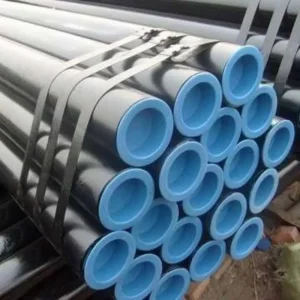
Agricultural tubing exposed to ocean transit must be protected against white rust (zinc storage stain). Ensure factory contracts specify: neutral chromate passivation or oiling, heavy plastic end caps on pipe ends, waterproof plastic wrapping around steel-strapped hexagonal bundles, and desiccants inside closed container shipments.
Frequently Asked Questions: Technical & Wholesale Sourcing Guide
Additional Factory-Direct Coated & Structural Steel Solutions
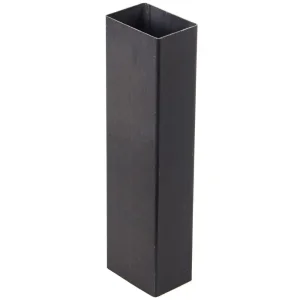
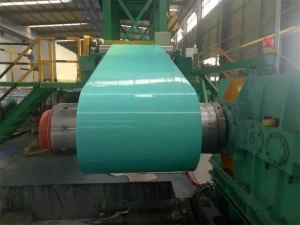
Explore our full range of specialty steel products, including high-corrosion resistant coated sheets, precision hollow sections, structural plates, and electrical steel coils for agricultural and industrial infrastructure.




Partner Direct with Leading China Agricultural Steel Tubing Mills
Get direct mill pricing, custom section tooling, and guaranteed metallurgical quality compliance for your upcoming commercial greenhouse, irrigation, or agricultural infrastructure tender.