Featured Wholesale Steel & EGI Product Catalog
Premium mill-direct steel solutions manufactured under strict ISO/IATF quality controls for international engineering, automotive, and appliance applications.
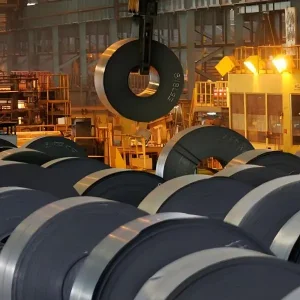
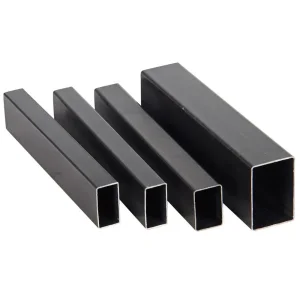
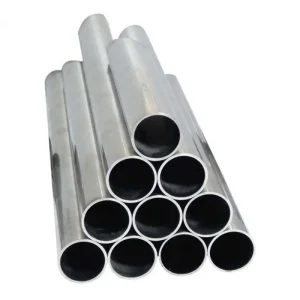
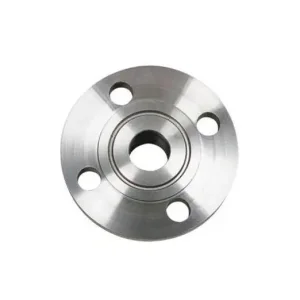
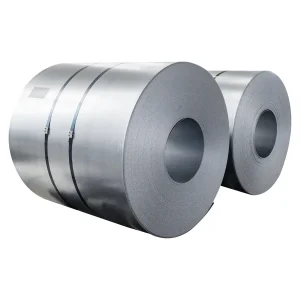
Comprehensive Engineering Guide to 50/50 Electro-Galvanized Steel (EGI)
Understanding electro-deposition kinetics, double-sided equal thickness zinc coatings (50g/m² per side), substrate selection, and surface passivation for precision manufacturing.
1.1 Technical Definition: What is 50/50 Electro-Galvanized Steel (EGI)?
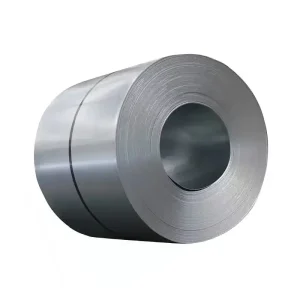
In global industrial steel standards (including JIS G3313, EN 10152, ASTM A879, and GB/T 15675), 50/50 Electro-Galvanized Steel (EGI) denotes cold-rolled carbon steel sheet or coil that has undergone a continuous electro-plating process to deposit a pure zinc layer of 50 g/m² on both sides (top and bottom surfaces). Unlike hot-dip galvanizing (HDG) which relies on molten zinc bath immersion, electro-galvanizing occurs at ambient room temperatures via electrolytic deposition, utilizing aqueous acidic zinc sulfate ($ZnSO_4$) or zinc chloride ($ZnCl_2$) baths under high electrical current density.
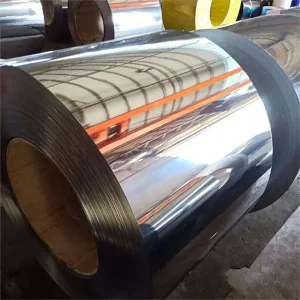
The nomenclature 50/50 (often designated as ZE 50/50, EG 50/50, or SECC 50G/50G) specifies an equal distribution of 50 grams of zinc per square meter per surface. This equates to an approximate zinc coating thickness of 7.0 to 7.2 micrometers (μm) per side. This specific coating weight sits at the high end of the electro-galvanized spectrum—providing nearly double the atmospheric corrosion protection of standard 20/20 EGI (20 g/m², ~2.8 μm per side) while retaining the flawless, spangle-free ultra-smooth surface finish required by automotive OEMs, premium home appliance makers, and server enclosure fabricators.
50/50 EGI provides the optimal economic and metallurgical compromise between extreme surface planarity (required for high-gloss paint systems) and enhanced rust prevention. It eliminates the thermal stress and surface roughness (dross, spangles, flux inclusions) inherent to Hot-Dip Galvanized (GI) coils.
1.2 Comparative Matrix: 50/50 EGI vs. Alternative Coated Steel Grades
Selecting the appropriate coated steel requires evaluating mechanical properties, zinc layer uniformity, weldability, and corrosion resistance under environmental stresses. Below is a engineering comparison matrix prepared by SMSTEEL quality assurance metallurgical specialists:
| Coating Specification | Coating Weight (Per Side) | Layer Thickness | Surface Micro-Finish | Deep Drawing (SECD/SECE) | Spot Welding Efficiency | Primary Industrial Use |
|---|---|---|---|---|---|---|
| 50/50 EGI (ZE 50/50) | 50 g/m² / 50 g/m² | ~7.1 μm / side | Ultra-Smooth, Zero Spangle, Ra 0.8 μm | Exceptional (No Flaking) | High (Consistent Resistance) | Automotive doors, Server chassis, High-end HVAC, Medical gear |
| 20/20 EGI (ZE 20/20) | 20 g/m² / 20 g/m² | ~2.8 μm / side | Ultra-Smooth, Zero Spangle, Ra 0.8 μm | Excellent | Very High (Lower Zinc Mass) | Indoor electronic casings, TV back-panels, Office furniture |
| Hot-Dip Galvanized (GI) Z275 | 137.5 g/m² / 137.5 g/m² | ~20.0 μm / side | Regular / Minimized Spangle, Ra 1.5-3.0 μm | Moderate (Risk of Flaking) | Moderate (Electrode Wear) | Outdoor structural tubing, Roofing, Heavy agricultural pipe |
| Galvannealed (GA / ZF60) | 30 g/m² / 30 g/m² (Zn-Fe) | ~4.5 μm / side | Matte Gray, Micro-Rough Zn-Fe Alloy | Good (Powdering Risk) | Superior (Iron Content) | Automotive underbody, Unexposed structural body panels |
1.3 Substrate Steel Classification & Mechanical Properties
50/50 EGI is supplied on various low-carbon cold-rolled base metals. Depending on the end-user forming process (bending, stamping, severe deep drawing), wholesale buyers can specify substrate chemistry matching international standards:
- SECC / DC01+ZE (Commercial Quality): Designed for standard fabrication, moderate bending, and shallow drawing. Yield Strength ($R_{e}$): 140–280 MPa; Tensile Strength ($R_{m}$): 270–410 MPa; Elongation ($A_{80}$): ≥28%.
- SECD / DC03+ZE (Drawing Quality): Formulated with interstitial-free or aluminum-killed extra-low carbon steel for moderate to complex deep stamping. Elongation ($A_{80}$): ≥34%; Plastic strain ratio ($r_{90}$): ≥1.3.
- SECE / DC04+ZE (Extra Deep Drawing Quality): Optimized for severe multi-stage press drawing, such as automotive oil pans, complex interior structural pillars, and complex appliance wrap-arounds. Elongation ($A_{80}$): ≥38%; Plastic strain ratio ($r_{90}$): ≥1.6.
Global Sourcing Demand & Industry Trends for 50/50 EGI
How evolving regulatory frameworks, electric vehicle architecture, hyperscale data centers, and eco-passivation are shifting procurement strategies for steel buyers worldwide.
Hyperscale AI & Cloud Infrastructure
The explosive rise of AI computing infrastructure requires server rack enclosures, liquid cooling distribution units, and telecom cabinets with stringent EMI shielding, anti-fingerprint aesthetics, and zero zinc-flake risk to avoid circuit shorting. 50/50 EGI provides the ultimate clean-room structural material.
Electric Vehicle (EV) Lightweighting
Automotive OEMs are replacing heavy hot-dip structural parts with ultra-high-strength steel (UHSS) and advanced high-strength steel (AHSS) coated with electro-galvanized 50/50 zinc layers. It enables precision laser welding and smooth paint gloss on EV battery trays, door modules, and side-impact beams.
RoHS & REACH Eco-Passivation
Global environmental mandates strictly enforce hexavalent chromium ($Cr^{6+}$) phase-outs. Leading wholesale EGI factories in Tianjin now utilize 100% RoHS/REACH-compliant trivalent chromium ($Cr^{3+}$) and bio-based organic passivation coatings (AFP), opening unrestricted export channels into the EU and North America.
2.2 Macro Supply Chain Challenges & Wholesale Procurement Solutions
Procurement directors sourcing EGI coils globally face specific structural friction points: steel mill lead-time volatility, edge damage during oceanic transits, thickness tolerance drift, and coat weight inconsistencies. SMSTEEL addresses these issues through mill-direct integration from our 66,700 m² Tianjin manufacturing complex:
- Tight-Tolerance Cold Rolling: Utilizing 1400mm 6-high reversible cold rolling mills to achieve half-standard gauge tolerance (±0.015 mm on 1.0 mm nominal thickness), ensuring uniform press die pressure during customer stamping.
- Automated Online Thickness & Coating Measurement: X-ray fluorescence (XRF) closed-loop coating gauges monitor zinc deposition in real-time across both top and bottom coil strips, enforcing 50.0 g/m² ± 2.0 g/m² tolerance.
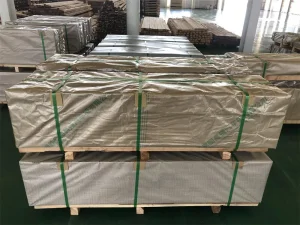
- Seaworthy Packaging Architecture: Heavy-gauge anti-corrosion VCI (Vapor Corrosion Inhibitor) paper wrapping, combined with galvanized steel outer protective rings, radial/circumferential steel straps, and wooden skid skids engineered for containerized or break-bulk shipping.
Electro-Galvanizing Line (EGL) Mechanics & Passivation Treatments
Inside the continuous electroplating bath: standard operating parameters, chemical passivations, and Anti-Fingerprint (AFP) resin technology.
Continuous Electro-Plating Line (EGL) Chemistry
In SMSTEEL's vertical continuous plating cells, cold-rolled steel strip passes through a series of chemical degreasing, electrolytic pickling, and electroplating tanks. An electric field drives zinc ions ($Zn^{2+}$) from soluble pure zinc anodes to the cathodic steel strip:
$$Zn^{2+} + 2e^- \rightarrow Zn^0 \quad \text{(Deposition Rate Controlled by Faraday's Law)}$$
By controlling line speed (up to 150 m/min) and electrolyte current density ($50-100 \text{ A/dm}^2$), a uniform, fine-grained 50 g/m² crystalline zinc coating is built up without forming brittle iron-zinc intermetallic alloy layers. This preserves 100% of the substrate's intrinsic ductile bending performance.
Anti-Fingerprint (AFP) & Passivation Coating Chemistry
Raw zinc coatings oxidize quickly when exposed to humidity or atmospheric oxygen. To guarantee long-term stability and operational handling, 50/50 EGI receives specialized surface chemical passivations:
- C / Chromate Passivation: Trivalent chromium ($Cr^{3+}$) chemical conversion layer creating an insoluble barrier against white rust ($Zn(OH)_2$).
- AFP-N / Transparent Organic Anti-Fingerprint: Thin organic resin film (~1.0 μm) applied over passivation. Prevents human skin oil staining, improves lubricant-free shallow drawing, and acts as an immediate primer for powder painting.
- Conductive Organic Resin (AFP-C): Formulated with conductive particles to ensure zero resistance loss during resistance spot welding while maintaining fingerprint suppression.
Factory Verification, Quality Assurance & TCO Analysis
How global procurement officers evaluate 50/50 EGI factories, mill test certificates (MTC), dimensional standards, and total cost of ownership (TCO).
4.1 Mill Test Certificate (MTC) & Compliance Standards
Every wholesale batch of 50/50 EGI shipped from SMSTEEL includes an EN 10204 3.1 Certified Mill Test Report documenting verifiable physical and chemical metrics:
- Chemical Composition Analysis: Ladle analysis verifying Carbon ($C \le 0.08\%$), Manganese ($Mn \le 0.45\%$), Phosphorus ($P \le 0.025\%$), Sulfur ($S \le 0.020\%$), and Silicon ($Si \le 0.03\%$).
- Coating Mass Verification: Gravimetric strip-and-weigh test according to ASTM A90 / ISO 1460 confirming 50 g/m² ± 2 g/m² dual-sided coating weight.
- Mechanical Property Testing: Tensile testing (ASTM A370 / ISO 6892-1) reporting Yield Strength, Ultimate Tensile Strength, Total Elongation ($A_{80}$), and strain hardening exponent ($n$-value).
- Surface Quality Inspection: Automated optical surface inspection rating under EN 10152 Surface Quality Grade A (standard surface) or Grade B (exposed surface for direct automotive painting).
4.2 Total Cost of Ownership (TCO) Sourcing Economics
While the initial purchase price per ton of 50/50 EGI is marginally higher than 20/20 EGI or raw cold-rolled steel (SPCC), evaluating the broader lifecycle manufacturing cost yields substantial savings:
Elimination of Post-Plating
Fabricating parts from pre-coated 50/50 EGI eliminates outsourcing component post-galvanizing or liquid batch painting, slashing factory lead time by 30-40% and eliminating toxic chemical bath handling.
Reduced Stamping Scrap Rates
Unlike Hot-Dip Galvanized sheet where zinc flaking clogs stamping dies and ruins surface finish, 50/50 EGI's electrolytic bond and optional organic resin coating act as a permanent solid lubricant, extending stamping die life by up to 250,000 strokes.
Optimized Freight & Yield
By purchasing slit coils or custom cut-to-length sheets directly from the天津 supplier, importers optimize container volume utilization (>98% weight capacity) and eliminate local shearing scrap waste.
50/50 EGI Technical Roadmap & Industry Innovations (2025–2030+)
Future-proofing steel procurement through AI surface inspection, Zinc-Nickel alloy evolution, and zero-carbon substrate steel manufacturing.
1. Zinc-Nickel (Zn-Ni) Alloy Deposition
Transitioning from pure zinc baths to Zinc-Nickel electro-alloying (10-15% Ni content). Zn-Ni 50/50 offers up to 5× higher salt spray corrosion protection at equivalent coating weights, enabling thinner gauges for aerospace and next-gen electric vehicles.
2. AI-Powered Optical Inspection
Integration of multi-spectral AI vision sensors on continuous plating lines. AI algorithms instantly detect micro-defects down to 0.05 mm at 150 m/min line speeds, automatically sorting and tagging non-conforming strip sections.
3. Decarbonized Green Steel Substrates
Utilizing Hydrogen Direct Reduced Iron (H2-DRI) and Electric Arc Furnace (EAF) steelmaking to produce net-zero carbon cold-rolled substrates for 50/50 EGI, meeting EU Carbon Border Adjustment Mechanism (CBAM) standards.
Industrial Sourcing & Engineering FAQ: 50/50 EGI
Detailed answers to technical, operational, and commercial questions regarding electro-galvanized 50/50 steel coils, sheets, and manufacturing specifications.
What exact coating thickness does "50/50" EGI represent in micrometers (μm)?
How does 50/50 EGI perform in Salt Spray Testing (ASTM B117) compared to 20/20 EGI?
Can 50/50 EGI be directly welded using standard Resistance Spot Welding (RSW)?
What is the shelf life of 50/50 EGI coils in warehouse storage?
What substrate steel options are available for deep drawing application of 50/50 EGI?
What packaging options are available for overseas ocean shipment from Tianjin port?
Related Factory Coils, Plates & Structural Products
Explore SMSTEEL’s integrated inventory options for multi-category procurement, consolidated sea freight, and mill-direct supply contracts.