
Featured Galvannealed & Coated Steel Catalog
Explore our export-grade zinc-iron alloy sheets, hot-dipped galvanized coils, and specialized structural steel solutions manufactured to ASTM, EN, and JIS benchmarks.
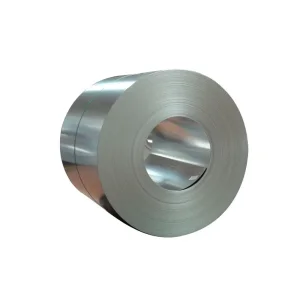
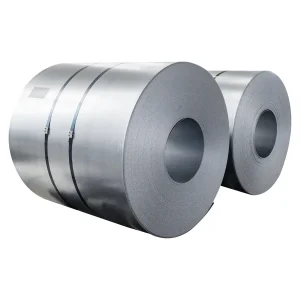
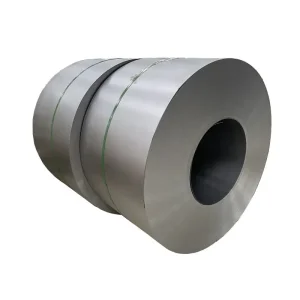
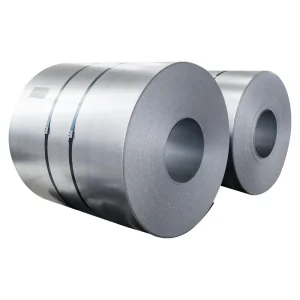
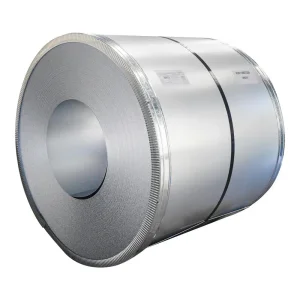
1. Metallurgical Foundations of ZF100 Galvannealed Steel Sheets
In modern industrial manufacturing—spanning automotive body-in-white (BIW), precision electrical enclosure fabrication, and heavy HVAC structural framing—the demand for materials offering a balance of corrosion protection, superior weldability, and exceptional paint adhesion has driven the widespread adoption of ZF100 Galvannealed (GA) Zinc-Iron Alloy Steel Sheets.
Designated as ZF100 under European standard EN 10346 (equivalent to A40 / A60 under ASTM A653/A653M or F10 / F12 under JIS G3302), this specialized coated steel product features a double-sided total coating mass of 100 g/m² (50 g/m² per side). Unlike traditional Hot-Dip Galvanized (GI) sheet metal, which maintains a free-zinc surface layer, ZF100 undergoes an in-line thermal diffusion process immediately after leaving the molten zinc pot.
Key Technical Distinction: The galvannealing process subjects the hot-dipped zinc coating to induction heating at 500°C to 560°C. This causes iron (Fe) from the steel substrate to diffuse rapidly into the molten zinc layer, converting the pure zinc coating into a fully alloyed Zinc-Iron (Zn-Fe) intermetallic structure containing 8% to 12% iron by weight.
1.1 Intermetallic Phase Microstructure of ZF100 Coating
The operational performance of ZF100 zinc-iron sheet hinges upon precise phase equilibrium control within the Zn-Fe binary system. The galvannealing thermal profile is engineered to yield a specific gradient of intermetallic phases from the substrate boundary to the outer surface:
Gamma Phase (Γ / Γ 1)
Formed at the immediate steel-coating interface. Features a high iron content (18%–28% Fe). Kept extremely thin (<1 μm) to prevent brittle interface cracking during deep drawing.
Delta Phase (δ 1)
Comprises the bulk of the ZF100 coating layer (~7%–11.5% Fe). Possesses a hexagonal crystal structure that offers superior ductility, toughness, and resistance to flaking.
Zeta Phase (ζ)
Located near the outer surface (5%–6% Fe). Monoclinic crystal morphology. Excessive Zeta formation is minimized in premier ZF100 production to prevent "powdering" during stamping.
2. Comparative Benchmark: ZF100 vs. Standard GI vs. Advanced Alloy Coatings
Engineers and procurement specialists often evaluate whether to specify ZF100 Galvannealed Steel Sheet, standard GI (HDG) Steel Sheet, or ultra-corrosion-resistant Zinc-Aluminum-Magnesium (ZM) Sheets. Below is a detailed engineering comparison based on industrial performance metrics:
| Property Parameter | ZF100 Galvannealed (GA) Sheet | Standard GI Sheet (Z275 / Z100) | Zinc-Aluminum-Magnesium (ZM275) |
|---|---|---|---|
| Coating Composition | Zn + 8%–12% Fe (Alloyed) | 99%+ Pure Free Zinc Layer | Zn + 1.5–3% Al + 1.5–3% Mg |
| Resistance Spot Welding (RSW) | Superior (Higher contact resistance, longer tip life) | Moderate (Zinc melting causes electrode brassing) | Moderate to Fair (Requires higher welding current) |
| Paint & E-Coat Adhesion | Exceptional (Micro-porous alloy structure) | Requires chemical pre-treatment / chromating | Good (Requires tailored cleaning/phosphatability) |
| Formability / Stamping | Good (Requires controlled die clearance) | Excellent (Ductile free zinc coating) | Excellent (Low friction coefficient) |
| Flat Surface Corrosion | High (Forms dense zinc-hydroxycarbonate) | High (Proportional to zinc thickness) | Ultra-High (Self-healing Simonkolleite film) |
| Cut-Edge Protection | Good (Galvanic sacrificial protection) | Good (Sacrificial zinc protection) | Superior (Magnesium migration heals cut edges) |
| Primary Industrial Intent | Automotive BIW, Enclosures, Painted OEM Parts | HVAC Ducts, Roofing, General Sheet Metal | Solar Mounts, High-Corrosion Outdoor Structural |
As demonstrated in the comparison table, while Zinc-Aluminum-Magnesium (ZM) coatings excel in raw unpainted outdoor atmospheric exposure, ZF100 zinc iron sheets remain the unmatched gold standard for applications requiring automated resistance spot welding and post-assembly powder coating or electro-deposition (E-coating).
3. Technical Roadmap & Metallurgical Future Outlook for Galvannealed Sheets
The manufacturing technology behind galvannealed steel is evolving rapidly in response to global automotive lightweighting, energy-efficiency demands, and environmental regulations. Chinese manufacturing centers are pioneering several critical technology shifts in ZF100 production:
1. Substrate Micro-Alloying (IF & AHSS)
Integration of Interstitial-Free (IF) ultra-low carbon steels (e.g., DX54D+ZF, DX56D+ZF) and Advanced High-Strength Steels (AHSS like DP600/DP780+ZF) allowing ultra-deep drawing and structural crashworthiness without coating micro-cracking.
2. Precision High-Frequency Induction Annealing
Modern galvannealing towers utilize high-frequency induction furnaces with real-time pyrometric feedback loops. This ensures heating precision within ±2°C across a 1500mm coil width, eliminating regional iron percentage variance.
3. Eco-Friendly Passivation & Dry Lubrication
Transition away from hexavalent and trivalent chrome passivation towards organic thin-film coatings and eco-friendly hot-melt dry lubricants that enhance press shop die life while complying with REACH/RoHS directives.
Next-Generation Horizon: Advanced research focuses on ultra-lightweight ZF coatings combined with nano-particle passivation layers, reducing the total energy required during automobile body painting baking ovens by over 15% while improving salt spray resistance performance beyond 720 hours without red rust.
4. China Factory Supply Chain Resilience & Production Efficiency Advantages
When sourcing ZF100 zinc iron sheet metal for large-scale industrial projects or contract manufacturing, global procurement managers prioritize supply chain stability, technical consistency, and cost-to-quality efficiency. China’s major steel manufacturing hubs—particularly in the Tianjin and Bohai Economic Rim—offer distinct competitive edges:
Fully Integrated Industrial Cluster
From coking and ironmaking to hot-rolling pickling, cold-reduction mills, and continuous galvannealing lines (CGL), Chinese factories operate fully integrated production eco-systems. This eliminates inter-factory transportation delays and guarantees raw material traceability.
Rapid Customization & Dimension Flexibility
Equipped with high-precision skin-pass mills, tension levelers, and automated slitting/cut-to-length lines, supplier factories can rapidly fulfill orders for non-standard sheet widths (600mm to 1500mm), precise gauge tolerances (±0.02mm), and customized coil weights.
Maritime Logistics & Port Infrastructure
Proximity to major deep-water ports (such as Tianjin Port) allows direct loading of seaworthy anti-moisture wrapped steel coils and bundles into breakbulk or container ships, shortening international lead times by up to 10 days.
Supply Chain Quality Assurance: Leading China supplier mills employ online automatic surface defect inspection systems (CCD cameras) operating 24/7 on high-speed CGL lines. This ensures every millimeter of ZF100 sheet surface is scanned for pinholes, dross, or micro-spangle irregularities prior to shipment.
5. Localized Application Scenarios & Sector Engineering Insights
Because of its unique metallurgical properties, ZF100 zinc iron alloy sheet is specified across demanding global manufacturing sectors where performance cannot be compromised:
Automotive Body-in-White (BIW)
Utilized for door outer/inner panels, hood reinforcements, floor pans, and wheel housings. The 8–12% Fe coating facilitates high-frequency resistance spot welding, dramatically extending welding tip life and enabling uniform cathodic electro-deposition (KTL/E-coat).
Precision Electrical Enclosures & Cabinets
Engineered for high-end server racks, industrial control panels, and transformer housings. The matte zinc-iron surface offers superior powder coating paint anchoring, preventing paint peeling even under severe vibration or thermal cycling.
HVAC Equipment & Appliance Panels
Specified by tier-1 manufacturers for commercial air conditioner chassis, heat exchanger frames, and washing machine side panels. The absence of free zinc prevents die fouling during complex multi-stage stamping operations.
6. Global Compliance, Quality Standards & Localized Support
Exporting high-quality ZF100 zinc iron sheets across North America, Europe, Southeast Asia, and the Middle East requires strict compliance with regional manufacturing specifications and environmental mandates:
6.1 International Standard Cross-Reference
Our factory supplier partners produce ZF100 and equivalent galvannealed grades strictly compliant with global engineering specifications:
| Standard System | Standard Code | Equivalent Grade Designation | Coating Mass Code |
|---|---|---|---|
| European (EN) | EN 10346 / EN 10152 | DX51D+ZF, DX52D+ZF, DX53D+ZF, DX54D+ZF | ZF100 (100 g/m² min total both sides) |
| American (ASTM) | ASTM A653 / A653M | CS Type A/B, FS Type A/B, DDS, EDDS | A40 (120 g/m²) / A60 (180 g/m²) |
| Japanese (JIS) | JIS G3302 | SGCC, SGCD1, SGCD2, SGCD3 | F10 (100 g/m²) / F12 (120 g/m²) |
| Chinese (GB) | GB/T 2518 | DC51D+ZF, DC52D+ZF, DC53D+ZF | ZF100 (100 g/m²) |
6.2 Rigorous Quality Control & Certification Protocol
Every shipment of ZF100 zinc iron sheet is delivered with a comprehensive Mill Test Certificate (MTC) in accordance with EN 10204 3.1, detailing:
- Chemical Composition Analysis: Ladle analysis of C, Mn, P, S, Si, Al, Ti, Nb elements.
- Mechanical Properties Testing: Yield Strength ($R_e$ or $R_{p0.2}$), Tensile Strength ($R_m$), Percentage Elongation ($A_{80}$), and plastic strain ratio ($r$-value) / strain hardening exponent ($n$-value) for drawing grades.
- Coating Mass & Fe% Verification: Triple-spot weigh-strip-weigh test and X-ray fluorescence (XRF) coating alloy analysis.
- Environmental Compliance: Full compliance with EU RoHS Directive 2011/65/EU, REACH (EC 1907/2006), and heavy-metal-free passivations.
Complete Steel Supply Chain Range
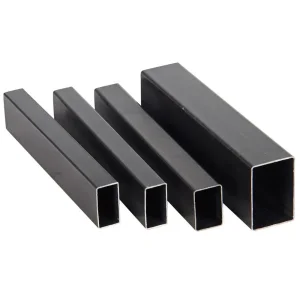
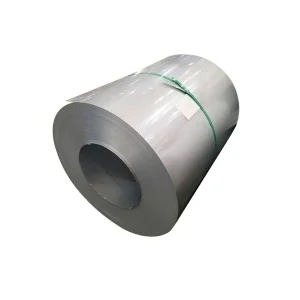
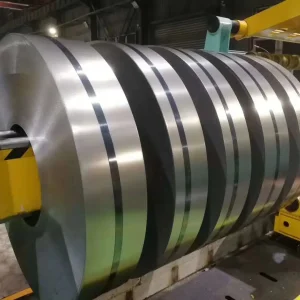
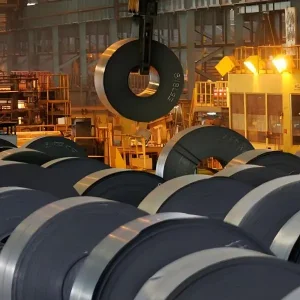
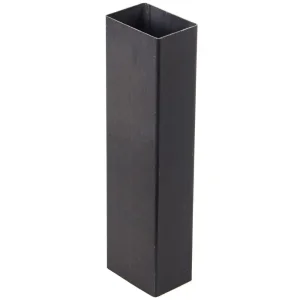
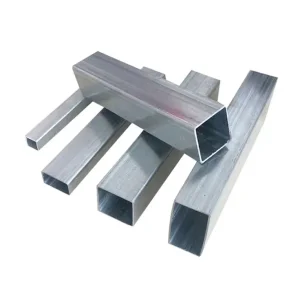
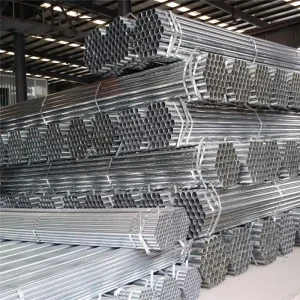
In addition to premier ZF100 galvannealed sheets, our manufacturing facilities produce stainless steel coils, electrical silicon steel, pickled coils, structural tubes, and greenhouse piping.
7. Technical & Procurement FAQ (Frequently Asked Questions)
In-depth engineering answers to common technical queries raised by metallurgical engineers, quality inspectors, and purchasing directors:
What exactly does "ZF100" signify in galvannealed steel sheet specifications?
Under European standard EN 10346, "ZF" denotes a Galvannealed coating (Zinc-Iron alloy created via thermal diffusion after hot-dipping), while "100" specifies a minimum total triple-spot coating weight of 100 g/m² considering both sides combined (equivalent to approximately 50 g/m² or ~7μm thickness per side). It provides an optimal balance between weldability, paintability, and sacrificial corrosion protection.
Why does ZF100 offer drastically superior spot welding performance compared to standard GI (Z100/Z275)?
Standard GI sheet metal possesses a pure zinc outer coating with a lower melting point (~419°C) and low electrical contact resistance. During resistance spot welding (RSW), pure zinc rapidly melts and alloys with copper welding electrodes ("brassing"), eroding tip geometry and requiring redressing every 500–1000 welds. Conversely, the Zn-Fe alloy in ZF100 has a much higher melting point (~650°C–780°C) and higher electrical resistivity. This concentrates heat at the steel-sheet interface rather than the electrode tip, extending welding electrode tip life by 200% to 300%.
What is the ideal Iron (Fe) percentage in a high-quality ZF100 coating, and why does it matter?
The target iron content in a prime-grade ZF100 galvannealed coating is strictly controlled between 8% and 12% Fe by weight. If the iron content falls below 8% (under-annealing), a soft free-zinc Zeta (ζ) phase remains on the surface, causing stickiness and lower weldability. If iron content exceeds 12% (over-annealing), an excessively thick brittle Gamma (Γ) phase forms at the substrate interface, causing severe "powdering" or flaking of the coating during deep stamping or bending operations.
How does ZF100 compare to ASTM A40 and ASTM A60 galvannealed sheets?
ZF100 (100 g/m² min total both sides) bridges the gap between ASTM A40 (minimum 120 g/m² total single-spot) and ASTM A25. It is functionally interchangeable with ASTM A40 for most automotive BIW and appliance sheet applications, providing robust corrosion resistance while offering superior ductility and press shop formability.
Can ZF100 galvannealed steel sheets be painted directly without chemical pre-treatment?
Thanks to its micro-porous matte surface texture resulting from the intermetallic Zn-Fe crystal structure, ZF100 exhibits outstanding mechanical keying and paint adhesion. While light cleaning/degreasing is always recommended before industrial painting, ZF100 accepts powder coatings, primer coats, and cathodic electro-deposition (E-coat) with far greater bond strength than smooth, bright spangle GI sheets.
What deep drawing steel substrate grades are available with ZF100 coating?
Our supplier factory partners offer ZF100 coating across a complete range of cold-rolled substrates:
- Commercial Quality: DX51D+ZF (St12 equivalent) for simple forming and bending.
- Drawing Quality: DX52D+ZF (St13 equivalent) for moderate stamping.
- Deep Drawing Quality: DX53D+ZF (St14 equivalent) for complex deep stamping.
- Extra Deep Drawing (IF Steel): DX54D+ZF / DX56D+ZF (Interstitial-Free steel) for extreme multi-stage automotive stamping.
What packaging and moisture-prevention standards are applied for ocean export?
All ZF100 steel coils and cut sheets are packed in heavy-duty seaworthy export packaging: wrapped in anti-rust VCI (Vapor Corrosion Inhibitor) paper and waterproof plastic film, encased in galvanized steel outer protective covers, secured with radial and circumferential high-tensile steel strapping, and mounted on treated wooden or steel skids equipped with desiccants.