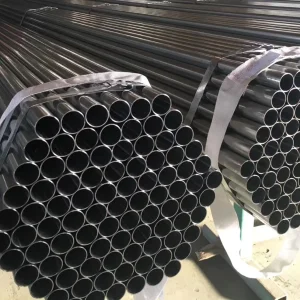
Primary Industrial Steel Products & Coils
Mill-direct high-durability Aluzinc coils, structural tubes, and galvanized steel solutions engineered for global construction and industrial manufacturing.
Metallurgical Architecture & Technical Fundamentals of Aluzinc Steel Coils
An engineering breakdown of 55% Aluminum-Zinc alloy coating chemistry, microstructural phase transformation, and long-term atmospheric resistance dynamics.
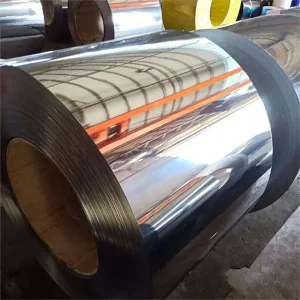
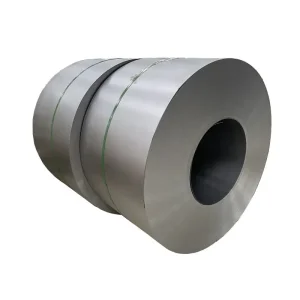
Aluzinc steel coils—commercially recognized worldwide under trademarks such as Galvalume, Zincalume, and Galvalume Plus—represent a technological milestone in protective metallic coating systems. Manufactured via a continuous hot-dip coating process, the Aluzinc coating alloy consists nominally of 55% Aluminum, 43.4% Zinc, and 1.6% Silicon by weight. This precise ternary eutectic mixture yields a dual-phase microstructural matrix that synthesizes the barrier corrosion resistance of aluminum with the galvanic, sacrificial edge protection of zinc.
Microstructural Synergism & Corrosion Inhibition Mechanism
When examined under electron microscopy, the solidified Aluzinc coating reveals a complex cored dendritic structure. The solidification process begins with aluminum-rich dendrites nucleation at elevated temperatures (~600°C). As the alloy cools, zinc is rejected into the interdendritic boundary spaces, creating a continuous zinc-rich phase network surrounded by an aluminum-rich passive barrier framework.
Aluminum Barrier Protection
Upon exposure to atmospheric oxygen and humidity, the aluminum phase oxidizes to form an insoluble, highly adherent Aluminum Oxide (Al₂O₃) surface film. This oxide layer acts as a physical barrier against moisture, chlorides, and sulfur dioxide penetration.
Galvanic Sacrificial Protection
At cut edges, scratched zones, or pierced fastener points, the exposed zinc within the interdendritic channels sacrifices itself preferentially to protect the structural steel substrate, preventing red rust propagation.
Silicon Interfacial Layer Control
The 1.6% Silicon inclusion is critical to processing performance. Silicon suppresses the violent exothermic reaction between iron and aluminum during dipping, forming a micro-thin Fe-Al-Si intermetallic layer that enables superior coating adhesion during deep drawing and bending.
Engineering Benchmark: In standardized salt spray testing (ASTM B117 / ISO 9227) and real-world outdoor exposure trials spanning 30+ years in marine (C4) and industrial (C5) environments, Aluzinc coated steel demonstrates 3 to 6 times greater corrosion resistance compared to conventional hot-dip galvanized (GI) steel coils of equivalent coating thickness.
Manufacturing Line Architecture, Passivation & Surface Chemistry
How state-of-the-art continuous annealing and hot-dip pot chemistry achieve uniform spangle formation and tight thickness tolerances.
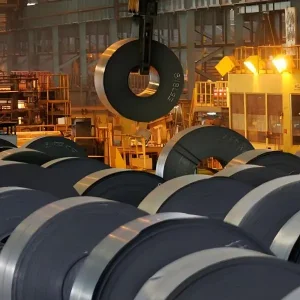
Our Tianjin manufacturing facility operates high-speed continuous hot-dip galvalume lines equipped with automated thickness gauging, closed-loop air knife wiping systems, and online optical surface defect detection. The manufacturing sequence involves meticulous surface preparation to ensure optimal metallurgical bonding.
The Continuous Hot-Dip Process Workflow
- Electrolytic Degreasing & Pickling: Cold-rolled full hard (FH) steel coil coils are thoroughly cleaned to eliminate residual rolling oils, iron fines, and surface oxides.
- Vertical Radiant Tube Annealing Furnace: Substrates pass through a protective atmosphere annealing furnace (N₂/H₂ reducing atmosphere) at 750°C - 850°C to recrystallize the steel grain structure while maintaining an oxygen-free metal surface.
- Molten Aluzinc Pot Immersion: The clean strip enters the alloy pot containing molten 55% Al-Zn-Si maintained at a precise temperature of 595°C - 610°C.
- Closed-Loop Air Knife Pressure Control: High-pressure nitrogen/air knives wipe excess liquid metal from both strip surfaces, achieving consistent coating weights ranging from AZ30 (30 g/m²) up to AZ200 (200 g/m²).
- Controlled Cooling & Minimized Spangle Formation: Forced air cooling towers rapidly solidify the coating, controlling crystal growth to produce regular or minimized spangle aesthetics suitable for architectural unpainted or pre-painted applications.
- Chemical Passivation & Anti-Fingerprint Coating: Post-treatment application of chromate-free passivation, organic thin film (Anti-Fingerprint / AFP), or light oiling to protect against wet-storage stain (white rust) and enhance drawing lubricity.
Surface Finish Specifications & Passivation Varieties
Depending on the downstream application—whether roll-forming corrugated roofing sheets, forming HVAC ducts, or serving as a base metal for prepainted galvalume steel (PPGL)—specific chemical post-treatments are applied:
| Surface Treatment Code | Chemical Description | Primary Benefit & Performance | Recommended End-Use |
|---|---|---|---|
| AFP / Organic (Green/Transparent) | Thin Organic Acrylic Coating (~1.0 µm) | Prevents finger marks, eliminates oiling, improves roll-forming lubricity | Exposed roofing, interior wall panels, home appliances |
| Chromated Passivation (C) | Trivalent Chromate Corrosion Inhibitor | Superior wet-storage corrosion resistance during maritime transit | Standard distribution, industrial storage, unpainted decking |
| Environment-Friendly Passivation (E) | RoHS / REACH Compliant Organic Polymer | Zero heavy metals, highly eco-friendly, excellent paint adhesion | EU/North American export contracts, green building tenders |
| Oiled (O) | Rust-preventative vanishing mineral oil | Temporary anti-rust protection during short storage, easy degreasing | Secondary processing, stamping, automotive bracket presswork |
Global Procurement Specifications & Structural Steel Compliance
Cross-reference guide for international engineering standards, mechanical property grades, and rigorous quality inspection protocols.
International project managers, EPC contractors, and procurement departments must align steel coil specifications with regional building codes and structural standards. As a premier China exporter, our Aluzinc coils strictly comply with major international specifications including ASTM A792/A792M (USA), EN 10346 (Europe), JIS G 3321 (Japan), and AS 1397 (Australia).
| Standard | Commercial Grade | Structural Grade | High Yield / Full Hard | Common Coating Weights |
|---|---|---|---|---|
| ASTM A792 / A792M | CS Type A, B, C | SS Grade 33 (230), Gr 40 (275), Gr 50 (340) | SS Grade 80 (550 MPa) | AZ50, AZ100, AZ150, AZ180 |
| EN 10346 | DX51D+AZ, DX52D+AZ | S250GD+AZ, S320GD+AZ, S350GD+AZ | S550GD+AZ (High Tensile) | AZ70, AZ100, AZ150, AZ180 |
| JIS G 3321 | SGLCC | SGLCD, SGLCE | SGLH570 (Full Hard) | AZ90, AZ120, AZ150 |
| AS 1397 | G250, G300 | G350, G450 | G550 (High Strength Corrugated) | AZ150, AZ200 |
Quality Control & Factory Acceptance Testing (FAT) Protocol
To eliminate field failures and guarantee compliance with purchase orders, every production master coil undergoes six stringent laboratory tests prior to packing:
- Triple Spot Coating Mass Test (ASTM A792): Chemical gravimetric stripping according to ISO 1460 to verify total g/m² mass on top, bottom, and center width points.
- T-Bend & Adhesion Test (ASTM D4145): 0T to 2T 180-degree bend testing to confirm zero coating flaking, peeling, or micro-cracking along the deformation radius.
- Tensile & Elongation Testing: Universal testing machines quantify Yield Strength (MPa), Tensile Strength (MPa), and Elongation (%) to guarantee structural calculations.
- Thickness & Width Tolerance Inspection: Continuous laser thickness micrometers ensure thickness tolerances within ±0.02 mm.
- Anti-Fingerprint Solvent Resistance: MEK rub tests to measure organic resin cure quality and surface durability.
- Salt Spray & Atmospheric Simulation: Continuous chamber exposure testing under ASTM B117 standards to confirm 1,000+ hours with zero red rust.
Tianjin Supply Chain Advantages & Global Logistics Excellence
Strategic geographic location, raw material integration, custom slitting, and seaworthy export packaging engineered for deep-sea shipping.
Located in the heart of China's primary steelmaking hub in Jinghai, Tianjin, our manufacturing footprint provides unparalleled supply chain efficiencies. Operating in close proximity to Tianjin Port—the largest steel shipping gateway in Northern China—allows our overseas buyers to achieve significant freight cost reductions, flexible shipment scheduling, and rapid order lead times.
Upstream Raw Material Synergies
Direct hot-rolled coil (HRC) sourcing contracts with major state-owned mills ensure consistent substrate chemical purity, zero inclusions, and highly competitive baseline pricing.
Precision Slitting & Custom Processing
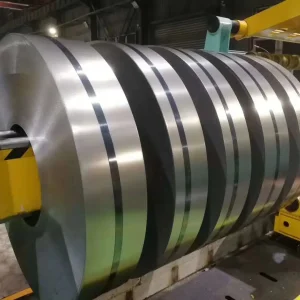
High-speed narrow slitting lines can cut master coils into slit strip coils from 30 mm up to 1250 mm wide, with tight width tolerances suitable for automated tube mills and roll formers.
Heavy-Duty Seaworthy Packaging
Coils are wrapped in anti-rust VCI film, encased in corrugated galvanized outer steel sheets, reinforced with inner/outer protective steel corner rings, and strapped onto wooden/steel skids for Eye-to-Sky or Eye-to-Wall container/breakbulk ocean transit.
Localized Application Scenarios & Global Industry Trends
Deployment across renewable energy, agricultural infrastructure, architectural cladding, and the technological migration toward Zinc-Aluminum-Magnesium (ZAM) alloys.
Primary Application Ecosystems
- Solar Photovoltaic Mounting Structures: High-yield Aluzinc slit coils (G550 / S350GD) offer lightweight, high-rigidity structural C/Z purlins for solar tracker ground systems exposed to desert or coastal air.
- Architectural Roofing & Wall Cladding: Corrugated and standing-seam Aluzinc panels provide superior solar reflectance, reducing air conditioning thermal loads in tropical and equatorial regions (Southeast Asia, Latin America, Africa).
- Agricultural Silos & Grain Storage: Excellent resistance to organic acids, grain friction, and humid microclimates within livestock housing and bulk grain storage structures.
- Industrial HVAC & Cable Trays: Ductwork, air handling units, and electrical cable trays requiring unpainted metallic aesthetic finish and long corrosion life without maintenance.
Future Outlook: Evolution toward Zinc-Aluminum-Magnesium (ZAM) Coatings
While 55% Aluzinc remains the gold standard for atmospheric flat roofing and cladding, the steel industry is witnessing an accelerated migration toward Zinc-Aluminum-Magnesium (ZAM) alloy coatings for extreme heavy-duty structural applications. Additions of 1.5% to 3% Magnesium form dense, self-healing Simonkolleite corrosion products, offering ultra-superior cut-edge protection in alkaline, soil-embedded, and ammonia-heavy environments. As an advanced technology manufacturer, our facilities offer both Galvalume and ZAM coil production lines to meet evolving global engineering demands.
Frequently Asked Technical Questions (FAQ)
Expert engineering answers to common procurement, metallurgical, and fabrication questions regarding Aluzinc steel coils.
What is the exact chemical composition difference between Galvanized (GI) and Aluzinc (GL) coils?
How long do Aluzinc steel coils last in outdoor architectural applications?
Can Aluzinc steel coils be welded and painted directly?
Why is Silicon (1.6%) added to the Aluzinc coating bath?
What coating weight (AZ grade) should I specify for my project?
How does Aluzinc perform in high-temperature operating conditions?
What testing documentation is provided with mill orders?
What precautions should be taken when storing and handling Aluzinc coils?
Comprehensive Steel Processing & Section Solutions
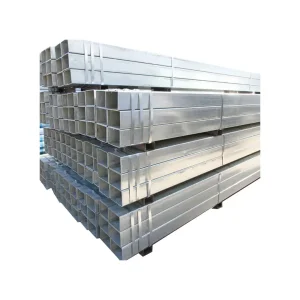
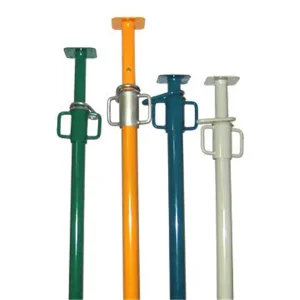
Explore our extended line of structural square tubes, silicon electrical steel, scaffolding props, tinplate, and heavy carbon steel pipes.