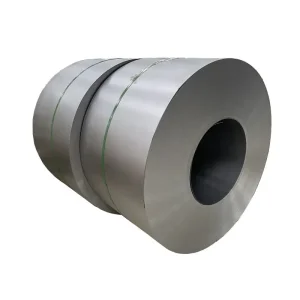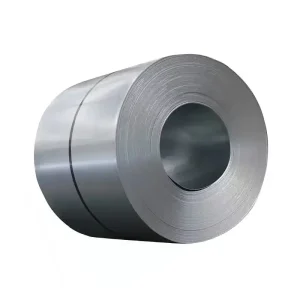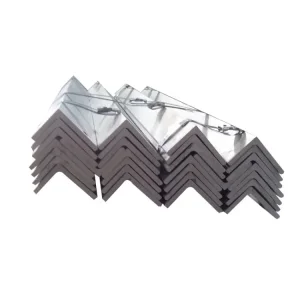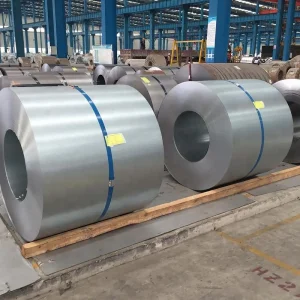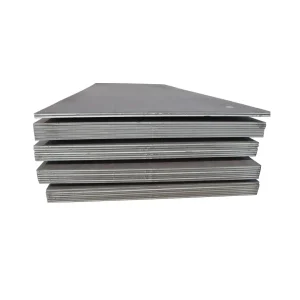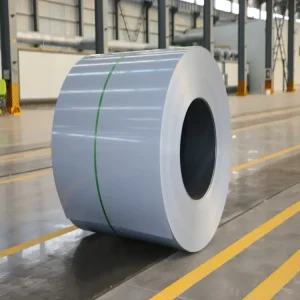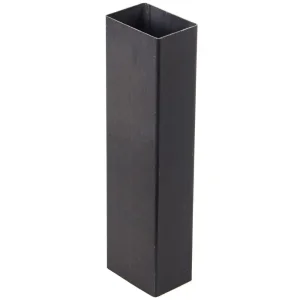
Featured Industrial Steel Pipe & Coil Products
Explore our core export-grade structural hollow sections, coated coils, and precision steel tubing manufactured to international standards.
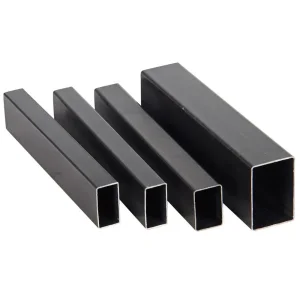
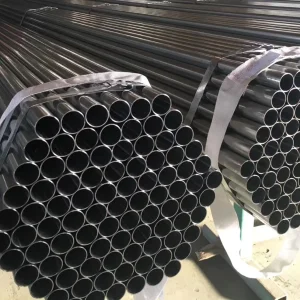
Metallurgical Characteristics & Engineering Specifications of Q195 Steel Pipe
A rigorous technical breakdown of chemical composition, mechanical ductility, weldability indices, and structural load capabilities for procurement engineers.
In modern structural engineering and industrial fabrication, Q195 steel pipe occupies a pivotal position as a mild, low-carbon structural carbon steel tubing material. Designated under the Chinese national standard GB/T 700-2006, the "Q" signifies the yield point (屈服点 - Qūfú diǎn), while "195" explicitly quantifies the minimum yield strength in Megapascals (MPa) for nominal material thicknesses up to 16mm.
Because of its balanced combination of high elongation, excellent cold-bending workability, superior weldability, and economical mass-production profile, premier Q195 pipe manufacturers & factories leverage this grade across thousands of commercial, civil, agricultural, and automotive applications worldwide. Understanding its precise metallurgical matrix is essential for structural designers, EPC contractors, and global sourcing executives aiming to optimize material cost without compromising engineering safety margins.
1. Chemical Composition Matrix & Element Functionality
The performance of Q195 carbon steel tubing originates directly from its hyper-controlled chemical formulation. Containing a low carbon mass fraction ($C \le 0.12\%$), Q195 maintains a predominant ferrite microstructure with localized pearlite colonies. This minimal presence of hard interstitial carbon carbides prevents embrittlement during cold roll-forming and high-frequency electric resistance welding (HFW/ERW).
| Element | Mass Fraction (%) | Standard Range (GB/T 700) | Metallurgical Role & Engineering Impact |
|---|---|---|---|
| Carbon (C) | 0.06 – 0.12% | $\le 0.12\%$ | Determines base hardness; low level ensures superior cold formability and zero pre-heat weldability. |
| Manganese (Mn) | 0.25 – 0.50% | $\le 0.50\%$ | Acts as a mild solid-solution strengthener and deoxidizer; neutralizes harmful sulfur hot-shortness. |
| Silicon (Si) | $\le 0.30\%$ | $\le 0.30\%$ | Used as a fully killed/semi-killed steel deoxidizing agent; refines grain boundary structure. |
| Phosphorus (P) | $\le 0.035\%$ | $\le 0.035\%$ | Strictly capped to prevent cold-shortness, grain boundary segregation, and impact brittleness. |
| Sulfur (S) | $\le 0.040\%$ | $\le 0.040\%$ | Kept minimal to eliminate manganese sulfide (MnS) stringers that lower transverse ductility. |
2. Comparative Standard Equivalence
Global buyers frequently require cross-referencing between Chinese GB standards and equivalent international specifications when issuing global project tenders. The table below illustrates direct equivalencies for Q195 pipe across major industrial standards:
| Standard Organization | Standard Code | Equivalent Grade | Key Chemical/Mechanical Difference |
|---|---|---|---|
| China (GB) | GB/T 700 / GB/T 3091 | Q195 | Base reference standard; focus on yield point $\ge 195\text{ MPa}$. |
| International (ISO) | ISO 630-2 | E195 / HR1 | Nearly identical mechanical profile and cold drawing tolerance. |
| USA (ASTM) | ASTM A283 / ASTM A53 | Grade A / Grade 1008 | ASTM A53 Grade A specifies $C \le 0.25\%$, yielding slightly higher tensile strength. |
| Europe (EN) | EN 10025-2 / EN 10305 | S195GT / E195 | EN 10305 covers precision steel tubes for automotive and hydraulic applications. |
| Japan (JIS) | JIS G3101 / JIS G3131 | SS300 / SPHC | SS300 requires minimum tensile strength of 300 MPa; comparable ductility. |
Global Commercial Landscape & Sourcing Dynamics
Analyzing global procurement demand, trade flows, structural usage trends, and why top-tier Q195 factories dominate the global tubular steel market.
High Yield Efficiency Ratio
Q195 steel pipes provide an exceptional strength-to-weight ratio for light structural frameworks, allowing construction companies to lower total tonnage requirements while preserving overall load safety factors.
Optimized Export Shipping Logisitics
Densely bundled round, square, and rectangular Q195 hollow sections allow maximum container payload utilization (26-28 metric tons per 20ft GP container), minimizing per-ton ocean freight costs for international buyers.
Superior Coating Adhesion
The pristine surface chemistry and minimal carbon scale of hot-rolled and cold-rolled Q195 strip provide an ideal substrate for pre-galvanizing, hot-dip galvanizing (HDG), electro-galvanizing, and organic powder coating.
Global Sourcing Analysis: Demand Drivers Across Regional Markets
The global demand for Q195 ERW and seamless steel pipes continues to grow exponentially, driven by rapid urbanization, infrastructure modernization, and agricultural technology shifts across key geopolitical regions:
- Southeast Asia (Vietnam, Indonesia, Thailand, Philippines): Massive expansion in commercial greenhouse agriculture, light residential steel framing, and localized furniture assembly operations creates steady monthly imports of pre-galvanized Q195 square and rectangular hollow sections.
- Middle East & North Africa (UAE, Saudi Arabia, Egypt): Mega-projects under regional economic visions rely heavily on Q195 black ERW pipes for electrical conduit systems, temporary site scaffolding, perimeter fencing, and shade structure framing.
- Latin America (Brazil, Mexico, Colombia): Rising demand for cost-effective structural steel tube in civil construction and automotive seat framing makes Q195 cold-drawn precision tubing a sought-after import commodity.
- North America & Europe: Specialized fabricators and OEM buyers import custom cut-to-length Q195 precision tubes for mechanical appliances, display racks, and outdoor leisure equipment where strict dimensional tolerance is mandatory.
China Factory Efficiency & Operational Economies of Scale
Why industrial manufacturing clusters in Tianjin and Tangshan deliver unmatched cost-competitiveness, strict quality control, and rapid lead times for global B2B procurement.
1. Vertical Supply Chain Integration
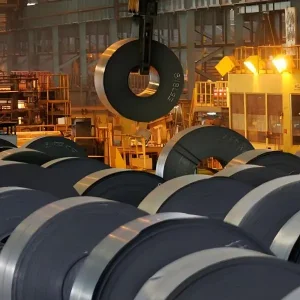
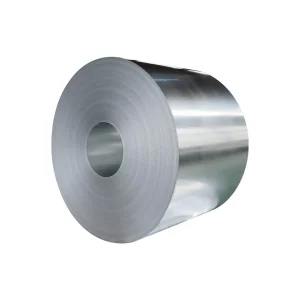
Leading Chinese Q195 pipe factories operate within integrated steelmaking hubs located right next to primary raw material suppliers (such as Baosteel, Shougang, and Tangshan Iron & Steel). Hot-rolled steel strip coils are transferred directly from hot strip mills to high-frequency pipe welding lines via continuous logistics corridors. This integrated approach reduces raw coil transportation costs, eliminates secondary re-heating energy consumption, and maintains raw coil chemical consistency across production batches.
2. Advanced High-Frequency Welded (HFW/ERW) Automated Lines
Modern Chinese mills feature automated solid-state high-frequency induction welding equipment operating at frequencies between 300 kHz and 500 kHz. Continuous uncoiling, automatic shear-end welding, spiral accumulator buffering, precision roll forming, and automated seam scarfing run continuously at speeds exceeding 120 meters per minute. Online Eddy Current NDT testing equipment continuously scans the longitudinal weld seam to detect air pockets, pinholes, or cold welds before flying saw cutting takes place.
3. Specialized Galvanizing & Surface Finishing Precision
China's Q195 pipe manufacturing ecosystem offers direct access to both continuous pre-galvanized strip pipe forming lines and automated deep-kettle hot-dip galvanizing facilities. Continuous pre-galvanized lines apply uniform zinc coatings (from Z40 up to Z275 $g/m^2$) with online zinc-spraying repair over the external weld seam. Deep-kettle HDG lines deliver thick zinc layers exceeding 500 $g/m^2$ ($>70 \mu m$), meeting ISO 1461 specifications for extreme outdoor anti-corrosion applications.
4. Rigorous Quality Management Systems (QMS) & E-E-A-T Compliance
Premier factories maintain ISO 9001:2015 Quality Management Systems, ISO 14001 Environmental Management, and CE Certification for structural steel (EN 10219). Every export shipment is validated with comprehensive Mill Test Certificates (MTC) in strict accordance with EN 10204 3.1, containing verified chemical ladle analysis, hydrostatic test results, flattening/flaring test reports, and coating thickness measurements.
Localized Application Scenarios & Engineering Case Studies
From modern agricultural arch structures to high-precision automotive tubular components, explore how Q195 steel pipes deliver targeted structural performance.
1. Agricultural Greenhouse Frameworks
Pre-galvanized and hot-dip galvanized Q195 round and oval pipes are the global standard for greenhouse gothic arches, purlins, and side-wall supports. The high elongation ($>30\%$) allows tight radius arch bending without surface cracking or tube buckling, while zinc coatings withstand humid, fertilizer-rich agricultural microclimates for over 15 years.
2. Civil Construction & Scaffolding
Q195 welded steel tubes are widely utilized for light structural scaffolding, temporary site hoarding, walk-through frames, and shoring posts. Their excellent weldability simplifies the attachment of ring-lock, cup-lock, and frame scaffolding fittings without requiring post-weld stress-relief heat treatment.
3. Furniture & Architectural Hardware
Cold-rolled Q195 precision steel tube features a bright, ultra-smooth surface finish ideal for chrome plating, electroplating, and polyester powder painting. It serves as the core material for office chairs, medical beds, retail clothing racks, school desks, and outdoor patio furniture frames.
4. Electrical Metallic Tubing (EMT Conduit)
Q195 steel is roll-formed and induction welded into rigid electrical conduits and EMT tubes. The soft, ductile low-carbon structure permits easy on-site hand-bending and offset flaring without flattened cross-sections, providing durable physical protection for high-voltage commercial electrical wiring.
5. Solar PV Ground-Mounting Sub-Structures
For ground-mounted utility solar farms in desert and coastal areas, heavy-duty hot-dip galvanized Q195 rectangular tubing acts as purling beams and torque tubes, resisting high wind uplift vectors while maintaining long-term corrosion resistance against soil salinity.
6. Automotive Secondary Structural Tubing
Precision cold-drawn Q195 seamless and ERW tubes are extensively integrated into vehicle instrument panel beams (IP beams), door impact bars, seat frame assemblies, and exhaust pipe hangers where strict dimensional tolerances ($\pm 0.05\text{ mm}$) are essential.
Global Enterprise Procurement & Quality Assurance Guide
Essential checklist for B2B purchasing managers, EPC buyers, and steel distributors evaluating Q195 pipe factory quotations and quality verification steps.
Key Dimensional & Surface Inspections
- Outer Diameter (OD) Tolerance: Standard ERW OD tolerances must conform to $\pm 0.5\%$ for round pipe and $\pm 0.75\%$ for square/rectangular sections according to GB/T 3091 or ASTM A500.
- Wall Thickness (WT) Tolerance: Verify that wall thickness variation does not exceed $\pm 8\%$ to $\pm 10\%$. Precision drawn tubes require tighter tolerances within $\pm 0.05\text{ mm}$.
- Straightness Verification: Structural steel pipe straightness should be strictly maintained within $< 1.5\text{ mm/m}$ to prevent installation alignment issues on job sites.
- Internal Weld Bead Scarfing: For fluid line or internal rod insertion applications, specify internal bead scarfing (height reduced to $< 0.25\text{ mm}$) or bead flattening.
Incoterms, Packaging & Ocean Logistics
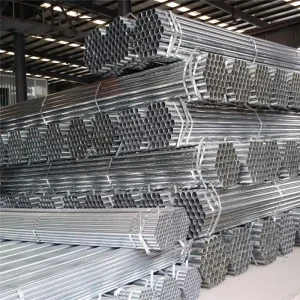
- Hexagonal Bundling: Steel pipes should be tightly bound with high-tensile steel straps in hexagonal bundles (200kg to 2,000kg) with dual lifting slings for safe crane handling.
- End Protection: Plastic end caps or bevel protectors should be applied to threaded or plain end pipes to avoid thread damage and internal corrosion during transit.
- Anti-Rust Coating Options: Request light anti-rust oil, clear varnish coat, black paint coating, or 3LPE anti-corrosion coating depending on transit duration and storage conditions.
- Container Loading Strategy: Use wooden skids, dunnage, and steel wire lashing inside 20ft and 40ft containers to prevent bundle movement during heavy sea transit.
Technical Innovation & Future Market Trends
How smart rolling technology, green steel decarbonization, and advanced alloy coatings are reshaping Q195 pipe manufacturing.
Zinc-Aluminum-Magnesium (ZAM) Coatings
Leading Q195 pipe factories are transitioning from conventional galvanized coatings to next-generation ZAM (Zn-Al-Mg) alloy coatings. ZAM coatings offer self-healing edge protection and up to 5x greater corrosion resistance in salt-spray marine testing.
Industry 4.0 Smart ERW Rolling Mills
Integration of AI vision systems, real-time laser wall thickness gauging, and automated ultrasonic weld defect monitoring ensures zero-defect mill output, driving rejected tube rates down to near-zero levels.
Decarbonization & Green Steel Manufacturing
Utilizing Electric Arc Furnace (EAF) steelmaking powered by renewable solar and hydrogen energy allows Chinese Q195 pipe manufacturers to deliver low-carbon tubular steel products that comply with European CBAM regulations.
Frequently Asked Questions (FAQ) for Q195 Pipe Sourcing
In-depth technical answers addressing specifications, custom production, mill test certificates, and international delivery terms.
What is the exact chemical and mechanical difference between Q195 and Q235 steel pipes?
Can Q195 welded steel pipes be hot-dip galvanized?
What pipe profile dimensions and wall thicknesses are available from Q195 manufacturers?
Does Q195 pipe comply with international building and conduit codes?
What non-destructive testing (NDT) is conducted on Q195 weld seams?
What is the typical lead time and Minimum Order Quantity (MOQ) for factory direct Q195 orders?
Additional Steel Processing Parts, Coils & Tubes
Explore our extended lineup of cold-rolled sheets, silicon steel coils, structural angle irons, and specialty steel plate solutions.