
High-Performance Certified Steel Solutions
Explore our premium mill-direct portfolio manufactured to international engineering standards for global heavy infrastructure, automotive, and industrial fabrication applications.
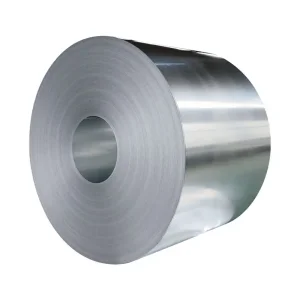
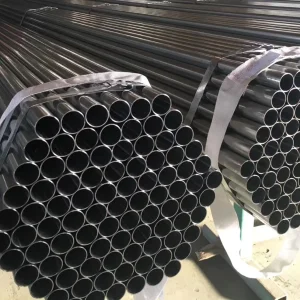
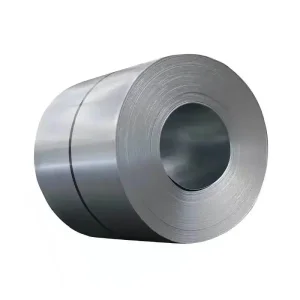
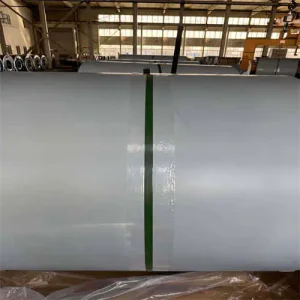
Engineering Fundamentals of HRPO Steel Sheets
A comprehensive metallurgical breakdown of Hot Rolled Pickled and Oiled (HRPO) steel sheets—bridging the mechanical superiority of hot-rolled carbon steel with cold-rolled surface precision.
What is HRPO Steel? Chemical Descaling & Oiling Mechanics
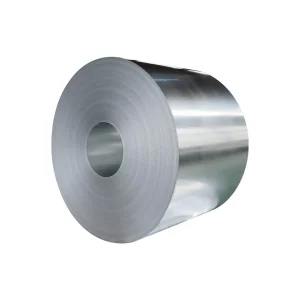
Hot Rolled Pickled and Oiled (HRPO) steel sheet represents an essential industrial bridge between rough black hot-rolled steel and expensive cold-rolled steel sheets. During the hot-rolling process, as molten steel is passed through heavy mill rollers at temperatures exceeding 1,000°C (1,832°F), atmospheric oxygen reacts instantaneously with the glowing metal surface to form a tough, brittle crust of iron oxides known as mill scale (consisting of $FeO$, $Fe_3O_4$, and $Fe_2O_3$).
While mill scale protects bare steel from immediate corrosion during raw structural handling, it poses severe drawbacks for modern automated manufacturing: it dulls expensive stamping dies, causes uneven fiber laser beam reflection, prevents consistent electric spot welding, and causes powder coatings to flake off over time.
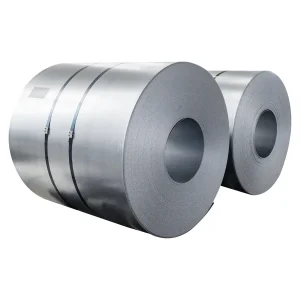
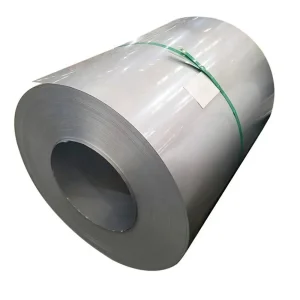
The continuous pickling process remedies this by immersing the uncoiled hot-rolled steel strip into a continuous series of heated hydrochloric acid ($HCl$) baths. The acid chemically dissolves the oxide mill scale without degrading the underlying carbon steel substrate. Immediately following acid pickling, the strip is thoroughly washed in deionized water, dried, tension-leveled, and electrostatically sprayed with a thin, uniform film of rust-preventative oil ($0.5 - 2.5 g/m^2$).
HRPO vs. Hot Rolled vs. Cold Rolled
- Hot Rolled Black (HR): High mill scale, rough surface roughness ($Ra > 6.3 \mu m$), low cost, but causes high tool wear and requires manual blasting prior to painting.
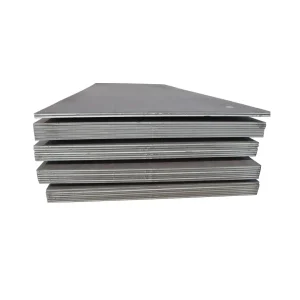
- HRPO Sheet: Zero mill scale, smooth metallic matte silver finish ($Ra 1.2 - 2.5 \mu m$), rust-protected oil coat, tension-leveled flat profile, cost-effective alternative to Cold Rolled.
- Cold Rolled (CR): Cold reduced thickness, ultra-smooth finish ($Ra < 0.8 \mu m$), high yield strength, but significantly higher cost per ton and limited heavy-gauge availability.
HRPO Sheet Sourcing Demand Across Global Industry
Analyzing global economic dynamics, commercial trade-offs, and procurement preferences for HRPO carbon steel sheets in North America, Europe, East Asia, and emerging industrial hubs.
Automotive & Transportation
Global automakers and tier-1 component stamping suppliers rely on HRPO sheet steel for chassis frame cross-members, suspension control arms, wheel rims, and truck floor panels. Its consistent deep-drawing ductility combined with scale-free surfaces ensures flawless robotic spot welding and corrosion protection under E-coat priming.
HVAC & Electrical Enclosures
Commercial HVAC compressor housings, heavy electrical transformer boxes, industrial shelving racks, and server cabinets demand strict dimensional flatness and excellent paint adhesion. HRPO eliminates the cost of in-house abrasive grit blasting, allowing fabricators to send CNC-punched parts straight to powder coating lines.
Laser Cutting & Precision Metal Fabrication
Precision job shops operating high-power fiber laser cutting centers heavily prefer tension-leveled HRPO steel plates ($1.5mm - 12mm$). The absence of mill scale eliminates laser beam scattering and dross formation, preventing laser nozzle contamination and drastically reducing oxygen/nitrogen cutting gas consumption.
China Factory Efficiency & Production Advantages
Unpacking how integrated Chinese steel manufacturing clusters combine massive economies of scale, continuous pickling technology, and modern quality control to deliver world-class HRPO sheets at highly competitive price points.
Continuous CPCM Milling Integration
Leading Chinese manufacturing facilities, such as Step Million Steel Supply Chain in Tianjin, deploy state-of-the-art Continuous Pickling Cold-rolling Mills (CPCM) and standalone continuous push-pull pickling lines (PPPL). By linking high-speed hot strip mills directly with automated pickling and electrostatic oiling cells, production downtime is minimized and strip tension is strictly maintained.
This closed-loop integration ensures that every batch of HRPO coil features uniform thickness profile across the entire length, eliminating edge head-to-tail gauge variations typical of fragmented steel processing facilities.
Tension Levelling & Residual Stress Relief
Internal residual stress inside steel coils is the primary cause of material warping, "oil-canning," and spring-back during modern multi-axis CNC bending or high-temperature laser cutting. Advanced Chinese factories incorporate high-capacity tension levelers directly into the pickling line exit section.
By subjecting the pickled strip to controlled plastic elongation under precision tension rollers, internal stress vectors are fully equalized. Fabricators receiving Chinese HRPO sheets experience near-zero material distortion during high-definition laser cutting and progressive die stamping.
HRPO Steel Grades & Quality Matrix
Comprehensive engineering reference detailing international standards conformity, chemical compositions, yield/tensile strengths, and surface tolerance benchmarks for HRPO steel procurement.
| Standard | Grade / Designation | Yield Strength ($ReH$ MPa) | Tensile Strength ($Rm$ MPa) | Elongation ($A_80$ %) | Primary Industrial Application |
|---|---|---|---|---|---|
| EN 10111 | DD11 (StW22) | 170 - 360 | ≤ 440 | ≥ 28 | Commercial drawing, general stamping, welded tubes |
| EN 10111 | DD12 (StW23) | 170 - 340 | ≤ 420 | ≥ 30 | Deep drawing, complex automotive brackets & housings |
| EN 10111 | DD13 (StW24) | 170 - 320 | ≤ 400 | ≥ 33 | Extra deep drawing, intricate presswork components |
| ASTM A1011 | CS Type A / B / C | 205 - 240 | 380 - 450 | ≥ 25 | General sheet metal fabrication, HVAC, storage racking |
| ASTM A1011 | SS Grade 36 / 50 | ≥ 250 / ≥ 340 | ≥ 400 / ≥ 450 | ≥ 20 / ≥ 16 | Structural framing, heavy machinery, trailer chassis |
| JIS G3131 | SPHC / SPHD | ≥ 225 | ≥ 270 | ≥ 29 | Japanese OEM appliance panels, automotive press parts |
Surface Roughness Control
Controlled roll texturing achieves an average surface roughness ($Ra$) between $1.2 \mu m$ and $2.5 \mu m$, providing the optimal balance between tactile smoothness and mechanical keying for subsequent electrostatic powder coatings.
Electrostatic Oil Film Weight
Application of high-grade, easily degreased rust-preventative oil at dosages from $0.8 g/m^2$ to $2.0 g/m^2$ guarantees up to 6 months of rust-free indoor storage while maintaining compatibility with wash degreasers.
Tight Gauge Tolerances
Compliance with EN 10051 and ASTM A635 restrictive thickness tolerance classes ensures crown-to-edge variation remains under $\pm 0.08 mm$ for $3.0mm$ gauge sheets, maximizing stamping tool safety.
Localized Application Scenarios & Engineering Case Studies
Real-world practical performance comparisons demonstrating how switching from black hot-rolled steel to pickled & oiled sheets optimizes shop floor throughput and finishes.
High-Speed Fiber Laser Job Shop Integration
Scenario: A contract metal fabricator in Germany was experiencing frequent laser cutting head crashes and excessive slag adhesion when processing $4.0mm$ standard hot-rolled S235JR black steel plates on a 12kW fiber laser machine.
Solution & Result: By transitioning to SMSTEEL S235JR HRPO pickled & oiled sheets, average cutting speed increased from $3.8 m/min$ to $5.2 m/min$ (+36.8%). Nitrogen gas consumption decreased by 22% due to clean melt expulsion, laser nozzle life expanded by 300%, and secondary manual edge deburring was completely eliminated.
Automotive Control Arm Stamping & Powder Coating
Scenario: An OEM automotive component maker in Mexico reported high paint flaking failure rates (>8%) following 500-hour salt spray corrosion testing on agricultural vehicle brackets manufactured from unpickled hot-rolled steel.
Solution & Result: The supplier introduced EN 10111 DD13 HRPO sheets with controlled $1.5 g/m^2$ electrostatic oiling. The clean, scale-free surface bonded perfectly with the zinc-phosphate conversion wash, resulting in 0% paint peel failure across 1,000-hour salt spray testing and extending die service intervals between re-grinds by 250%.
Strategic Sourcing & Seaworthy Export Packaging
Protecting steel integrity during long-distance ocean freight requires specialized anti-corrosion packaging protocols, rigorous batch documentation, and flexible procurement terms.
VCI Corrosion Inhibitor Protection
Pickled steel is uniquely vulnerable to atmospheric moisture during maritime shipping. Every bundle of HRPO sheet is wrapped in heavy-duty Vapor Corrosion Inhibitor (VCI) anti-rust paper, sealed inside waterproof HDPE plastic film, and encased in galvanized steel side corner guards.
Mill Test Certificates (EN 10204 3.1)
Full traceability is guaranteed for every heat lot. Mill Test Certificates (MTCs) detailing complete chemical composition ($C, Mn, P, S, Si, Al$), yield strength, tensile strength, percentage elongation, and electrostatic oil film weight accompany every container delivery.
Flexible MOQs & Container Loading
Recognizing the cash-flow needs of global distributors and fabricators, trial order quantities starting from 25 metric tons (1 full 20ft container) are supported. Bundles are custom-cut to length ($1000mm - 6000mm$) and secured on heat-treated wooden skids.
Future Trends in HRPO Manufacturing & Green Steel
Exploring breakthroughs in acid-free descaling technologies, ultra-high-strength pickled alloys, and automated machine vision inspection systems shaping the next decade of flat steel production.
Eco Pickling Surface (EPS) Tech
Emerging mechanical slurry descaling—known as Eco Pickled Surface (EPS)—uses recirculated water and fine steel grit to blast off mill scale without chemicals. EPS delivers a rust-resistant matte finish while completely eliminating acid waste runoff.
Ultra-High Strength HRPO (AHSS)
Automotive lightweighting initiatives are driving the development of advanced high-strength steel (AHSS) HRPO grades exceeding $700 - 900 MPa$ yield strength. Pickling these tough alloys allows complex structural chassis stamping without adding vehicle weight.
AI Surface Quality Scanners
High-speed inline cameras powered by deep-learning vision algorithms scan 100% of the pickled steel surface at strip speeds of $300 m/min$, detecting micro-pits, roll marks, and oil dosage variances in real time prior to shearing.
Frequently Asked Questions (FAQ)
In-depth technical answers to the most common engineering, procurement, and surface processing questions asked by global steel buyers.
How long does the rust-preventative oil protect HRPO sheets from rusting?
Standard electrostatic anti-rust oil application ($1.0 - 2.0 g/m^2$) provides robust corrosion protection for 3 to 6 months during indoor storage under dry, temperature-controlled conditions ($ humidity < 60\%$). For overseas ocean transit, combining oiling with VCI vapor barrier wrapping extends shelf life up to 12 months.
How is the oil layer removed prior to welding or powder coating?
The anti-rust oils applied to HRPO sheets are formulated for effortless removal using standard industrial alkaline wash systems, water-based degreasers, or solvent wipe-downs. In automated powder coating pretreatment lines, standard multi-stage phosphate washing thoroughly degreases the metal surface.
Can HRPO sheets be laser cut immediately without prep work?
Yes. Unlike black hot-rolled steel, HRPO sheets are 100% scale-free and tension-leveled flat. They can be placed directly onto fiber or CO2 laser beds for high-speed cutting without risk of scale slag contamination, laser head crashing, or uneven beam reflection.
What is the main financial advantage of choosing HRPO over Cold Rolled (CR)?
HRPO offers a clean, oxide-free surface finish and excellent paintability similar to Cold Rolled steel, but avoids the energy-intensive cold reduction rolling process. Purchasing HRPO typically saves buyers 15% to 25% in raw material costs compared to Cold Rolled sheets in equivalent gauges ($1.5mm - 3.0mm$).
Is dry (un-oiled) HRPO steel sheet available for purchase?
Yes, dry/un-oiled HRPO sheet is available upon request for applications where oil degreasing is impossible. However, dry HRPO requires immediate conversion, powder coating, or vacuum-sealed VCI packaging to prevent rapid "flash rusting" upon exposure to humidity.
What standard gauges and widths are available for supply?
Standard HRPO sheet thicknesses range from $1.2mm$ to $12.0mm$, with coil/sheet widths spanning $600mm$ to $2000mm$. Lengths can be cut-to-size from $1000mm$ to $6000mm$ based on customer engineering drawings.
Does pickling alter the mechanical tensile properties of the underlying steel?
No. Hydrochloric acid pickling only reacts with the surface iron oxide scale. The bulk chemical composition, grain structure, yield strength, tensile strength, and elongation percentage of the underlying carbon steel matrix remain completely unaltered.
How does HRPO perform during severe deep drawing and stamping?
Deep drawing grades such as EN 10111 DD12 and DD13 offer exceptional ductility ($A_80 \ge 33\%$). Because pickling eliminates hard, abrasive oxide particles, die wear is reduced by over 70%, allowing high-speed stamping without die scoring or metal tearing.
Explore Our Full Industrial Steel Catalog
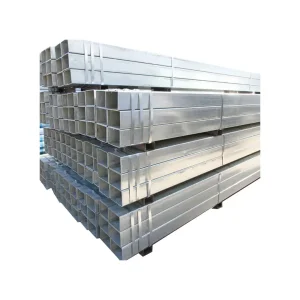
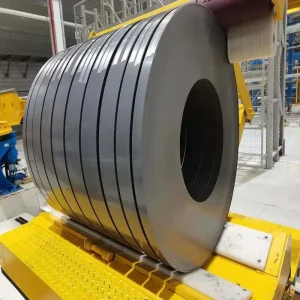
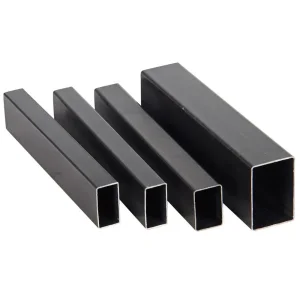
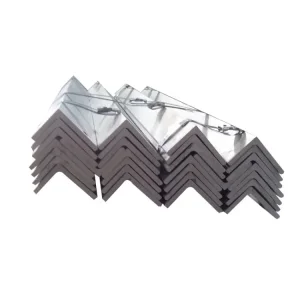
Discover additional high-grade structural pipes, specialized silicon coils, galvanized tubing, and alloy beams manufactured to mill-direct perfection.
Partner with China's Premier HRPO Sheet Manufacturer
Connect directly with our metallurgical engineering and global supply chain specialists. Request mill quotes, technical data sheets, or custom batch samples delivered to your facility.
Request Immediate Factory Quote