Engineered Steel Solutions & Factory Offerings
Direct mill products manufactured under strict EN, ASTM, API, and JIS quality standard frameworks for global structural and industrial deployments.
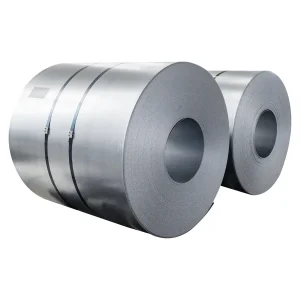
1. Executive Summary: The Structural Backbone of Modern Infrastructure
In the contemporary landscape of global civil engineering, heavy machinery manufacturing, shipbuilding, and energy infrastructure, Hot Rolled (HR) Steel Plate stands as an indispensable foundational material. Produced through the high-temperature rolling of continuous casting slabs above their recrystallization temperature (typically exceeding 1,100°C / 2,012°F), HR steel plates possess unique mechanical properties, structural yield integrity, and high versatility across heavy fabrication applications.
The global steel industry has undergone a monumental shift. Driven by requirements for carbon footprint reduction, extreme operational environment resilience (such as sub-zero Arctic conditions and high-corrosion offshore environments), and weight optimization without yield compromise, selecting a trustworthy, technically sound high-quality HR plate supplier and factory has evolved from a transaction into a strategic procurement decision.
1.1 Understanding Thermo-Mechanical Controlled Processing (TMCP)
To evaluate what truly constitutes a "High-Quality" HR plate, procurement officers and structural engineers must examine advanced metallurgical processing techniques. Modern tier-one China steel mills utilize Thermo-Mechanical Controlled Processing (TMCP). Unlike traditional hot rolling followed by normalized heat treatment, TMCP precisely regulates both the deformation thermal parameters and cooling rates during rolling.
This microstructural engineering refines the ferrite-pearlite grain size to ultra-fine dimensions (ASTM micro-grain size 10 to 12), achieving high tensile strength, exceptional notch toughness at low temperatures, and superior weldability by maintaining a exceptionally low Carbon Equivalent (CEv) value.
2. Technical Metallurgy & International Standards Matrix
Sourcing high-quality HR plates requires a deep understanding of global equivalencies, alloy chemistries, and yield dynamics. Below is a comprehensive cross-reference table detailing core industrial HR plate grades supplied by leading manufacturing facilities.
| Standard Category | Common Standard & Grade | Yield Strength (MPa) | Tensile Strength (MPa) | Key Metallurgical Characteristics | Primary Industrial Sector |
|---|---|---|---|---|---|
| Structural Carbon Steel | ASTM A36 / S235JR (EN 10025-2) | ≥ 235 - 250 | 400 - 510 | Excellent ductility, easy cold forming, high weldability, controlled CEv. | General construction, bolted/welded building frames, baseplates. |
| High-Strength Low-Alloy (HSLA) | S355J2+N / ASTM A572 Gr 50 | ≥ 355 | 470 - 630 | Micro-alloyed with Nb, V, Ti. Fine grain structure with impact toughness at -20°C. | Bridges, heavy structural columns, crane booms, offshore jackets. |
| Pressure Vessel Steel | ASTM A516 Gr 70 / P355GH | ≥ 355 | 485 - 620 | Killed steel, fine grain structure, vacuum degassed, resistant to hydrogen cracking. | Boilers, oil & gas storage tanks, chemical reactors, heat exchangers. |
| Abrasion Resistant (AR) | NM400 / NM500 / Hardox Equivalent | ≥ 1000 - 1250 | ≥ 1250 - 1600 | Liquid quenched and tempered (Q+T). High martensitic harness (400-500 HBW). | Mining dump truck beds, excavator buckets, cement hoppers, crushers. |
| Offshore & Shipbuilding | ABS Grade A/D/E / EH36 / DH36 | ≥ 355 | 490 - 620 | TMCP processed, certified Z-direction tensile property options (Z15, Z25, Z35). | Ship hulls, marine platform decks, subsea structural frameworks. |
2.1 Chemical Composition & Weldability Index (CEv)
A fundamental metric of HR plate quality is its carbon equivalent value (CEv), calculated using the International Institute of Welding (IIW) formula:
Tier-one HR plate suppliers strictly control CEv under 0.38% for standard structural grades and under 0.42% for high-strength grades. This eliminates the necessity for extensive pre-heating during automated field welding, drastically reducing labor costs and risk of cold cracking in structural weldments.
3. China Smart Manufacturing 4.0: Supply Chain Resilience & Production Dominance
China's steel manufacturing transformation over the past decade represents a paradigm shift from volume-driven production to high-precision, smart, and sustainable manufacturing. Modern Chinese HR plate production facilities integrate Industry 4.0 IoT technologies, delivering unprecedented quality control, lead-time predictability, and cost efficiency.
Automated Rolling & Gauge Control
Utilizing Hydraulic Automatic Gauge Control (AGC) combined with real-time X-ray and laser thickness measurement systems, Chinese plate mills achieve flat thickness tolerances well within EN 10029 Class C/D standard limits, ensuring consistent plate weight and machining reliability.
In-Line Non-Destructive Testing (NDT)
100% online continuous Ultrasonic Testing (UT) detecting internal discontinuities, inclusions, laminations, and porosity according to EN 10160 (S1/E1 to S3/E3) or ASTM A578 Level A/B standards, guaranteeing internal cleanliness for safety-critical load-bearing components.
Supply Chain Agility & Raw Material Security
Integrated supply chains connected directly to major deep-water ports (such as Tianjin, Qingdao, and Shanghai) ensure rapid raw material processing and continuous export container loading, drastically lowering demurrage and lead-time risks for overseas EPC contractors.
Supply Chain Whitepaper Insight: Strategic Procurement Optimization
When sourcing HR steel plates internationally, major cost variables extend beyond FOB price per metric ton. Procuring from an integrated China smart factory enables custom plate cutting (CNC plasma/flame cutting), edge beveling for direct welding, and shot blasting/primer painting (SA 2.5 standard) right at the mill. This eliminates third-party processing intermediaries, lowering the Total Cost of Ownership (TCO) by up to 18% to 24% for global buyers.
4. Localized Industrial Application Scenarios & Downstream Engineering
High-quality HR plates are modified in alloy design, surface finish, and dimension tailored to localized global application demands. Below are key operational sectors where HR plate engineering is paramount.
Heavy High-Rise & Infrastructure Engineering
In seismic zone structural building frames and long-span steel bridges, extra-thick structural HR plates (50mm to 150mm thickness) with Z-direction tear resistance (Z25/Z35) are required to withstand multi-axial stress concentration and prevent lamellar tearing during thick fillet welding.
Renewable Energy & Wind Turbine Towers
Offshore and onshore wind turbine tubular towers demand high fatigue-strength steel plates such as S355NL / S355ML. These plates must withstand millions of cyclic wind load rotations while maintaining low-temperature impact energy absorbency down to -50°C.
Specialized Machinery & Earthmoving Equipment
Manufacturers of mining excavators, rock crushers, and concrete pump booms rely on high-yield Quenched and Tempered (Q+T) HR plates (e.g., S690QL, S960QL, NM450). High yield strength allows structural weight reduction, increasing payload capacity while maintaining extreme structural durability.
5. Global Steel Industry Trends & Future Outlook (2025–2035)
As the international manufacturing sector transitions toward environmental decarbonization and digitised supply networks, the HR plate manufacturing landscape is experiencing dramatic structural shifts:
5.1 Green Steel & Hydrogen-Based Direct Reduced Iron (DRI)
Global buyer purchasing directives increasingly evaluate Scope 1, 2, and 3 carbon emissions. Leading Chinese steel production complexes are investing billions in Electric Arc Furnace (EAF) technology supplied by Hydrogen-DRI and renewable solar/wind power grids. Future HR plate procurement will favor mills offering validated Environmental Product Declarations (EPD) detailing low carbon footprints per ton of finished plate.
5.2 Ultra-High Strength Steels (UHSS) and Lightweighting
The push toward structural efficiency is expanding demand for UHSS grades reaching yield strengths of 1100 MPa to 1300 MPa. Breakthroughs in micro-alloying (utilizing precise balances of Niobium, Vanadium, Titanium, and Boron) allow thinner plate profiles to perform tasks previously requiring heavy, massive plate gauges, saving overall project shipping costs and crane lift requirements.
5.3 Digital Quality Traceability (Blockchain & Smart MTCs)
Paper Mill Test Certificates (MTCs) are rapidly being replaced by cryptographically verified digital MTCs compliant with EN 10204 3.1/3.2. Scannable QR codes engraved directly onto the HR plate surface allow site engineers to instantly verify ladle chemical analysis, tensile test curves, impact energy values, and NDT certification on their mobile devices right at the construction installation point.
6. Frequently Asked Questions (FAQ) & Procurement Guidance
Expert answers addressing essential technical, quality, logistics, and purchasing questions faced by global steel procurement buyers.
What is the difference between Hot Rolled (HR) plate and Cold Rolled (CR) steel sheet?
How can buyers ensure zero lamellar tearing in thick structural HR plate welding?
What Mill Test Certificates (MTC) should be requested from an HR plate supplier?
How are HR steel plates packaged and protected against marine corrosion during sea freight?
What are the standard dimensional tolerances for high-quality HR plates?
Explore Our Complete Steel & Coated Flat Product Catalog
Browse our extensive export portfolio of galvanized, stainless, structural flat bars, and specialized coated steel solutions supplied direct from our factories.