Featured Anti-Rust & Structural Steel Products (Part I)
Explore our mill-direct anti-corrosion products manufactured under international quality standards (ASTM, EN, ISO, JIS). Certified for high-pressure resilience, structural longevity, and marine durability.
Metallurgical Foundations: How Rusting Is Prevented in Industrial Steel
Rust, scientifically categorized as iron oxide ($Fe_2O_3 \cdot nH_2O$), poses an estimated annual economic burden exceeding $2.5 trillion globally across infrastructure, energy, marine, and manufacturing sectors. Preventing the degradation of ferrous alloys requires an authoritative understanding of electrochemical oxidation dynamics and precise metallurgical intervention.
Standard carbon steel oxidizes when exposed to oxygen ($O_2$) and moisture ($H_2O$). The electrochemical reaction proceeds via anodic iron dissolution ($Fe \rightarrow Fe^{2+} + 2e^-$) paired with cathodic oxygen reduction ($O_2 + 2H_2O + 4e^- \rightarrow 4OH^-$). To permanently disrupt this galvanic cell, industrial steel manufacturers utilize four primary technical defenses:
1. Sacrificial Cathodic Protection
Zinc coatings ($Zn$) act as a sacrificial anode. Because zinc possesses a lower standard reduction potential than iron ($-0.76V$ vs $-0.44V$), it corrodes preferentially, emitting protective electrons even if the steel substrate is deeply scratched.
2. Impermeable Physical Barrier
Metallic alloys (such as Galvalume's 55% Aluminum matrix) form dense, microscopic oxide layers (Al₂O₃) that physically isolate the underlying steel matrix from moisture, atmospheric salts, and industrial sulfur dioxide.
3. Chemical Passivation
Post-dip passivation treatments convert reactive surface atoms into stable hydrozincite [$Zn_5(OH)_6(CO_3)_2$] or chromium-free complex oxide films, blocking initial white rust during overseas storage and transit.
4. Micro-Alloying & Sealer Layers
Adding Magnesium ($Mg$), Aluminum ($Al$), and Silicon ($Si$) to zinc baths generates self-healing corrosion products. For electrical steel, specialized C-5 insulating varnish seals edges against moisture ingress.
Industrial Anti-Corrosion Coating Technologies Comparison Matrix
| Coating / Process Type | Chemical Composition | Typical Coating Mass | Corrosion Lifespan (ISO 12944 C3) | Primary Industrial Applications |
|---|---|---|---|---|
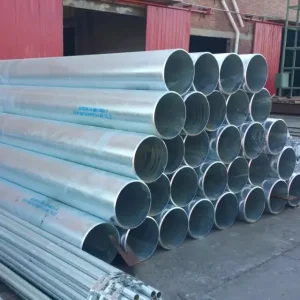
| Hot-Dip Galvanized (HDG) | 99%+ Pure Zinc ($Zn$) | Z100 - Z600 ($g/m^2$) | 25 - 50+ Years | Structural hollow sections, outdoor pipes, transmission towers |
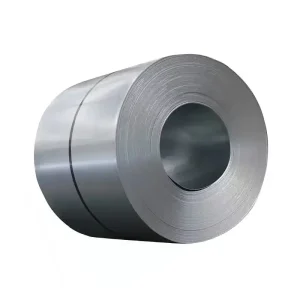
| Galvalume / Aluzinc (GL) | 55% Al, 43.4% Zn, 1.6% Si | AZ90 - AZ180 ($g/m^2$) | 30 - 60+ Years | Architectural roofing sheets, solar racking, coastal structures |
| Galvannealed (ZF) | Zinc-Iron Alloy (~10% Fe) | ZF80 - ZF180 ($g/m^2$) | 15 - 30 Years | Automotive body panels, stamped OEM brackets, painted enclosures |
| Pickled & Oiled (HRPO) | Stripped Scale + Synthetic Oil | 3-5 $g/m^2$ Oil Layer | 6-12 Months (Indoor Storage) | Precision laser cutting, deep-drawing stamped parts, machinery tubing |
| Electrical Silicon (CRNGO) | Si-Steel + Organic/Inorganic C-5 | 1-3 $\mu m$ Insulation | Lifetime (Enclosed Motors) | Electric vehicle traction motors, power transformers, stators |
Global Commercial Landscape & Evolving Anti-Corrosion Demands
The worldwide market for anti-corrosive steel materials is undergoing a structural transition driven by large-scale renewable infrastructure, stringent environmental legislation, and harsher operating environments. B2B procurement managers and structural engineers no longer view anti-rust treatments as simple superficial post-processing, but as integrated metallurgical investments.
Renewable Energy Surge
Utility-scale solar farms and offshore wind installations require structural steel capable of surviving 30+ years in marine (C5-M) and high-humidity agricultural environments without maintenance. This has accelerated the transition from conventional galvanizing to Zinc-Aluminum-Magnesium (ZAM) micro-alloyed steel pipes and profiles.
Environmental Mandates
Global environmental regulations (such as EU REACH and RoHS) have strictly restricted hexavalent chromium ($Cr^{6+}$) passivation. Modern steel mills have adopted advanced trivalent chromium ($Cr^{3+}$) and bio-based organic passivation matrices, providing equal salt-spray resistance with complete eco-compliance.
EV Motor Efficiency
The electrification of global transportation demands high-frequency CRNGO silicon steel coils (M310 to M800 grades). These electrical steels require micro-thin rust-inhibiting insulation coatings that prevent inter-laminar corrosion while keeping core watt-loss to an absolute minimum.
China Factory Efficiency & Supply Chain Integration Strengths
As a leading hub for global steel production, China’s industrial manufacturing ecosystem delivers unmatched supply chain efficiency, advanced process automation, and economies of scale. The concentration of raw steel refining, continuous hot-dip galvanizing lines (CGL), and precision pipe welding in clusters like Tianjin enables rapid fulfillment without sacrificing metallurgical rigors.
Advanced Quality Control Technologies
Modern Chinese steel factories utilize real-time automated inline control systems to ensure zero-defect anti-corrosion production:
- Automated X-Ray Fluorescence Gauging: Continuous measurement of zinc coating thickness across the entire coil width to guarantee uniform zinc distribution within $\pm 2g/m^2$.
- Inline Weld Seam Annealing: High-frequency induction seam treatment for ERW and spiral welded pipes to remove internal stress and restore microstructural corrosion resistance.
- Air-Knife Coating Control: High-pressure nitrogen gas knives precisely meter molten zinc layers on high-speed galvalume lines up to 200 meters per minute.
- Closed-Loop Passivation Drying: Infrared baking ovens cure anti-fingerprint and chromate-free passivators instantly, preventing water-stain defects.
Procurement & Cost Efficiency Drivers
By partnering directly with Chinese manufacturers, global procurement entities gain significant structural cost advantages:
- Integrated Billet-to-Coil Supply: Direct access to local iron ore refining and hot-rolling mills eliminates intermediary logistics markups.
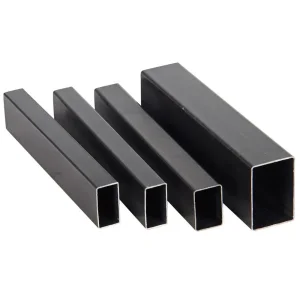
- Flexible Custom Order Volumes: Ability to produce custom non-standard square tubing sizes (e.g., 50x50mm, 200x100mm) and specific spangle finishes in small trial runs.
- Seaworthy Export Packaging Protocols: Heavy-duty VCI (Vapor Corrosion Inhibitor) paper, plastic film sealing, steel strapping, and wooden skid crating designed to withstand long ocean transits without white rust.
Step-by-Step Continuous Galvanizing & Anti-Rust Manufacturing Workflow
Coil Pickling
Hydrochloric acid baths clean surface mill scale ($Fe_3O_4$) to expose bare iron metal.
Annealing & Reduction
Reducing furnace atmosphere ($H_2/N_2$) cleans oxide residue and optimizes ductility.
Zinc/Alloy Immersion
Steel passes through molten zinc bath ($450^\circ C$) forming intermetallic Fe-Zn layers.
Air Knife & Passivation
Gas knives meter coating thickness; surface passivator applied and IR-cured.
VCI Packaging
Finished products are wrapped in VCI vapor barrier paper and strapped for marine transport.
Localized Application Scenarios & Material Selection Guide
Corrosion challenges vary drastically based on geographic environmental conditions, operational stresses, and chemical exposures. Below is an engineering selection framework aligned with localized operational demands.
Coastal & Offshore Marine
Environmental Load: Extreme salt spray, high humidity, ISO 12944 C4/C5-M severity.
Recommended Material: Galvalume Aluzinc Sheets (AZ150+) or Heavy Hot-Dip Galvanized Spiral Steel Pipes (Z600) with 3LPE outer coating.
Agricultural Greenhouses
Environmental Load: Fertilizer vapors, high ammonia fumes, constant condensation.
Recommended Material: Pre-Galvanized Square & Round Tubing (20x20mm to 50x50mm) with clear organic sealers over weld seams.
Urban Structural Framing
Environmental Load: Moderate atmospheric exposure (C2/C3), high mechanical loads.
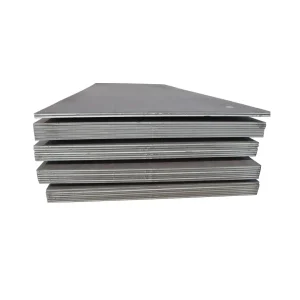
Recommended Material: ASTM A106 / A53 ERW Carbon Steel Pipes and Hot Rolled Q235/Q345 Plates ready for primer painting.
Automotive OEM Stamping
Environmental Load: Deep-drawing stress, requirements for automated spot welding & electro-deposition painting.
Recommended Material: Galvannealed (ZF) Coils (DC51D / DX51D) providing superior paint adhesion without flaking.
Heavy Machine Fabrication
Environmental Load: Indoor laser cutting, precision CNC bending, temporary storage oxide prevention.
Recommended Material: Pickled & Oiled HRPO Steel Coils offering scale-free smooth metal surfaces without grit blasting.
Power Grids & EV Motors
Environmental Load: Continuous high-frequency electromagnetic rotation, thermal cycling.
Recommended Material: Non-Oriented CRNGO Silicon Steel Coils (M310 to M800) with C-5 insulation coating.
Enterprise Sourcing Guide: How B2B Buyers Mitigate Quality Risks
Procuring anti-corrosive steel internationally requires rigorous verification of material testing protocols, mill documentation, and packaging safeguards. Enterprise purchasing managers should enforce the following standard verification practices before finalizing contracts:
1. Verification of Coating Thickness & Weight
Always specify the exact minimum coating mass according to international standards (e.g., ASTM A653 or EN 10346) rather than generic terms like "galvanized". Require magnetic thickness gauge testing (ISO 2178) or weigh-strip-weigh chemical testing (ISO 1460) upon delivery.
2. Mill Test Certificate (MTC) Compliance
Insist on original MTC documentation compliant with EN 10204 Type 3.1. The certificate must explicitly detail melt heat numbers, chemical ladle analysis (C, Mn, Si, P, S), yield/tensile strength test values, and actual measured coating weight.
3. Accelerated Salt Spray Testing (ASTM B117)
For high-corrosion installations, request 5% neutral salt spray chamber test results. Standard galvanized steel should achieve 240-500 hours before red rust appears, while Galvalume and ZAM steels must exceed 1,000 to 1,500 hours.
4. Third-Party Inspection Protocols
Mitigate import risk by mandating third-party pre-shipment inspections via independent agencies such as SGS, BV (Bureau Veritas), or TÜV. Inspectors verify dimensional tolerances, edge-burr quality, surface spangle uniformity, and container seaworthiness.
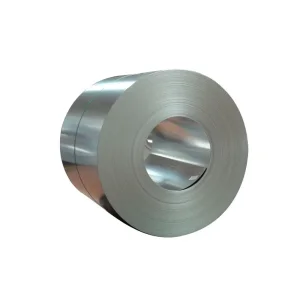
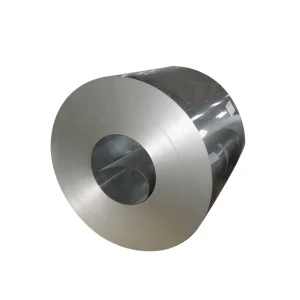
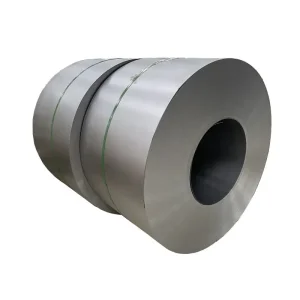
Featured Anti-Rust & Structural Steel Products (Part II)
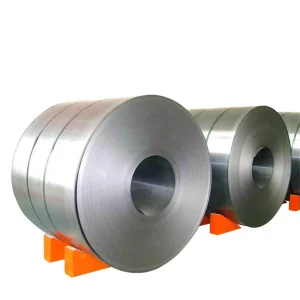
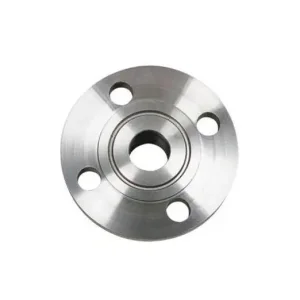
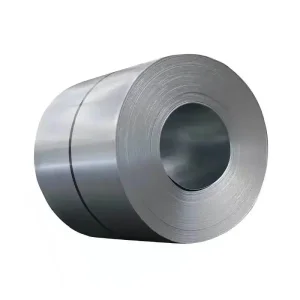
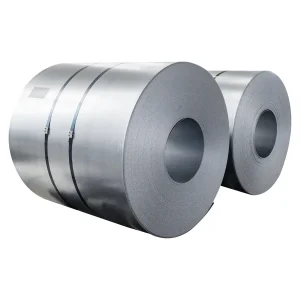
Discover our high-strength cold-rolled, galvannealed, hot-dipped galvanized, and electrical steel solutions tailored for deep drawing, welding, flange connections, and transformer manufacturing.
Frequently Asked Questions: Rust Prevention & Steel Sourcing
In-depth technical answers regarding corrosion mechanisms, zinc coating weight selection, manufacturing tolerances, and international export logistics.