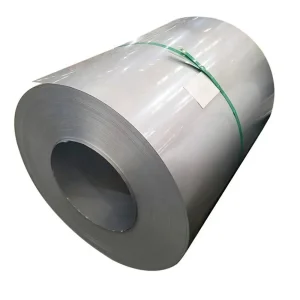
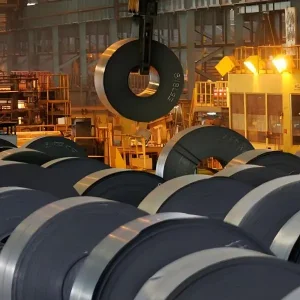
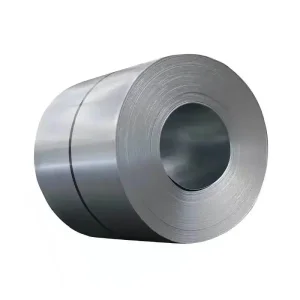
Factory-Direct High-Grade Protective Materials
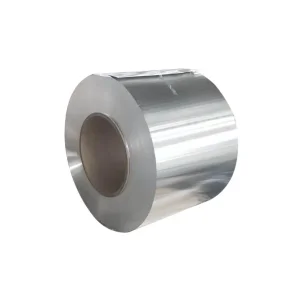
Understanding Industrial Oxidation: The Chemistry & Physics of Rust
How modern manufacturing facilities prevent degradation across raw ferrous metals, structural tubing, and processed steel coils.
Electrochemical Mechanisms of Corrosion
Rusting, chemically recognized as the hydrated iron oxide reaction ($Fe_2O_3 \cdot nH_2O$), is an electrochemical breakdown that costs global manufacturing ecosystems over $2.5 trillion annually. In industrial environments, iron atoms surrender electrons to ambient oxygen in the presence of an electrolyte (moisture or atmospheric condensation):
- Anodic Oxidation: $Fe \rightarrow Fe^{2+} + 2e^-$
- Cathodic Reduction: $O_2 + 2H_2O + 4e^- \rightarrow 4OH^-$
- Precipitation Phase: $Fe^{2+} + 2OH^- \rightarrow Fe(OH)_2 \xrightarrow{O_2} Fe_2O_3 \cdot nH_2O$
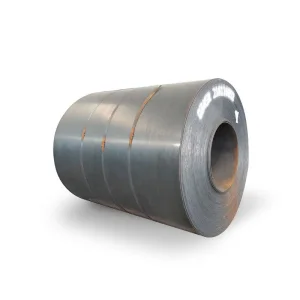
Without targeted surface passivations, chemical barriers, or sacrificial sacrificial layers, un-treated carbon steel exposed to relative humidity above 60% experiences micro-pitting, structural thinning, and eventual load-bearing failure.
ISO 12944 Corrosivity Classifications
Factories operating across global supply networks must engineer anti-rust strategies based on standardized atmospheric corrosivity categories:
| Category | Risk Level | Typical Environment |
|---|---|---|
| C1 - C2 | Low / Very Low | Heated interiors, rural dry climates |
| C3 - C4 | Medium / High | Urban industrial zones, high humidity, coastal processing |
| C5 - CX | Very High / Extreme | Offshore marine, aggressive chemical exposure plants |
Core Anti-Rust Technologies in Modern Steel Production
Engineered processes for preventing rust at the mill, factory, and supply chain levels.
1. Hot-Dip Galvanizing & Aluzinc Coating
By submerging carbon steel into molten zinc or zinc-aluminum baths ($450^\circ C$), a metallurgically bonded multi-layer zinc-iron alloy forms. This acts as both a physical barrier and a sacrificial anode—meaning even if the surface is scratched, the zinc corrodes preferentially, protecting the core iron structure.
2. HRPO Chemical Pickling & Oiling
Hot Rolled Pickled and Oiled (HRPO) steel undergoes hydrochloric acid immersion baths to remove mill scale and oxide layers. A thin layer of rust-inhibiting electrostatic oil is applied immediately afterward, safeguarding raw steel during international maritime transit and prolonged plant storage.
3. Electroplating & Tin Cladding (ETP / TFS)
Electrolytic Tinplate (ETP) and Tin-Free Steel (TFS) utilize micro-thin electro-deposited tin or chromium coatings. This process creates an impermeable non-toxic barrier specifically tailored for food packaging, chemical canisters, and delicate component enclosures prone to rapid oxidation.
China's Manufacturing Strengths in Rust-Resistant Metallurgy
How integrated industrial clusters and advanced processing plants deliver competitive, high-durability steel globally.
1. Fully Integrated Supply Chain Ecosystems
Chinese steel production hubs integrate raw iron ore smelting, precision cold-rolling, continuous galvanizing lines (CGL), and automated slitting within single mega-factory complexes (such as those in Tianjin, Shandong, and Hebei). This eliminates multiple heating cycles and transit exposures, drastically reducing micro-surface oxidation during the manufacturing process itself.
2. High-Tech Continuous Galvanizing & Passivation Lines
Modern Chinese mills feature computer-controlled air-knife gauging systems that ensure precise coating weight distribution down to the micrometer level ($Z80$ to $Z275$ g/m²). Advanced chrome-free passivations, polymer seals, and anti-fingerprint treatments are applied inline at high speeds, guaranteeing long-term corrosion resistance.
3. Economies of Scale & R&D Investment
China accounts for over 50% of world crude steel output. This immense scale fuels massive capital reinvestment into research and development of next-generation anti-rust formulations, including Zinc-Aluminum-Magnesium ($Zn-Al-Mg$) coatings, which offer self-healing edge corrosion protection superior to traditional galvanizing.
4. Strict Quality Control & Global Export Standards
Leading Chinese exporters rigorously adhere to international structural and anti-corrosion standards, including ASTM A653, EN 10346, JIS G3302, and ISO 9227 salt spray testing benchmarks, providing complete transparency via mill test certificates (MTC).
Industry Trends & Macro-Industrial Anti-Corrosion Solutions
Where corrosion science is heading in the age of green manufacturing and smart industrial infrastructure.
Zinc-Aluminum-Magnesium (ZAM) Coatings
The industry is shifting from traditional hot-dip galvanizing toward ZAM alloy coatings. Magnesium additions create a dense, highly stable protective film ($Simoncolleite$) that self-heals cut edges, eliminating edge-rust common in pierced roofing panels and solar mounting frames.
Nanotechnology & Self-Healing Polymers
Integration of nano-graphene plates and micro-encapsulated corrosion inhibitors into primer coats enables self-repairing surface films. When physical impacts fracture the paint barrier, micro-capsules rupture, releasing active chemical passivators that seal micro-fissures instantly.
IoT-Enabled Corrosion Monitoring
Smart factories are embedding electrochemical impedance sensors within high-value structural assemblies. These sensors communicate real-time oxidation rates directly to plant maintenance software, enabling predictive anti-corrosion maintenance before visible red rust occurs.
Localized Application Scenarios for Anti-Rust Materials
Matching specialized anti-corrosion steel grades to specific operational environments.
1. High-Humidity Agricultural Greenhouses & Irrigation
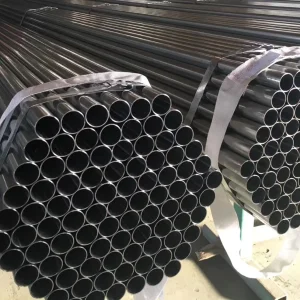
Greenhouse structural frameworks face constant elevated relative humidity, thermal cycling, and chemical fertilizers. Hot-dip galvanized round and square tubes with thick zinc layers ($Z275$ or $300g/m^2$) prevent internal and external tubular corrosion, extending greenhouse service life beyond 20 years.
2. Coastal Infrastructure & Marine Roofing
Salt spray and airborne chloride ions rapidly attack standard steel. Utilizing Galvalume (Aluzinc) roofing sheets—combining 55% Aluminum, 43.4% Zinc, and 1.6% Silicon—delivers up to four times the atmospheric corrosion resistance of conventional galvanized steel in coastal regions.
3. Electrical Motors & Transformer Core Assembly
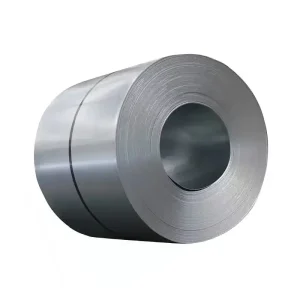
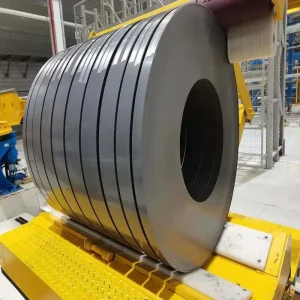
Non-Grain Oriented Electrical Silicon Steel (CRNGO) coils require precise insulating coatings (such as C-3, C-5, or organic varnishes) to prevent interlaminar rust and eddy current losses, ensuring long-term energy efficiency in power generation equipment.
4. Heavy Structural Construction & Formwork Systems
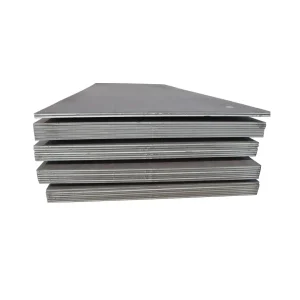
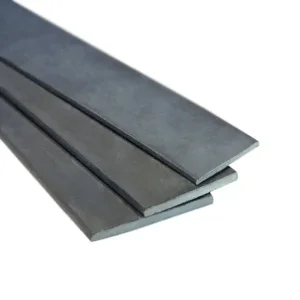
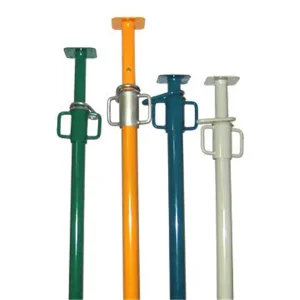
Heavy-duty scaffolding props and structural flat bars undergo high mechanical wear. Dual-protection strategies combining hot-dip galvanizing with painted powder coats ensure scratch-resistant corrosion protection across demanding construction sites.
Global Sourcing Requirements & Anti-Rust Maritime Packaging
Protecting raw and fabricated steel during long-distance ocean freight from factory floor to job site.
VCI Corrosion Inhibitor Wrapping
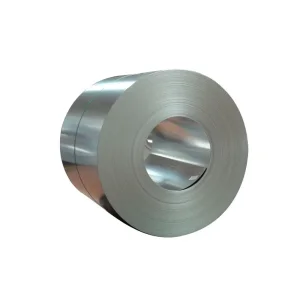
For overseas shipments, steel coils and bundles are wrapped in Vapor Corrosion Inhibitor (VCI) paper and heavy-duty poly-laminated woven fabrics. VCI molecules volatilize inside the sealed package, forming an invisible protective film on metal surfaces that blocks moisture contact.
Seaworthy Steel Bundling & Edge Protectors
Coils and pipes are secured using high-tensile steel strapping combined with inner/outer metal edge rings. Plastic or steel corner protectors prevent mechanical gouging during crane loading, ensuring protective zinc coatings remain fully intact.
Desiccant Packs & Container Humidity Control
International shipping containers undergo extreme temperature fluctuations (creating "container rain"). Strategically placed high-absorption desiccant bags capture condensation, keeping relative humidity inside the container well below the 60% rusting threshold.
Frequently Asked Questions: Industrial Rust Prevention
Expert technical insights answering key engineering and procurement queries.