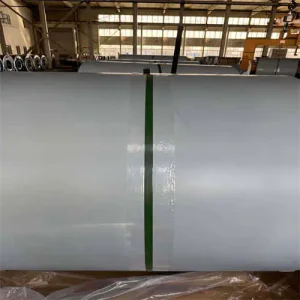
Hot-Galvanized Greenhouse Structural Components
Precision-engineered hot-dip galvanized tubes, structural hollow sections, and specialty steel profiles designed for maximum tensile strength, high wind load resistance, and multi-decadal corrosion protection.
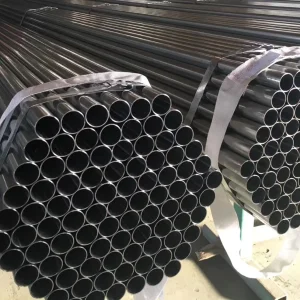
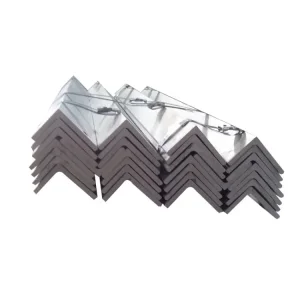

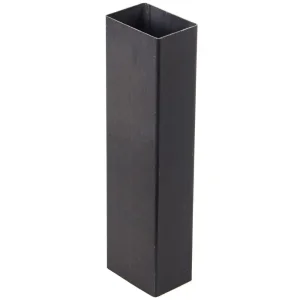



The Global Commercial Greenhouse Landscape & Structural Demands
How agricultural intensification, climate unpredictability, and modern Controlled Environment Agriculture (CEA) are changing the baseline parameters for structural steel supply chains worldwide.
Modern global agriculture is undergoing a massive structural transformation. Driven by extreme weather events, soil degradation, water scarcity, and the urgency to achieve localized food security, commercial growers and institutional investors are rapidly scaling up Controlled Environment Agriculture (CEA). From multi-span Venetian glasshouses in Western Europe to solar-integrated polycarbonate mega-structures in the Middle East and high-tunnel hoop systems across North America, the global greenhouse infrastructure market relies entirely on one critical variable: structural steel integrity.
Key Industry Reality: A commercial greenhouse framing system must continuously endure structural dead loads (hanging crop loads, gutter systems, heating/lighting arrays), environmental live loads (snow accumulation, extreme wind uplift forces), and severe chemical exposure (high interior relative humidity, localized fertilizer overspray, carbonic acid condensation) for a design life exceeding 25 to 30 years without structural degradation.
Wholesale Sourcing Dynamics & Risk Mitigation for EPC Contractors
For greenhouse distributors, agricultural engineering contractors (EPCs), and wholesale buyers, procuring structural tubing is no longer just a commodity transaction. It requires direct mill-level engineering coordination. Sub-standard structural tubing with uneven zinc coating thickness, inconsistent wall tolerances, or poor micro-alloying creates catastrophic field vulnerabilities. A single micro-fissure or localized corrosion failure inside a humid greenhouse micro-climate can compromise an entire span, resulting in millions of dollars in crop loss and structural damage.
As a premier Hot Galvanized Green House Wholesalers Manufacturer & Supplier based in China’s industrial steel hub (Tianjin), our manufacturing facilities integrate high-frequency induction welding (HFW), automated inline zinc-spraying, and full-immersion hot-dip galvanizing kettles. This ensures that every pipe, square tube, and structural angle meets stringent international standards such as ASTM A123, BS EN ISO 1461, and EN 10219.
Hot-Dip Galvanizing Metallurgy & Structural Specifications
Understanding the chemical bond, alloy phase formation, and mechanical performance parameters that separate standard steel tubing from true agricultural-grade hot-dip galvanized structural steel.
The Metallurgical Bond: Intermetallic Zinc-Iron Alloy Layers
Unlike cold galvanizing (electro-galvanizing) or simple paint barriers, which only form a mechanical adhesion layer on the steel surface, hot-dip galvanizing produces a multi-layered, metallurgically bonded zinc-iron alloy structure. When structural low-carbon steel (Q195, Q235, Q345, or S235JR/S355JR) is immersed in a molten zinc bath maintained at approximately 450°C (842°F), a series of complex solid-state diffusion reactions take place between the iron and molten zinc.
Gamma Phase (Γ)
The innermost layer bordering the base steel substrate. Consists of 75% Zn / 25% Fe alloy with a micro-hardness exceeding that of the underlying structural carbon steel itself.
Delta Phase (δ)
A highly ductile intermediate layer containing approximately 90% Zinc and 10% Iron, absorbing physical impacts and thermal stress during greenhouse frame expansion.
Zeta Phase (ζ) & Eta Phase (η)
The outer monoclinic layer (94% Zn / 6% Fe) topped by pure metallic zinc (100% Zn) providing immediate cathodic protection and sacrificial barrier properties.
Technical Comparison: Coating Methodologies for Greenhouse Tubing
Choosing the correct coating technology directly influences total lifecycle expenditure (CAPEX vs OPEX) for commercial agricultural facilities. Below is an engineering evaluation comparing different factory coating routes:
| Galvanizing Category | Coating Mass Range | Inner Wall Protection | Corrosion Resistance | Primary Greenhouse Use |
|---|---|---|---|---|
| Pre-Galvanized Steel Pipe | 100 - 275 g/m² | Re-treated Weld Seam | Moderate (10 - 15 Yrs) | Internal purlins, light crop supports, shade net structures |
| Hot-Dip Galvanized Pipe (HDG) | 300 - 600 g/m² | 100% Complete Dip Coating | Extreme (25 - 40 Yrs) | Main load columns, arches, foundation piles, wet walls |
| Zinc-Aluminum-Magnesium (ZAM) | 275 - 450 g/m² | Self-Healing Cut Edges | Superior (30 - 50 Yrs) | Coastal, highly humid, or high-fertilizer CEA complexes |
| Electro-Galvanized (SECC/EG) | 20 - 60 g/m² | Minimal / Uncoated Interior | Low (2 - 5 Yrs) | Indoor dry electrical conduits or non-structural brackets |
Targeted Global Applications & Micro-Climate Performance
Custom-engineered structural profiles adapted to regional climate extremes, localized building codes, and specialized agricultural production systems.
Arid & Desert Solar-Integrated Complexes
Region Target: Middle East (GCC), North Africa, Australian Outback.
Challenge: Extreme UV radiation, thermal expansion cycles (day-to-night ΔT exceeding 35°C), and abrasive sandstorms.
Solution: Heavy-wall hot-dip galvanized oval and square tubes with high yield strength (Q345B / S355JR), coated with UV-stabilized passivated zinc coatings to resist surface pitting.
Sub-Zero Alpine & Heavy Snow Regions
Region Target: Northern Europe, North America, Central Asia.
Challenge: High roof snow accumulation, ice loading, and extreme wind uplift shear.
Solution: High-yield ERW round structural steel pipes (ASTM A106 / BS 1387) utilized for arched rafters and truss systems, featuring superior impact resistance at sub-zero temperatures (Charpy V-Notch tested at -20°C).
High-Humidity Coastal & Hydroponic Facilities
Region Target: Southeast Asia, Caribbean, Tropical Coastal Basins.
Challenge: Continuous ambient humidity (>85% RH), saline air, and elevated carbon dioxide enrichment levels inside grow bays.
Solution: High-Zinc (400g/m² - 600g/m²) hot-dip galvanized or Zinc-Aluminum-Magnesium (ZAM) structural profiles, fully sealed against micro-corrosion.
Global Compliance, Quality Control & Mill Certification
Providing total supply chain transparency, international testing compliance, and dedicated engineering support from raw coil selection to containerized sea freight.
Mill Test Certificates (MTC) & Inspection Standards
As an established wholesale manufacturer, every shipment leaving our Tianjin facility is accompanied by full metallurgical trace documentation in accordance with EN 10204 3.1. Overseas buyers receive verified testing records covering:
- Chemical Composition Analysis: Spectrographic verification of Carbon (C), Manganese (Mn), Silicon (Si), Phosphorus (P), and Sulfur (S) limits to guarantee weldability and mechanical integrity.
- Mechanical Properties Testing: Yield Strength ($R_eH$), Tensile Strength ($R_m$), Elongation percentage ($A\%$), and Flattening / Bending test compliance.
- Coating Mass Integrity: Magnetic induction gauge thickness checks and weigh-strip-weigh chemical testing (ISO 1460 / ASTM A90) verifying exact zinc deposit density ($g/m^2$).
- Third-Party Verification: We regularly coordinate pre-shipment inspections with international accredited testing agencies including SGS, Bureau Veritas (BV), TÜV Rheinland, and Intertek.
Anti-Corrosion Seaworthy Packaging Protocol: To eliminate white rust (wet storage stain) during long ocean transit across varying temperature zones, all galvanized pipes are treated with eco-friendly chromate passivation or oil-dipping. Bundles are bound with heavy-duty steel strapping, wrapped in waterproof woven plastic sheeting, and fitted with custom end-caps for crane and forklift safety during port unloading.
Technology Roadmap & Next-Generation Steel Innovation
Anticipating the technological demands of smart greenhouses, vertical farms, and zero-carbon agricultural infrastructure through 2030.
Zn-Al-Mg Alloy Coatings
Widespread transition toward ternary Zinc-Aluminum-Magnesium alloy coatings, delivering up to 5 times the atmospheric corrosion resistance of traditional galvanizing while offering self-healing protection on sheared edges.
Precision CNC Profiling & Punching
Integration of multi-axis CNC laser cutting and automated inline punching. Wholesale buyers receive pre-drilled, ready-to-assemble framing kits that eliminate on-site drilling and protect zinc coatings from jobsite damage.
Green Steel & Low-Carbon Production
Adopting electric arc furnace (EAF) steelmaking routes utilizing recycled scrap steel powered by renewable energy, reducing embedded carbon footprints (Scope 1 and Scope 2 emissions) for sustainable CEA development.
Frequently Asked Questions for Wholesale Greenhouse Tubing
Direct technical and commercial answers for agricultural engineering firms, steel importers, and wholesale buyers.
What is the main difference between pre-galvanized and hot-dip galvanized greenhouse pipes?
Pre-galvanized pipes are manufactured from steel coils that have already been zinc-coated in a continuous strip process. The tube is formed and welded, with the outer weld seam re-coated with zinc spray. Hot-dip galvanized (HDG) pipes, by contrast, are fabricated from black steel first and then completely submerged into a bath of molten zinc. This ensures that both the interior and exterior surfaces receive a continuous, thick alloy coating (typically 300 - 600 g/m² vs 100 - 275 g/m² for pre-galvanized). HDG pipes are recommended for main load-bearing columns and harsh climates, whereas pre-galvanized pipes are cost-effective for secondary purlins and interior shelving.
How do you prevent white rust (wet storage stain) during sea transport?
White rust occurs when zinc-coated steel is exposed to trapped moisture and lack of free air circulation during ocean transit. We eliminate this risk through a multi-step protection protocol: 1) Applying eco-friendly chromate passivation or trivalent chromium sealers immediately after galvanizing; 2) Ensuring complete furnace drying prior to bundling; 3) Wrapping steel bundles in heavy-duty plastic vapor-barrier film and waterproof outer polypropylene sheeting; and 4) Adding desiccants inside sealed ocean containers upon request.
Can you supply custom profile shapes such as oval or plum-blossom tubes for agricultural hoops?
Yes. In addition to standard Round (OD 21.3mm - 219.1mm), Square (20x20mm - 200x200mm), and Rectangular (20x40mm - 150x200mm) hollow sections, our facility operates specialized inline roll-forming tooling for Elliptical / Oval tubes (e.g., 30x60mm, 30x70mm, 30x80mm) and D-shape / Arch profiles. Oval tubes provide superior resistance against vertical snow bending loads while maintaining a sleek aerodynamic profile against side wind shear.
What steel grades and tensile strengths are recommended for commercial greenhouse frames?
For standard high-tunnel and hoop greenhouses, Q195 and Q235 (equivalent to ASTM A500 Grade A / EN 10219 S235JR) provide excellent ductility, weldability, and cost efficiency. For large-span multi-span commercial greenhouses with heavy roof snow loads or hanging gutter systems, we recommend high-yield structural steel grades such as Q345B / Q355B (ASTM A500 Grade C / EN 10219 S355JR), which offer yield strengths exceeding 345 MPa, allowing for lighter overall frame weight without compromising load capacity.
What is your typical minimum order quantity (MOQ) and production lead time for bulk orders?
For standard sizes held in stock, our minimum order quantity starts at 5 to 10 metric tons per specification. For custom dimensions, non-standard wall thicknesses, or special zinc coating weights (>500 g/m²), the production MOQ is typically 20 to 25 metric tons (one full 20ft or 40ft container). Our factory production lead time ranges from 15 to 25 days from contract confirmation and deposit receipt, supported by direct container loading at our factory yard in Tianjin.
How do on-site welding or drilling operations affect galvanized steel pipes?
Welding or drilling burns away or interrupts the protective zinc layer at the localized thermal zone. To maintain long-term corrosion resistance, we advise utilizing pre-punched bolt-connected structural designs wherever possible. If jobsite welding or cutting is required, the affected surface must be wire-brushed to remove scale and immediately coated with a rich zinc-dust cold-galvanizing compound (containing at least 92% metallic zinc in the dry film) matching ISO 3549 / ASTM A780 standards.
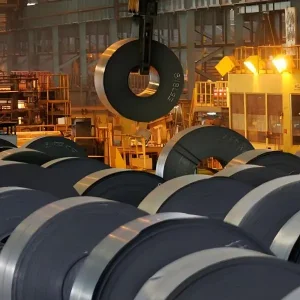
Coated Steel Coils, Plates & Industrial Tubing
Explore our full line of hot-rolled pickled and oiled steel, electrical silicon steel, coated sheet coils, and structural steel plates for global engineering applications.