
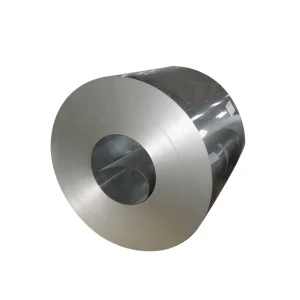
Featured Hot-Dip Coated & Precision Rolled Steel Products
Browse our core inventory engineered for heavy industrial, automotive, heat exchange, and structural engineering projects.
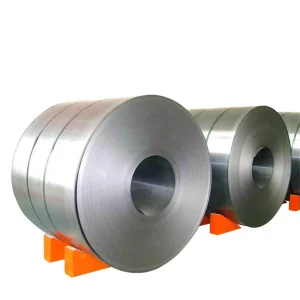


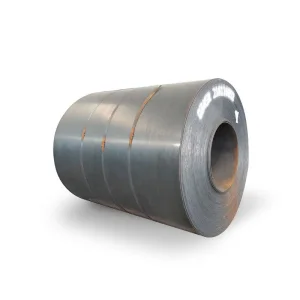
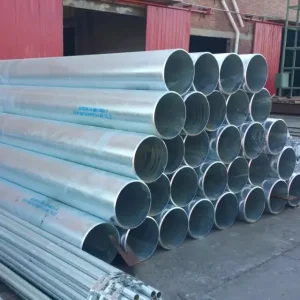
Hot-Dip Metallic Coating Technology on Aluminized Steel
Understanding the microstructural phase transformations, thermal barrier mechanisms, and anti-corrosive properties of hot-dip aluminum-coated steel substrates.
Type 1 Aluminized Coating (Al-Si Alloy)
Type 1 hot-dip aluminized steel is produced by continuously dipping low-carbon steel strip into a molten bath containing approximately 8% to 11% Silicon (Si) and balance Aluminum. The addition of silicon is crucial: it restricts the aggressive interdiffusion of iron and aluminum at high temperatures, inhibiting the growth of a thick, brittle Fe-Al intermetallic layer ($\text{Fe}_2\text{Al}_5$ phase).
Primary Characteristics:
- Continuous thermal resistance up to 550°C (1,022°F) without discoloration.
- Maximum heat oxidation protection up to 650°C (1,202°F) with minimal scaling.
- Thermal reflectivity up to 80% of heat energy up to 480°C.
- Ideal for automotive exhaust systems, mufflers, heat exchangers, and industrial ovens.
Type 2 Aluminized Coating (Commercially Pure Al)
Type 2 hot-dip aluminized steel utilizes a coating bath of 99%+ commercially pure aluminum without significant silicon additions. This coating yields a thicker intermetallic interface and an exterior pure aluminum boundary layer that provides unyielding atmospheric barrier protection.
Primary Characteristics:
- Exceptional long-term resistance to atmospheric weathering and rural/industrial environments.
- Outperforms standard hot-dip galvanized (GI) steel by 3x to 6x in rural and coastal outdoor exposure.
- Forms a passive, self-healing $\text{Al}_2\text{O}_3$ (aluminum oxide) film upon surface abrasion.
- Preferred for corrugated roofing sheets, building cladding, outdoor HVAC units, and grain silos.
China's Manufacturing & Supply Chain Powerhouses
Key performance indicators of leading Chinese aluminizing and metallic coating factories servicing global tier-1 buyers.
Hot-Dip Aluminized vs. Standard Metallic Coatings Comparison
A rigorous engineering breakdown comparing Hot-Dip Aluminized (Type 1 & Type 2), Galvalume (55% Al-Zn), and Traditional Hot-Dip Galvanized (HDG) steel substrates.
| Coating Specification Parameter | Aluminized Type 1 (Al-Si) | Aluminized Type 2 (Pure Al) | Galvalume (55% Al, 43.4% Zn, 1.6% Si) | Galvanized (99%+ Pure Zn) |
|---|---|---|---|---|
| International Standard Reference | ASTM A463 / EN 10346 (AS) / JIS G3314 | ASTM A463 / EN 10346 (AS) | ASTM A792 / EN 10346 (AZ) | ASTM A653 / EN 10346 (Z) |
| Nominal Bath Composition | 89% Al, 9-11% Si | 99%+ Commercially Pure Al | 55% Al, 43.4% Zn, 1.6% Si | 99.5%+ Pure Zinc |
| Max Continuous Temperature | 550°C (1,022°F) | 500°C (932°F) | 315°C (600°F) | 200°C (392°F) |
| Max Peak Temperature | 650°C (1,202°F) | 600°C (1,112°F) | 500°C (932°F) | 250°C (482°F) |
| Heat Reflectivity Coefficient | 80% - 85% | 85% - 90% | 70% - 75% | 30% - 50% (Spangled) |
| Salt Spray Corrosion Resistance | Excellent at high temperatures | Superior in outdoor atmospheric | Exceptional in general exposure | Moderate (sacrificial zinc protection) |
| Formability & Drawability | High (Silicon controls phase layer) | Moderate (Thicker intermetallic) | Moderate to High | Very High (Ductile zinc) |
| Primary B2B Sourcing Sector | Automotive Exhaust, Boilers, HVAC | Roofing, Silos, Heavy Marine Structures | Commercial Roofing, Appliances | Construction Framing, General Ductwork |
Why Chinese Factories Lead the Global Hot-Dip Coating Market
Analyzing the industrial scalability, technological integration, and cost-efficiency advantages offered by China-based aluminized coating suppliers.
Fully Integrated Supply Chains
Chinese suppliers leverage mill-direct integration starting from iron ore processing, hot-rolling mills (HRPO), cold-reduction continuous mills (CRM), to continuous galvanizing/aluminizing lines (CGL). This vertical integration minimizes transport delays, preserves substrate cleanliness, and cuts intermediate trading markups by up to 25%.
Advanced Automation & Control
Modern Chinese coating factories incorporate real-time X-ray fluorescence (XRF) coating gauge feedback loops, automated air-knife pressure regulators, and closed-loop temperature control across hydrogen-purged annealing furnaces. This achieves tight coating tolerances down to ±2g/m² across the coil length.
Global Quality Audits & Compliance
Top Chinese manufacturers adhere strictly to ISO 9001, ISO 14001, and IATF 16949 automotive standards. Exports are backed by full Mill Test Certificates (MTC) according to EN 10204 3.1, third-party SGS/BV inspection protocols, and custom seaworthy anti-moisture packaging for transatlantic transit.
Localized Heavy-Industrial Application Scenarios
How global enterprises utilize hot-dip metallic coated aluminized steel to replace expensive stainless alloys while meeting strict thermal and corrosion guidelines.
1. Automotive Exhaust Systems & Heat Shields
Modern ICE and hybrid vehicle OEM specifications demand exhaust components that withstand harsh cyclic thermal loads and corrosive condensate solutions containing sulfur dioxide and nitrogen oxides. Hot-dip aluminized steel (Type 1, T1-25 / T1-40 coating weight) serves as the industry standard for:
- Exhaust mufflers, tailpipes, and catalytic converter heat shields.
- Replaces Stainless 409/439 alloys at a 35% material cost savings.
- Prevents intergranular oxidation and thermal flaking under 600°C operation.
2. HVAC, Industrial Ovens & Kiln Ductwork
Commercial HVAC burn-boxes, heat exchangers, industrial grain dryers, and bakery oven interiors require high thermal radiation efficiency and oxidation resistance. Type 1 aluminized coils provide:
- High infrared reflectivity, reducing wall insulation thickness requirement.
- Zero toxic off-gassing at high temperature operating regimes.
- Smooth surface finish facilitating easy deep drawing for burner tubes and heat exchangers.
3. Outdoor Industrial Construction & Silos
In aggressive agricultural and coastal industrial microclimates, Type 2 pure aluminum coated steel is applied to grain storage bins, roofing panels, and chemical plant enclosures:
- Resists acidic gas exposure ($H_2S$, $SO_2$) in fertilizer manufacturing facilities.
- Provides up to 50 years of maintenance-free service life in rural environments.
- Superior edge-bleed corrosion resistance compared to thin galvalume coatings.
4. Solar Thermal Collectors & Appliance Panels
Precision cold-rolled aluminized sheets with smooth surface passivation are increasingly integrated into clean-energy solar thermal arrays and commercial kitchen equipment:
- Maintains mechanical yield strength at continuous elevated operating temperatures.
- Excellent paintability and powder coating adhesion after mild surface pretreatment.
- Strict dimensional tolerances for automated stamping and roll-forming production lines.
B2B Purchasing Manager Quality Audit & Inspection Checklist
Essential quality assurance protocols for sourcing managers when auditing China aluminized steel suppliers and validating container shipments.
Base Metal Certification
Verify that the factory utilizes prime commercial deep-drawing quality steel (such as DC01, DC04, or ASTM A1008) free from internal inclusions, edge burrs, or thickness variations exceeding ASTM A568 tolerances.
Tri-Spot Coating Analysis
Ensure coating weight compliance (e.g., T1-25 = 75 g/m² total both sides, T1-40 = 120 g/m²) via weigh-strip-weigh chemical dissolution methods according to ASTM A90 / A463 testing standards.
Phase Layer Thickness Audit
Request metallographic cross-section optical analysis. The alloy phase layer ($\text{Fe-Al-Si}$) must remain below 4 microns to ensure the steel sheet withstands severe 180° bend tests without coating flaking or micro-cracking.
Emerging Trends in Hot-Dip Metallic Coating Technology
How next-generation ternary alloy additions and green manufacturing technologies are reshaping the coated steel supplier ecosystem.
Ternary Zinc-Aluminum-Magnesium-Silicon (ZAM-Si) Systems
Leading Chinese mills are advancing beyond traditional hot-dip aluminizing by introducing quaternary coating systems incorporating Magnesium (Mg) additions. The addition of 1.5-3% Mg fosters the formation of dense, protective Simonkolleite corrosion products ($\text{Zn}_5(\text{OH})_8\text{Cl}_2\cdot\text{H}_2\text{O}$), delivering self-healing cut-edge protection unprecedented in standard aluminized steel.
Decarbonized Hydrogen-Fired Aluminizing Lines
In response to global Carbon Border Adjustment Mechanisms (CBAM) and ESG mandates, top tier-1 Chinese factories are transitioning continuous annealing furnaces from natural gas combustion to green hydrogen blending. This green steel manufacturing shift reduces embedded carbon emissions ($t\text{CO}_2/t\text{steel}$) by up to 40% across export supply chains.
Hot-Dip Aluminized Steel Sourcing FAQ
Comprehensive engineering and commercial answers to common technical queries raised by global procurement officers and structural engineers.
What is the exact metallurgical difference between Hot-Dip Aluminized (Type 1) and Galvalume steel?
Hot-Dip Aluminized Type 1 consists of an aluminum coating alloyed with 8-11% Silicon. It is optimized primarily for high-temperature resistance (up to 650°C) and heat reflection. Galvalume (AZ50/AZ150), by contrast, contains 55% Aluminum, 43.4% Zinc, and 1.6% Silicon. Galvalume is optimized for ambient outdoor atmospheric corrosion resistance through galvanic zinc protection, but it breakdown thermally at temperatures above 315°C (600°F). Type 1 aluminized must be specified when high temperature exposure is anticipated.
How does Silicon (Si) prevent coating brittleness during stamping and forming?
During the hot-dip dipping process, molten aluminum reacts intensely with the steel substrate to form hard, brittle intermetallic compounds ($\text{FeAl}_3$, $\text{Fe}_2\text{Al}_5$). The addition of 8-11% Silicon acts as a diffusion barrier in the molten bath, reducing the growth rate of this intermetallic alloy layer by up to 80%. This keeps the brittle phase layer extremely thin (< 4 µm), allowing the outer ductile aluminum layer to flex during drawing, bending, or roll-forming without delaminating.
What coating weights are standard for Type 1 and Type 2 aluminized steel according to ASTM A463?
Under ASTM A463/A463M standard specs:
- Type 1 Designations: T1-25 (75 g/m² total both sides, ~0.025 mm per side), T1-40 (120 g/m² total both sides), and T1-60 (180 g/m² heavy duty).
- Type 2 Designations: T2-100 (300 g/m² total both sides) and T2-60 (180 g/m² total both sides).
Can hot-dip aluminized steel be welded using standard industrial methods?
Yes. Hot-dip aluminized steel can be welded using spot welding, Gas Metal Arc Welding (GMAW/MIG), and High-Frequency (HF) induction pipe welding. However, because aluminum has a lower electrical resistivity and higher thermal conductivity than un-coated steel, higher welding current densities (approx. 30% higher amperage) are required. Proper ventilation is mandatory to evacuate aluminum oxide fumes, and weld seam re-passivation or aluminum-rich spray application is recommended along exterior cut edges.
What lead times and container loading specs are typical for exports from Chinese factories?
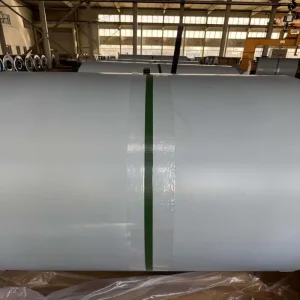
Standard production lead times for custom mill runs of aluminized steel coils or tubes range between 20 to 35 days upon LC or deposit confirmation. Coils are wrapped in anti-rust VCI paper, encased in galvanized outer steel protection sleeves, secured with heavy-duty radial and circumferential steel straps, and loaded into 20ft heavy-duty containers (up to 27-28 metric tons per container) on customized wooden/steel pallets designed for ocean freight transit.
Why choose China factory direct supply over local distributors?
Purchasing direct from audited Chinese manufacturing mills eliminates multiple intermediary markups, grants direct access to specialized chemical passivations, custom coil slit widths, and non-standard gauge tolerances, while offering direct engineering collaboration to tailor steel chemistry for complex deep-drawing requirements.
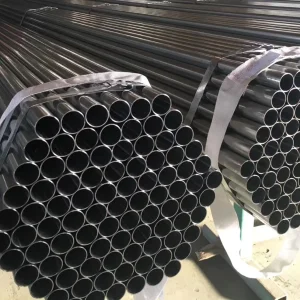
High-Performance Coated Coils, Tubes & Steel Products
Explore additional high-demand steel product lines manufactured across our specialized production lines.


Request Technical Datasheets & Container Quotations
Connect directly with our metallurgical engineering team. Obtain custom coating weight recommendations, mill test certificates, sample coupons, and competitive CIF container quotes within 24 hours.