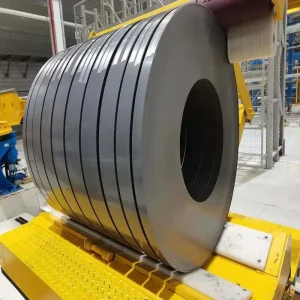
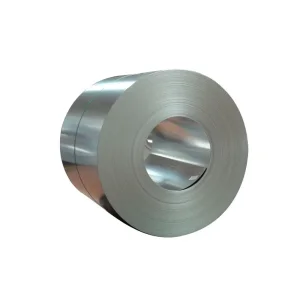
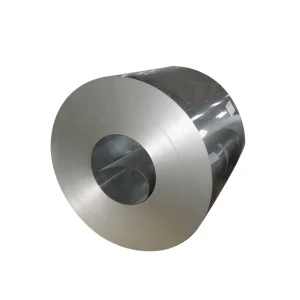
Premier Electro-Galvanized & High-Surface Coated Steel Lines
Precision-engineered EGI coils, zinc-iron alloy (ZF) sheets, ultra-deep drawing grade cold-rolled products, and specialized corrosion-resistant alloys sourced directly from accredited global manufacturing facilities.



1. Global EGI Market Dynamics & Electro-Galvanizing Metallurgical Superiority
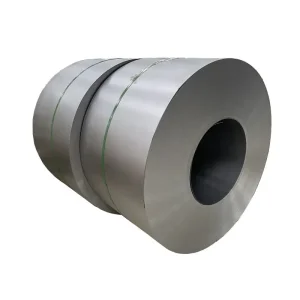
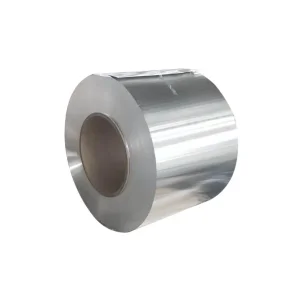
Electro-Galvanized Iron (EGI), standardized under internationally recognized designations such as JIS G3313 (SECC, SECD, SECE), ASTM A879, and EN 10152 (DC01+ZE to DC06+ZE), represents the pinnacle of surface-finished flat steel engineering. Unlike Hot-Dip Galvanized (HDG) steel, which relies on passing cold-rolled steel coils through a molten zinc bath at temperatures exceeding 450°C, Electro-Galvanizing utilizes a cold continuous electro-plating process. This electrolytic bath—typically containing zinc sulfate ($ZnSO_4$) or fluoroborate solutions—precipitates pure, atomic-level zinc ions onto the substrate under precise electrical current control.
The resulting metallurgical profile exhibits zero thermal distortion, preserving the exact mechanical temper, yield strength, and plastic strain ratio ($r$-value) of the underlying cold-rolled steel sheet. Tier-1 high-quality EGI manufacturers and factories leverage advanced electro-deposition cell arrays to achieve coating tolerances as stringent as $\pm 0.5 \mu m$, establishing EGI as the indispensable material for high-end automotive skin panels, computer server enclosures, premium home appliance outer casings, and medical devices where pristine aesthetic finish, micrometer-level precision, and flawless paint adhesion are mandatory.
Information Gain Insight: Modern EGI production lines have transitioned from conventional chromate passivation to advanced organo-inorganic hybrid nano-coating treatments (Anti-Fingerprint / AFP coatings). This chemical evolution provides double the corrosion protection of bare zinc while allowing resistance spot welding without stripping the organic layer—solving a historical bottleneck in high-speed automated OEM assembly lines.
Comparative Engineering Analysis: EGI vs. HDG vs. Galvannealed (ZF)
Procurement engineers and industrial designers often evaluate coating technologies based on three parameters: surface roughness ($Ra$), weldability index, and deep-drawing limit drawing ratio (LDR). Below is an authoritative technical comparison highlighting why specialized EGI manufacturers hold a structural advantage in precision manufacturing sectors:
| Metallurgical Property / Specification | Electro-Galvanized Iron (EGI / SECC) | Galvannealed Steel (ZF / Zinc-Iron) | Hot-Dip Galvanized Steel (HDG / DX51D+Z) |
|---|---|---|---|
| Coating Deposition Process | Cold Electrolytic Zinc Plating (20–50°C) | Hot-Dip + Inline Annealing Furnace (500–550°C) | Molten Zinc Bath Immersion (450–460°C) |
| Microstructural Spangle | Zero Spangle (Ultra-Smooth Mirror Finish) | Matte Grey (Zn-Fe Intermetallic Alloy Phase) | Regular / Minimized Spangle Texture |
| Surface Roughness ($Ra$) | 0.6 μm – 1.2 μm (Highly Uniform) | 0.8 μm – 1.5 μm (Micro-textured) | 1.0 μm – 2.5 μm (Variable) |
| Resistance Spot Weldability | Exceptional (Low Electrode Wear) | Superior (Higher Electrical Resistance) | Moderate (Requires Higher Amperage) |
| Post-Painting Aesthetic Finish | Class-A Automotive Surface Standard | Excellent Primer & Paint Adhesion | Industrial Standard (Risk of Orange Peel) |
| Primary Application Spectrum | IT Hardware, Electronics, Auto Exteriors | Welded Auto Structural Parts, Heavy Cabinets | Construction, Solar Racks, Outdoor HVAC |
2025–2035 Technological Roadmap for High-Quality EGI Production
Leading EGI factories are adopting smart manufacturing protocols, ultra-thin electro-alloy chemistry, and decarbonized supply chain practices to meet stringent international standards.
AI Closed-Loop Plating Thickness Control
Integration of real-time X-ray fluorescence (XRF) sensors with AI-driven current density modulation algorithms. This setup ensures zero coating deviation across 1,500mm-wide steel strip coils at line speeds exceeding 150 m/min.
Chromium-Free Organic Passivation (RoHS 3.0)
Development of self-healing nano-silica and zirconium-based chemical treatments. These green passivation layers completely eliminate Hexavalent Chromium ($Cr^{6+}$) while providing enhanced anti-fingerprint and anti-tarnish performance.
Electro-Plated Zinc-Nickel (Zn-Ni) Alloy Coatings
Deposition of a 10–15% Nickel alloyed zinc layer via electro-plating cells. Zn-Ni EGI offers 5x the corrosion resistance of pure zinc at equivalent coating weights, making it the premier choice for EV battery enclosures and under-hood electronics.
Localized Application Scenarios & Sector Solutions
How leading manufacturing enterprises configure high-quality EGI specifications to address specific mechanical, anti-corrosion, and aesthetic challenges.
A. Consumer Electronics & Data Infrastructure
Primary Grades: SECC-AF (Commercial Anti-Fingerprint), SECD (Drawing Grade)
Scenario Need: Computer server racks, 5G telecom chassis, and high-end audio housing require EMI (Electromagnetic Interference) shielding, precise stamping tolerances without flaking, and clean finger-print-resistant touch surfaces.
Engineering Solution: EGI factories supply double-sided phosphatized or thin organic-coated SECC sheets ($E16/E16$ or $E24/E24$ coating mass). This ensures uninterrupted grounding conductivity alongside corrosion resistance in climate-controlled server rooms.
B. Automotive Body-in-White (BIW) & Outer Panels
Primary Grades: SECE (Deep Drawing), SECF (Extra Deep Drawing), DC05+ZE
Scenario Need: Door outer panels, fender skins, and trunk lids demand a pristine Class-A surface finish after stamping, with zero orange-peel effect after high-gloss paint application.
Engineering Solution: EGI manufacturers perform strict tension-leveling and skin-pass rolling ($Ra = 0.8 \mu m$) post-plating. The cold deposition preserves the high strain-hardening exponent ($n$-value > 0.22) required for complex automotive stamping curves.
C. Premium Home Appliance Manufacturing
Primary Grades: JIS SECC, ASTM A879 Commercial Quality
Scenario Need: Refrigerator side panels, microwave interior cavities, and washing machine side plates require smooth surface flatness for direct powder coating or vinyl film lamination.
Engineering Solution: Factory-direct EGI coils treated with chromate-free passivation ensure 100% adhesion for high-speed powder coating lines, reducing paint blistering risks to zero under humid kitchen environments.
D. Precision Medical & Laboratory Equipment
Primary Grades: DC04+ZE, SECE Extra Deep Drawing
Scenario Need: Enclosures for CT scanners, centrifuge housings, and analytical instrument frames require high dimensional stability, non-magnetic consistency, and resistance to aggressive chemical disinfectants.
Engineering Solution: EGI sheets with customized 20g/m² electro-zinc deposition combined with acrylic sealers resist alcohol and bleach wiping cycles without degrading the underlying metal substrate.
Macro-Level Industry Solutions & Factory Quality Control
Securing long-term procurement reliability through rigorous chemical testing, tension-leveling, micro-structural verification, and seaworthy packaging standards.
1. Deep Drawing & Stamping Defect Mitigation Protocol
During deep drawing, sub-standard EGI sheets may suffer from micro-cracking of the zinc coating or stretcher strain lines caused by yield point elongation. High-quality EGI factories eliminate these risks by conducting online optical strain measurement (ARGUS system) and verifying that the plastic strain ratio ($r$-value) exceeds 1.8 for SECD/SECE grades. Chemical baths are continuously monitored to maintain iron impurity levels below 50 ppm, preventing brittle zinc-iron intermetallic inclusions in the pure zinc layer.
2. Resistance Spot Welding Optimization Guidelines
Because zinc melts at 419°C while steel melts at ~1500°C, welding zinc-coated steel requires higher current density and shorter weld times to prevent zinc vaporization and electrode brassing. High-quality EGI suppliers provide customer-specific weld lobe curves, recommending copper-chromium-zirconium ($CuCrZr$) electrodes and pulse-welding waveforms that extend electrode life by up to 30% compared to standard HDG processing.
3. Seaworthy Anti-Rust Packaging & Ocean Logistics Architecture
EGI coils are vulnerable to white rust (zinc hydroxide formation) if exposed to condensation during transoceanic transit. Accredited factories utilize a multi-layer protective packaging system:
- Layer 1: VCI (Vapor Corrosion Inhibitor) chemical film wrapped directly around the bare metal surface.
- Layer 2: High-density polyethylene (HDPE) waterproof inner barrier sheath.
- Layer 3: Galvanized outer steel side-guards and corrugated metal edge protectors.
- Layer 4: High-tensile radial and circumferential steel strapping bound over wooden or steel pallets designed for heavy container loads.
Frequently Asked Questions: High-Quality EGI Procurement
Direct technical answers to critical engineering, specification selection, and logistics questions raised by international buyers and quality auditors.
Extended High-Performance Steel Coils, Plates & Pipes
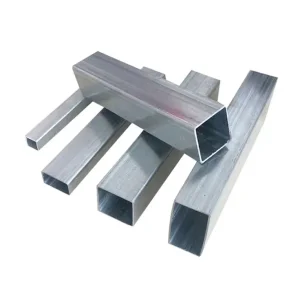
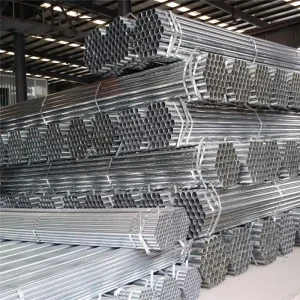
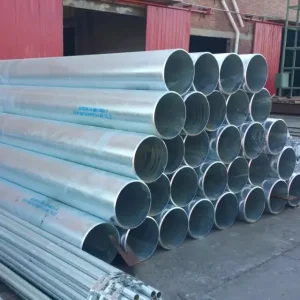
Explore our broader mill production capabilities, including silicon steel (CRNGO), pre-galvanized hollow sections, hot-dip zinc-aluminum-magnesium sheets, and tinplate packaging steel.