
Featured Industrial Coils & Structural Steel Feedstock
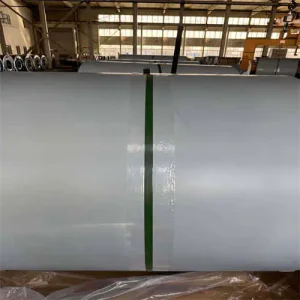
Wholesale SECC ELECTRICAL GALVANIZED STEEL COILS FOR DOOR GATE Supplier, Factory
View Product Specs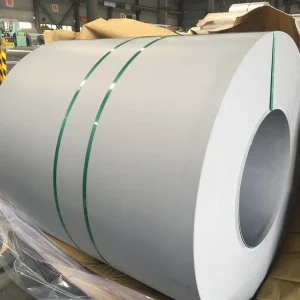
Wholesale China Suppliers Factory SECC/SECD/SECE 20/20 Coating Electro-Galvanized Steel Plate for Enhanced Durability Factory, Factories
View Product Specs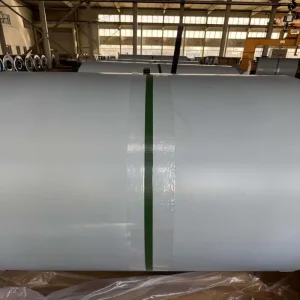
Wholesale Electrogalvanized Steel from China Suppliers - Quality Factory Direct Coating Solutions Supplier, Factories
View Product Specs
Wholesale CRNGO Silicon Steel Coil M310 M350 M470 M600 M800 - China Suppliers & Factory for Non-Grain Oriented Electrical Steel Supplier, Suppliers
View Product Specs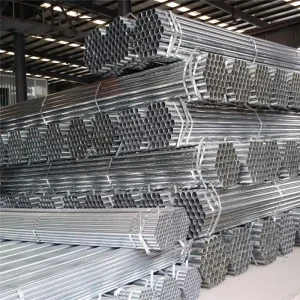
Wholesale China Suppliers Factory: Thick-Wall Pre Galvanized Steel Pipe for Greenhouse - Custom Sizes & Specifications Manufacturers, Suppliers
View Product Specs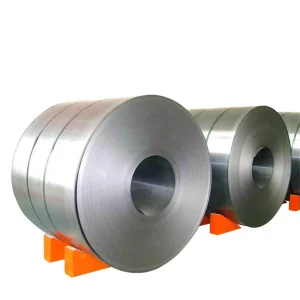
Wholesale High Strength Cold Rolled Steel Sheets for Extra Deep Drawing Quality from China Suppliers and Factory Supplier, Suppliers
View Product Specs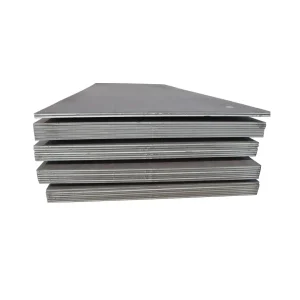
High-Quality China Suppliers Hot Rolled Carbon Steel Plates Q235 Q195 Q345 ST S355 from Factory - High Quality Steel Strips Manufacturers, Suppliers
View Product Specs
High-Quality China Suppliers Factory Galvannealed Steel Coil ZF60 ZF275 DX51D Zinc Iron Alloy for Welding and Painting Applications Suppliers, Factory
View Product SpecsGlobal Market Architecture & Sourcing Demands for GI Coils
Evaluating structural trends, yield economics, and material life-cycle requirements across international commercial, industrial, and residential building sectors.
In modern industrial architectural engineering, Galvanized Iron (GI) steel coils serve as the foundational material for durable roof cladding, standing-seam assemblies, corrugated sheet roll-forming, and structural purlin systems. As global infrastructure accelerates across Asia-Pacific, the Middle East, Latin America, and North America, the procurement criteria for roofing-grade GI coils have shifted from basic cost-per-ton metrics toward stringent metallurgical performance, precise coating mass control, micro-structural grain refinement, and zero-defect surface aesthetics.
Roofing manufacturers face distinct operational challenges: roll-forming machinery running at line speeds exceeding 60 meters per minute requires absolute uniformity in yield strength, thickness tolerance ($\pm0.02\text{ mm}$), and coating adhesion. Flaking, micro-cracking, or zinc delamination during continuous roll profile formation can cause immediate machinery downtime, material rejection, and compromised long-term corrosion performance in atmospheric field service environments.
High-Speed Roll Forming Quality
Zero-spangle and minimized-spangle GI coils engineered with superior ductility to prevent micro-fissures during high-radius profile bending and rib formation.
Atmospheric Protection
Hot-dip zinc coatings forming an impenetrable physical barrier coupled with sacrificial galvanic action to protect exposed sheet cut edges against red rust.
Pre-Painted Feedstock Integrity
Chemically passivated and chromate-treated surface topographies engineered specifically for optimal resin bonding in organic coil coating lines (PPGI).
Metallurgical Engineering, Substrate Mechanics & Coating Chemistry
Precision mechanical parameters, chemical composition limits, and hot-dip continuous galvanizing furnace control metrics.
The operational lifespan of a galvanized steel roof depends on the chemical composition of the cold-rolled base metal (CS, FS, SS grades) and the structural chemistry of the hot-dip zinc layer. During the continuous galvanizing process, cold-rolled steel strip passes through an annealing furnace to restore ductility before entering a molten zinc bath maintained at approximately $450^\circ\text{C}$ to $460^\circ\text{C}$.
Substrate Grade Matrix & Mechanical Properties
Roofing profile manufacturers select substrate grades based on structural load calculations, purlin spacing, and rib geometry. Commercial grades (e.g., DX51D+Z, SGCC, ASTM A653 CS) provide exceptional bending quality for standard profiles, while structural grades (e.g., S280GD, S350GD, S550GD, ASTM A653 SS Grade 80) deliver high yield strength for wide-span industrial roofs subject to wind uplift and snow loads.
| Standard Designation | Steel Grade / Type | Yield Strength (MPa) | Tensile Strength (MPa) | Elongation A50 (%) | Primary Roofing Application |
|---|---|---|---|---|---|
| EN 10346 | DX51D + Z | 140 – 300 | 270 – 500 | ≥ 22 | Corrugated Sheets, Standard Rib Profiles, Rain Gutters |
| EN 10346 | S280GD + Z | ≥ 280 | ≥ 360 | ≥ 18 | Structural Roofing, Medium-Span Decking, Purlins |
| EN 10346 | S350GD + Z | ≥ 350 | ≥ 420 | ≥ 16 | Heavy Industrial Roofing, Standing Seam Systems |
| EN 10346 | S550GD + Z | ≥ 550 | ≥ 560 | — | High-Tensile Structural Sheeting, Low-Weight Panels |
| ASTM A653 / A653M | CS Type A / B | 170 – 310 | ≥ 380 | ≥ 20 | Commercial Building Roofs, Residential Shingles |
| JIS G3302 | SGCC | 205 – 300 | ≥ 270 | ≥ 18 | General Roofing Sheeting, Architectural Cladding |
Intermetallic Zinc-Iron Alloy Layers & Spangle Dynamics
When the steel strip exits the zinc bath, a metallurgical diffusion reaction forms distinct zinc-iron intermetallic alloy phases ($\text{Gamma } \Gamma, \text{ Delta } \delta, \text{ Zeta } \zeta$) capped by a pure zinc outer layer ($\text{Eta } \eta$). Precise addition of minor alloying elements such as Aluminum ($0.15\% - 0.25\%$) to the zinc bath suppresses brittle alloy layer growth, creating a highly ductile metallic bond capable of withstanding intense mechanical deformation.
| Coating Mass Code (EN/ASTM) | Nominal Zinc Weight (g/m² total both sides) | Triple-Spot Test (g/m²) | Single-Side Thickness (μm) | Corrosion Resistance Environment |
|---|---|---|---|---|
| Z60 / G20 | 60 g/m² | ≥ 60 | ~ 4.2 μm | Dry Indoor / Temporary Enclosures |
| Z100 / G30 | 100 g/m² | ≥ 100 | ~ 7.0 μm | Mild Rural Atmospheres (Low Risk) |
| Z140 / G45 | 140 g/m² | ≥ 140 | ~ 10.0 μm | Standard Urban & Light Industrial Roofing |
| Z180 / G60 | 180 g/m² | ≥ 180 | ~ 13.0 μm | Heavy Industrial & Moderate Coastal Zones |
| Z275 / G90 | 275 g/m² | ≥ 275 | ~ 20.0 μm | Severe Marine, Agricultural & Chemical Exposure |
Spangle Morphology Selection
- Zero Spangle (Minimized Spangle): Ultra-smooth finish ideal for direct paint application, coil-coating lines (PPGI), and high-precision standing seam profiles where visible grain boundaries are undesirable.
- Regular Spangle: Traditional zinc crystal rosette formation suitable for standard unpainted corrugated sheets, agricultural roofs, and industrial shade structures.
Surface Passivation & Chemical Protection
- Chromate Passivated (C/Cr3+): Environmentally compliant trivalent chromium passivation preventing white rust (storage stain) during transit and ocean shipment.
- Anti-Fingerprint (AF) / Organic Sealer: Transparent thin-film acrylic sealers improving scratch resistance during handling and enhancing corrosion barriers in high-humidity climates.
Enterprise Sourcing Criteria & Maritime Logistics Safeguards
Mitigating financial risk, container shipment degradation, and dimensional non-conformance for global high-volume buyers.
Procuring GI coils on an enterprise scale requires strict alignment between mill manufacturing tolerances and project specification sheets. Purchasing managers must account for total coated thickness (TCT) versus base metal thickness (BMT), width tolerances, edge camber, and weight constraints per coil to ensure seamless integration with local uncoilers and roll-forming lines.
Dimensional Precision Control
Automated inline X-ray thickness gauges maintain coil thickness variations strictly within $\pm0.015\text{ mm}$, preventing machine jam-ups and uneven rib stress during high-speed profiling.
TCT vs. BMT Specification Clearances
Clear documentation differentiating Total Coated Thickness (TCT) from Base Metal Thickness (BMT) ensures accurate structural load-bearing calculations for architectural tenders.
Coil Weight Optimization
Coil weights customized from 3.0 to 8.0 metric tons per coil match crane lift capabilities and uncoiler mandrel ratings at destination factories.
Export Packaging & Ocean Transit Protection Architecture
Cross-border ocean freight exposes steel coils to extreme relative humidity fluctuations, dew point condensation (sweating), and ambient salt air exposure. Standard domestic packaging is insufficient for long-distance maritime routes. Factory exporting operations implement multi-layer protective packaging engineered to completely isolate the steel from environmental ambient moisture.
| Packaging Element | Material & Construction Specifications | Protective Mechanism |
|---|---|---|
| Inner Core Wrap | VCI (Vapor Corrosion Inhibitor) Poly-laminated paper | Emits protective rust-inhibiting vapors inside the enclosed inner diameter. |
| Metallic Shielding | Heavy-gauge Galvanized Steel Inner & Outer Edge Protectors | Shields coil edges from mechanical impact damage during crane strap loading. |
| Outer Shell | Corrugated Galvanized Steel Outer Wrapper Sheet | Prevents physical punctures, moisture ingress, and external abrasion. |
| Securing Assembly | High-tensile steel radial (min. 3) and circumferential (min. 3) straps | Locks the coil geometry firmly under high dynamic transport loads. |
| Container Eye Orientation | "Eye to Wall" or "Eye to Sky" on heavy wooden skids with desiccants | Prevents coil movement inside 20ft heavy-duty containers under sea swell. |
Architectural Roofing Application Matrix & Regional Solutions
Deploying optimized GI steel grades across distinct climatic zones, chemical exposure levels, and structural profiles.
Industrial Warehouses & Logistics Hubs
Wide-span trapezoidal cladding sheets require high yield strength (S350GD/S550GD) to support purlin spacing while minimizing structural steel framing tonnage. Z180 to Z275 coating weights ensure 25+ year maintenance-free operation.
Residential Standing Seam Systems
Zero-spangle soft-forming GI coils (DX52D/DX53D + Z) designed for double-lock standing seam roofs. Outstanding ductility allows tight 180-degree hem bends without zinc layer micro-cracking or paint adhesion loss.
Agricultural Enclosures & Livestock Barns
Exposure to elevated ammonia vapor, humidity, and organic acids demands chromate-passivated Z275 heavy galvanized substrate or advanced Zinc-Aluminum-Magnesium alloy coatings to avoid accelerated pitting corrosion.
Next-Generation Galvanizing Metallurgy & Green Steel Trends
Transitioning from pure zinc to Zinc-Aluminum-Magnesium (ZAM) ternary alloys and low-carbon hydrogen steel substrate production.
The global steel industry is undergoing a dual transformation driven by decarbonization targets and advanced coating science. Next-generation continuous galvanizing lines are incorporating AI-driven automated air-knife systems and switching to ternary alloy formulations that outperform traditional GI coatings in extreme conditions.
Zinc-Aluminum-Magnesium (Zn-Al-Mg) Evolution
By adding $1.5\% - 3\%$ Magnesium and $11\%$ Aluminum to the galvanized molten bath, Zn-Al-Mg coatings form a dense, stable protective film ($\text{Simonkolleite } \text{Zn}_5(\text{OH})_8\text{Cl}_2 \cdot \text{H}_2\text{O}$). This self-healing chemical structure migrates over cut edges and punched holes, offering up to 5 times the corrosion resistance of standard hot-dip GI at equivalent coating thicknesses.
Hydrogen-Reduced Green Substrate Production
Leading steel mills are integrating Direct Reduced Iron (DRI) processes utilizing green hydrogen fuel. Substrates produced via low-carbon electric arc furnace (EAF) routes reduce embodied Scope 1 and Scope 2 carbon footprint metrics by up to $65\%$, allowing global roofing manufacturers to comply with EU CBAM and international green building standards (LEED/BREEAM).
Regulatory Compliance, In-House QA & International Standards
Mill test certificates (EN 10204 3.1), laboratory testing protocols, and third-party inspection readiness.
Every production master coil undergoes rigorous quality control protocols before release. Mill Test Certificates (MTC) issued in strict compliance with EN 10204 3.1 accompany every shipment, verifying full traceability from iron ore ladle chemistry to final coil packaging.
Accelerated neutral salt spray testing confirming zero red rust formation after 500 to 1,500 hours depending on coating weight.
Tensile testing evaluating Yield Point, Ultimate Tensile Strength, and Total Elongation on every master coil lot.
0T to 2T bend testing confirming zero zinc coating peeling or tape adhesion loss along tight deformation radii.
Triple-spot magnetic and chemical weigh-strip-weigh methods ensuring zinc mass compliance across coil width.
Frequently Asked Questions: GI Coil Procurement & Technical Specs
Direct answers to complex metallurgical, logistics, and manufacturing queries faced by global buyers.
What is the practical difference between DX51D+Z and S350GD+Z for roofing profiles?
DX51D+Z is a ductile commercial forming grade designed for high-formability profiles, corrugated sheets, and rain gutters where ease of bending is critical. S350GD+Z is a structural steel grade with a guaranteed minimum yield strength of 350 MPa. S350GD is specified for structural roofing panels, standing seam systems, and purling decks where high load-bearing capacity and wind uplift resistance are mandatory.
How does zinc coating weight (Z100 vs. Z275) impact outdoor service life expectancy?
Under normal atmospheric exposure, pure zinc corrodes at a predictable rate of approximately $0.5 \text{ to } 2.0 \, \mu\text{m per year}$ in rural environments and $2.0 \text{ to } 5.0 \, \mu\text{m per year}$ in industrial coastal zones. Z100 (~$7.0 \, \mu\text{m}$ single-side zinc layer) provides approximately 7-10 years of red-rust protection in standard atmospheric conditions. Z275 (~$20.0 \, \mu\text{m}$ single-side zinc layer) extends maintenance-free field performance to 25+ years under severe marine and industrial atmospheric environments.
Why is Zero Spangle preferred over Regular Spangle for modern color-coating lines (PPGI)?
Zero Spangle coils feature an ultra-fine grain surface structure produced by rapid solidification control during hot-dip galvanizing. Unlike Regular Spangle coils, which possess visible zinc crystals that can map through thin paint layers and cause uneven thermal expansion under sunlight, Zero Spangle surfaces ensure optimal paint film smoothness, superior primer adhesion, and eliminate long-term paint peeling risks.
What measures are taken to prevent white rust (storage stain) during long ocean container shipments?
White rust occurs when moisture condenses between tightly wrapped coil laps in oxygen-starved environments. To prevent white rust, our export-grade GI coils are treated with trivalent chromate passivation (Cr3+) or specialized anti-fingerprint acrylic sealers. Coils are wrapped in VCI (Vapor Corrosion Inhibitor) poly-laminated paper, outer galvanized steel shells, sealed with rubber edge guards, and loaded with heavy-duty desiccant packs inside sealed shipping containers.
What is the standard tolerance for Total Coated Thickness (TCT) on export GI coils?
Standard thickness tolerances strictly follow international standards EN 10143 and ASTM A924. For a typical $0.50\text{ mm}$ TCT roofing coil, thickness variation is maintained within $\pm0.02\text{ mm}$ across the entire length and width of the coil, preventing machinery feed slips and rib gauge variation during high-speed roll forming.
Request Mill Specifications & Volume Pricing Quotations
Connect directly with our senior metallurgical engineering team and export logistics managers for technical compliance verification, customized coil dimensions, and mill-direct price quotes.
Contact Export Sales TeamAdditional Structural Steel & Coated Products Catalog

Wholesale China Suppliers Factory ZM AZM Coated Steel Sheet 275g Zinc Aluminum Magnesium for Solar Mounting Structures Supplier, Factory
View Product Specs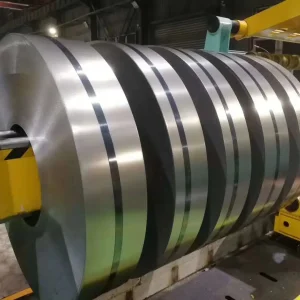
Wholesale 0.23mm CRGO Grain Oriented Electrical Silicon Steel Coil for Transformer | China Suppliers & Factory Supplier, Suppliers
View Product Specs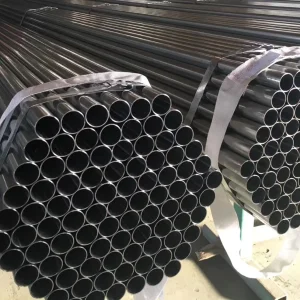
Wholesale Factory Sale High Quality ASTM A106 Sch 40 ERW Iron Tube, ERW Weld Carbon Steel Pipe Manufacturers, Suppliers
View Product Specs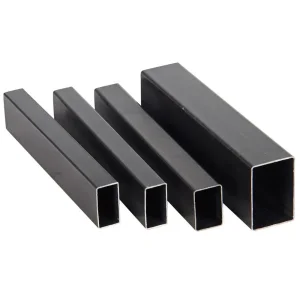
Wholesale China Suppliers 50x50mm Square Tubing Factory - Durable Metal Square Pipe for Steel Fence Posts Supplier, Suppliers
View Product Specs
Wholesale CRNGO of M310 M350 M470 M600 M800 Silicon Steel Non-Grain Oriented Silicon/Electrical Steel Coil Manufacturer, Manufacturers
View Product Specs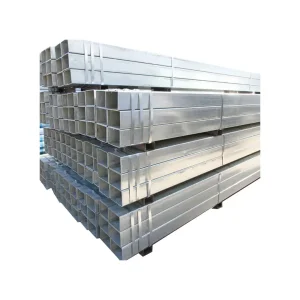
High-Quality China Suppliers Factory 40x40 Tube SHS Hot Dip Galvanized Square Steel Pipe 200*100 Rectangle Steel Pipe Supplier, Factories
View Product Specs
Wholesale China Square Tubing Suppliers - 50x50mm 4x4 Metal Pipe Factory for Durable Steel Fence Posts Manufacturer, Factory
View Product Specs