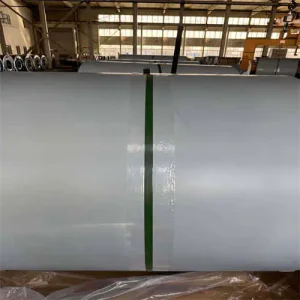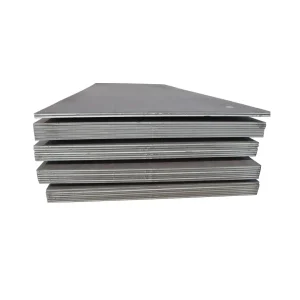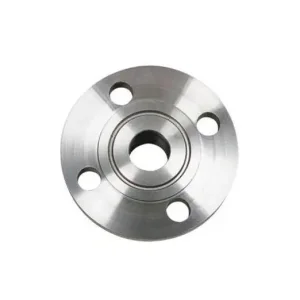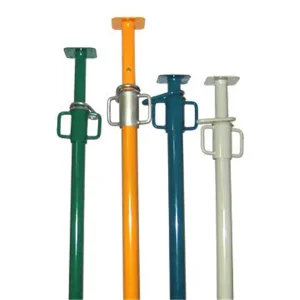
Featured Mill Products & Structural Solutions
Explore our mill-direct inventory of structural steel products, engineered precisely to global standards including ASTM, EN, JIS, and GB certifications.
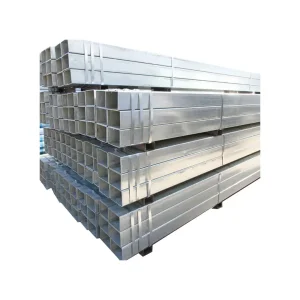
1. Executive Technical Summary: Metallurgical Landscape of RHS/SHS
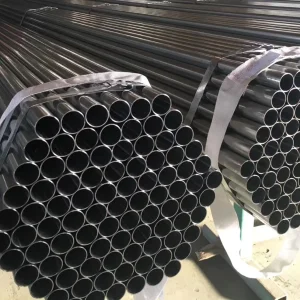
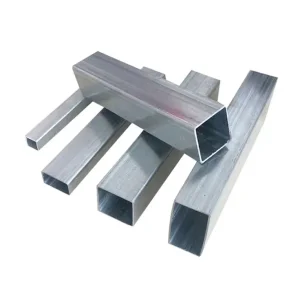
Rectangular Hollow Sections (RHS) and Square Hollow Sections (SHS) represent the pinnacle of structural carbon steel engineering. Manufactured via High-Frequency Electric Resistance Welding (HFW/ERW) or cold-forming followed by hot-dip galvanization, galvanized RHS square steel tubes deliver an optimal synthesis of high torsional rigidity, high strength-to-weight ratios, and superior atmospheric corrosion resistance.
In modern structural design, RHS/SHS profiles are preferred over traditional open sections (such as I-beams or channels) due to their closed geometric symmetry. This symmetry significantly minimizes hydrodynamic and aerodynamic drag while eliminating un-inspectable ungalvanized pockets. The integration of a hot-dipped or pre-galvanized surface matrix transforms structural carbon steel into an enduring asset capable of surviving multi-decade exposure in ISO 12944 corrosive environments ranging from C1 (Indoor/Dry) to C5 (Industrial/Marine).
Technical Comparison: Pre-Galvanized vs. Batch Hot-Dip Galvanized RHS
Procurement directors and structural engineers must differentiate between Pre-Galvanized (HDGI strip-formed) and Post-Welded Hot-Dip Galvanized (Batch HDG) hollow sections based on environmental load requirements:
| Parameter / Characteristic | Pre-Galvanized RHS Square Tube | Batch Hot-Dip Galvanized RHS Tube |
|---|---|---|
| Manufacturing Sequence | Continuous galvanized steel coil $\rightarrow$ Cold Formed $\rightarrow$ HFW Seam $\rightarrow$ Seam Zinc Sprayed | Black Steel Coil $\rightarrow$ Cold Formed $\rightarrow$ HFW Seam $\rightarrow$ Fully Immersed in Molten Zinc Bath |
| Zinc Coating Mass Range | 40 g/m² – 120 g/m² (both sides combined) | 300 g/m² – 610 g/m² (42 $\mu$m – 85 $\mu$m per side) |
| Internal Surface Protection | Uniform zinc coating applied at mill coil stage | 100% internal total immersion coverage with flow-venting |
| Corrosion Resistance Class | C1 to C3 Environments (Indoor, Light Structural, Framing) | C3 to C5 Industrial / Marine Environments (Heavy Infrastructure) |
| Weld Seam Integrity | External weld seam restored via automated inline thermal zinc spraying | Continuous seamless coating layer across base metal and heat-affected zone (HAZ) |
| Standard Compliance | EN 10219, ASTM A500, GB/T 6728, JIS G3466 | EN ISO 1461, ASTM A123 / A53, BS 1387, EN 10210 / 10219 |
2. Global Industrial Status & Sourcing Market Dynamics
The international demand for Galvanized Rectangular and Square Hollow Sections is experiencing unprecedented expansion, driven primarily by mega-scale energy transition projects, modern modular prefabrication, and resilient agricultural infrastructure. According to current metallurgical industry benchmarks, the global market for structural hollow sections is expanding at a CAGR of 6.2%, with galvanized square and rectangular profiles constituting over 42% of the overall structural tubing sector.
Utility-scale Solar Photovoltaic (PV) plants require high-yield strength RHS profiles (e.g., S355JR, S420MH, or Zinc-Aluminum-Magnesium alloys) for torque tubes and structural mounting frames capable of handling 25-year design lifetimes under harsh wind and solar exposure.
Architectural engineering in North America, Europe, and Australia relies heavily on SHS/RHS steel frames due to their dimensional stability, uniform axial compression capacity, and speed of off-site assembly in modular housing and high-rise commercial structures.
Commercial multi-span greenhouse installations and automated high-density logistics warehousing demand lightweight, high-tensile pre-galvanized RHS profiles that withstand humid, fertilizer-rich microclimates without requiring ongoing maintenance.
3. Strategic Efficiency Advantages of Chinese Smart Manufacturing
As the primary hub of global steel manufacturing, China's advanced production ecosystems—centered in industrial clusters like Tianjin and Hebei—have evolved beyond sheer volume to set global benchmarks in technical precision, supply chain agility, and cost-efficiency. Purchasing from top-tier Chinese factories provides international buyers with clear structural and commercial advantages:
Direct proximity to major state-owned hot-rolled strip mills reduces raw material freight costs and guarantees consistent chemical compositions (P < 0.025%, S < 0.015%) and strict carbon equivalent control ($CEV \le 0.38$).
State-of-the-art high-frequency induction welding lines operate continuously at speeds exceeding 60 m/min, equipped with inline ultrasonic non-destructive testing (NDT) and eddy-current seam monitoring for zero-defect welds.
Advanced quick-change roller cassette systems allow Chinese mills to efficiently produce non-standard rectangular sections, custom wall thicknesses (from 0.8 mm up to 20 mm), and special structural radius specifications.
Proximity to deep-water shipping terminals (such as Tianjin Xingang Port) enables seamless, seaworthy packaging, anti-corrosive oiling, automated bundle tagging, and bulk container loading for rapid transit to global ports.
4. Localized Application Scenarios & Structural Engineering
The versatile geometry of galvanized square and rectangular steel tubing enables tailored structural performance across diverse global climates and industrial sectors:
A. Coastal & Marine Structural Framing
Scenario: Port facilities, sea-wall walkways, and offshore maintenance buildings exposed to high-salinity air.
Material Choice: Batch Hot-Dip Galvanized RHS (Minimum 85 $\mu$m zinc layer, S355J2H grade).
Engineering Rationale: Thick metallurgical zinc-iron alloys provide sacrificial cathodic protection, resisting chloride-induced pitting corrosion without requiring costly epoxy topcoats.
B. Solar Tracking Torque Tubes & Purlins
Scenario: Desert and high-ultraviolet utility-scale PV parks in the Middle East and Australia.
Material Choice: Zinc-Aluminum-Magnesium (ZAM) or Pre-Galvanized RHS (Z275 to Z600 coatings).
Engineering Rationale: Exceptional resistance to wind-blown sand abrasion, with ZAM coatings offering self-repairing protection along punched holes and cut edges.
C. Heavy Machinery & Vehicle Chassis
Scenario: Agricultural trailers, mining support equipment, and commercial vehicle frames.
Material Choice: Cold-Formed High-Strength RHS (ASTM A500 Grade C or S460MH).
Engineering Rationale: Superior torsional stiffness compared to open I-beams prevents structural distortion under asymmetrical dynamic loads while lowering total vehicle curb weight.
5. Industry Development Trends & Technological Innovations
The structural hollow section manufacturing sector is undergoing rapid technological transformation, shaped by sustainability imperatives and advanced material engineering:
- Rise of Ternary Alloy Coatings (Zn-Al-Mg): Zinc-Aluminum-Magnesium coatings are rapidly displacing traditional pure zinc coatings in outdoor infrastructure. The addition of 2%–3% Aluminum and 1.5%–3% Magnesium creates a dense, adherent corrosion barrier (SimONkolleite) that provides up to five times greater corrosion resistance than standard galvanizing at equivalent coating thicknesses.
- Decarbonization & Green Steel Manufacturing: Global EPC contractors increasingly require verified Environmental Product Declarations (EPD). Leading Chinese manufacturers are adopting Electric Arc Furnace (EAF) steelmaking powered by renewable energy and closed-loop hydrometallurgical zinc recovery systems to significantly lower Scope 1 and Scope 2 embodied carbon footprints.
- AI-Driven Wall Thickness & Concentricity Control: Integrating real-time laser profiling and X-ray wall-thickness gauge sensors into the roll-forming process ensures precise corner radius control and concentricity, preventing local buckling risks during high-stress structural connections.
6. Technical Procurement Framework for Global Enterprise Buyers
To streamline international procurement and eliminate quality discrepancies, enterprise purchasing teams should evaluate structural steel suppliers against five core engineering criteria:
Ensure strict adherence to EN 10219-2 or ASTM A500 standards. Crucial dimensions include outer dimensions ($\pm 0.75\%$), wall thickness ($\pm 10\%$), concavity/convexity ($\le 0.8\%$), and squareness of sides ($90^\circ \pm 1^\circ$).
Specify minimum yield strength ($R_{eH}$), tensile strength ($R_m$), and Charpy V-notch impact test values (e.g., 27 Joules at -20°C for S355J2H grades operating in sub-zero climates).
Galvanized coatings must pass bend tests (ASTM A123) and cross-hatch adhesion testing without flaking, cracking, or peeling along the cold-formed corner radiuses.
7. Frequently Asked Questions (Technical & Commercial FAQ)
Detailed answers to the technical, metallromic, and logistics questions asked by structural engineers and procurement managers:
- S235JR / Q235B: Minimum yield strength 235 MPa; ideal for general fencing, greenhouse frames, and light structures.
- S355JR / S355J2H / Q355B: Minimum yield strength 355 MPa; engineered for heavy structural framing, solar tracking torque tubes, and cranes.
- ASTM A500 Grade B / Grade C: Yield strengths from 315 MPa to 345 MPa; widely specified across North American construction projects.
- C2 (Rural / Low Pollution): 50+ years.
- C3 (Urban / Industrial): 25 to 40 years.
- C4 / C5 (Coastal / Heavy Marine): 15 to 25 years.
Complete Structural & Coated Steel Catalog
Discover our expanded portfolio of raw material plates, galvanized sheets, specialized coils, and mechanical piping direct from our manufacturing facility.