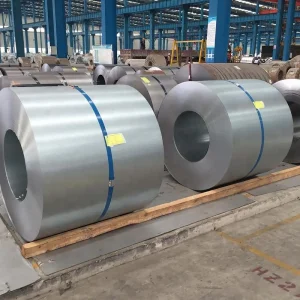
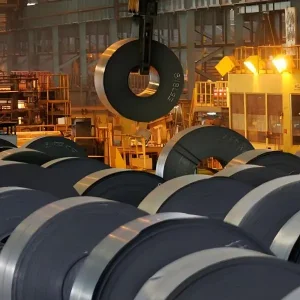
Mill-Direct Structural & Coated Steel Sections
Explore our factory-direct inventory of high-grade galvanized tubing, alloy sheets, and structural profiles designed for global engineering compliance.
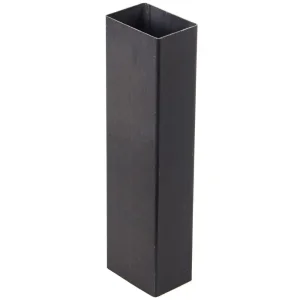
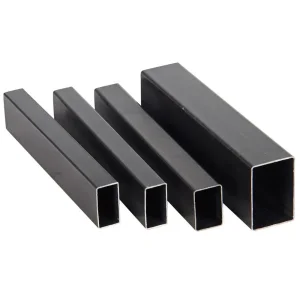
Global Industrial Landscape of Galvanized Rectangular Tubing
Understanding the structural mechanics, shifting procurement centers, and macro demand drivers across international civil infrastructure, agriculture, and energy sectors.
1. Structural Superiority: Why Rectangular Hollow Sections (RHS) Dominate Global Engineering
In modern structural engineering, Galvanized Rectangular Pipes (commonly categorized as Rectangular Hollow Sections, or RHS) represent a fundamental evolution over traditional open structural shapes like I-beams, channel steel, and angle iron. The key advantage lies in their geometrical mass distribution. RHS tubing provides superior torsional rigidity and high flexural resistance along both horizontal and vertical axes, allowing engineers to design lightweight, ultra-strong frameworks with minimized material usage.
Unlike open profiles, the closed box geometry of a rectangular steel pipe offers uniform resistance to wind, seismic, and multi-directional axial forces. When coated with hot-dip zinc or pre-galvanized protective layers, RHS profiles eliminate internal corrosion risks, making them the preferred material for long-span roof trusses, high-rise curtain walls, bridge superstructures, and utility-scale solar tracker structures globally.
Key Global Demand Drivers
- Utility Solar PV Infrastructures: Massive demand for Zn-Al-Mg and Hot-Dip Galvanized rectangular tubes as torque tubes and mounting posts across North America, Europe, and the Middle East.
- Modular Construction & Prefab Buildings: Rapid adoption of cold-formed RHS frameworks for quick-assembly warehouses, data centers, and urban residential modules.
- Automotive & Heavy Transportation: Integration of high-strength structural tubing in commercial vehicle chassis, agricultural machinery, and trailer framing.
- Agricultural Greenhouses: Large-scale installation of pre-galvanized rectangular pipes for high-humidity hydroponic facilities requiring 15–25 year anti-rust warranties.
Global Trade & Sourcing Dynamics
Global procurement managers face tightening environmental regulations, strict anti-dumping checks, and rising demand for verifiable supply chain transparency. Modern B2B buyers require manufacturers who deliver not only competitive price per ton ratios, but also full compliance with international standards such as ASTM A500 Grade B/C, EN 10219 S275J2H/S355J2H, and JIS G3466. Factory direct sourcing from integrated manufacturing hubs has become the primary strategy to mitigate supply chain bottlenecks and control landed costs.
Metallurgy, Production Mechanics & China Factory Advantage
Inside the advanced ERW tube mills and hot-dip galvanizing lines: How material science and China's industrial clustering drive unparalleled global cost-efficiency.
Technical Comparison: Pre-Galvanized vs. Hot-Dip Galvanized (HDG) Rectangular Pipes
Selecting the correct galvanizing method is critical for balancing project capital expenditure (CapEx) against long-term operational maintenance costs. Below is a rigorous technical side-by-side comparison of the two primary manufacturing processes:
| Technical Parameter | Pre-Galvanized Rectangular Pipe | Hot-Dip Galvanized (HDG) Rectangular Pipe |
|---|---|---|
| Substrate Material | Pre-coated hot-rolled/cold-rolled strip coil | Black ERW structural steel tube (post-weld dipped) |
| Zinc Coating Weight | 40g/m² – 120g/m² (5 µm – 17 µm thickness) | 200g/m² – 600g/m² (28 µm – 85 µm thickness) |
| Internal Weld Seam | Online thermal zinc spray re-coating required | 100% full internal & external immersion coverage |
| Corrosion Resistance | Moderate (Indoor, dry, mild rural outdoor) | Extreme (Coastal, industrial, marine, soil burial) |
| Surface Aesthetics | Smooth, bright metallic silver, mirror-like finish | Slightly rough, spangled, matte grey industrial finish |
| Standard Compliance | ASTM A500, GB/T 6728, JIS G3466 | ASTM A53, EN ISO 1461, BS 1387, EN 10219 |
| Service Life Expectancy | 7 – 15 Years (Environment dependent) | 25 – 50+ Years (Maintenance-free) |
China Factory Manufacturing Ecosystem & Scale Advantage
China’s leading steel pipe production hubs, particularly concentrated in regions like Tianjin (Jinghai District) and Hebei Province, offer unmatched manufacturing density. Integrated supply chain clusters position raw steel coil rolling mills, High-Frequency Electric Resistance Welding (HF-ERW) tube mills, and molten zinc galvanizing plants within a tight 15-kilometer radius.
This geographical concentration yields direct cost reductions: zero long-distance raw material freight, continuous 24/7 automated roll-forming, and direct access to major deep-water shipping ports like Tianjin Port (Xingang). Consequently, Chinese OEM factories can deliver custom-dimension RHS steel tubes with lead times 30% to 50% shorter than overseas competitors.
Rigorous Quality Control & Testing Protocols
Top-tier Chinese rectangular pipe manufacturers enforce strict, end-to-end quality assurance systems. Every heat lot undergoes standardized metallurgical and mechanical verification:
- Eddy Current & Ultrasonic Weld NDT: 100% online non-destructive testing of longitudinal seam welds to prevent micro-cracks or lack of fusion.
- Hydrostatic Pressure Testing: Verification of structural integrity under pressures up to 5.0 MPa for fluid-handling pipes.
- Zinc Adhesion & Thickness Gauge: Magnetic PosiTector thickness testing and cross-hatch tape adhesion testing according to ISO 2808.
- Flattening & Flare Mechanical Tests: Ensuring high ductility without weld splitting during downstream bending or punching.
Localized Application Scenarios & Engineering Case Studies
How customized rectangular steel tubing delivers long-term structural integrity across extreme environments and diverse commercial sectors.
Solar PV Mounting & Tracker Racks
In utility-scale solar farms in arid or desert regions (e.g., Middle East, Atacama Desert), single-axis tracker systems utilize heavy-wall 150x100mm and 200x100mm HDG or Zn-Al-Mg rectangular tubes as central torque tubes. The rectangular geometry offers exact mounting surfaces for solar module brackets while resisting high dynamic wind uplift forces without rotational twisting.
Commercial HVAC & Building Services
Modern mega-structures and data centers deploy pre-galvanized rectangular tubing for heavy-duty HVAC duct supports, piping header frames, and cable tray suspension grids. The flat surfaces of RHS profiles simplify drilling, welding, and mechanical bolting, drastically reducing mechanical contractor installation hours on site.
Modular Logistics Warehouses
High-bay automated storage and retrieval system (ASRS) warehouses demand strict dimensional straightness (tolerance < 1/1000 of length). High-precision cold-formed RHS structural steel tubing acts as the primary column and beam components, maintaining structural squareness and load-bearing stability under heavy pallet racking loads.
Unlike square tubes (SHS) which possess equal section modulus ($Z_x = Z_y$), Rectangular Hollow Sections (RHS) allow structural engineers to align the major axis ($I_x$) with the predominant bending load direction. This engineered orientation reduces overall steel weight by up to 18% to 25% compared to over-designed square sections, directly lowering freight costs and total structural dead weight.
Global Procurement Guide: TCO & Risk Mitigation
Best practices for international buyers, EPC contractors, and steel distributors sourcing bulk galvanized rectangular tubing from China.
1. Total Cost of Ownership (TCO) Evaluation Matrix
When comparing mill quotes, experienced purchasing officers look beyond the FOB price per metric ton. A complete TCO calculation incorporates:
- Actual Weight vs. Theoretical Weight: Confirming tolerance margins ($T \pm 5\%$) to avoid under-gauge delivery tricks.
- Port Handling & Freight Optimization: Maximizing container payload via nested tubing sizes (e.g., placing 40x20mm pipes inside 100x50mm pipes).
- Seaworthy Export Packaging: Anti-rust oiling, VCI plastic wrapping, corner protectors, and heavy-duty steel strapping to prevent ocean transit oxidation.
2. Factory Audit & Quality Verification Roadmap
To safeguard against non-conforming materials, international buyers should mandate a rigorous multi-stage verification protocol:
- Mill Test Certificate (MTC): Demanding EN 10204 3.1 certification verifying heat numbers, chemical ladle analysis, and yield strength testing.
- Third-Party Inspection (TPI): Authorizing independent agencies (SGS, BV, TUV) for pre-shipment dimensional checks, zinc weight measurement, and hydrostatic testing.
- Raw Material Traceability: Verifying that parent coil strips originate from tier-1 steel mills (e.g., HBIS, Shougang, Baosteel).
Industry Macro Trends & Next-Gen Coating Technologies
Pioneering green steel initiatives, automated laser cutting, and self-healing Zinc-Aluminum-Magnesium alloy coatings shaping the next decade of structural manufacturing.
Zinc-Aluminum-Magnesium (Zn-Al-Mg) Coatings
The global steel tubing industry is undergoing a major shift from conventional HDG to Zn-Al-Mg (AZM) alloy coatings. Containing 3% Magnesium and 11% Aluminum, this revolutionary coating forms a dense, self-healing protective layer over cut edges and punched holes. It provides up to 5 to 10 times higher corrosion resistance than standard galvanizing in salty marine environments.
Decarbonization & Green Steel Mandates
Driven by the European Union’s Carbon Border Adjustment Mechanism (CBAM) and global ESG policies, leading Chinese factories are transitioning to Electric Arc Furnace (EAF) steelmaking powered by renewable energy. Low-carbon structural RHS pipes with certified Environmental Product Declarations (EPDs) are rapidly becoming a mandatory requirement for international infrastructure tenders.
Precision 3D Laser Fabrication
Modern tube manufacturing is no longer limited to producing raw 6-meter mill lengths. Factory-direct suppliers now offer online 3D fiber laser cutting, CNC slotting, chamfering, and robotic welding end-preparations. Pre-fabricated RHS structural components allow site assembly to proceed directly without additional field cutting or welding.
Frequently Asked Questions (B2B Buyer FAQ)
In-depth answers to key technical, quality control, commercial, and logistics questions concerning galvanized rectangular pipe procurement.
What is the structural difference between Rectangular Hollow Sections (RHS) and Square Hollow Sections (SHS)?
While both are cold-formed box profiles, Square Hollow Sections (SHS) have equal side dimensions ($A = B$) and an identical moment of inertia along both principal axes. Rectangular Hollow Sections (RHS) feature unequal sides ($A \neq B$). RHS is specifically engineered for structural applications where bending moments or unbraced lengths are significantly higher along one direction. By placing the deeper side parallel to the primary load, engineers achieve higher strength with lower overall weight.
How do I determine whether to specify pre-galvanized or hot-dip galvanized rectangular tubing for my project?
Your choice depends primarily on environmental exposure and service life expectations:
- Specify Pre-Galvanized (Pre-GI): For indoor structural frames, furniture, indoor cable raceways, or mild agricultural enclosures where zinc coating weights of 40–120 g/m² provide adequate protection at lower cost, with a smooth, bright aesthetic finish.
- Specify Hot-Dip Galvanized (HDG): For outdoor infrastructure, solar farms, coastal building framing, chemical plant supports, or underground structural foundations exposed to moisture, soil corrosion, or industrial pollutants. HDG delivers 200–600 g/m² zinc coating, covering both internal and external surfaces.
What international manufacturing standards govern galvanized rectangular pipes?
Leading global specifications include:
- ASTM A500 Grade B / Grade C: The standard North American specification for cold-formed welded and seamless carbon steel structural tubing in round, square, and rectangular shapes.
- EN 10219-1/2: The European standard for cold-formed welded structural hollow sections of non-alloy and fine-grain steels (e.g., S235JRH, S275J2H, S355J2H).
- JIS G3466: The Japanese industrial standard for carbon steel square and rectangular tubes for general structural purposes.
- EN ISO 1461 / ASTM A123: The governing specifications for hot-dip galvanized coatings applied to fabricated iron and steel articles.
How is internal weld seam corrosion prevented on pre-galvanized rectangular pipes?
During the High-Frequency Electric Resistance Welding (HF-ERW) process of pre-galvanized strip, the zinc layer along the longitudinal seam is vaporized by high temperatures. Advanced factories utilize online thermal spray re-galvanizing equipment immediately downstream of the welding head. High-purity molten zinc or zinc-aluminum wire is atomized and sprayed directly onto the external seam. For critical applications requiring 100% internal seam protection, post-fabrication hot-dip galvanizing (dipping the entire finished pipe) is recommended.
What dimensional tolerances can Chinese direct-mill manufacturers guarantee?
Standard commercial production adheres to ASTM A500 or EN 10219 tolerances:
- Outer Dimensions (Side Length): $\pm 0.75\%$ to $\pm 1\%$ of specified side dimension.
- Wall Thickness: $\pm 10\%$ of nominal wall thickness (precision sizing lines can achieve $\pm 5\%$).
- Squareness of Corners: $90^\circ \pm 1^\circ$.
- Straightness: Maximum $0.15\%$ of total pipe length (e.g., $< 9$mm total deviation over a 6-meter pipe).
- Cut Length Tolerance: Standard mill cut $-0/+20$mm; precision laser cut $-0/+2$mm.
What packaging methods are used to prevent white rust (wet storage stain) during sea freight?
White rust occurs when newly galvanized steel is exposed to moisture in stagnant, unventilated ocean container environments. Reliable export factories implement a multi-layer protective protocol: passivating the zinc coating with chromate or eco-friendly trivalent passivation fluids, applying light anti-rust oil, wrapping tight hexagonal bundles in waterproof VCI (Vapor Corrosion Inhibitor) plastic film, fitting wooden skids, and strapping with high-tensile steel bands.
Can factory suppliers provide custom fabrication services like hole punching, bending, and laser slotting?
Yes. Fully integrated Chinese manufacturers operate secondary processing workshops equipped with multi-axis CNC fiber lasers, punch presses, and hydraulic bending machines. Buyers can submit CAD/BIM drawings for pre-cut lengths, mounting holes, beveling, and welded end plates. Pre-fabricated orders reduce field labor requirements and waste at job sites.
What are the standard payment terms and Minimum Order Quantities (MOQ) for bulk exports?
Standard minimum order quantities (MOQ) typically start at 10 to 20 metric tons per size for standard stock sizes, or 25 to 50 metric tons (one full 20ft/40ft container load) for custom rolled non-standard sizes. Standard payment terms include 30% T/T deposit with 70% balance paid against Bill of Lading (B/L) copy, or 100% Irrevocable Letter of Credit (L/C) at sight issued by tier-1 global banks.
Additional Industrial Steel Coils, Pipes & Sheets
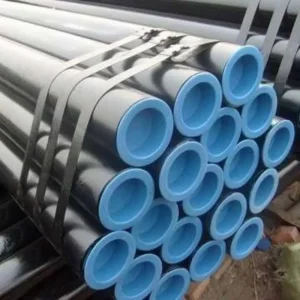
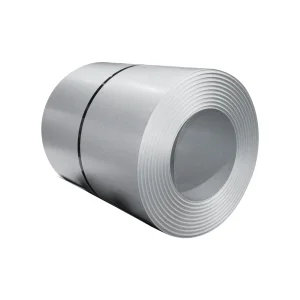
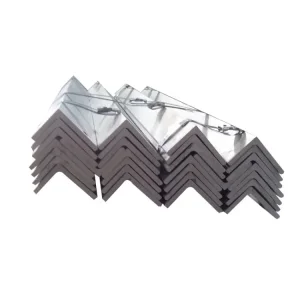
Browse our complete portfolio of seamless carbon steel pipes, stainless plates, electrical silicon steel coils, and galvalume roofing sheets.