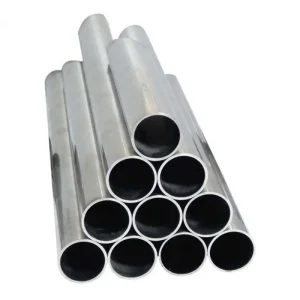
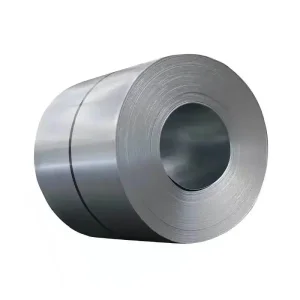
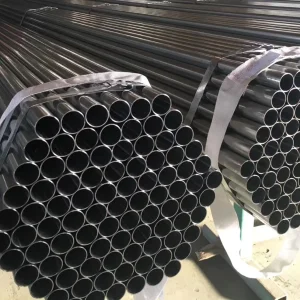
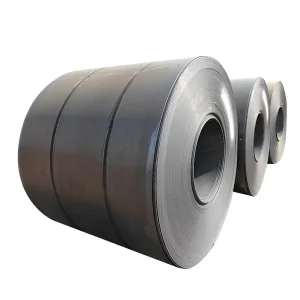
Core Galvanized & Structural Steel Portfolio
Mill-direct structural shapes, coated coils, and precision tubing tested to ASTM, EN, and JIS standards.
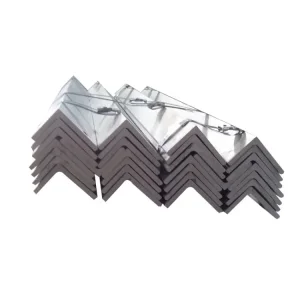
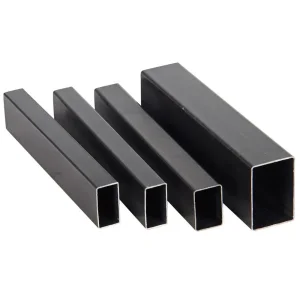
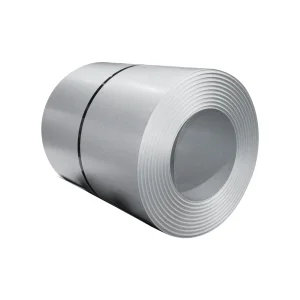
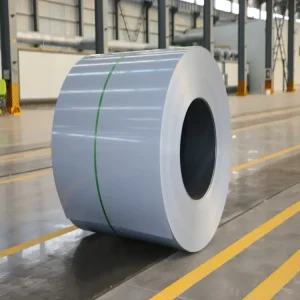
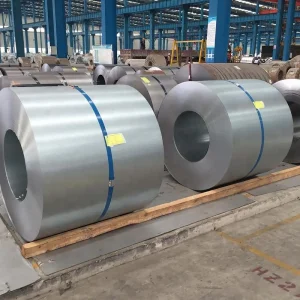
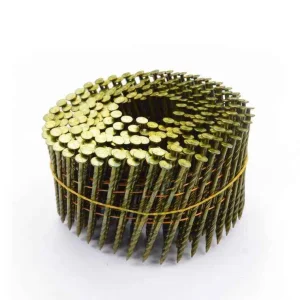
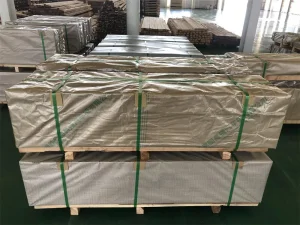
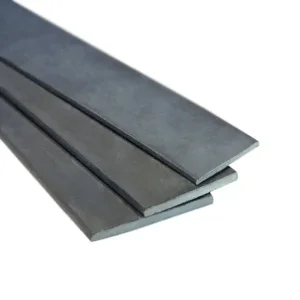
1. Fundamental Corrosion Protection Mechanisms: Electro Galvanized (EG) vs Hot Dipped Galvanized (HDG)
Selecting the optimal zinc-coated steel grade for structural, automotive, or industrial applications requires an engineered understanding of corrosion chemistry and mechanical metallurgy. Zinc protection relies on two key principles: barrier protection (isolating steel from moisture and ambient oxygen) and sacrificial cathodic protection (zinc corroding preferentially over iron due to its lower electrochemical potential, -0.76V vs. -0.44V SHE).
However, the application process fundamentally dictates the crystalline morphology, bonding strength, coating density, and overall lifecycle of the finished steel product.
Electro-Galvanized (EG) Process
Electro-galvanizing (ASTM A879 / JIS G3313) is an electro-deposition process. Cold-rolled steel strip passes through an aqueous electrolyte bath containing zinc ions ($Zn^{2+}$). An electric current deposits pure, fine-grained zinc onto the steel surface layer by layer at ambient temperatures.
- Coating Microstructure: 100% pure zinc, single uniform phase, zero spangle.
- Typical Coating Mass: 10 $g/m^2$ to 90 $g/m^2$ (equivalent to 1.5 $\mu m$ to 12 $\mu m$ per side).
- Thermal Impact: Zero heat-affected zone (HAZ), eliminating structural distortion or loss of temper.
- Key Grades: SECC, SECD, SECE, Electro-zinc coated sheet.
Hot-Dipped Galvanized (HDG) Process
Hot-dip galvanizing (ASTM A653 / EN 10346 / ASTM A123) involves immersing thoroughly cleaned steel into molten zinc at approximately 450°C (842°F). A metallurgical reaction forms multiple zinc-iron intermetallic alloy layers capped with an outer layer of pure zinc.
- Coating Microstructure: Metallurgically bonded intermetallic phases ($\Gamma$, $\delta$, $\zeta$) with an outer $\eta$ (pure Zn) layer.
- Typical Coating Mass: 100 $g/m^2$ to 600 $g/m^2$ (Z100 to Z600 / HDG 15 $\mu m$ to 85+ $\mu m$).
- Bond Strength: Greater than 2500 psi mechanical adhesion due to atomic diffusion.
- Key Grades: DX51D+Z, SGCC, Structural Steel A653 CS/SS.
2. Technical Performance Benchmark Matrix
The choice between EG and HDG dictates long-term performance, weldability, surface finishing options, and total cost of ownership (TCO). Below is an engineering benchmark comparison across critical parameters:
| Performance Attribute | Electro-Galvanized (EG) | Hot-Dipped Galvanized (HDG) | Engineering Impact & Selection Strategy |
|---|---|---|---|
| Coating Thickness Range | 1.5 $\mu m$ – 12 $\mu m$ (Ultra-Thin) | 15 $\mu m$ – 100+ $\mu m$ (Heavy-Duty) | HDG provides up to 10x thicker protection for outdoor exposures. |
| Salt Spray Resistance (ASTM B117) | 72 to 240 hours until red rust | 500 to 2,000+ hours until red rust | HDG is mandatory for severe atmospheric (C3-C5) environments. |
| Surface Finish & Flatness | Mirror-smooth, zero spangle, ultra-flat | Regular, minimized, or zero spangle with mild texture | EG is optimal for high-class automotive skin and electronic enclosures. |
| Formability & Deep Drawing | Exceptional; coating does not flake or peel | Good; heavy alloy layers may flake under severe bend radii | EG (SECD/SECE) is superior for complex deep-drawn stamping. |
| Paintability & Adhesion | Superior base for e-coating, powder coating, or liquid paint | Requires chromate conversion, passivating, or profiling prior to paint | EG eliminates pre-paint surface etching procedures. |
| Weldability (Resistance / Spot) | Excellent; low zinc vapor reduces electrode degradation | Moderate; thicker zinc causes tip fouling and splatter | EG optimizes high-speed robotic spot welding assembly lines. |
Global Steel Export & Production Capacity
Driving global industrial supply chains with high-volume, precision-controlled galvanizing infrastructure.
3. Why Sourcing Galvanized Steel from Premier Chinese Manufacturers Drives Supply Chain Edge
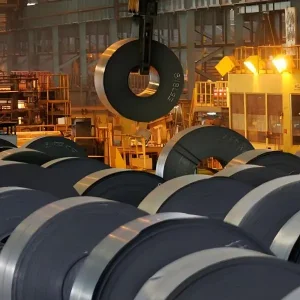
China accounts for over 50% of global crude steel output, but its true competitive advantage lies in the advanced technological integration of its continuous galvanizing lines (CGL) and electro-galvanizing lines (EGL). Enterprise buyers sourcing from leading Chinese suppliers like SMSTEEL (Step Million Steel) gain distinct structural benefits:
1. Fully Integrated Supply Chain Ecosystem
Key steel clusters in Tianjin and Tangshan integrate iron ore reduction, hot-rolling mills, cold-rolling mills, and galvanizing lines within tight geographical radiuses. This proximity eliminates intermediate transport friction, cuts production lead times by 30%, and drastically reduces carbon intensity.
2. Automated Inline Thickness & Surface Quality Control
Modern Chinese mills utilize automated X-ray fluorescence (XRF) and laser-gauge coat-weight feedback systems. These real-time, closed-loop controllers maintain zinc coating weight tolerances to within $\pm 2 g/m^2$, eliminating thin-spot risks and ensuring strict compliance with ASTM A653 and EN 10346 specifications.
3. Cost Optimization Without Quality Sacrifice
High-capacity operational scale, combined with localized energy optimization and direct port access (e.g., Tianjin Port), yields competitive per-ton pricing. Procurement managers capture higher profit margins while securing Tier-1 certified raw steel.
4. Global Macro Trends & Metallurgical Breakthroughs
The global surface-coated steel industry is undergoing a major technological transformation driven by strict decarbonization goals and aggressive durability requirements in renewable energy infrastructure.
Rise of Zinc-Aluminum-Magnesium (ZAM) Coatings
While HDG remains the traditional benchmark for outdoor structural protection, Zinc-Aluminum-Magnesium (ZAM / ZM) coated steel (such as ZM275 coated sheet) is reshaping high-corrosion markets. Containing typically 1.5% to 3% Magnesium and 3% to 6% Aluminum, ZAM forms a dense, self-healing protective film of simonkolleite [$Zn_5(OH)_8Cl_2\cdot H_2O$] at cut edges and scratched surfaces. ZAM offers 2x to 5x higher corrosion resistance than standard HDG at equivalent coating thicknesses.
Decarbonization in Galvanized Steel Production
Leading Chinese steelmakers are investing heavily in Electric Arc Furnaces (EAF) powered by green solar and wind power. Additionally, hydrogen-based direct reduced iron (DRI) processes are replacing carbon-heavy blast furnaces. Green galvanized steel coils with validated Environmental Product Declarations (EPDs) are now accessible for EU Carbon Border Adjustment Mechanism (CBAM) compliance.
5. Sector-Specific Localized Application Scenarios
Automotive Body-in-White & Precision Parts
Recommended Spec: Electro-Galvanized SECC / SECD / SECE (20/20 Coating).
Automotive body panels, door interiors, and electronic brackets demand zero surface defect, smooth paintability, and precise dimensional stamping capability. EG eliminates surface orange-peel effects and ensures flawless paint bonding.
Solar PV Mounting Structures & Highway Guardrails
Recommended Spec: Hot-Dipped Galvanized Steel Angle / C-Purline / ZAM Sheet (Z275-Z600).
Ground-mounted solar arrays in desert, coastal, or humid agricultural zones demand 25+ years of zero-maintenance structural integrity. Heavy HDG or ZAM provides sacrificial edge-healing protection against sand abrasion and environmental weathering.
HVAC Ducts, Cleanrooms & Server Cabinets
Recommended Spec: Zero Spangle Hot-Dip GI Coil or EG Sheet.
Indoor environmental control equipment requires smooth surfaces that prevent particulate entrapment and allow straightforward cleaning or powder coating. Zero spangle GI coil combines cost efficiency with a clean aesthetic.
Agricultural Greenhouses & Underground Piping
Recommended Spec: High-Zinc Hot-Dip Galvanized Pipes (ASTM A53 / BS 1387).
Agricultural framing experiences constant exposure to fertilizers, organic acids, and condensation. Immersing welded steel pipes in molten zinc coats both internal and external walls for long-lasting corrosion protection.
6. Total Cost of Ownership (TCO) & Procurement Framework
Industrial procurement directors must evaluate surface-coated steel through a Total Cost of Ownership (TCO) model rather than unit purchase cost alone:
$TCO = C_{initial} + C_{fabrication} + C_{coating\_repair} + C_{maintenance} - V_{salvage}$
- When EG is cheaper in TCO: In indoor, high-precision assembly lines where painting, welding speed, stamping yield, and zero-defect rejection rates dominate manufacturing costs.
- When HDG is cheaper in TCO: In outdoor infrastructure where field recoating or structural maintenance is prohibitively expensive or physically impossible over a 20 to 50-year service life.
To verify material quality prior to dispatch, global buyers should request the following mandatory testing documentation from suppliers:
- Mill Test Certificate (MTC) to EN 10204 3.1: Verifying chemical ladle analysis and mechanical tensile/yield properties.
- Coating Mass Determination (ASTM A90 / ISO 1460): Triple spot test verifying $g/m^2$ or micron thickness.
- Salt Spray Testing (ASTM B117): Accelerated corrosion verification in 5% neutral salt fog environments.
Engineering & Procurement FAQ
Expert answers to common questions regarding electro-galvanized vs hot-dipped galvanized steel sourcing.
Coiled Steel, Pipe, Plate & Industrial Components
Complete your project procurement with mill-direct carbon, stainless, and specialized alloy steel products.