
Featured Mill Direct Offerings (Part I)
ISO 9001 & IATF 16949 Certified Production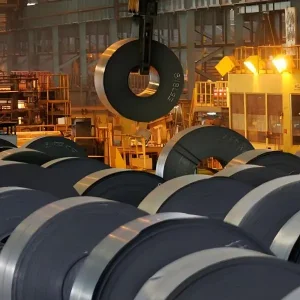
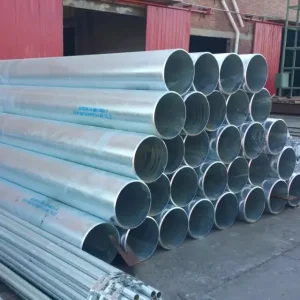

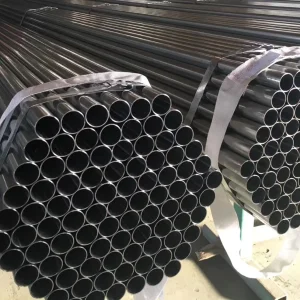
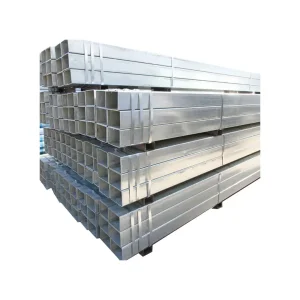
Cold rolled drawing steel represents the pinnacle of flat-rolled carbon steel metallurgy, specifically designed to withstand extreme plastic deformation without experiencing wall thinning, micro-cracking, or necking. Sourced from high-purity, vacuum-degassed liquid steel and processed through computer-controlled continuous cold reduction mills, these steels are engineered for applications demanding extraordinary formability, precise dimensional tolerances, and flawless surface topographies.
The Lankford parameter ($r$-value) quantifies the resistance to width-wise and thickness-wise thinning during draw operations. Higher mean $r$-values ($r_m > 1.8$ to $2.2$) ensure uniform metal flow into complex die cavities, preventing localized necking under deep-draw conditions.
The strain hardening exponent ($n$-value) governs the work-hardening capability and stretchability of cold-rolled sheet. High $n$-values ($n > 0.20$) distribute strain evenly across stretch-dominated zones, critical for domed shapes and intricate pressings.
By micro-alloying with Titanium (Ti) and Niobium (Nb), free interstitial carbon and nitrogen atoms are fully precipitated. This eliminates Lüders elongation (stretcher strains) and provides non-aging properties during extended storage.
Navigating international grade equivalencies is essential for global procurement engineering. Our cold-rolled drawing steel products conform to major international standards including European (EN 10130), Japanese (JIS G3141), American (ASTM A1008), and German (DIN 1623) frameworks.
| EN 10130 Grade | JIS G3141 Equivalent | ASTM A1008 Equivalent | Yield Strength $R_e$ (MPa) | Tensile Strength $R_m$ (MPa) | Elongation $A_{80}$ (%) | Drawability Level |
|---|---|---|---|---|---|---|
| DC01 | SPCC | CS Type A/B/C | 140 – 280 | 270 – 410 | ≥ 28 | Commercial Quality / Light Bending |
| DC03 | SPCD | DS Type A/B | 140 – 240 | 270 – 370 | ≥ 34 | Standard Drawing Grade |
| DC04 | SPCE | DDS (Deep Drawing) | 140 – 210 | 270 – 350 | ≥ 38 | Deep Drawing (Complex Shells) |
| DC05 | SPCF | EDDS (Extra Deep Draw) | 140 – 180 | 270 – 330 | ≥ 40 | Extra Deep Drawing (IF Steel) |
| DC06 | SPCG | EDDS + Super Draw | 120 – 170 | 270 – 330 | ≥ 41 | Super Deep Drawing / Complex BIW |
| DC07 | Specialized IF | Ultra EDDS | 100 – 150 | 250 – 310 | ≥ 44 | Extreme Geometric Draw Depth |
Cold-rolled drawing steel coil and sheet are converted into critical components across localized manufacturing hubs worldwide. Understanding localized press conditions, tooling setups, and ambient atmospheric factors guarantees seamless material integration.
In Tier-1 automotive assembly plants across North America, Europe, and East Asia, DC04 and DC06 grades form complex body side outer panels, wheel arches, inner door frames, oil pans, and fuel tank shells. High plastic strain ratios ($r_m > 2.0$) allow press shops to achieve deep draw depths in a single press stroke without multi-stage intermediate annealing, drastically cutting cycle times.
In consumer appliance clusters across Southeast Asia and Latin America, cold-rolled sheet steel (SPCD, SPCE) is stamped into seamless washing machine tubs, refrigerator door skins, microwave oven cavities, and compressor covers. Excellent surface roughness control ($Ra = 0.6 – 1.2\ \mu\text{m}$) ensures superior paint adhesion, powder coating finish, and enamel bonding.
Hermetic HVAC compressors require cylindrical shells deep-drawn from extra-thick cold-rolled steel coil. Clean internal grain structures eliminate pinhole leaks under high hydrostatic operating pressures, ensuring long-term containment of modern eco-refrigerants.
Precision deep-drawn housings for spin-on automotive oil filters, industrial capacitor cans, and shielded electronic enclosures rely on strict gauge thickness uniformity ($\pm 0.02\text{ mm}$) to maintain consistent punch clearances and extend die tooling life.
The cold rolling industry is undergoing a technological transformation driven by carbon neutrality targets, AI-guided rolling mill automation, and advanced surface texturing methodologies.
Transitioning from blast furnace routes to Direct Reduced Iron (DRI) fueled by green hydrogen significantly reduces carbon footprints while lowering trace residual elements (Cu, Ni, Cr), further elevating cold-formability and deep-drawing ductility.
Electron Beam Texturing (EBT) and Electro-Discharge Texturing (EDT) roll surfaces impart deterministic, isotropic topography to cold-rolled sheet, maximizing lubricant film retention during extreme press operations and eliminating galling.
Integrated closed-loop shape meters and Automatic Flatness Control (AFC) systems actively adjust roll bending and multi-zone cooling, eliminating center buckles, wavy edges, and residual stress gradients prior to customer slitting.
China’s cold-rolled steel manufacturing sector, particularly centered around the Bohai Rim and Tianjin industrial corridor, offers unprecedented supply chain synergy. From raw liquid iron refining to ultra-modern continuous tandem cold rolling mills, this integrated ecosystem guarantees stability, scalability, and structural cost advantages for international buyers.
Direct proximity to Tianjin Xingang Port reduces inland transit freight, risk of transit rust, and port loading delays, enabling rapid vessel chartering for global bulk or containerized export shipments.
In-house iron ore sintering, BOF converter refining, ladle degasification, and continuous casting eliminate intermediary markups, giving end-users direct mill pricing and uncompromised chemical purity.
Automated continuous annealing lines (CAL) maintain mill-wide temperature uniformity within $\pm 2^\circ\text{C}$, yielding consistent mechanical properties across thousands of metric tons per order.
Deploying cold-rolled steel coils overseas requires robust quality management protocols, comprehensive certification, and protective sea-freight packaging to prevent atmospheric corrosion, edge damage, and coil slumping during ocean transit.
Every master coil is tracked via unique heat numbers and supplied with EN 10204 3.1 Mill Test Certificates detailing full ladle chemical analysis (C, Mn, P, S, Si, Al, Ti, Nb), tensile test results ($R_e, R_m, A_{80}$), mean plastic strain ratio ($r_m$), strain hardening exponent ($n_m$), surface roughness ($Ra$), and Erichsen cupping test values.
To counter ocean humidity and salt spray, coils are coated with electrostatic non-drying rust-preventative oil ($1.0 – 2.5\text{ g/m}^2$), wrapped in Volatile Corrosion Inhibitor (VCI) anti-rust film, shielded with heavy-duty galvanized steel outer corner protectors, and bound with high-tensile radial and circumferential steel strapping on wooden pallets.
Featured Mill Direct Offerings (Part II)
Custom Slitting & Cut-to-Length Available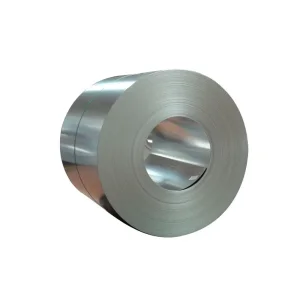



Technical queries frequently raised by stamping engineers, metallurgists, and industrial procurement managers regarding cold-rolled drawing steel performance.
How do $r$-value and $n$-value directly impact press shop scrap rates during deep drawing?
What causes "earing" or "orange peel" in deep-drawn parts and how is it prevented at the mill?
What is the critical shelf-life before Lüders lines (stretcher strains) re-emerge in aluminum-killed cold-rolled steel?
Which surface finish ($Ra$) should be specified for parts undergoing subsequent painting versus electroplating?
How does skin-pass rolling (temper rolling) modify mechanical properties?
Can cold-rolled drawing steel be welded directly to structural high-strength steel?
Ready to Optimize Your Stamping Yield & Reduce Scrap Rates?
Consult with our senior metallurgical engineering team to match your press tooling parameters with the ideal cold-rolled drawing steel grade, slit width, and surface oiling specification.