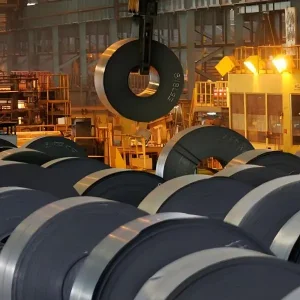
Featured Industrial & Electrical Steel Products
Direct factory supply of precision cold-rolled electrical steel, galvanized coils, and structural profiles produced to international ISO, ASTM, and IEC standards.

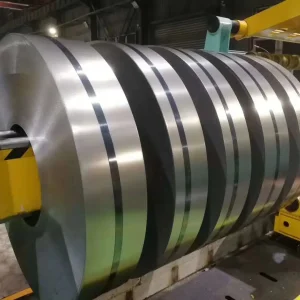
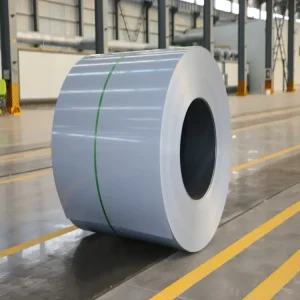
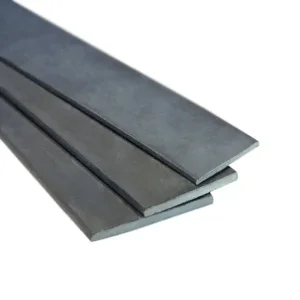

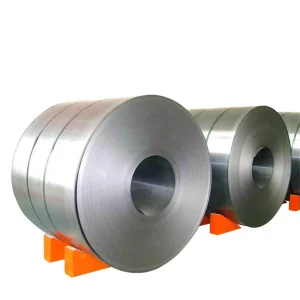

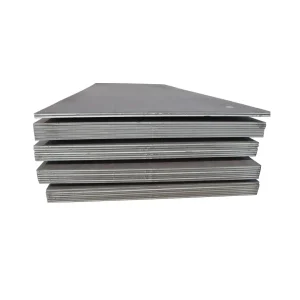
Understanding 23/80 CRGO Electrical Steel Metallurgy
An in-depth metallurgical analysis of nominal 0.23mm gauge Cold-Rolled Grain-Oriented silicon steel engineered for ultra-low iron loss, superior magnetic induction, and high stacking factor core assemblies.
Industrial Specification Summary: "23/80" designates a premium magnetic grade of cold-rolled grain-oriented electrical steel characterized by a nominal thickness of 0.23 mm (0.009 inches) and a maximum specific core loss of approximately 0.80 W/kg at 1.7 Tesla magnetic induction at 50 Hz. Equivalent international designations include 23Q080, 23M080, M080-23G, and NV23-80.
Cold-Rolled Grain-Oriented (CRGO) steel represents the pinnacle of soft magnetic material engineering. Within modern electrical distribution networks, power transformers, and reactor inductors, energy loss within core materials accounts for a substantial percentage of continuous operational expenditure. To minimize these losses, steel mills utilize precise thermo-mechanical processing to align iron-silicon alloy crystals along a single favorable crystallographic direction—specifically the Goss Texture (110)[001] orientation.
The Physics of Iron Loss Reduction in 0.23mm Gauges
Total core loss ($P_t$) in transformer core laminations is mathematically dissected into three distinct mechanisms: Hysteresis Loss ($P_h$), Classical Eddy Current Loss ($P_e$), and Excess or Anomalous Loss ($P_a$):
P_t = P_h + P_e + P_a = k_h \cdot f \cdot B_m^n + \frac{\pi^2 \cdot d^2 \cdot f^2 \cdot B_m^2}{6 \cdot \rho \cdot \delta} + P_a
Where d represents lamination thickness, f represents frequency, B_m represents peak magnetic field intensity, ρ represents electrical resistivity, and δ represents material density. As demonstrated by the classic eddy current equation, $P_e$ scales directly with the square of the sheet thickness ($d^2$). Reducing the steel gauge from 0.30mm or 0.27mm down to 0.23mm yields an immediate mathematical reduction in classical eddy current losses of up to 27% to 35% under standard grid operating conditions.
Goss Texture Grain Orientation
Silicon-iron alloys with 3.1% to 3.45% Si content undergo secondary recrystallization at temperatures exceeding 1150°C. This forces body-centered cubic (BCC) iron crystals to align so that their easy magnetization axis [001] is parallel to the rolling direction, lowering magnetic reluctance.
Laser Domain Refinement
Top-tier 23/80 factories employ non-contact laser scribing or plasma jet treatments across the strip surface. This introduces localized thermal stresses that divide 180° magnetic domains into finer sub-domains, dramatically suppressing anomalous loss ($P_a$).
C-5 Insulation Coating
Coated with an inorganic glass-like phosphate coating (AISI C-5 type), 23/80 sheets exhibit exceptionally high surface insulation resistance (> 100 Ω·cm² per lamination), resisting interlaminar eddy currents and oil degradation in submerged core designs.
23/80 Technical Specification & Grade Comparison Matrix
Direct comparison of magnetic, mechanical, and physical parameters between 23/80 CRGO and standard global electrical steel grades (IEC 60404-8-7 and ASTM A876 standards).
| Steel Grade (Standard) | Nominal Thickness | Max Core Loss P1.7/50Hz (W/kg) | Max Core Loss P1.5/50Hz (W/kg) | Min Polarization B800 (Tesla) | Typical Stacking Factor (%) | Primary Processing Method |
|---|---|---|---|---|---|---|
| 23/80 CRGO (High-Permeability) | 0.23 mm (0.009 in) | 0.75 - 0.80 W/kg | 0.52 - 0.56 W/kg | 1.89 - 1.92 T | ≥ 96.5% | Laser Scribing + Double Cold Rolling |
| 23Q090 / 23M090 | 0.23 mm (0.009 in) | 0.85 - 0.90 W/kg | 0.58 - 0.62 W/kg | 1.87 - 1.89 T | ≥ 96.5% | Standard High-Permeability Cold Rolling |
| 27/90 CRGO (Standard Grade) | 0.27 mm (0.011 in) | 0.88 - 0.92 W/kg | 0.61 - 0.65 W/kg | 1.86 - 1.88 T | ≥ 97.0% | Single/Double Cold Rolling |
| 30/100 CRGO (Conventional) | 0.30 mm (0.012 in) | 0.98 - 1.05 W/kg | 0.68 - 0.73 W/kg | 1.85 - 1.87 T | ≥ 97.2% | Conventional Grain-Oriented Rolling |
| CRNGO 50W290 (Non-Oriented) | 0.50 mm (0.020 in) | 2.70 - 2.90 W/kg | 1.25 - 1.35 W/kg | 1.60 - 1.65 T | ≥ 98.0% | Isotropic Cold Rolling (Motors) |
Density & Specific Heat
Density: 7.65 g/cm³. Specific heat capacity: 490 J/(kg·K) at 20°C. High silicon content (3.2% Si) increases resistivity to ~48 μΩ·cm, suppressing eddy paths.
Mechanical Yield & Tensile Strength
Yield Strength (0.2% offset): 320 - 360 MPa along rolling direction. Tensile Strength: 380 - 430 MPa. Hardness: ~185 HV10. Engineered for high-speed precision stamping and slitting.
B-H Hysteresis Curve Stability
Exhibits extremely steep magnetization curves. Saturation polarization reaches 2.03 Tesla, allowing transformer designers to push flux density operating points to 1.68–1.72 Tesla without saturation noise.
Global Procurement Demand for 23/80 CRGO Electrical Steel
Analyzing macroeconomic drivers, energy transition mandates, and corporate procurement challenges across key regional markets.
The global transition toward decarbonized power generation, renewable energy integration, and modern smart grids has driven unprecedented procurement demand for high-efficiency transformer cores. Energy regulatory frameworks—such as the European Union’s Ecodesign Tier 2 (EN 50708), the United States DOE 2016 / 2027 Efficiency Standards, and China's GB 20052-2020 Level 1 Efficiency Standard—have made older 0.30mm and 0.27mm CRGO grades obsolete for Tier-1 power utility bids.
Grid Modernization & HVDC Corridors
Ultra-High Voltage (UHV) AC and DC transmission networks require massive step-up transformers (500kV to 1100kV). Procurement teams specify 23/80 or laser-refined 0.23mm grades to prevent overheating during continuous peak load cycles.
Renewable Energy Sub-Stations
Solar photovoltaic farm inverters and offshore wind turbines utilize step-up distribution transformers subjected to high harmonic distortion. The low hysteresis loss of 23/80 protects transformer cores against stray losses caused by 5th and 7th order harmonics.
EV Charging Super-Hub Networks
High-power DC fast-charging plaza installations demand compact, low-noise transformers located in municipal urban areas. 23/80 steel’s laser-refined magnetostriction reduction significantly suppresses operating acoustic noise (< 45 dB).
Critical Procurement Parameters for OEM Transformer Manufacturers
When enterprise buyers submit Requests for Quotations (RFQs) to 23/80 CRGO factories, technical evaluations focus on four unyielding quality metrics:
- Slitting Width Tolerance & Burr Control: Precise longitudinal slitting is mandatory. Burr heights must strictly remain under 0.02 mm (20 microns) to eliminate short circuits between stacked laminations.
- Coating Adhesion & Oil Compatibility: The C-5 phosphate insulation must withstand 180°C hot oil immersion tests without peeling, cracking, or reacting with synthetic ester or mineral oils.
- Stress-Relief Annealing Capability: Mechanical stresses introduced during slitting and shearing degrade the magnetic domain structure. Buyers verify whether the 23/80 material retains its low loss guarantee after standard annealing (780°C–820°C in 90% N2 / 10% H2 dry atmosphere).
- Epstein Frame vs. Single Sheet Test Calibration: Mill Test Certificates (MTCs) must explicitly validate whether core loss values are verified via standard 25cm Epstein Frame testing (IEC 60404-2) or Single Sheet Testers (SST, IEC 60404-3).
The Manufacturing Process: From Molten Steel to 23/80 Coil
Step-by-step technological journey illustrating how leading electrical steel factories process high-purity iron into precision 0.23mm laser-refined coils.
Primary Steelmaking & Vacuum RH Degassing
Ultra-clean steel melt preparation in basic oxygen furnaces (BOF) followed by Ruhrstahl-Heraeus (RH) vacuum degassing. Carbon content is lowered to < 0.005%, sulfur to < 0.003%, and nitrogen to < 0.006%, while precisely alloying 3.15% to 3.35% silicon.
Continuous Slab Casting & High-Temperature Reheating
Slabs (200mm–250mm thick) are continuously cast and reheated in specialized induction furnaces above 1380°C to dissolve manganese sulfide (MnS) and aluminum nitride (AlN) inhibitors necessary for controlling secondary grain growth.
Hot Rolling & Two-Stage Cold Rolling
Hot rolling reduces slabs to 2.0mm–2.5mm bands. After pickling, the material undergoes a two-stage cold rolling process with intermediate decarburization annealing, reducing the sheet down to its final target thickness of 0.23 mm ± 0.01 mm.
High-Temperature Box Annealing (Secondary Recrystallization)
Coils are subjected to 1200°C batch annealing in a 100% pure hydrogen atmosphere for over 20 hours. This triggers secondary recrystallization, consuming misoriented grains and leaving a near-perfect (110)[001] Goss crystal alignment.
Laser Scribing & Continuous Coating Line
The strip passes through high-speed fiber laser scribing units that create microscopic transverse domain boundary lines spaced 3mm to 6mm apart. Finally, an inorganic magnesium phosphate tension coating (C-5) is applied and thermally cured.
Macro Industry Solutions: Transformer Core Implementations
How engineering teams integrate 23/80 CRGO into stacked, wound, and distributed-gap transformer core topologies.
1. Step-Lap Mitred Stacked Transformer Cores
For large power transformers (> 10 MVA), 23/80 sheets are cut into precision trapezoidal laminations on automated CNC shear lines. Utilizing a 45° step-lap mitred joint design with 5 to 7 steps per lap group dramatically minimizes flux distortion at core joints, allowing the core to achieve the full low-loss benefit of the 0.80 W/kg raw material rating.
2. Wound Cores (Unicore & Toroidal Assemblies)
Single-phase and three-phase distribution transformers frequently utilize continuously wound cores. The exceptional ductility of 23/80 cold-rolled strip allows tight bending radii without coating delamination. Post-winding stress-relief annealing restores full magnetic permeability ($B_{800} \ge 1.90\text{ T}$).
3. High-Frequency Shunt & Series Reactors
In high-voltage VAR compensation and solar inverter output filters operating between 100 Hz and 400 Hz, standard 0.30mm steel suffers severe thermal runaway from eddy currents. 23/80 provides a cost-effective alternative to expensive nickel alloys or amorphous ribbons while maintaining high mechanical structural integrity.
Mill Quality Control, ISO Compliance & Export Logistics
Ensuring total supply chain transparency, international accreditation, and seaworthy protection for worldwide cargo export.
Sourcing CRGO silicon steel coils across international borders requires zero tolerance for chemical or physical defects. Top-tier Chinese manufacturers and export suppliers operate integrated Quality Management Systems compliant with ISO 9001:2015, Environmental Management ISO 14001:2015, and Occupational Health ISO 45001:2018.
Mill Test Certificates (EN 10204 3.1)
Every production coil is accompanied by an official EN 10204 3.1 MTC detailing exact heat chemical composition, measured 50Hz/60Hz loss values, B800 polarization, coating thickness, and edge camber tolerances.
Third-Party Inspection (SGS / BV)
Factory-direct shipments support buyer-nominated third-party verification by SGS, Bureau Veritas, or Intertek for independent Epstein frame magnetic testing and dimensional verification prior to port loading.
Heavy-Duty Seaworthy Export Packaging
CRGO coils are highly susceptible to moisture oxidation. Coils are wrapped in Volatile Corrosion Inhibitor (VCI) anti-rust paper, sealed in galvanized steel outer casings, mounted on fumigated wooden pallets, and secured with heavy steel radial straps.
Frequently Asked Questions (FAQ)
Detailed engineering responses to technical and commercial questions surrounding 23/80 CRGO procurement, testing, and application.
What does the designation "23/80" represent in electrical steel specifications?
In electrical steel nomenclature, "23/80" indicates a cold-rolled grain-oriented (CRGO) steel product with a nominal sheet thickness of 0.23 mm (0.009 inches) and a maximum guaranteed core loss of 0.80 Watts per kilogram (W/kg) measured at a magnetic induction of 1.7 Tesla at 50 Hz. Depending on the mill standard, equivalent international designations include 23Q080 (China GB standard), 23M080, M080-23G (European EN 10107 standard), and 023-NV-80.
How does 0.23mm 23/80 compare to 0.27mm (27/90) or 0.30mm (30/100) CRGO grades?
Reducing lamination thickness from 0.27mm or 0.30mm down to 0.23mm directly lowers classical eddy current losses by 25% to 35%. While 0.30mm CRGO typically exhibits losses around 0.98–1.05 W/kg at 1.7T/50Hz, 23/80 achieves ≤ 0.80 W/kg. This allows transformer manufacturers to design smaller, lighter transformer cores that comply with strict government energy-efficiency mandates (such as EU Ecodesign Tier 2 or US DOE standards) without increasing physical transformer volume.
Does laser domain scribing on 23/80 steel survive stress-relief annealing?
It depends on whether the material underwent thermal-durable or non-thermal-durable laser scribing. Standard laser scribing introduces superficial thermal stresses that can be erased if the buyer anneals the material above 750°C. However, advanced heat-resistant laser domain refinement (employing mechanical micro-grooving or chemical etching prior to coating) permanently locks in sub-domain refinement, allowing laminations to undergo full stress-relief annealing (780°C–820°C) without losing their low core-loss property.
What is the recommended stress-relief annealing profile for 23/80 transformer core laminations?
To eliminate mechanical stresses introduced during slitting, punching, or shearing, laminations should be annealed in a continuous or batch furnace at a soak temperature of 780°C to 820°C for 2 to 4 hours. The furnace atmosphere should consist of dry nitrogen mixed with 5% to 10% hydrogen (dew point below -40°C) to prevent surface oxidation or carburization. Cooling rates must be controlled (< 50°C/hour down to 350°C) to prevent thermal distortion.
Why is the core stacking factor critical when purchasing 0.23mm electrical steel?
The stacking factor (or lamination factor) measures the solid magnetic steel volume percentage relative to the total physical core volume. Thinner gauges inherently require more laminations per centimeter of core height, increasing the total surface insulation volume. High-quality 23/80 CRGO features an ultra-thin, smooth C-5 insulation coating (~1.5 to 2.5 microns per side), maintaining an exceptional stacking factor of ≥ 96.5%, preventing physical core size inflation.
What are the standard slitting width and burr height tolerances for 23/80 master coils?
For precision slitting lines, width tolerances are maintained within ±0.10 mm for strip widths under 300mm, and ±0.15 mm for wider strips. Burr height is strictly controlled to ≤ 0.02 mm (20 μm). Excessive edge burrs create localized electrical short-circuits across laminations, generating high eddy currents and local hotspots that degrade the overall efficiency of the transformer core.
Complete Factory Direct Steel Supply
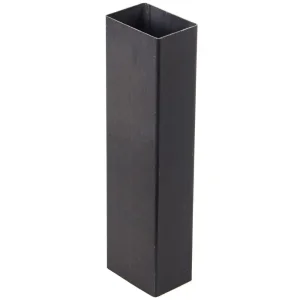
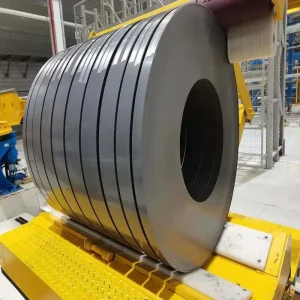
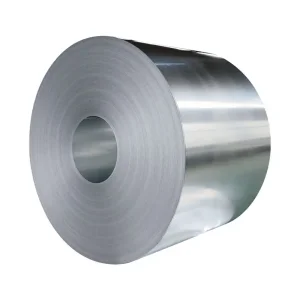
Browse our supplementary range of silicon steel coils, coated metal sheets, structural tubes, and custom industrial profiles manufactured for global export.