
Engineered Steel & Coated Metal Portfolio
Explore mill-direct high-precision steel products, custom-engineered for global automotive, structural, and packaging compliance.
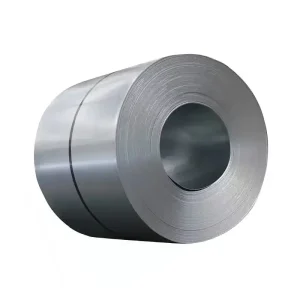
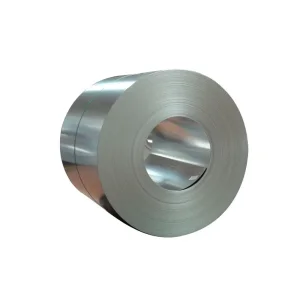
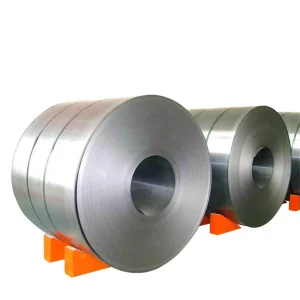
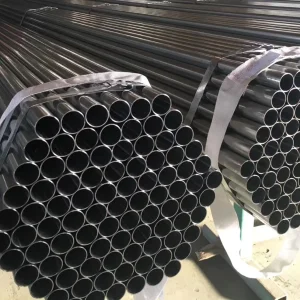
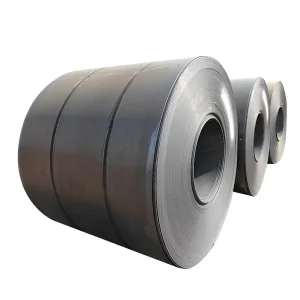
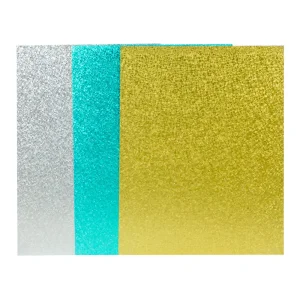
1.0mm Heavy-Gauge Electrolytic Tinplate (ETP): Engineering & Metallurgical Foundations
Analyzing the structural, chemical, and physical parameters of 1.0 tin plate for high-stress industrial containment and specialized manufacturing applications.
Heavy-Gauge Structural Integrity
Unlike standard thin-gauge tinplate (typically ranging from 0.15mm to 0.38mm) used in beverage cans, 1.0mm heavy-gauge tinplate sits at the premium threshold of cold-rolled metallic packaging steel. It offers superior yield strength (up to 550 MPa depending on temper grade) and exceptional resistance to internal bursting pressures and external mechanical impacts.
Advanced Electro-Tinning Kinetics
Our production lines utilize continuous high-velocity halogen or methanesulfonic acid (MSA) electro-tinning baths. This ensures a micro-uniform tin layer ($1.1/1.1\text{ g/m}^2$ to $11.2/11.2\text{ g/m}^2$) bonded to a low-carbon substrate steel, preventing intermetallic oxidation while providing flawless solderability and drawability.
Passivation & Chemical Barrier Tech
Equipped with state-of-the-art 311 chromate passivation or eco-friendly chromium-free passivation (titanium/zirconium oxide base), 1.0 tin plate exhibits remarkable barrier performance against sulfur staining, atmospheric corrosion, and organic chemical solvent degradation.
Global Market Dynamics & 1.0 Tin Plate Evolutionary Trends
Understanding shifting macroeconomic factors, regulatory shifts, and technical breakthroughs reshaping industrial tinplate procurement worldwide.
1. Transition Toward Sustainable & Infinite Recyclability
As global environmental directives like ESG compliance, REACH, and the EU Packaging and Packaging Waste Regulation (PPWR) intensify, industrial packaging buyers are actively replacing single-use synthetic plastics with metal substrates. 1.0mm tinplate stands out as a 100% infinitely recyclable material that retains structural integrity across endless recycling loops without quality loss.
2. Rise of High-Pressure Heavy Industrial Containment
Modern chemical processing, automotive fluid storage, and high-pressure aerosol technologies require containers that withstand rigorous hydrostatic pressure testing. Standard 0.25mm–0.50mm sheets fail under extreme burst parameters. The market is witnessing a steady CAGR growth (+6.4%) in demand for 1.0mm ETP sheets tailored for heavy chemical drums, explosion-proof aerosol cylinders, and hazardous material storage.
3. Chromium-Free Alternative Passivation Technologies
With stringent global restrictions on hexavalent chromium ($Cr^{6+}$), top-tier steel manufacturers are pioneering advanced electro-titanium passivation (ECCS/TFS) and organic passivation coatings. These breakthrough surface treatments deliver non-toxic, food-safe, and environmentally compliant anti-yellowing performance while maintaining paint adhesion for high-bake lacquers.
Global Enterprise Procurement Requirements & Metallurgical Matrix
Rigorous mechanical, chemical, and dimensional compliance standards demanded by multinational B2B purchasing leads and packaging engineers.
| Specification Parameter | Standard / Range | Technical Description & Procurement Relevance |
|---|---|---|
| Nominal Thickness | 1.00 mm ($\pm 0.005\text{ mm}$) | Ultra-tight cold-rolling tolerance via hydraulic automatic gauge control (AGC) systems. |
| International Standards | ASTM A623 / EN 10202 / JIS G3303 | Full international standard alignment ensuring global mechanical interchangeability. |
| Temper Grades | T1, T2, T3, T4, T5 & DR8, DR9 | Single Cold Reduced (SR) for high ductility/drawing; Double Cold Reduced (DR) for maximum strength. |
| Tin Coating Weight | 1.1/1.1 to 11.2/11.2 $\text{g/m}^2$ | Differential or equal coating thickness options customized to corrosive medium exposure. |
| Surface Finishes | Bright, Stone, Matte, Silver | Calculated surface roughness ($Ra$) optimized for varnish printing, lithography, or friction grip. |
| Passivation Methods | 311 Chromate / Chromium-Free (CF) | Protects against oxidation yellowing during high-temperature lacquer curing ($200^\circ\text{C}+$). |
| Oiling Type & Mass | DOS (Dioctyl Sebacate) / ATBC | Electrostatic oil deposition ($3\text{ to }10\text{ mg/m}^2$) ensuring plate lubricity without coating rejection. |
Key Buyer Intent: Deep-Drawability vs. Flange Crack Resistance
Enterprise buyers sourcing 1.0 tin plate evaluate two opposing mechanical properties: drawing ductility and flanging rigidity. Low-carbon aluminum-killed steel bases (Type MR or Type D) processed via continuous annealing (CA) provide clean isotropic grain structures. This eliminates plastic anisotropy, preventing earring defects during deep drawing and cracking during 90-degree flanging operations.
Surface Printability & Coating Adhesion
For decorative metal lithography, aerosol branding, and industrial lacquer adhesion, 1.0mm tinplate requires stringent surface tension control. Mill-applied electrostatic DOS oil must evaporate uniformly under baking cycles without leaving pinholes, fish-eyes, or carbon residues on the cured lacquer film.
China Industry 4.0: Supply Chain Resilience & Production Advantage
How digitalized steelworks, AI-driven metallurgical controls, and port infrastructure deliver unmatched cost-efficiency, lead-time consistency, and quality assurance.
Automated Continuous Annealing & Rolling
Our smart factories integrate multi-stand cold reduction mills paired with real-time X-ray thickness measurement devices. Automated computer feedback loops dynamically adjust roll gap pressures every millisecond, guaranteeing a flawless, consistent 1.0mm thickness across the entire coil length.
AI Vision Pinhole & Surface Defect Scanning
Employing high-speed CCD visual inspection algorithms, 100% of the tinplate sheet surface is scanned at speeds up to 600 meters per minute. Any micro-pinholes, scratch marks, tin inclusions, or uneven spangles are instantly tagged, isolated, and discarded automatically.
Fully Integrated Coastal Supply Chain Hubs
Situated near major deep-water ports (such as Tianjin Port), our direct supply chain bypasses intermediate logistics bottlenecks. Raw steel billet sourcing, cold rolling, electro-tinning, anti-rust VCI packaging, and container loading take place within a 50-kilometer industrial radius.
Localized Application Scenarios & Engineering Case Performance
From heavy chemical containment to high-end electronics shielding, explore where 1.0 tin plate delivers unyielding durability.
Industrial Chemical Drums & Solvent Tanks
Heavy chemical containers carrying paints, thinners, lubricants, and hazardous resins require rigid 1.0mm walls to withstand drop testing, stacking compression, and internal chemical vapor pressures without rupture.
Electronic EMI/RFI Shielding Enclosures
Due to tinplate's exceptional magnetic permeability and solderability, 1.0mm tin-coated sheets are widely stamped into electromagnetic interference (EMI) shields, server chassis covers, and transformer housing cans.
Automotive Oil Filters & Deep-Drawn Shells
Automotive spin-on oil filter housings undergo millions of pressure pulsation cycles. The 1.0mm thickness prevents fatigue failure while protecting the internal filter media against road debris impacts.
Specialized Industrial & Coated Steel Solutions
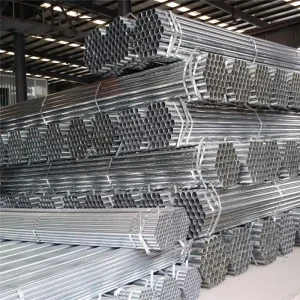
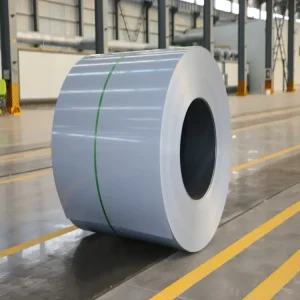
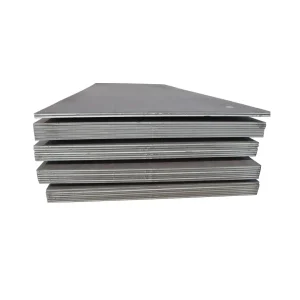
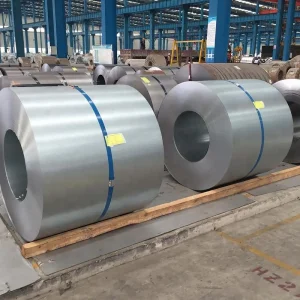
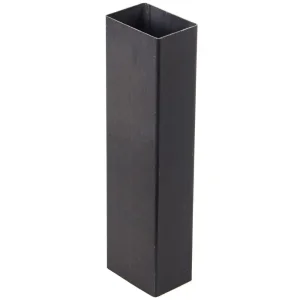
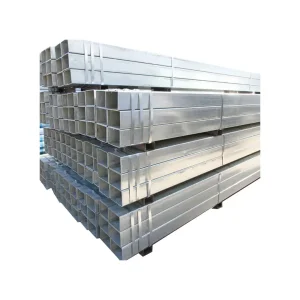
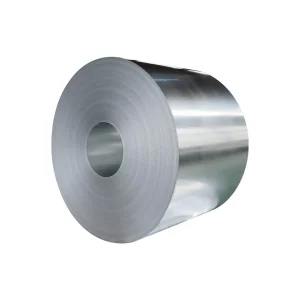
Complete your supply procurement with our certified galvanized, aluminized, structural, and profile steel series.
Quality Assurance Protocols & E-E-A-T Compliance Framework
Demonstrating verified metallurgical expertise, authoritative mill test reporting (MTC), and stringent third-party quality audits.
Mill Test Certificate (MTC) EN 10204 3.1 & 3.2 Integrity
Every shipment of 1.0 tin plate is accompanied by a full heat-traceable Mill Test Certificate detailing chemical ladle analysis (C, Mn, P, S, Si, Al balance), Rockwell 30T hardness values, tensile strength, yield point, and precise tin coating mass measurements certified in accordance with EN 10204 3.1 or independent 3.2 inspector verification.
Food Safety & Toxicological Certifications
Our packaging-grade tinplate conforms strictly with FDA 21 CFR 175.300, European Regulation (EC) No 1935/2004, and China National Food Safety Standard GB 4806.9. It guarantees zero heavy metal migration (lead, cadmium, arsenic) for direct food contact applications.
Seaworthy Anti-Rust VCI Export Packaging Standard
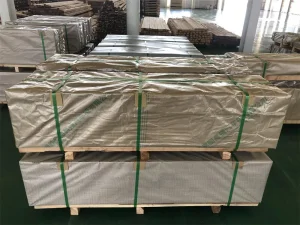
Recognizing the risks of ocean freight humidity and salt spray corrosion, all 1.0mm tinplate coils and cut sheets are wrapped with heavy-duty Vapor Corrosion Inhibitor (VCI) film, corrugated plastic inner lining, galvanized outer steel jackets, and mounted on heat-treated ISPM-15 wooden pallets secured by high-tensile steel banding.
Frequently Asked Questions: Sourcing 1.0 Tin Plate
Addressing key engineering, procurement, and logistical queries from global supply chain managers.