
Wire Rod is a basic input for products ranging from fasteners and wire mesh to automotive components. Yet a small difference in diameter, carbon content, or surface condition can affect downstream processing. Global buyers need more than a competitive price. They need a clear specification, a dependable mill, and a delivery plan that matches production needs.
These ten buying tips focus on practical checks. Confirm the grade and size tolerances before requesting quotations. Ask for recent mill test certificates, and compare their chemistry and mechanical properties with your requirements. Clarify coil weight, bundle protection, labeling, and loading arrangements. A neat sample is useful, but it cannot replace documented quality controls. Details matter.
Supplier assessment also deserves careful attention. Review production capacity, inspection procedures, traceability, and experience with export packaging. Discuss lead times in writing, including what happens if production or shipping shifts. Freight costs, port handling, and moisture exposure can change the real landed cost. Even experienced teams miss details. I have seen purchasing plans give too much weight to unit price and too little to storage conditions or unloading equipment. That is worth reconsidering.
No checklist removes every risk, and requirements vary by application and market. Use the guidance here to ask sharper questions, compare offers on consistent terms, and identify gaps before placing an order. When specifications remain unclear, resolve them with the supplier rather than making assumptions.
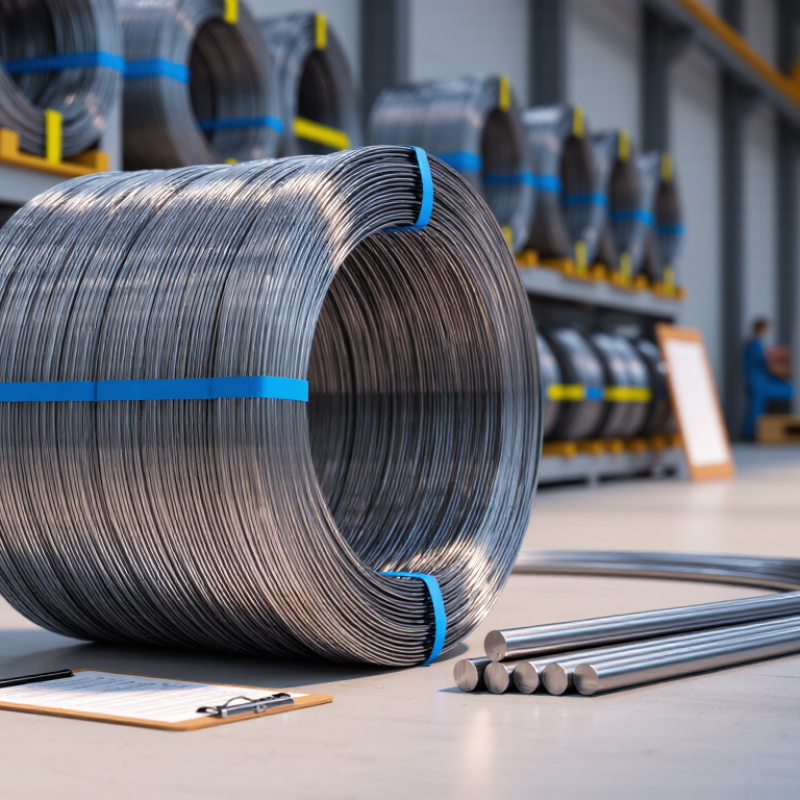
Wire rod grades describe more than strength. Low-carbon grades are commonly drawn into nails, mesh, binding wire, and general-purpose fasteners. Medium- and high-carbon grades suit demanding drawing, springs, and wire rope, where strength and fatigue performance matter. Alloy grades may support specialized mechanical or processing requirements. Small details matter.
Grade names are not interchangeable across standards. ASTM, EN, and JIS specifications can use different designations and testing rules, even for similar applications. Compare the full specification, not just the grade label. Check chemical composition, tensile properties, dimensional tolerances, and delivery condition against the forming process. A mill test certificate helps confirm the supplied heat’s reported results. Still, paperwork cannot reveal every handling or surface issue.
Application should guide the purchase. For deep drawing, consistent chemistry and clean surfaces help reduce breaks during processing. For welding wire, composition and cleanliness affect stable feeding and weld quality. Buyers sometimes focus on tensile strength and overlook scale, seams, or coil handling. That mismatch is avoidable, but not always. Confirm coil weight, packaging, and storage requirements too; a suitable grade can become difficult to process after poor handling. When standards differ, ask the supplier to identify the exact specification and any agreed deviations before ordering.
Wire rod should be matched to its next processing step, not just its quoted price. Confirm the nominal diameter and permitted tolerance against your drawing or die setup. A small variation can cause feeding trouble during high-speed drawing. Check coil weight and packaging too; a suitable rod is less useful if your handling equipment cannot manage the bundle.
Chemical composition must fit the intended grade and process. Carbon content affects strength and drawability, while manganese and other elements can influence performance. Requirements vary by application, so avoid relying on a generic “low-carbon” or “high-strength” label. Ask for the applicable specification and a mill test certificate showing the heat analysis. Then compare it with your purchase requirements. Details matter.
Mechanical properties deserve equal attention. Review tensile strength, ductility, and any specified surface condition, especially for fine drawing, welding, or fastener production. A rod that meets chemistry limits may still behave poorly if its strength or surface quality is unsuitable. I would also confirm heat-number traceability and agree on incoming inspection before shipment. A sample test helps, but it cannot replace clear acceptance criteria. Even careful buyers miss this. And specifications can be imperfect; record any exceptions before production begins.
Supplier capacity is more than a monthly tonnage figure. Ask how much wire rod is available for your diameter, grade, and delivery window. Compare that answer with recent production records and the mill’s stated output. Check whether equipment maintenance or peak-season demand could affect your order. A spreadsheet can look reassuring; actual schedules are less tidy.
Tips: Request sample inspection reports and the written quality procedure. Confirm how heat numbers link each coil to its test results. Ask what happens when a result falls outside specification. A clear answer matters. If possible, review a recent shipment’s records rather than relying only on a polished presentation.
Export experience affects more than paperwork. Ask for examples of shipments to your destination region, typical lead times, and the documents supplied with each order. Clarify who arranges packing, marking, and pre-shipment inspection, and how delays are reported. Check that quoted capacity includes the production slot, not just the mill’s theoretical maximum. One detail buyers sometimes miss: a supplier may meet the technical requirements but lack a dependable process for updates. That gap deserves a direct conversation.
Wire rod quotes are meaningful only when they describe the same product. Match steel grade, diameter, coil weight, tolerance, and inspection documents before comparing prices. A lower price may reflect a different specification, not a better deal. Small gaps matter.
Check the delivery basis and named port. FOB, CFR, and CIF assign freight and insurance costs differently, so do not compare them as if they were identical. Ask for the expected sailing date, transit time, and any destination charges. Port congestion, storage, and unloading can quietly increase the bill. Check the details.
Estimate total landed cost per tonne: product price, freight, insurance, import duties, customs fees, inland transport, and bank charges. Duty rates can depend on product classification and country of origin; confirm current requirements with a qualified customs broker. Include currency conversion and payment timing, too. In practice, estimates are rarely perfect. A spreadsheet may miss demurrage or a delayed delivery, so leave a reasonable contingency and record what each quote excludes. Compare the final delivered cost against your required delivery window, not price alone.
Illustrative cost breakdown by offer (USD per metric tonne)
A lower quoted price does not always mean a lower delivered cost. Compare freight, insurance, import duties, and inland handling alongside the product price. Values are illustrative assumptions, not current market quotes; actual duties and charges vary by product classification, origin, destination, and contract terms.
A signed sample is useful only when it matches the order. Record its steel grade, diameter, surface condition, coil weight, and packaging, then keep a sealed reference sample with dated photos. Small details matter. The World Steel Association’s World Steel in Figures 2024 reports 1,892.2 million tonnes of crude steel production in 2023. That scale makes clear why buyers should identify the exact producer, production route, and heat number in their documents—not rely on a generic product description.
Before production, agree on inspection scope in writing. Specify sampling frequency, tensile and chemical tests, dimensional tolerances, the inspection location, and who pays for re-testing. Name the applicable test methods, such as ISO 6892-1 for tensile testing, and require traceable mill test certificates linked to coil or heat numbers. If an independent inspector is needed, set notice periods and hold points; late access can delay shipment. A sample cannot prove every coil.
Make the contract say what happens when results differ. Define acceptance limits, corrective actions, replacement or refund terms, and the time allowed for claims. Also align delivery dates, packaging, payment milestones, and the chosen Incoterms® rule. Do not assume. One weak spot in many purchase orders is vague wording like “standard quality.” It sounds clear until a test fails. Use measurable limits, and have both sides review the final specification before signing.
Use this checklist to align the product specification, verification plan, and commercial terms before placing an order. Applicable standards and acceptance limits should be agreed by both parties and stated in the purchase contract.
| No. | Buying Dimension | What to Confirm | Practical Check or Contract Detail |
|---|---|---|---|
| 1 | End use and steel grade | Identify the intended conversion process, such as drawing, cold heading, welding, or mesh production, and specify the required grade. | State the grade designation and governing specification in the order. For example, ASTM A510/A510M covers general requirements for carbon-steel wire rods and coarse round wire; confirm that the chosen standard fits the application. |
| 2 | Dimensions and tolerances | Specify nominal diameter, permitted diameter variation, ovality, and any dimensional measurement method required. | List the values and units explicitly, such as millimetres, and agree where and how measurements are taken. Do not rely on a nominal diameter alone. |
| 3 | Chemical composition | Confirm the required limits for carbon, manganese, silicon, and any residual or alloying elements relevant to processing. | Require a heat-specific mill test certificate and state whether reported results are to be assessed against the named grade specification or additional purchaser limits. |
| 4 | Mechanical and processing properties | Agree which properties are necessary for the intended process, such as tensile strength, ductility, or drawing performance. | Define test methods, sampling frequency, and acceptance limits in advance. Avoid adding tests that are not relevant to the product or agreed specification. |
| 5 | Samples and approval | Request a representative sample or sample coil before production or shipment when product performance or surface condition needs evaluation. | Record the sample identification, grade, diameter, and test results. Clarify in writing that sample approval does not replace inspection of the production lot unless the contract says so. |
| 6 | Inspection and testing | Set the inspection scope, including dimensional checks, visual examination, chemical analysis, and mechanical tests where applicable. | Specify the inspection stage, lot definition, sampling plan, acceptance criteria, report format, and whether an independent inspection is required. Agree who pays for any third-party inspection. |
| 7 | Surface condition and defects | Define acceptable surface condition and how scale, seams, cracks, rust, or other visible defects will be assessed. | State whether descaling, coating, or other surface treatment is required. Use clear, mutually agreed acceptance criteria rather than relying on subjective descriptions such as “good surface.” |
| 8 | Coil and packing requirements | Confirm coil weight range, coil dimensions, tying method, protective wrapping, and identification markings. | Specify whether the goods must be protected from rain and moisture during handling and transport. Require durable labels showing agreed order and product identification details. |
| 9 | Quantity, delivery, and shipping terms | Agree ordered quantity, permitted quantity tolerance, delivery schedule, shipment method, and named delivery point. | Identify the applicable Incoterms® 2020 rule and precise named place. Confirm who arranges freight, insurance, export clearance, and import clearance under the selected term. |
| 10 | Contract, documents, and claims | Set out price and currency, payment terms, required shipping documents, delivery obligations, and the process for handling non-conforming goods. | List required documents, such as the commercial invoice, packing list, transport document, and mill test certificate where agreed. Define claim notice deadlines, supporting evidence, remedies, and the governing contract terms. |
Check nominal diameter, tolerance, coil weight, and packaging against the drawing and handling equipment. Small variations can disrupt fast drawing.
Request the applicable grade specification and a mill test certificate showing heat analysis. Compare carbon, manganese, and other required elements with your purchase requirements. Labels alone are not enough.
Review tensile strength, ductility, and surface condition for the intended process. Fine drawing, welding, and fastener production may require different properties. Chemistry is only part of the picture.
Confirm that heat numbers link each coil to its test results. Ask for sample inspection reports and clear acceptance criteria. Agree how out-of-spec results will be handled before shipment. Records can still miss things.
Ask how much of your grade and diameter can be supplied within your delivery window. Check recent production records and possible maintenance or seasonal delays. Schedules get messy.
Ask about shipments to your destination, typical lead times, and included documents. Clarify who handles packing, marking, and pre-shipment inspection. Reliable updates matter too.
Match grade, diameter, coil weight, tolerance, and inspection documents. Compare delivery terms and the named port as well. A lower price may cover a different specification.
Include product price, freight, insurance, duties, customs fees, inland transport, and bank charges. Check current duty requirements with a qualified customs broker. Leave room for delays and unexpected port costs. Estimates are never perfect.
Buying Wire Rod for international projects requires more than comparing prices. Start by understanding the available grades, relevant standards, and typical applications, then match the product’s diameter, chemical composition, and mechanical properties to your manufacturing requirements. Clear specifications help reduce the risk of receiving material that is unsuitable for processing or end use.
Evaluate each supplier’s production capacity, quality systems, and experience with export orders. Compare quotations by considering shipping terms, duties, delivery schedules, and the total landed cost rather than the unit price alone. Before placing a full order, confirm sample requirements, inspection methods, acceptance criteria, and contract terms, including packaging and delivery responsibilities. A careful review of these factors can support more reliable purchasing decisions and help buyers manage quality, cost, and supply expectations.
