
What Are the Best Steel Bar Types in 2026?

Time:2026-11-20 Author:Charlotte
0%

What Are the Best Steel Bar Types in 2026? The right answer depends on the job, not a single “best” grade. A reinforced-concrete footing, a machine shaft, and an exposed coastal walkway face different demands. Strength matters, but so do ductility, corrosion resistance, weldability, and the details of fabrication.

Structural engineer Charles J. Carter’s design perspective can be summarized in one practical line: “Choose steel for the design demand and detailing, not simply for the highest strength.” This is a paraphrase, not a verbatim quotation. It captures an important point: a bar that looks impressive on a mill certificate may still be a poor fit for a particular structure. A small mismatch can complicate bending, welding, inspection, or installation.

This guide compares common Steel Bar options, including carbon-steel reinforcing bars, alloy bars, stainless bars, and threaded bars. It explains where each type may perform well, what trade-offs buyers should check, and how exposure conditions affect selection. Picture rebar tied inside a damp concrete foundation, or a polished stainless bar beside salt spray: the setting changes the decision. Standards, grade markings, and supplier test documents matter, too. One detail is easy to miss. Product names and availability vary by market, and “2026” does not make every new-sounding option better. The comparisons ahead are a starting point, not a substitute for project-specific engineering review.
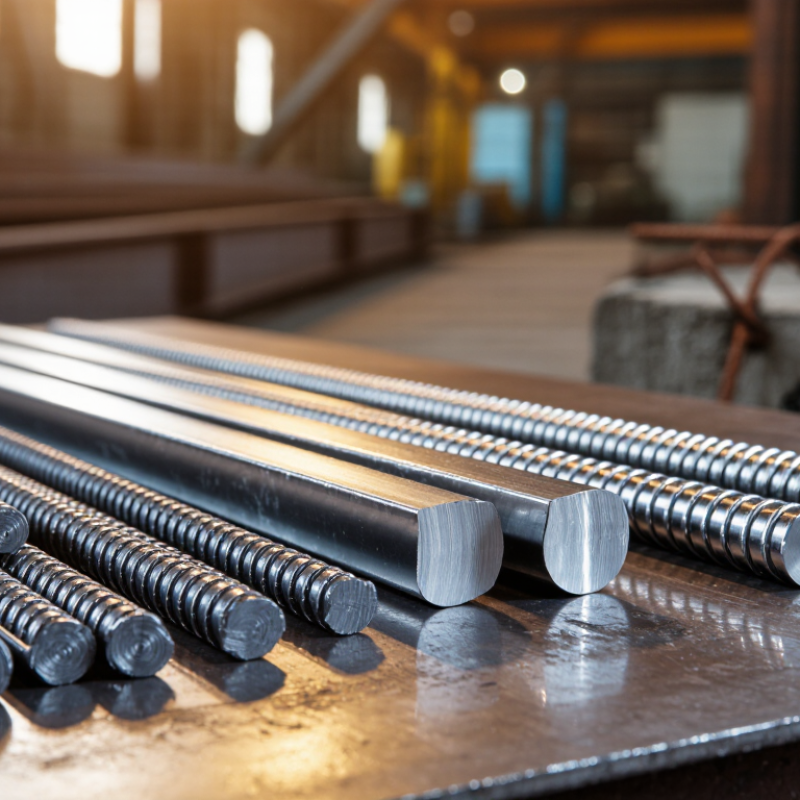
What Are the Best Steel Bar Types in 2026?

Steel Bars: Definition, Forms, and Role in Construction

What Are the Best Steel Bar Types in 2026?
Steel Bars: Definition, Forms, and Role in Construction

A steel bar is a solid, elongated steel product used in structures and fabrication. Common forms include round, square, and flat bars. In concrete construction, ribbed reinforcing bars are especially important: their raised pattern helps them bond with concrete. Concrete resists compression well but performs poorly under tension, so reinforcing bars help carry tensile forces and limit cracking. Plain round bars are easier to bend, while high-strength deformed bars are widely used in reinforced concrete. Stainless steel bars can suit corrosive settings, though their cost may be harder to justify. The right choice depends on the design, exposure, and applicable material specifications.

Construction’s scale helps explain steel’s role. World Steel Association’s World Steel in Figures 2024 reports 1,892.2 million tonnes of crude steel production worldwide in 2023; its sector breakdown assigns about 52% of steel use to buildings and infrastructure. That figure covers steel use broadly, not reinforcing bars alone. A practical detail is often missed: bar size, grade, spacing, and concrete cover work together. Choosing by strength alone can leave durability or installation concerns unresolved.

Tips: Check the project drawings and specified bar standard before ordering. Keep bars clear of mud and standing water, and inspect for heavy scaling or damage. Small site shortcuts can create problems later.

What Are the Best Steel Bar Types in 2026?

Minimum yield strength of selected reinforcing steel grades, shown in megapascals (MPa). ASTM A615 Grades 40, 60, and 80 and ASTM A706 Grade 60 correspond to nominal minimum yield strengths of 40, 60, and 80 ksi, respectively; values are converted and rounded. Higher strength is not the only selection factor: ductility, weldability, seismic requirements, corrosion exposure, and project specifications also matter.

Reference: ASTM A615/A615M and ASTM A706/A706M reinforcing-bar grade requirements. Confirm the applicable edition and project code before specifying materials.

Key Factors for Evaluating Steel Bar Types in 2026

What Are the Best Steel Bar Types in 2026?

Key Factors for Evaluating Steel Bar Types in 2026

The best steel bar depends on its job, not just its strength rating. Reinforcing bars suit concrete, while round and flat bars serve different fabrication needs. Check the specified grade, diameter, shape, and surface condition against the project drawings. A ribbed bar should fit the required concrete bond; a smooth bar may be better for machining or certain assemblies.

Strength is only one part of the decision. Ductility affects how a bar behaves under bending or sudden loads, while weldability matters when connections are fabricated on site. Corrosion exposure deserves equal attention. A coastal structure, for example, faces salt-laden air that can accelerate rust on unprotected steel.

That shortcut misleads. Choosing by tensile strength alone can overlook service life and installation constraints.

Review test certificates, dimensional tolerances, and applicable project standards before ordering. Ask whether the material’s grade and composition match the intended cutting, bending, or welding process. Also compare availability and total installed cost, including waste and protective treatment. Fit matters. A bar that looks suitable on paper may be awkward to handle or incompatible with existing details. Specifications vary by region, so confirm requirements with the project engineer rather than relying on a general product description.

Major Steel Bar Types and Their Typical Properties

What Are the Best Steel Bar Types in 2026?
Major Steel Bar Types and Their Typical Properties

Deformed carbon-steel rebar is the everyday choice for concrete beams, slabs, and foundations. Its raised ribs help the bar grip the surrounding concrete. ASTM A615/A615M lists Grade 60 rebar with a minimum yield strength of 60 ksi, or about 420 MPa. Weldable low-alloy bars, specified under ASTM A706/A706M, have controlled chemistry and are often selected where welding or seismic ductility matters. The grade number alone is not a complete design check.

Stainless-steel rebar offers stronger resistance to chloride-driven corrosion, but alloy and strength properties vary by grade. Epoxy-coated and galvanized bars add protective layers to carbon steel; coating damage and handling still matter. These options can suit coastal decks or structures exposed to deicing salts. More protection is not automatically better if detailing, concrete cover, and maintenance are neglected. A specification sheet cannot predict every jobsite condition.

Tips: Match bar type to exposure, connection method, and design requirements. Check the applicable ASTM specification and mill test certificate; verify dimensions and coatings on delivery. Small scratches can be easy to miss. A qualified engineer should confirm the selection, especially for welded or corrosion-sensitive work.

What Are the Best Steel Bar Types in 2026? — Major Steel Bar Types and Their Typical Properties

Steel Bar Type Typical Specified Yield Strength Corrosion Resistance Weldability and Fabrication Common Applications Key Considerations
Plain round carbon-steel bar Often about 250–420 MPa, depending on the product specification and grade. Low in ordinary atmospheric or wet exposure; normally requires concrete cover, coating, or other protection in aggressive environments. Generally easy to cut, bend, and machine. Weldability depends on its chemistry and applicable specification. Dowels, pins, ties, light reinforcement, and general fabrication. Smooth surfaces provide less bond with concrete than deformed reinforcing bars. Confirm that the specified product is suitable for structural reinforcement.
Deformed carbon-steel reinforcing bar Common grades specify approximately 420 or 500 MPa minimum yield strength; values depend on the governing standard. Low without protection. Concrete cover and suitable mix design help protect embedded reinforcement. Usually suitable for conventional reinforcing work. Welding should follow the grade requirements and an approved procedure. Reinforced-concrete buildings, foundations, slabs, bridges, and retaining structures. Ribs improve mechanical bond with concrete. Check bar grade, ductility class, dimensions, and local design code.
Weldable reinforcing bar Commonly around 420 MPa minimum yield strength for widely used 60 ksi-class products. Similar to uncoated carbon-steel reinforcement. Designed with controlled chemistry and mechanical properties to support welding when the applicable code and welding procedure are followed. Seismic detailing, welded reinforcement assemblies, and projects where welding is specified. “Weldable” does not mean welding is unrestricted; verify the material certificate, carbon equivalent, project requirements, and procedure.
Epoxy-coated reinforcing bar Typically the strength of its underlying reinforcing-bar grade, often about 420–500 MPa. Coating provides a barrier against chloride-related corrosion when intact; damage or poor coating repair can reduce protection. Cutting, bending, handling, and field repairs require care to avoid coating damage. Welding through the coating needs project-specific controls. Bridge decks, parking structures, marine-adjacent concrete, and other chloride-exposed construction. This is a coating system, not a separate steel grade. Coating quality, inspection, handling, and repair are important.
Hot-dip galvanized reinforcing bar Typically the strength of the underlying bar grade, commonly about 420–500 MPa. Zinc coating provides sacrificial corrosion protection; performance depends on coating condition and exposure. Can be fabricated to the applicable requirements, but bending and handling should avoid damaging the coating. Follow project guidance for welding and repairs. Concrete exposed to moisture, deicing salts, or marine conditions where a zinc-coated reinforcement system is specified. Coating thickness and inspection requirements vary by standard. Confirm compatibility with the concrete system and project specification.
Stainless-steel reinforcing bar Varies by alloy and product grade; specified minimum yield strengths commonly range from about 300 to 600 MPa. High relative to ordinary carbon steel, with performance depending on alloy, chloride exposure, and detailing. Fabrication and welding depend on the stainless grade; use appropriate procedures and avoid contamination from carbon-steel tools or debris. Marine structures, bridge decks, coastal construction, and critical concrete exposed to chlorides. Higher material cost may be offset by reduced corrosion risk and longer service life in suitable applications. Select the alloy for the exposure conditions.
High-strength low-alloy reinforcing bar Often about 500–600 MPa in specifications that provide these grades. Generally comparable to uncoated carbon-steel reinforcement unless a separate corrosion-resistant alloy or coating is specified. Depends on chemistry and grade. Higher strength can require closer control of bending, welding, and fabrication procedures. Structures where higher reinforcement strength may help reduce steel quantity or congestion, subject to design-code approval. Higher yield strength does not automatically reduce member size or improve performance; ductility, development length, crack control, and code limits still apply.

Note: Strength values are typical reference ranges, not universal product guarantees. Confirm the applicable national standard, grade, bar size, ductility requirements, exposure conditions, and project design documents before selection. Coated bars retain the mechanical properties of their underlying steel grade unless otherwise specified.

Best-Fit Steel Bars for Construction and Industrial Uses

What Are the Best Steel Bar Types in 2026?

Best-Fit Steel Bars for Construction and Industrial Uses

Choosing a steel bar starts with its job, not its name. Ribbed reinforcing bars, or rebar, bond with concrete and help structural members handle tension. They suit foundations, slabs, and columns, where bar spacing and concrete cover affect performance. Fit matters. For shafts, pins, and machined components, round bars offer a practical starting shape. Flat and square bars work well for brackets, frames, and supports that need straight edges or simple cuts.

Industrial settings bring different demands. Threaded bars can help connect equipment or anchor assemblies, while smooth round bars may be easier to machine into precise parts. Corrosion exposure matters, too: outdoor or damp locations may call for a suitable corrosion-resistant grade or protective coating. Welding, bending, and machining requirements should be checked against the selected steel’s properties. A bar that looks right may not handle fabrication well.

Before ordering, confirm dimensions, grade, tolerances, and applicable project specifications with the engineer or fabricator. Ask how the bar will be cut, joined, and exposed in service. Small details can change the best choice. I would not treat a single type as universally superior; cost, availability, and fabrication needs can complicate the decision. That trade-off is easy to underestimate.

How to Select Steel Bars by Load, Environment, and Code

What Are the Best Steel Bar Types in 2026?

Select reinforcing bars by design load, exposure, and the governing code—not by grade alone. For ordinary reinforced concrete, ASTM A615 carbon-steel bars are widely specified; ASTM A706 offers controlled tensile properties and improved weldability where seismic detailing or welding requires it. A structural engineer should calculate bar area, spacing, development length, and splice details under the project’s adopted ACI 318 edition. Higher-strength bars may reduce congestion, but they do not automatically improve crack control or simplify construction.

Environment changes the decision. Chloride exposure near roads or seawater can accelerate corrosion, so compare epoxy-coated, galvanized, or stainless bars against the expected service life and maintenance plan. A 2002 FHWA/NACE study estimated U.S. corrosion costs at $276 billion annually, about 3.1% of GDP. The estimate is dated, but it shows why exposure deserves early attention. A coating is not a substitute for adequate concrete cover, drainage, and careful placement. Small site details matter.

Tips: Check mill certificates and bar markings against the approved drawings and ASTM specification. Confirm local code amendments before ordering. If the drawings leave exposure class or splice requirements unclear, pause and ask the engineer. That extra check may feel slow; rework is slower.

FAQS

Which steel bar type is best for concrete?

Ribbed reinforcing bars grip concrete and help slabs, foundations, and columns resist tension. Bar spacing and concrete cover matter.

When are round, flat, or square bars useful?

Round bars suit shafts, pins, and machined parts. Flat or square bars work well for brackets, frames, and supports.

Should I choose a bar by strength rating alone?

No. Ductility, weldability, corrosion exposure, and fabrication needs also affect performance. Strength alone can be misleading.

What should I consider for coastal or damp projects?

Salt air and moisture can speed up corrosion. Consider suitable resistant steel or a protective coating, plus proper concrete cover and drainage.

How do load and project requirements affect bar selection?

The engineer should check bar area, spacing, development length, and splice details against the project’s design and local code.

What should I verify before ordering steel bars?

Check grade, dimensions, tolerances, surface condition, and test certificates against approved drawings. Small mismatches can cause delays.

Does weldability matter when selecting a bar?

Yes. Confirm the steel suits the planned welding, bending, or machining. I would not assume every grade handles fabrication equally well.

Is a protective coating enough to prevent corrosion?

Not by itself. Cover, drainage, careful placement, and maintenance also matter. It is easy to underestimate those site details.

Conclusion

Choosing the best Steel Bar in 2026 starts with understanding its forms and role in construction. Steel bars reinforce concrete, support structural frames, and serve a range of industrial applications. Common options include plain, deformed, and specialized bars, each offering different levels of strength, flexibility, bond with concrete, and resistance to environmental wear. Comparing these properties helps clarify which type is suited to a particular project.

The right selection depends on expected loads, site conditions, fabrication needs, and applicable building codes. Deformed bars may provide a stronger grip within concrete, while other forms can better suit specific structural or manufacturing tasks. Consider factors such as corrosion exposure, required strength, ductility, dimensions, and ease of handling before making a choice. Matching the bar type to the project’s demands can improve safety, durability, and material efficiency.

Charlotte

Charlotte

Charlotte is a seasoned marketing professional with a deep understanding of the company's portfolio and a passion for elevating its presence in the market. With a keen eye for detail and a commitment to excellence, she ensures that our professional blog is regularly updated with insightful articles......